
Edible
Bael
Aegle marmelos
Also known as Bel, Wood apple, Stone apple, Bilva
How to grow bael, Aegle marmelos. The Indian fruit with a shell you break with a hammer, its place in Shiva worship, the sherbet made from it, and the thorns on every branch.
At a glance
- Difficulty
- Moderate
- Water
- Weekly in growth, nearly dry when leafless
- Light
- Full sun
- Temperature
- Minimum around freezing. It takes a light frost when dormant
- Humidity
- Low to moderate. It tolerates dry air well
- Hardiness
- USDA 10-12, RHS H1b, hardy to 2 C
- Type
- Tender to half-hardy deciduous tree
- Height
- 8-15 m in the open, 1.5-2 m in a pot
- Native to
- the Indian subcontinent
- Best month
- May and June in the Northern Hemisphere, November and December in the Southern Hemisphere
The dry deciduous forests of India, on monsoon timing. It sheds its leaves in the hot dry months and needs that rest, so it fails in a climate with rain spread evenly. Established trees take a brief light frost.
Hardiness zones describe winter cold alone. Summer heat, humidity, rainfall and the length of the growing season decide as much, so treat the range as the outer limit rather than as a recommendation.
Every month named in this guide is for the temperate Northern Hemisphere. If you garden in the Southern Hemisphere, shift each one by six months, so May becomes November. Closer to the equator the wet and dry seasons matter more than the calendar, and the shift stops being a useful guide.
Skin irritant
- Safe to eat
- The ripe pulp, and the young leaves in small amounts
- Do not eat
- The rind, and unripe fruit in quantity
- Harm from
- Eating it and handling it
- Affects
- People
Bael is not toxic and nothing in it is listed as harmful to cats or dogs. Two ordinary cautions. The pulp is used traditionally for both constipation and diarrhoea depending on ripeness, and a large quantity of ripe pulp is a laxative, which is the effect people most often report. The hard woody rind is inedible. The tree is in the Rutaceae with citrus and rue, and the peel oils of that family can cause phytophotodermatitis, a burn-like rash raised by sun exposure after skin contact with the sap or peel, so gloves are sensible when pruning and handling fruit on a bright day. The spines are long, sharp and set at the leaf axils, and they are the practical hazard.
Sources: RHS potentially harmful garden plants, ASPCA toxic and non-toxic plants
About
A bael fruit has to be broken open with something heavy. The shell is woody, 2 to 4 mm thick and hard enough that a knife will not do it, and Indian households crack them with a hammer, a stone or the back of a cleaver.
Inside is an aromatic orange pulp, sweet and resinous, full of fibre and small seeds in a sticky mucilage. It is scooped out and turned into bael sherbet, a cooling summer drink across northern India, or dried into slices for tea.
The tree is sacred to Shiva. Its trifoliate leaves represent the three-pronged trident and are offered at temples, no bilva tree is felled without ceremony, and the species appears throughout Sanskrit religious literature.
Appearance and character
An upright deciduous tree, rather open in habit, 8 to 15 m in the open.
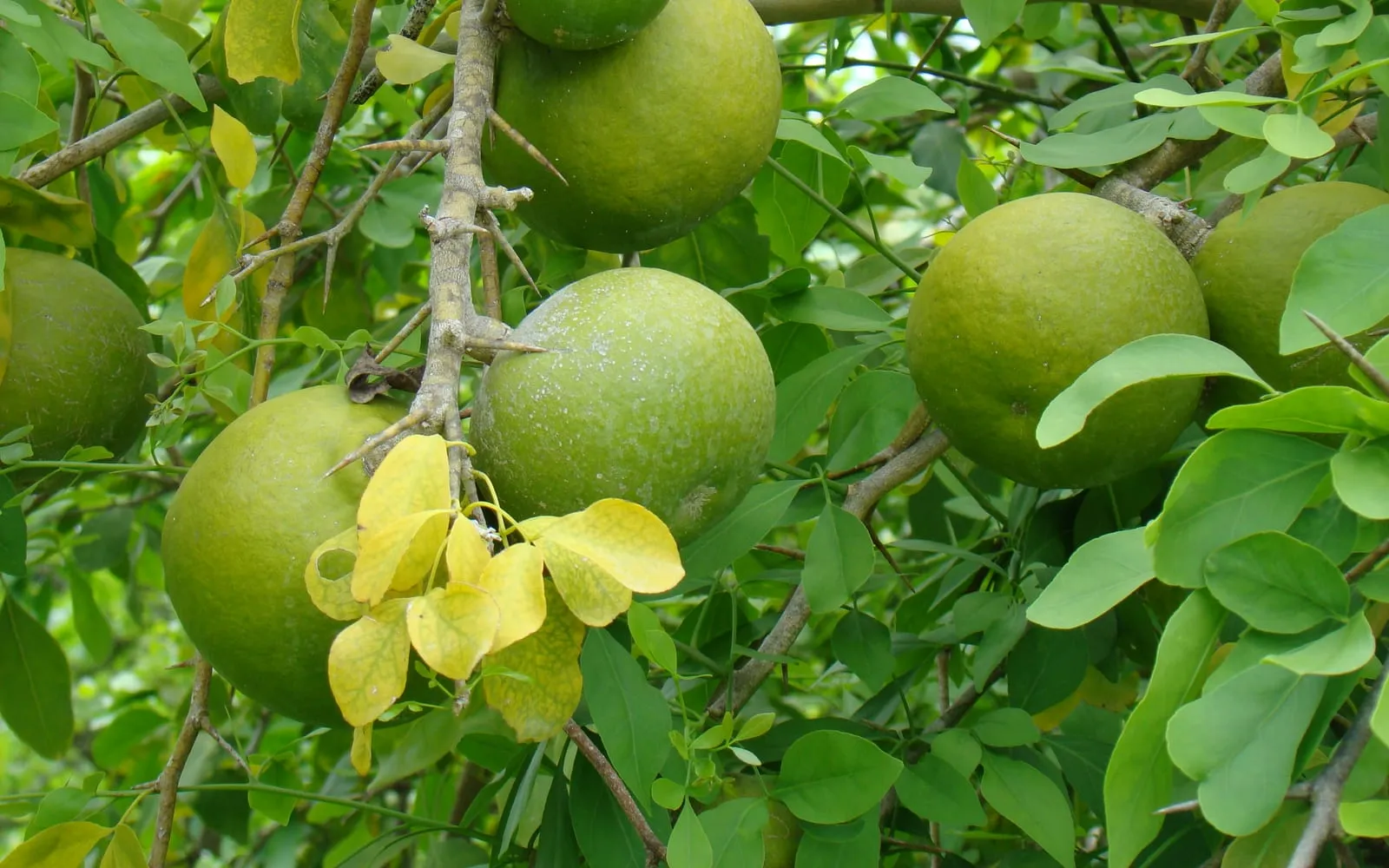
Long sharp spines, 1 to 3 cm, sit at the leaf axils along the branches, and they are the first thing anyone handling the tree notices.
Bark is grey-brown, corky and deeply fissured on an old trunk.
Leaves are trifoliate, with three leaflets, the terminal one largest, each 4 to 10 cm, thin, pale green and aromatic when crushed with a citrus-resin scent. The three leaflets are why the leaf is offered to Shiva.
The tree is leafless for part of the dry season and through a cool winter.
Flowers are greenish white, about 2 cm, fleshy, in short clusters, and strongly and pleasantly scented.
Fruit is round to pear-shaped, 5 to 20 cm, with a smooth hard woody shell that ripens from green to a pale yellow-grey.
Pulp is orange, aromatic, sweet and resinous, divided into segments by fibrous walls, with numerous seeds in a sticky mucilage.
Where it is from
Bael is native to the Indian subcontinent, across India, Bangladesh, Nepal and Sri Lanka, and it grows in dry deciduous forest.
Its religious position is old and central. The bilva tree is sacred to Shiva, its trifoliate leaves are offered in worship, and it appears in the Vedas and throughout later Sanskrit literature.
Ayurvedic medicine has used the fruit, root and leaves for as long as there are records of it, primarily for digestive complaints, and bael remains a common domestic remedy in India.
The fruit is a summer staple in the north. Bael sherbet, made by mixing the pulp with water, sugar and sometimes a little salt, is sold at roadside stalls through the hot months.
The tree spread to South East Asia and is grown in Thailand, Malaysia and Indonesia, and it has been planted in tropical Africa and the Caribbean.
Temperate markets see dried bael slices in South Asian groceries, sold for tea, and almost never the fresh fruit.
How it grows
Sow seed from a ripe fruit. It germinates at 20 to 28 deg C in three to six weeks and keeps for a few weeks only.
Wash the mucilage off the seed before sowing.
Grow in free-draining compost. Bael tolerates poor, dry, saline and alkaline ground better than almost any fruit tree.
Give full sun and keep it above freezing. It takes a light frost when dormant, which makes it one of the hardier plants in this collection.
Water weekly in growth and keep it nearly dry when leafless.
Keep humidity low to moderate, which makes it a better indoor subject than most tropical fruit trees.
Feed monthly from April to September at moderate strength.
Prune while dormant, wearing thick gloves.
Expect fruit in six to eight years from seed and four to five from a grafted plant.
Through the seasons
Winter is dormancy. The tree drops its leaves. Hold above freezing, keep the compost nearly dry, and feed nothing.
Late winter is the pruning window while the plant is bare.
Spring brings the new leaves and then the scented flowers.
Early summer is fruit set.
Midsummer is fruit swell, which is slow, taking eight to eleven months in its native range.
Autumn is when to stop feeding and reduce watering towards dormancy.
Fruit set one summer ripens the following one, so a mature tree carries two stages at once.
Care difficulty
Moderate, and one of the more practical plants in this collection for a cool climate.
Cold tolerance is good. It takes a light frost when dormant and needs only to be kept from a hard one.
The deciduous habit suits a cool winter, since a cool dry rest is easy to provide.
Soil tolerance is exceptional, including poor, dry, saline and alkaline ground.
Dry air is tolerated, which very little else here manages.
The spines are the practical obstacle and need thick gloves.
Fruiting takes six to eight years from seed, and the fruit itself needs eight to eleven months to ripen, so patience is the main requirement.
Watering
Water weekly in growth, giving a thorough soak and letting the compost dry well down.
Keep it nearly dry through winter dormancy, since a wet leafless plant rots.
Water steadily through the long fruit development.
Drain fully.
Tap water is fine, including hard water, since this species tolerates alkalinity.
Keep humidity low to moderate. Misting is unnecessary.
Water outdoor pots less than instinct suggests.
Warning signs, diseases and pests
Leaf fall in autumn is normal. Bael is deciduous.
Wilting in damp compost during dormancy is root rot, which is the usual way one is lost.
Winding pale trails inside the young leaves are citrus leaf miner.
Brown limpets on the stems are scale.
White fluff in the leaf axils is mealybug.
Blackened tips after a hard frost are cold damage. Cut back to live wood in spring.
Very slow fruit development is normal. Bael fruit takes eight to eleven months to ripen.
A rash after handling the tree on a bright day is phytophotodermatitis from the peel oils. Wear gloves.
Growing environment
A cool greenhouse or conservatory, standing outdoors for the summer.
Winter a little above freezing, dry, with the plant leafless.
Summer at 22 to 35 deg C.
Full sun.
Low to moderate humidity.
Free-draining compost of moderate fertility, tolerant of lime and salt.
pH from 5.0 to 8.5, which is the widest tolerance in this collection.
A pot of 35 to 45 cm, and thick gloves kept nearby.
Feeding
Feed monthly from April to September with a balanced liquid feed at moderate strength.
Keep it light. Bael grows on poor ground and heavy feeding produces soft growth.
Stop feeding at the end of August so the wood hardens before dormancy.
Give nothing through winter.
Repot or top-dress in late winter while the plant is bare.
Add magnesium if older leaves yellow between the veins.
A citrus feed suits it, since the tree is in the same family.
Troubleshooting
How do I open one? With something heavy. The shell is woody and 2 to 4 mm thick, and a knife will not do it. Indian households use a hammer, a stone or the back of a cleaver.
What is bael sherbet? The pulp mixed with water, sugar and sometimes a little salt, strained and drunk cold. It is a summer staple across northern India.
Why is the tree sacred? It is sacred to Shiva, and its trifoliate leaf represents the trident. The leaves are offered in worship and the tree appears throughout Sanskrit religious literature.
How hardy is it? One of the hardier plants in this collection. It takes a light frost when dormant and needs only to be kept from a hard one.
How long does the fruit take? Eight to eleven months from flower to ripe fruit, so a mature tree carries two stages at once.
I got a rash after pruning it. Phytophotodermatitis. Bael is in the citrus family and the peel and sap oils raise a burn-like rash when the skin is then exposed to sun. Wear gloves.
Can I grow it in poor dry soil? Yes, and better than almost anything else here. It tolerates poor, dry, saline and alkaline ground.
How soon will it fruit? Six to eight years from seed, four to five from a grafted plant.