
Outdoor plant
Armand Clematis
Clematis armandii
Also known as Evergreen Clematis
How to grow Armand clematis, Clematis armandii. Why cold, drying wind scorches its evergreen leaves even when the wood survives untouched, pruning after flowering rather than in winter, and the sap that can leave ungloved hands itching for days.
At a glance
- Difficulty
- Moderate
- Water
- Regularly while establishing, then during dry spells
- Light
- Full sun to part shade, with roots kept cool and shaded
- Temperature
- Hardy, but young growth and flowers are frost-tender
- Hardiness
- USDA 7-9, RHS H4, hardy to -10 C
- Type
- Evergreen climbing vine, living many decades
- Height
- 5-8 m
- Native to
- China
Less hardy than the deciduous clematis species commonly grown, and it needs a sheltered wall or fence in a marginal climate rather than an open, exposed position. Because it keeps its leaves through winter rather than losing them, a cold, drying wind can scorch the foliage even where the plant survives the temperature itself without damage to the woody stems.
Hardiness zones describe winter cold alone. Summer heat, humidity, rainfall and the length of the growing season decide as much, so treat the range as the outer limit rather than as a recommendation.
Toxic if eaten
- Do not eat
- Every part, and the sap most of all
- Harm from
- Eating it and handling it
- Affects
- People, cats, dogs and horses
Clematis belongs to the buttercup family and carries the same irritant compound as its relatives. The sap contains protoanemonin, released when stems or leaves are crushed or cut, and it causes burning of the mouth, drooling, vomiting and diarrhoea if eaten, with redness and blistering on sensitive skin from contact. The ASPCA lists Clematis as toxic to cats, dogs and horses, and the RHS lists it among plants harmful if eaten and irritating to the skin. Serious poisoning is rare because the taste is acrid and stops most animals after a mouthful. The realistic exposure is a gardener pruning a large, vigorous plant like this one without gloves in warm weather, which is enough to leave the forearms itching for a day or two. Wear gloves and long sleeves when cutting it back, wash afterwards, and avoid touching your eyes while working. Protoanemonin breaks down as the tissue dries, so prunings left on a compost heap become harmless within days, and there is no ongoing hazard from dried cuttings.
Sources: ASPCA (Clematis), RHS potentially harmful garden plants
About
Armand clematis is an evergreen clematis grown for year-round cover as well as early spring flowers. Its long, leathery leaves stay on the plant through winter, so it is useful on a sheltered wall or fence where a deciduous clematis would be bare.
That evergreen habit also makes it more exposed to cold, drying wind. Shelter matters more for this species than for many clematis. In spring it flowers in clusters of small, fragrant white blooms on the previous year’s growth, so pruning is done after flowering rather than in winter.
Appearance and character
Leaves are trifoliate, made up of three long, pointed, leathery leaflets per leaf, glossy dark green above and paler, matt green beneath, entirely unlike the softer, thinner leaves of the deciduous clematis species most gardeners know.
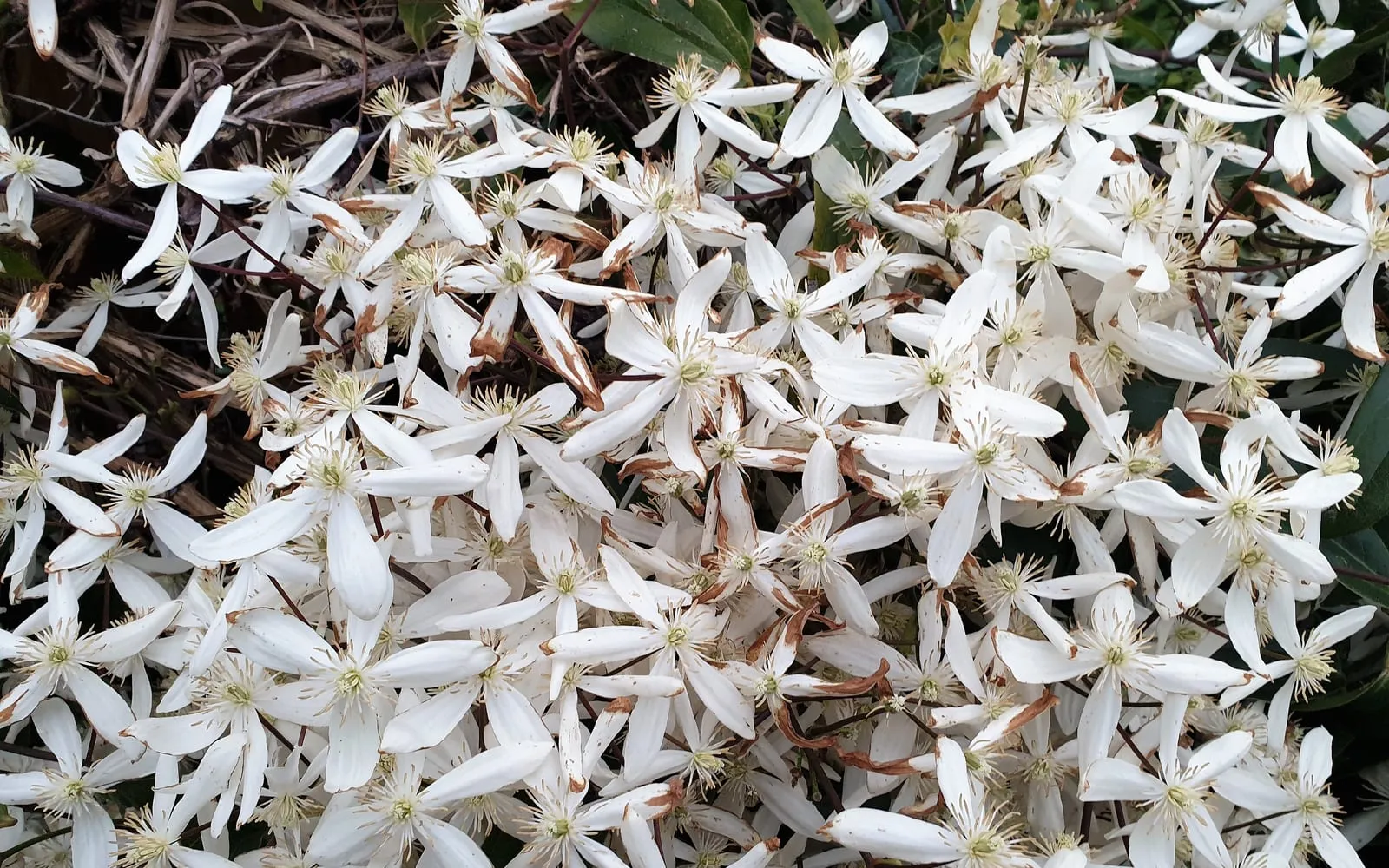
Flowers open in dense clusters along the previous year’s growth in early spring, pure white, star-shaped, 4 to 6 cm across, with prominent yellow anthers, and carry a genuine fragrance, stronger on a still, mild day.
Growth is vigorous and twining, capable of covering 5 to 8 m of wall or fence within a few years given good conditions, with strong stems that thicken and become woody at the base over time, much like the deciduous species in the genus.
Where it is from
Clematis armandii is native to central and western China, growing in mild, wooded valleys where winters are milder than in much of the rest of the country, which accounts for its reduced cold hardiness compared with clematis species from colder parts of Asia.
That milder native climate means it needs a more sheltered position in cultivation than most of its relatives, and gardeners in cooler climates typically grow it against a warm, protected wall rather than on an open pergola or fence, where a hardier deciduous species would manage without difficulty.
How it grows
Plant in fertile, well-drained soil, neutral to slightly alkaline, against a sheltered wall or fence in a climate at the cooler end of its range, since protection from cold wind matters more here than for most clematis.
Follow the old gardening rule for the whole genus: keep the roots cool and shaded while the top growth reaches for the sun. Shade the base of the plant with a paving slab, low planting, or mulch, and let the vine climb into full light above.
Provide sturdy support from the start, since the vigorous growth needs something substantial to twine around; a trellis, wires on a wall, or an established shrub or tree all work.
Prune, if needed, immediately after flowering in spring, removing any frost-damaged or overcrowded growth and shortening overly vigorous shoots to keep the plant within bounds. This is a different rule from the hard, late-winter prune given to some later-flowering clematis groups; cutting this species back hard in winter removes the wood that would otherwise flower that spring.
Through the seasons
Late winter to early spring brings the main flowering display, opening on the previous year’s growth while temperatures are still cool.
Spring is also the time for any pruning, done immediately after flowering finishes rather than before it.
Summer is the main growing season, with vigorous new growth extending the plant’s coverage. Water during dry spells, particularly for a young, still-establishing plant.
Autumn and winter show off the evergreen foliage, the plant’s main appeal outside the flowering season, when most other clematis have dropped their leaves and left bare stems.
Care difficulty
Moderate. The plant grows vigorously and needs little in the way of routine care once established in a suitable, sheltered position, but getting that position right matters more here than for a hardier, deciduous clematis. A plant sited in an exposed, cold spot struggles with wind scorch on its evergreen foliage even where the temperature alone would not trouble it, so siting is the main decision to get right from the start.
Watering
Water regularly through the first two growing seasons while the root system establishes, a deep soak at the base rather than overhead watering, which wets the foliage unnecessarily and can encourage fungal problems.
Once established, water during any extended dry spell, and keep the shaded root zone consistently moist rather than letting it swing between wet and dry, which stresses the plant more than steady, moderate moisture.
Warning signs, diseases and pests
Clematis wilt causes sudden collapse of individual stems, wilting and blackening within days, though it is markedly less common on this species and other small-flowered types than on the large-flowered hybrid clematis most prone to it. Cut affected stems back to healthy growth or ground level and destroy the removed material rather than composting it.
Aphids cluster on soft new growth in spring, distorting shoot tips. A strong jet of water or an insecticidal soap controls light infestations.
Scale insects occasionally appear on older, woody stems as small, flat, brownish bumps. Treat with horticultural oil.
Frost scorch on the evergreen leaves shows as browning and curling after a cold, drying winter wind, particularly in an exposed position. It is a siting issue rather than a disease, and moving or better sheltering the plant is the long-term fix.
Growing environment
Full sun to part shade suits the top growth, with the root zone kept cool and shaded, the classic clematis planting rule of “head in the sun, feet in the shade.”
Shelter from cold, drying wind matters more for this evergreen species than for a deciduous clematis, since exposed foliage scorches through winter even when the wood itself survives the cold undamaged.
Fertile, well-drained soil, neutral to slightly alkaline, suits it best. It dislikes waterlogged ground, which can trigger root problems regardless of how well the top growth is otherwise sited.
A warm wall in a marginal climate provides both the shelter and the reflected warmth that help this species perform at its best where winters push toward the cold end of its tolerance.
Feeding
Apply a balanced, general-purpose fertiliser in spring as growth resumes, following the product’s guidance for a climbing shrub.
A mulch of well-rotted compost applied over the shaded root zone in spring supplies additional fertility and helps keep that zone consistently moist through the growing season.
Avoid heavy feeding beyond this single spring application, since an already vigorous plant gains little from extra fertility beyond producing more growth than the support can comfortably hold.
Troubleshooting
The evergreen leaves have browned and curled over winter. Frost scorch from cold, drying wind is the likely cause rather than disease. Remove badly damaged leaves in spring once new growth starts, and consider a more sheltered position or wind protection for future winters.
A single stem collapsed and blackened suddenly. Possibly clematis wilt, though less common on this species than on large-flowered hybrids. Cut the affected stem back to healthy tissue or to ground level, destroy the cut material, and the rest of the plant usually recovers.
It flowered poorly this spring. Check whether it was pruned hard in winter, which removes the previous year’s growth that this species flowers on. Prune only after flowering from now on, lightly rather than hard.
Can I grow it in a container? With difficulty, given its vigour. A large, deep container with excellent drainage can work for a few years, but this is a plant that generally performs far better with its roots in open ground and room to grow to its full size.
Is it hardy enough for a cold, exposed garden? Probably not without significant shelter. Choose a warm wall out of the worst wind in a marginal climate, or consider a hardier, deciduous clematis species if no such position is available.