
Houseplant
Tree Philodendron
Thaumatophyllum bipinnatifidum
Also known as Philodendron selloum, Philodendron bipinnatifidum, Lacy Tree Philodendron
How to grow Thaumatophyllum bipinnatifidum, the tree philodendron. Its huge deeply cut leaves on a thick trunk, why it needs floor space, and its easy care.
At a glance
- Difficulty
- Easy
- Water
- When the top few centimetres of compost have dried
- Light
- Bright indirect light, with some direct sun
- Temperature
- Warm to cool; keep above about 5 deg C
- Humidity
- Average to high
- Hardiness
- USDA 9-11, RHS H2, hardy to 5 C
- Type
- Evergreen self-heading perennial
- Height
- 1.5 to 3 m
- Native to
- South America
A big, bold aroid from the warm forests and clearings of South America, hardier than most of its relatives. It has little frost tolerance but takes cool rooms and a brief chill far better than the tender climbing philodendrons, surviving a light, short frost outdoors in mild areas. It needs warmth, bright light and room to spread, and copes with ordinary room air more easily than the velvet-leaved kinds.
Hardiness zones describe winter cold alone. Summer heat, humidity, rainfall and the length of the growing season decide as much, so treat the range as the outer limit rather than as a recommendation.
Toxic if eaten
- Do not eat
- All parts, which contain calcium oxalate crystals
- Harm from
- Eating it and handling it
- Affects
- People, cats and dogs
Like the philodendrons it was long grouped with, the tree philodendron contains insoluble calcium oxalate crystals throughout, and chewing any part causes intense burning and swelling of the mouth and throat, with drooling and vomiting. The sap can also irritate skin and eyes. The ASPCA lists Philodendron as toxic to cats and dogs. It rarely causes lasting harm, since the burning stops most eating, but it is painful, so keep it away from children and pets and wash off any sap.
Sources: ASPCA toxic and non-toxic plants, RHS potentially harmful garden plants
About
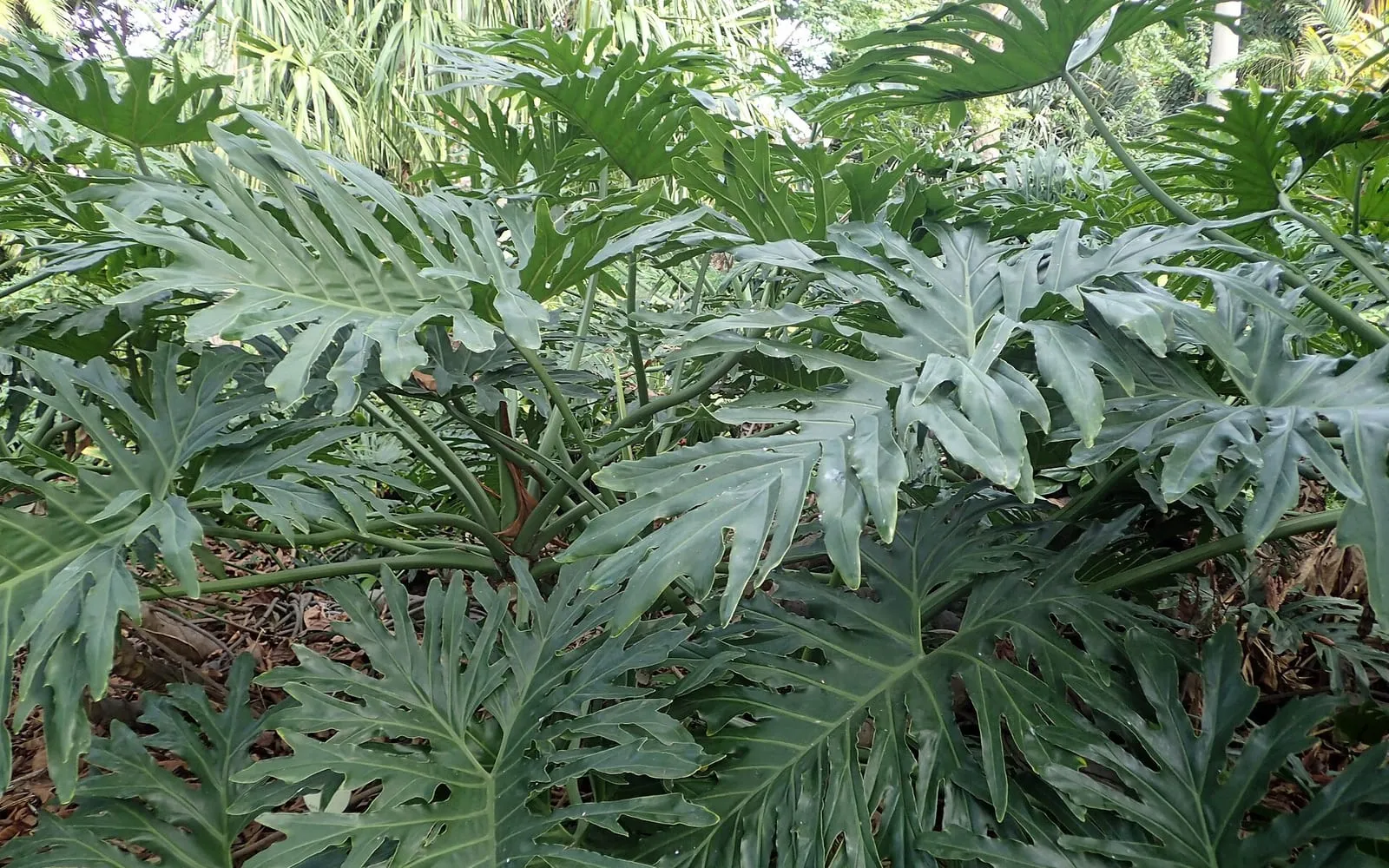
Tree philodendron is a big, architectural plant grown for its enormous, deeply cut leaves, each one lobed and slashed into a lacy outline and held on a long stalk from a thick, woody, self-supporting stem. An old plant becomes tree-like, its trunk marked with the diamond scars of fallen leaves and propped on stout aerial roots.
Long known as Philodendron selloum or bipinnatifidum, it has been moved to the genus Thaumatophyllum, though it is grown exactly as a philodendron and shares their calcium oxalate toxicity. Unlike the climbing kinds, it is self-heading, spreading outward and upward from a central stem instead of vining up a pole.
It is one of the easier big aroids, hardier and more tolerant of cool rooms and ordinary air than the velvet-leaved climbers. What it mainly needs is space, since a mature plant can spread two or three metres across.
Appearance and character
Leaves are large and deeply cut, each broad blade slashed and lobed into a lacy, almost feathery outline, glossy mid-green, held on long stalks that radiate from the central stem.
The stem is thick and woody, self-supporting, and on an old plant becomes a short trunk patterned with the pale diamond scars of shed leaves and braced by stout aerial roots.
The habit is self-heading rather than climbing. It spreads outward and slowly upward, reaching one and a half to three metres.
Flowers are the greenish spathe of the arum family and are rarely seen indoors. The plant is grown for its bold, sculptural foliage.
Where it is from
Thaumatophyllum bipinnatifidum comes from the warm forests, clearings and riverbanks of south- eastern South America, where it grows as a large, self-supporting plant in bright, warm, humid conditions. It is used to more light and a wider temperature range than the shade-dwelling climbers.
Give it warmth, bright light and room to spread. It tolerates cool rooms and ordinary room air, and even takes a brief light frost outdoors in mild areas, though it still dislikes cold, wet compost.
How it grows
It grows steadily in warmth and bright light, unfurling large leaves from the central stem and spreading outward, and slows in winter. Given space and light it is a vigorous, easy plant.
Pot it in a rich, free-draining houseplant compost in a heavy, stable pot to balance the big leaves, and keep the compost evenly moist in growth. It has no need of a moss pole, being self-supporting, though the aerial roots can be tucked into the pot.
Keep it warm to cool, above about 5 deg C, in bright indirect light with some direct sun, and give it plenty of floor space. Wipe the large leaves occasionally to keep them clean and free of dust and mites.
Propagate from stem cuttings or offsets, or from seed, and expect a large plant to need a big, stable pot and a clear corner instead of a shelf.
Through the seasons
Spring brings vigorous new leaves as light increases, the best time to repot into a larger, stable pot and to resume feeding.
Summer is the main growing season, with the largest leaves. Keep the compost evenly moist, feed monthly, and give it bright light.
Autumn growth slows as light falls. Reduce feeding and let the compost dry a little more between waterings.
Winter the plant rests. A cool room suits it; keep it bright, only lightly moist, and above about 5 deg C.
Care difficulty
Easy, and one of the more forgiving big aroids. Given warmth, bright light and room to spread it grows into a bold, healthy specimen, tolerating cool rooms and ordinary air better than the velvet climbers. The main considerations are its size, which needs real floor space, and cold, wet compost, which rots it. Give it room and light and it grows well.
Watering
Water when the top few centimetres of compost have dried, keeping it evenly moist through the growing season without letting it dry out hard or stand waterlogged. The big leaves use plenty of water in warm, bright weather.
Ease off in winter when growth slows, letting the compost dry a little more between waterings, and empty any saucer. Cold, wet compost in low light is the main risk.
Warning signs, diseases and pests
Spider mites and scale appear in warm, dry air, the mites stippling the leaves and the scale showing as brown bumps. Raise the humidity, wipe the large leaves, and treat early, since the big surfaces are easy for pests to colonise.
Root rot follows cold, wet compost, showing as yellowing, collapsing leaves and a soft base. Water less, improve the drainage, and keep the plant warm.
Its size is the other thing to plan for. A mature plant spreads two or three metres across, so it needs a clear corner instead of a crowded shelf, and yellowing lower leaves are often just age as the plant builds its trunk.
Growing environment
Bright, indirect light with some direct sun suits it, and it takes more light than the shade-loving climbers. Deep shade gives smaller, less-divided leaves and a leggier plant.
Warmth to cool suits it, above about 5 deg C, and it tolerates cool rooms and ordinary room air far better than the velvet philodendrons. Average humidity is fine, with a little extra welcome in a dry room.
Give it a rich, free-draining compost in a heavy, stable pot and plenty of floor space for its spreading leaves, in a bright, warm to cool position.
Feeding
Feed monthly through spring and summer with a balanced liquid houseplant fertiliser, to support the large leaves. Ease off in autumn and stop in winter while growth slows.
A big plant in a large pot benefits from an annual top-dressing of fresh compost as well as liquid feeding through the season.
Troubleshooting
It is getting enormous. That is its nature; a mature plant spreads two or three metres. Give it a clear corner and room, and remove the oldest lower leaves as they age to show off the developing trunk.
The lower leaves are yellowing. Often just age, as the plant sheds old leaves and builds its stem, especially if the newest leaves look healthy. Persistent yellowing with soft stems, though, points to overwatering.
The leaves are small and less divided. Usually too little light. Move it somewhere brighter, with some direct sun, and the new leaves grow larger and more deeply cut.
Does it need a moss pole? No. Unlike the climbing philodendrons it is self-heading and self-supporting, spreading from a thick central stem, so it needs floor space instead of a pole.
Is it safe around pets and children? No. Like the philodendrons it was grouped with, and like monstera, it contains calcium oxalate crystals that burn the mouth if chewed, so keep it out of reach and wash off any sap.
Tree Philodendron problem guides
Not sure what is wrong? See the common houseplant pests guide.