
Lawn care by climate: grass, mowing and watering
Most lawn trouble comes from the wrong grass for the climate, or from the way it is mown and watered. Match the grass to your conditions, cut it high, water deeply and less often, and feed it while it is growing.
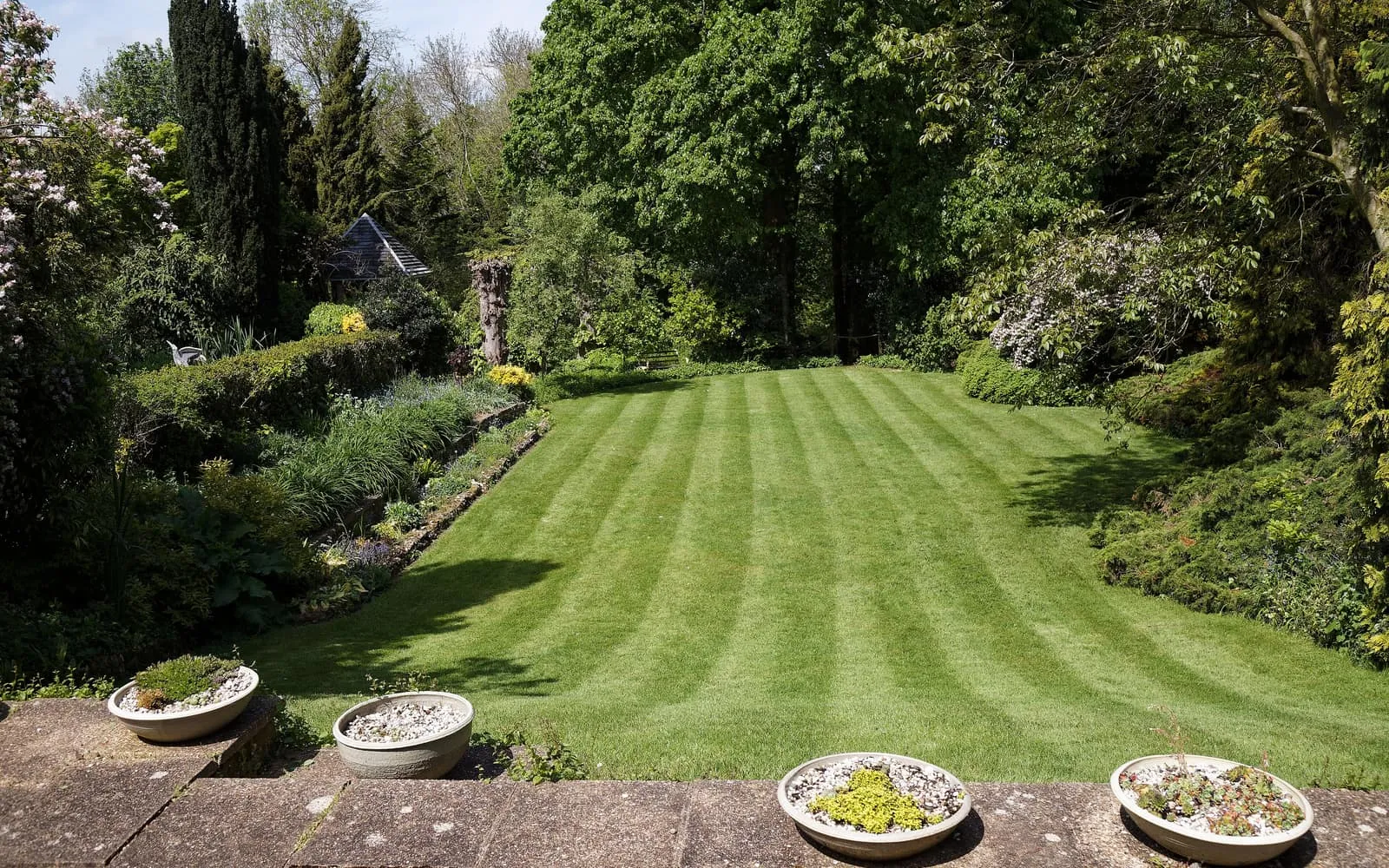
A lawn is a patch of grass kept short and dense by regular cutting. Most of what goes wrong with one comes down to the wrong grass for the climate, or to the way it is mown and watered. Choose the right grass and treat it well, and a lawn needs less feeding and watering than you might think.
Match the grass to your climate
The grass type matters more than almost anything you do later, and you make that choice before you sow or lay turf. Lawn grasses fall into two groups, and which one suits you depends on how hot your summers get and how cold your winters.
Cool-season grasses grow best when the air is between about 15 and 24 deg C. They put on most of their growth in spring and autumn, stay green through a mild winter, and struggle in summer heat, when they slow, brown off and can die in drought without water. They suit climates with cold to mild winters and warm rather than very hot summers.
Perennial ryegrass, the fescues, the bentgrasses and smooth meadow-grass are the main cool-season grasses. Perennial ryegrass is a hard-wearing choice for most cool-climate lawns and lawn-seed mixes. It establishes quickly and copes with heavy wear.
Warm-season grasses grow best when the air is above about 25 deg C. They thrive in hot summers, spread fast in the heat, and turn straw-brown and dormant once the weather cools, greening up again the next warm season. Bermuda grass, zoysia, St Augustine grass, buffalo grass and kikuyu are the common ones. They suit hot-summer, subtropical and tropical climates. They tolerate heat and drought better than cool-season lawns.
Some places have both hot summers and cold winters, so neither group is ideal. Tall fescue and zoysia are the usual compromises there. Wherever you garden, a cool-season lawn struggling through a long hot summer, or a warm-season lawn staying brown through a cool winter, is usually the wrong grass for the place.
Mow high and often enough
Mowing shapes a lawn more than any other job, and the commonest mistake is cutting too short. Start with the one-third rule. Never remove more than a third of the leaf in a single cut. Cutting the grass shorter than that weakens the roots and lets in weeds and moss.
Longer grass usually copes better. It grows deeper roots, shades the soil so it stays cooler and holds moisture, and leaves less space for weed seedlings. How short to cut depends on the grass. Fine fescues and bents take close mowing, ryegrass and tall fescue need more length, and among the warm-season grasses Bermuda and zoysia are cut low while St Augustine is left longer. Raise the height in hot or dry spells, so the grass shades its own roots.
Two habits matter as much as height. Keep the mower blade sharp, because a blunt one tears the leaf and leaves a ragged, browning tip that lets in disease. Cut by how fast the grass is growing rather than by the day of the week, which may mean twice a week in a warm wet spell and not at all in a drought.
Leave the clippings on the lawn in most conditions. They rot down fast and return nitrogen to the soil, cutting how much feed the lawn needs. Collect them only when the grass is long, wet or diseased, when a thick mat of cuttings would smother it.
Water deeply and less often
When you water, give the lawn a good soak that wets the soil to a hand’s depth. This encourages roots to grow down. Deep roots reach water after the surface has dried, so the lawn copes better with drought. Frequent light sprinkling does the opposite, keeping the roots shallow and the grass dependent on you.
As a rough guide, a growing lawn uses about 25 mm of water a week, from rain and watering together, but your climate, soil and grass change that figure a lot. Water in the early morning, so less is lost to evaporation and the leaves dry quickly. Dry leaves are less likely to develop disease.
An established lawn does not need to stay green all summer. Most cool-season grasses go dormant in drought, browning off and surviving on their roots until rain returns, when they green up again. A brown summer lawn is usually resting rather than dying. In a hot, dry climate, it is worth asking whether keeping a lawn green is the best use of water. A drought-tolerant grass, a tapestry of low plants or a drought-tolerant planting may need far less.
Feed when the grass is growing
Feed a lawn only while it is actively growing, and match the timing to the grass. Cool-season lawns need feed in spring and again in autumn. Warm-season lawns need it through late spring and summer, when they are growing fastest. Feeding a dormant lawn wastes fertiliser, since the grass cannot use it, and much of the nitrogen washes away to pollute watercourses.
Nitrogen greens a lawn and encourages leaf growth, so it is the main nutrient in most lawn feeds. Little and often works better than one heavy dose, which forces soft, sappy growth that is prone to disease. A lower-nitrogen autumn feed, with more potassium, helps cool-season grass prepare for winter instead of making soft growth before cold weather.
If moss and weeds keep coming back, a soil test is worth the small cost. Most lawns do best at a slightly acid pH, around 6 to 6.5, and no amount of feed will fix a problem that comes down to compaction, shade or drainage.
Air, thatch and a firm surface
Grass roots need air. Heavy use presses air out of the soil. On a compacted lawn, walked over daily or growing on heavy clay, water sits on the surface and roots stay shallow. Aerating helps. Push a garden fork deep across the lawn and rock it, or use a hollow-tine tool that pulls out plugs of soil and lets air and water in.
Thatch is the layer of dead stems and roots that builds up between the green grass and the soil. A thin layer is normal and does no harm. A thick one sheds water, harbours disease and stops feed and seed reaching the soil. Rake or scarify it out once it builds up past a centimetre or so.
A dressing of sandy loam brushed into the surface after aerating or scarifying levels small hollows and improves the top few centimetres over a season or two. Do all of this while the grass is growing strongly, so it recovers quickly, rather than while it is dormant.
Moss and weeds are symptoms
Moss and weeds are usually symptoms of poor growing conditions, not the main problem. Moss grows wherever grass is weak. It does well in shade, on wet or compacted ground, in acid or hungry soil, and where the lawn is cut too short. Kill the moss without changing any of that and it comes straight back. Fix the cause by thinning overhanging branches, aerating, liming an acid soil or raising the cut, and the grass competes again.
Weeds work the same way. A dense, well-fed lawn leaves them little room, while thin, short or bare grass lets them establish. Dandelions and plantains are common lawn weeds, but think before you reach for a weedkiller. A lawn with dandelions in spring feeds bees and hoverflies when few other flowers are open. Clover, long treated as a weed, stays green in drought and feeds nitrogen to the grass around it. Many lawn weedkillers are also restricted or withdrawn now, so check what is legal where you garden before buying one.
Some lawn problems have their own pages. Red thread shows as pinkish patches on a lawn short of nitrogen, fairy rings as dark green circles caused by fungi in the soil, and leatherjackets, the grubs of crane flies, chew through roots and leave yellow patches that birds may tear up while feeding.
Repair bare patches and overseed
Bare patches fill in fastest during the growing season. Loosen the surface, scatter seed of the same grass, press it in, and keep it damp until it establishes. Overseeding, which means scattering seed across a whole thin lawn, thickens cool-season grass and crowds out weeds and moss. Autumn is the usual time, into a mown, raked and aerated surface. Perennial ryegrass is the common choice for patching and overseeding a worn cool-season lawn.
Warm-season grasses are different, because most spread by runners rather than setting much seed. You patch them with sprigs, plugs or rolls of turf rather than by sowing, and they spread fastest in the heat of their growing season.
A lower-input lawn
A lawn does not have to be weed-free and green all year. Mowing higher and less often, tolerating clover and daisies, and watering little or not at all gives you a lawn that takes far less work and copes better with drought. A tapestry lawn mixes low, tough plants such as clover, wild thyme and lawn chamomile into the grass or in place of it. It stays green on less feed and water and flowers for pollinators.
Or let part of the lawn grow long. Stop mowing a strip or a corner, cut it once or twice a year, and it starts to become a small meadow. Turning a lawn into a wildflower meadow is a project in itself, and it suits a corner where a neat lawn would be more trouble than it is worth.
Work with the grass, not the calendar
Feed, aerate, scarify and seed when the grass is growing strongly enough to recover. For cool-season lawns, that usually means spring and autumn. For warm-season lawns, it means late spring and summer. Work done while the lawn is dormant can set it back instead of helping. Watch the grass, and do each job when the lawn is growing well enough to grow back.
Common questions
- How short should I cut my lawn?
- Follow the one-third rule: never remove more than a third of the leaf in a single cut. Longer grass usually grows deeper roots and shades out weeds, so cut higher rather than lower. Exact heights depend on the grass. Fine fescues and bermudagrass can be cut low, while ryegrass, tall fescue and St Augustine need more length. Raise the height further in hot, dry weather.
- How often should I water a lawn?
- Water deeply and less often rather than a little every day, so the roots grow down and the lawn copes better with drought. A growing lawn uses roughly 25 mm of water a week from rain and watering together, but climate, soil and grass type change that. Water in the early morning. An established lawn can be left to go brown and dormant in a drought, and most cool-season grasses green up again when rain returns.
- What is the best grass for my lawn?
- It depends on your climate. Cool-season grasses such as ryegrass, fescues, bentgrass and meadow-grass suit places with cold to mild winters and warm rather than hot summers. Warm-season grasses such as Bermuda, zoysia, St Augustine, buffalo grass and kikuyu suit hot-summer, subtropical and tropical climates and brown off in cool winters. Choose the group that matches your conditions before you sow or lay turf.
- Why is my lawn full of moss?
- Moss grows where grass is weak. Shade, wet or compacted ground, acid or under-fed soil, and very short mowing all favour it. Removing the moss without changing those conditions lets it grow back. Improve the drainage, aeration, light, fertility or cutting height so the grass thickens and competes.
- Should I leave grass clippings on the lawn?
- Yes, in most conditions. Short clippings rot down quickly and return nitrogen to the soil, which cuts how much feed the lawn needs. Collect them only when the grass is long, wet or diseased, when a thick mat of clippings would sit on top of the lawn instead of rotting down.
- When should I feed my lawn?
- Feed only while the lawn is actively growing, and match the timing to the grass. Feed cool-season lawns in spring and again in autumn, and warm-season lawns through late spring and summer. Do not feed a dormant lawn, because the grass cannot use the nitrogen and much of it washes away.
Sources and further reading
- LawnsRoyal Horticultural SocietyMowing, feeding, watering and renovation for a cool-season lawn.
- Managing Lawns and TurfgrassUniversity of Missouri ExtensionCool-season and warm-season grasses, mowing height, watering depth and feeding.
- Cool-Season Grasses: Lawn Maintenance CalendarUniversity of Missouri ExtensionTiming each job to the grass rather than the calendar month.