
Disease
Red thread
Laetisaria fuciformis
Also called Corticium disease, Pink patch
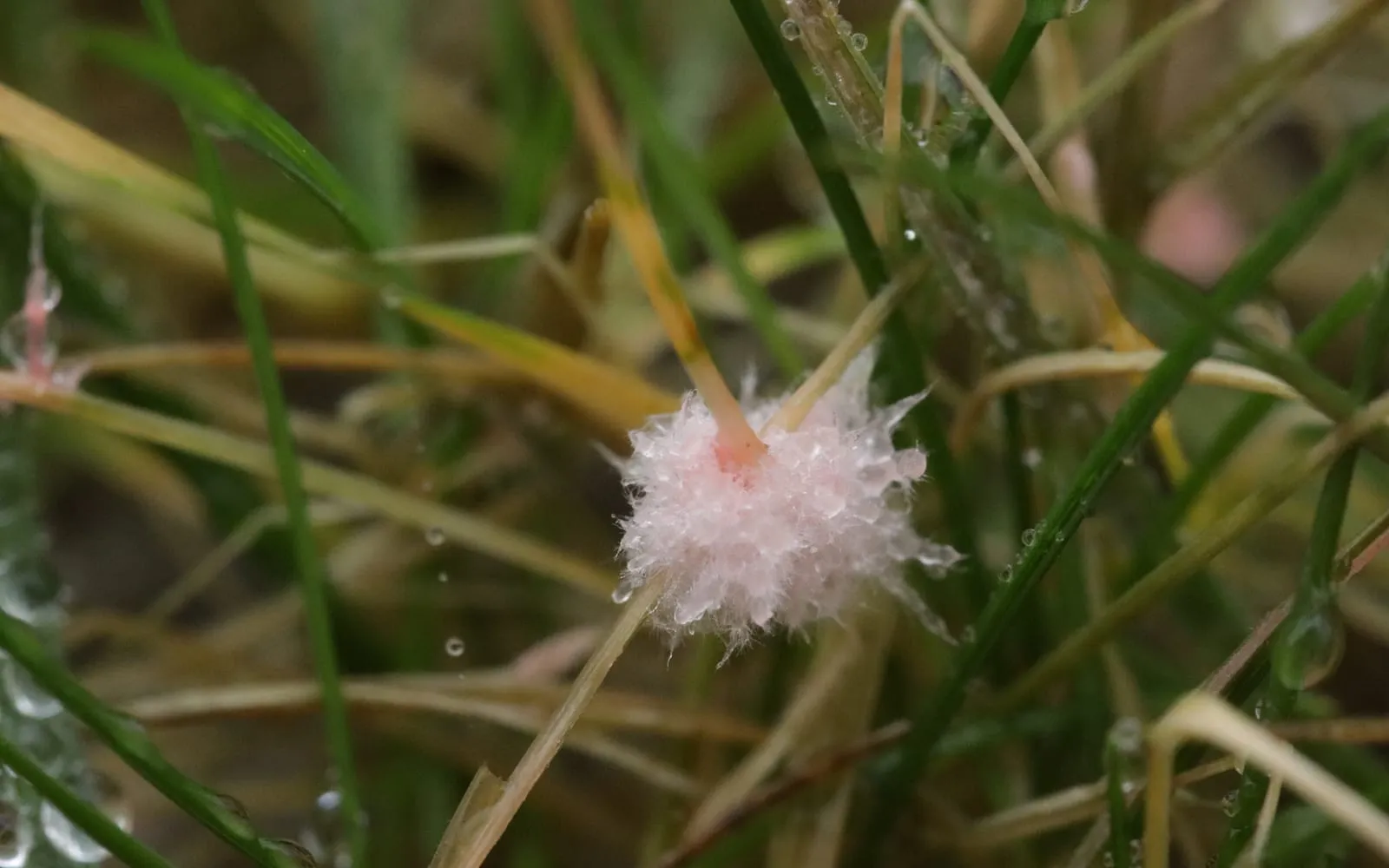
Bleached patches in a lawn with pink threads on the grass tips. Red thread looks alarming, kills nothing, and usually means the lawn is short of nitrogen.
At a glance
- Type
- Disease
- Cause
- Fungus
- Severity
- Cosmetic
- Affects
- Garden plants
- Active
- May to October
- Established in
- Europe, North America, Asia, Australia and New Zealand
What you are seeing
- Irregular bleached or tan patches in the lawn, from the size of a coin to a dinner plate
- Pink or coral-red threads standing out from the grass tips, like tiny antlers
- Pale pink cottony flocks binding blades together in damp weather
- Patches with a ragged edge that run together into larger areas
- Grass in the patch discoloured rather than dead, with green shoots at the base
- Worst on ryegrass and fescue lawns in a mild damp spell
- The whole thing disappearing within weeks of a nitrogen feed
Before you treat anything
Harmless to people, pets and the grass itself. Children and dogs can use a lawn with red thread in it.
What you are looking at
Patches of the lawn go pale, bleached to a straw or tan colour, with ragged edges rather than clean circles. They run from the size of a coin to a dinner plate and they join up.
Kneel down and look at the individual blades. Fine threads of a pink or coral red stand out from the leaf tips, a few millimetres long and branched at the end like miniature antlers. After rain, the same fungus produces pale pink cottony flocks that bind blades together.
Part the grass at the base of a patch. The shoots down there are green and alive, which is the key to the whole page.
Ryegrass and fescue lawns show it most, and a mild damp spell brings it on. Britain gets the worst of it from early summer through to a wet autumn.
It is telling you the lawn is hungry
Red thread is a disease of grass that is short of nitrogen. A well-fed sward grows away from it faster than the fungus can work up the leaf, and an underfed one does not.
The consequence is unusual on this site. The treatment for red thread is a bag of lawn fertiliser. Feed the lawn in spring or summer and the patches grow out within a few weeks, and it stays gone as long as the lawn is fed.
Everything else on this page is about how long the grass stays wet, since the fungus needs prolonged leaf wetness to spread. Thatch, compaction, shade, still air and evening watering all lengthen that period, and dealing with them lowers how often the problem returns.
It kills nothing. The fungus attacks the leaves and does not touch the crown or the roots, so a lawn covered in it in August is a full lawn again by October. Nothing needs reseeding and nothing has been lost.
The one that does kill grass
Fusarium patch, also called snow mould, is the lawn disease worth telling apart from this, because the advice is opposite in one important respect.
It makes small brown or yellow patches that darken and merge, with white or pale pink cottony growth at the edges in damp weather. It works mainly from autumn through to spring, often after snow or a long wet spell, and it does kill the grass, leaving bare ground that has to be reseeded.
Where red thread comes from too little nitrogen, fusarium patch is encouraged by too much of it applied late in the season. Feeding a lawn heavily in autumn produces soft growth going into winter and invites it, which is why autumn lawn feeds are formulated low in nitrogen and high in potassium.
Feed for growth in spring and summer. Feed for hardiness in autumn.
What to do about it
Apply a balanced lawn fertiliser and wait a few weeks.
Scarify out the thatch and aerate anything compacted.
Cut back what is shading the lawn and let air move across it.
Water in the morning if you water at all.
Mow regularly and box off the clippings while the patches are visible.
Brush the dew off on still mornings.
Overseed a repeatedly affected lawn in September with improved ryegrass cultivars.
Do not go looking for a fungicide. None is available to gardeners in Britain for this, and none is needed.
What it gets mistaken for
Drought browns the whole lawn together, worst over buried rubble, pipe runs and the thinnest soil, and there are no threads on the leaf tips.
Leatherjackets and chafer grubs kill the grass from below, so the turf lifts away like a mat with no roots holding it, and birds and badgers tear the patches up to get at them.
Dog urine leaves small dark green rings around a dead brown centre.
Fairy rings produce dark green arcs of lush growth, often with toadstools, and sometimes a bare ring between.
Fusarium patch kills, works in the cold half of the year, and follows too much autumn nitrogen rather than too little.
What to do, in order
Start here
Prevention, and the changes that stop the problem returning. Most of these pages should end at this tier.
- Feed the lawn
- Red thread is a disease of underfed grass, and a balanced lawn fertiliser in spring or summer clears it within a few weeks. The grass grows away faster than the fungus can colonise it. This is the whole treatment, and it is one bag from a garden centre.
- Scarify out the thatch
- A layer of dead material at the base of the sward holds moisture against the leaves and keeps them wet into the day. Rake it out vigorously in autumn or spring on any lawn that feels spongy underfoot.
- Aerate a compacted lawn
- Compaction holds water at the surface and starves the roots of air, and a lawn that is walked on hard or driven over will show it. Spike it with a fork or a hollow tine aerator in autumn, working over the worst areas.
- Get more air and light onto the grass
- Long dew periods are what the fungus needs. Thinning overhanging branches, cutting back a hedge that shades the lawn all morning, and opening up a sheltered corner all shorten the time the grass stays wet.
- Water in the morning and not in the evening
- An evening watering leaves the grass wet all night on top of the dew. Where a lawn is irrigated at all, do it early so the surface dries by mid-morning.
- Mow regularly, and collect the clippings while it is present
- Regular mowing removes infected leaf tips and keeps the grass growing. Box the clippings off while the patches are there rather than leaving them to drop the fungus back onto the sward.
Then reach for a barrier
Netting, hand removal and water. Nothing here harms anything except the target.
- Brush the dew off on a still morning
- Dragging a besom, a hose or a length of rope across the lawn scatters the dew and gets the grass drying an hour or two earlier. Groundsmen have done it for a century and it costs nothing.
- Overseed thin patches in autumn
- Where a lawn has been repeatedly affected, oversowing with a mixture containing improved ryegrass cultivars thickens the sward and lifts its resistance. Do it in September into scarified, aerated turf.
Plants affected
Guides that name it among the problems to watch for. The list is the plants it is characteristic of rather than everything it will feed on.