
Pest
Leatherjackets and chafer grubs
Also called Leatherjacket, Chafer grub, Crane fly larvae, Daddy-long-legs grubs
Leatherjackets leave yellow lawn patches that lift like a carpet, often with birds or badgers tearing at the turf. Separate them from chafer grubs before using nematodes.
At a glance
- Type
- Pest
- Cause
- Insect
- Severity
- Destroys the crop or display
- Affects
- Garden plants
- Active
- All year
- Established in
- Europe, North America, Australia and New Zealand
What you are seeing
- Yellow or brown patches of lawn that spread over a few weeks
- Turf that lifts away like a loose carpet, with no roots holding it down
- Birds, badgers or foxes tearing the surface up and leaving it in shreds
- Greyish-brown legless grubs up to 4 cm long, tough-skinned and with no obvious head, in the top few centimetres of soil
- Fat white C-shaped grubs with three pairs of legs and an orange-brown head
- Grass that pulls away when you tug a handful, rather than resisting
- Crane flies in numbers over the lawn on late summer evenings
Before you treat anything
Nothing here is harmful. Nematodes are safe around children, pets and wildlife, and they are the reason no insecticide appears on this page: none is approved for lawn pests in amateur gardens in Great Britain.
What you are looking at
Patches of the lawn yellow and then brown, and they widen. Take hold of the grass in a patch and pull, and it comes away in your hand. Push a hand under the edge of the turf and it lifts like a loose carpet, because there are no roots underneath holding it to the soil.
Very often the first thing anyone notices is the birds. Starlings, rooks, magpies and crows work the lawn over and tear the surface into shreds, and badgers and foxes will dig it into ridges overnight. That mess is worse than the grubs’ own damage and it is the reason most people investigate.
Roll the turf back and look in the top few centimetres of soil.
Two different grubs, two different nematodes
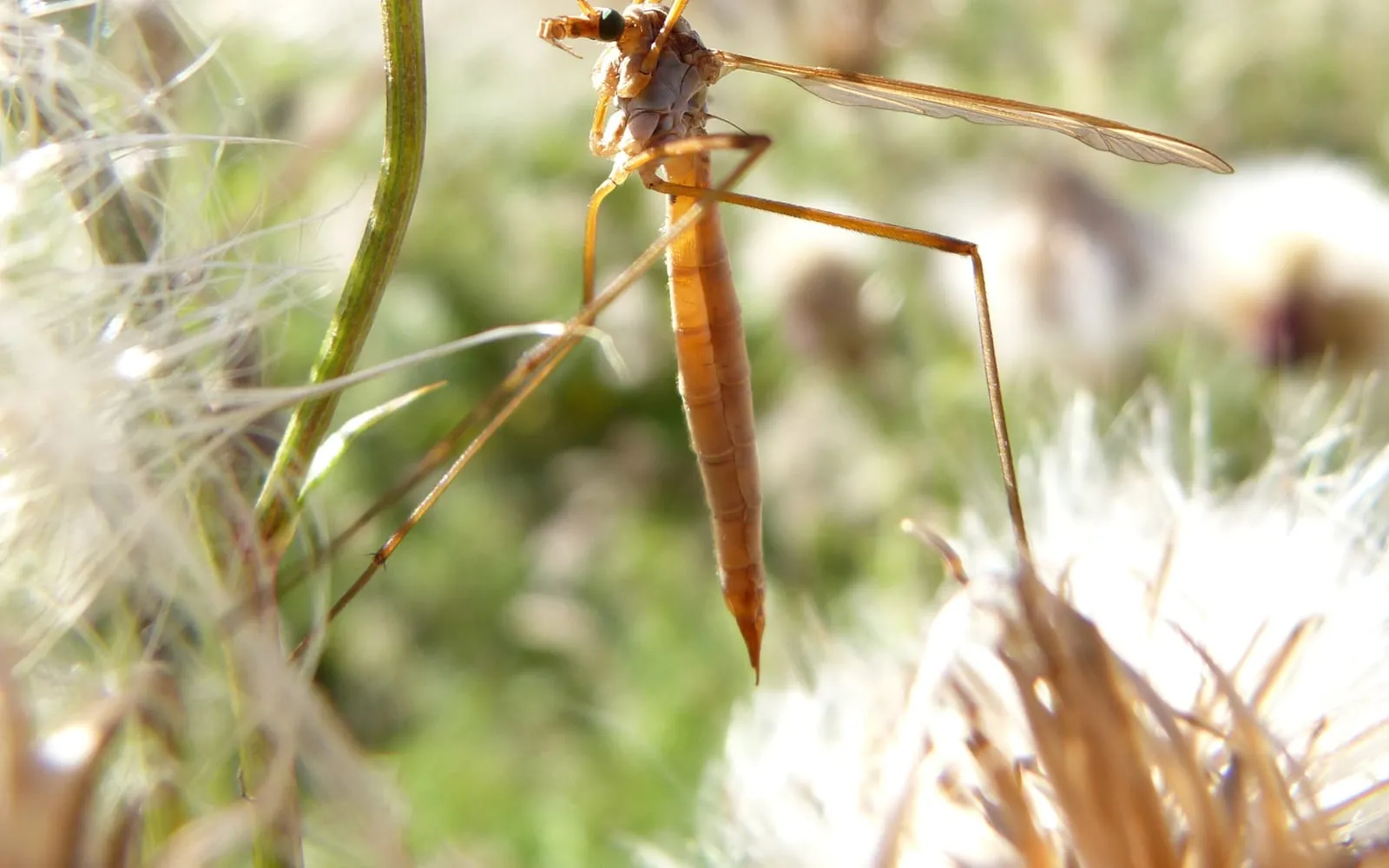
Leatherjackets are the larvae of crane flies. They are greyish-brown, legless, up to about 4 cm long, tough and rubbery to the touch, with no obvious head. The name comes from the skin. They eat grass roots and chew through the stem bases just below the surface.
Chafer grubs are beetle larvae. They are fat, white, curled into a firm C shape, with three pairs of legs at the front and a distinct orange-brown head capsule, up to about 3 cm. They eat roots.
The distinction matters because the two nematode species sold for them are different. Steinernema feltiae goes after leatherjackets and Heterorhabditis bacteriophora after chafer grubs, and buying the wrong pack wastes the money and the season.
The autumn timing is the whole thing
Crane flies emerge and lay in August and September, into turf that is damp. The larvae hatch and feed through autumn, sit out the coldest part of the winter, and do their most visible damage in early spring when the lawn is trying to grow and they are nearly full size.
Nematodes need warm moist soil and small grubs, which puts the treatment window in September and early October. By the time a gardener sees a ruined lawn in March, the grubs are large, the soil is cold, and nematodes applied then will disappoint. That mismatch between when people notice and when the treatment works is why the products have a mixed reputation.
Chafers run a similar calendar with the adults flying in May and June and the grubs doing their damage from late summer into autumn.
There is no insecticide for lawn pests available to amateur gardeners in Great Britain. The old products have all gone, and nematodes plus a well-fed lawn are what is left.
What to do about it
Count first. Lift a 10 cm square of turf and pick through it. A handful of grubs is normal and needs nothing.
Water nematodes on in September or early October, matched to the right grub, into soil that is warm and damp, and keep the lawn watered for a fortnight afterwards.
Feed and water the lawn so it outgrows what is left.
Aerate, scarify and improve the drainage, since damp turf in late summer is what the crane flies lay into.
Lay black polythene over a watered patch overnight and sweep up what comes to the surface in the morning.
Reseed the bare patches in September.
Leave the birds to it and repair the turf afterwards.
What it gets mistaken for
Red thread bleaches the leaves and leaves the crown and roots untouched, so the turf stays firmly anchored. Grub damage lifts away.
Drought browns the whole lawn at once, worst over buried rubble and pipe runs, and the roots hold.
Dog urine leaves small dead patches ringed with dark green.
Fairy rings show as dark green arcs, often with toadstools.
Vine weevil grubs look almost identical to small chafer grubs and live in plant containers rather than in turf. Anything white and C-shaped in a pot is vine weevil until proved otherwise.
Ant nests raise fine soil through the sward without killing it.
What to do, in order
Start here
Prevention, and the changes that stop the problem returning. Most of these pages should end at this tier.
- Feed and water the lawn so it outgrows the damage
- A vigorous sward replaces roots faster than the grubs remove them, and a starved one does not. Grass with a decent root system carries a population that would wreck a thin lawn. Feed in spring and summer and water through a drought.
- Improve the drainage
- Crane flies lay into damp turf in late summer, and eggs and young larvae die in dry soil. A lawn that lies wet in September gets far more of them. Aerate, scarify out the thatch, and deal with any compaction or standing water.
- Expect it after a wet late summer
- Egg laying happens in August and September, so a wet end to the summer produces the bad spring that follows. Knowing that is worth more than reacting in April, because the treatment window is in the autumn.
- Take the bird damage in proportion
- Most of what people see is starlings, rooks, magpies or a badger excavating the lawn to get at the grubs, and that mess is worse than anything the grubs did. It also means the population is being reduced for you. Repair the turf rather than trying to stop the birds.
Then reach for a barrier
Netting, hand removal and water. Nothing here harms anything except the target.
- Lay black polythene over a watered lawn overnight
- Water the affected area well in the evening, cover it with black polythene, and lift it first thing. Leatherjackets come to the surface under the sheet and can be swept up and taken away, or left for ten minutes for the birds. It thins a population and it makes a good survey of how many you have.
- Count before you treat
- Cut a 10 cm square of turf, lift it, and pick through the top few centimetres. Anything under about five grubs to that square is a lawn that will cope. Twenty is a lawn that needs treating. Most lawns have some and need nothing.
- Reseed the bare patches in autumn
- Scarify the dead turf out, rake to a tilth, and oversow in September. Grass repairs quickly at that time of year and the new sward goes into winter established.
Then bring in the predators
Encourage what already lives in the garden, and buy predators in where the problem is under glass and nothing will arrive on its own.
- Water on nematodes in early autumn
- Steinernema feltiae for leatherjackets and Heterorhabditis bacteriophora for chafer grubs, applied while the grubs are small and the soil is still warm and moist. September into early October is the window in most of Britain. Water the lawn before and after applying, and keep it damp for a fortnight afterwards. Applied to cold or dry soil in spring they disappoint, which is why so many people conclude they do not work.Widely sold across Europe and North America. Australia and New Zealand permit far fewer species, because releasing an entomopathogenic nematode that is not already approved is prohibited there. Check what is registered locally rather than ordering from overseas.
- Keep the birds interested
- Starlings in particular take enormous numbers of leatherjackets, and a lawn worked over by a flock in March is being treated free of charge. The holes fill in.
Biological controls are live organisms and their sale and release are regulated country by country. An agent sold freely in one place may be unapproved in another, so buy from a licensed supplier where you live and never import or move one yourself.
Plants affected
Guides that name it among the problems to watch for. The list is the plants it is characteristic of rather than everything it will feed on.
Common on UK allotments
This is one of the pests and diseases allotment growers meet most often. See it alongside the other common problems on the allotment guide.
Common allotment pests and diseasesA common vegetable pest
This is one of the pests that vegetable growers meet most often. See it alongside the others on the vegetable pests guide, grouped by how they feed and with prevention that works against most of them.
Common vegetable pests