
Edible
White Horehound
Marrubium vulgare
Also known as Common horehound, Houndsbane
How to grow white horehound, Marrubium vulgare. The cough-sweet herb, its woolly grey rosettes, and where it survives in the wild in Britain.
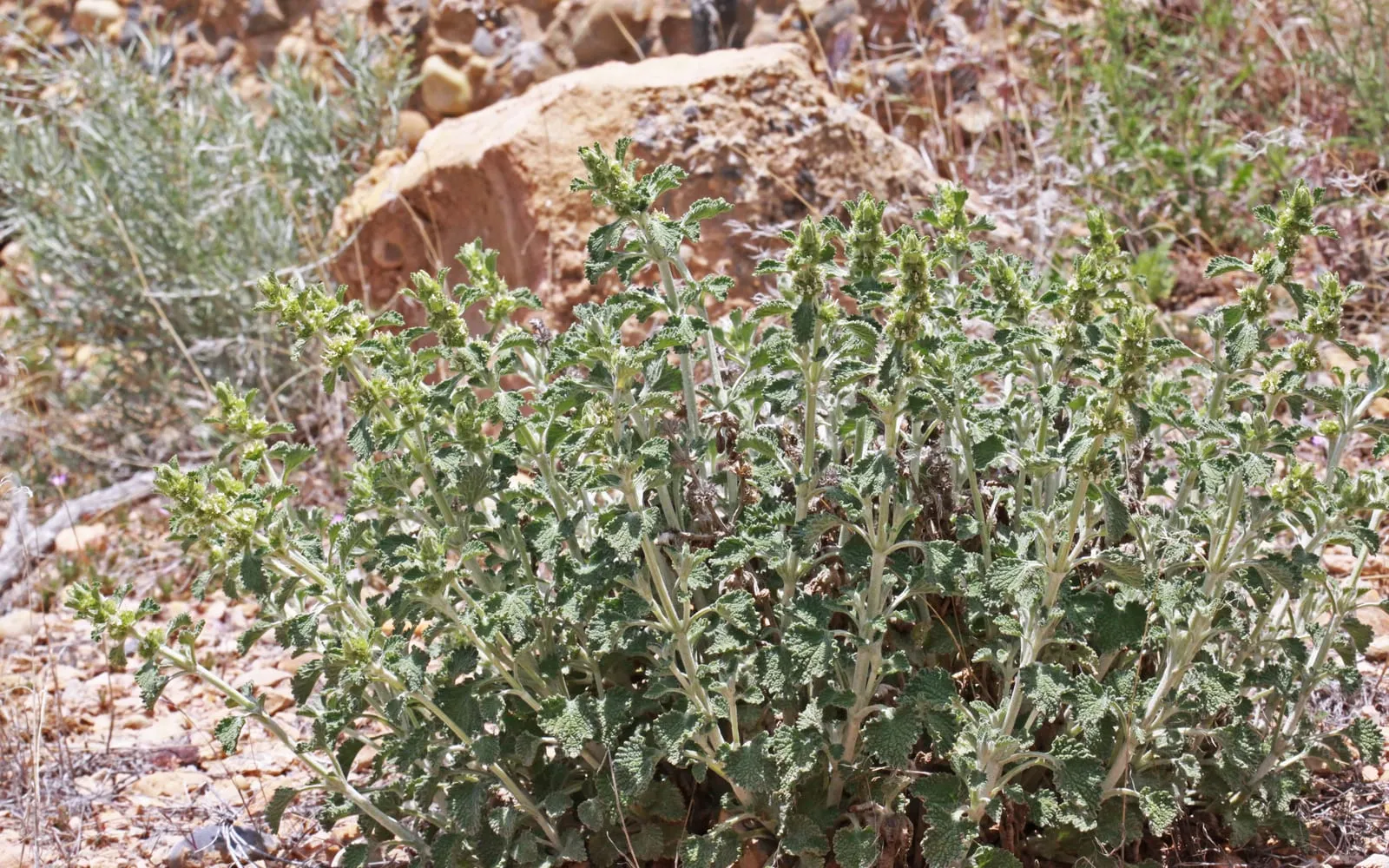
At a glance
- Difficulty
- Easy
- Water
- Almost never once established
- Light
- Full sun
- Temperature
- Fully hardy, to about -20 deg C
- Hardiness
- USDA 4-9, RHS H6, hardy to -20 C
- Type
- Hardy herbaceous perennial
- Height
- 30-60 cm
- Native to
- Europe, western Asia
- Best month
- July and August in the Northern Hemisphere, January and February in the Southern Hemisphere
Poor dry ground and full sun are what it asks for, and it seeds itself hard from a single plant. That habit has consequences. It is a declared noxious weed across much of southern Australia and in parts of the western United States, where it has taken over grazing land, so check the local status before planting.
Hardiness zones describe winter cold alone. Summer heat, humidity, rainfall and the length of the growing season decide as much, so treat the range as the outer limit rather than as a recommendation.
Every month named in this guide is for the temperate Northern Hemisphere. If you garden in the Southern Hemisphere, shift each one by six months, so July becomes January. Closer to the equator the wet and dry seasons matter more than the calendar, and the shift stops being a useful guide.
Edible, with limits
- Safe to eat
- Leaves, in the small quantities used for tea and confectionery
- Do not eat
- Large quantities of leaf or extract
- Harm from
- Eating it
- Affects
- People
White horehound is not on the RHS list of potentially harmful garden plants and the ASPCA holds no entry for it. It has a long record of use in cough sweets and herbal teas, and the European Medicines Agency has assessed it as a traditional herbal medicine for coughs and for loss of appetite. The caution in the herbal literature concerns quantity rather than ordinary use: large doses can cause vomiting and disturbances of heart rhythm, and the EMA advises against use in pregnancy and in children. Nothing suggests a hazard to a cat, dog or horse browsing the plant, which is bitter enough that few animals do it twice.
Sources: RHS potentially harmful garden plants, European Medicines Agency, Marrubium vulgare
About
White horehound is the herb in old-fashioned cough sweets and horehound beer. It tastes strongly bitter, which is the reason it works in confectionery, because sugar and bitterness together give the flavour that makes a horehound drop recognisable to anyone who has had one.
As a plant it is grey, woolly and unassuming, growing about half a metre with whorls of small white flowers up the stem. It belongs in a dry corner rather than a border, and it grows on ground too poor for almost anything else.
It is rare in the British countryside now, and listed as vulnerable. Horehound was once common on chalk downland and coastal waste ground, and modern agriculture removed most of the disturbed dry places it needed. Growing it in a garden is a small contribution to keeping it around.
Appearance and character
A bushy perennial 30 to 60 cm tall, branching from a woody base into several upright stems.
Leaves are rounded, deeply wrinkled, greyish-green and covered in dense white wool, giving the whole plant a felted appearance. The wool is the quickest way to recognise it.
Flowers are small and white, packed into tight whorls sitting in the leaf axils up the upper part of the stem, opening from June to September.
The calyx behind each flower ends in ten small hooked teeth that catch on wool and clothing, which is how the seed travels.
Stems are square and white-woolly, going woody at the base.
The scent is musky and faintly medicinal rather than pleasant, and the taste is strongly bitter. Neither is a fault. Both are what the plant is used for.
Where it is from
White horehound is native to Europe, north Africa and central Asia, growing on dry stony waste ground, downland and coastal cliffs.
In Britain it is a rare native, listed as vulnerable, hanging on in scattered sites on chalk downland and near the coast in southern England. It also turns up as a garden escape, which complicates the record.
Its medicinal use is very old. Egyptian, Greek and Roman writers all describe it for coughs, and it stayed in continuous use through the medieval period into modern pharmacy.
Horehound beer and horehound candy were both common in Britain and America into the twentieth century, and both are still made in small quantities.
It became a serious weed elsewhere. Introduced to Australia, horehound spread across grazing land in the southern states, taints the fleece of sheep with its hooked seed heads and is a declared noxious weed in several states.
How it grows
Sow in spring in modules at around 18 deg C. Germination takes two to three weeks and is often uneven, so sow more than you need.
Alternatively divide an established plant in spring, or take softwood cuttings in early summer.
Plant out in a sunny, dry, well-drained position, spacing at 45 cm. It wants poor ground and grows well on rubble, chalk and old builder’s sand.
Water only until it establishes. After that, leave it entirely alone.
Cut the plant back by half in autumn or early spring to keep it tidy and to stop it collapsing open in the middle.
Deadhead if you do not want seedlings. It seeds freely on light soil, and the hooked calyx spreads it around on clothing.
Harvest leaves before flowering, when the bitter principle is at its strongest. They dry easily and keep well.
Divide or replace the plant every four or five years, since old specimens go woody and sparse.
Through the seasons
Winter shows a low woolly clump of grey foliage. It is hardy and needs no protection, though the crown must not sit wet.
Spring brings new shoots in April. Cut back old growth then, divide if the clump needs it, and sow seed for new plants.
Early summer is the main growth. Harvest leaves in June, before the flowers open.
Midsummer is flowering, from June to September, and the plant works steadily for bees the whole time.
Autumn brings seed on hooked calyces that catch on everything. Cut the stems down if you want to limit the spread, or leave them for the birds and pull the seedlings in spring.
Care difficulty
Easy. White horehound is one of the least demanding plants in the collection and the mistakes made with it are all mistakes of generosity.
Rich soil produces a floppy plant with weak flavour and a short life. Poor dry ground produces a compact aromatic one. Do not improve the soil for it.
Wet ground in winter is the one real risk. The crown rots and the plant fails to shoot in spring.
It self-seeds freely and the seed heads hook onto clothes and animal coats, so deadhead if you want to keep it in one place.
Pruning is straightforward. Cut it back by half in spring into growth, and take out old woody stems.
No pests, no diseases of any consequence, no feeding, no staking and no watering. It asks for a dry corner and nothing else.
Watering
Water new plants weekly through their first summer.
After that, nothing. Established horehound comes through a drought without help, and its roots go deep into the dry ground it grows on.
Water a container fortnightly in high summer, letting it dry out fully between waterings.
Water at the base if at all. The leaves are densely woolly, they hold water and they mildew.
Keep the crown dry in winter. Avoid a mulch that traps moisture at the base, and use grit if you mulch at all.
Warning signs, diseases and pests
Root and crown rot in wet heavy soil is the only common cause of death. The plant fails to break in spring. Move the replacement somewhere drier.
Powdery mildew whitens the woolly leaves of a crowded plant in still humid weather, and the wool makes it hard to spot early. Thin the stems.
Aphids appear on soft spring growth and rarely need action.
Lax floppy stems that fall open in the middle mean rich soil, too much water or a plant that has not been cut back.
Weak bitterness means it has been fed or shaded. Grow it hard.
Seedlings across the bed mean the seed ripened. Deadhead earlier next year.
Yellowing lower leaves in summer are usually normal ageing on a plant that sheds its oldest growth as it extends.
Growing environment
Full sun. This is a plant of open, exposed, dry places and it will not do anything useful in shade.
Poor, stony, free-draining soil. Rubble, chalk, gravel and thin sand are all better for it than a prepared bed.
Alkaline, around pH 7 to 8.5. It grows naturally on chalk and limestone.
A gravel garden, a dry bank, the base of a sunny wall or a neglected corner all suit it, and none of them needs improving first.
It is drought tolerant to an unusual degree and works in a planting scheme where watering is not going to happen.
Bees work the flowers steadily through a long season, and it is a good plant for a dry pollinator planting alongside marjoram, hyssop and thyme.
Feeding
None. Feeding horehound produces a bigger, softer, less bitter and shorter-lived plant, which is the opposite of what it is grown for.
Do not mulch with compost or manure. Grit is the right mulch if you use one at all.
A container plant takes a weak balanced feed once in spring, and nothing else.
Refresh a pot with fresh gritty compost every second year rather than feeding it harder.
On very poor ground it will still grow. That is the plant’s entire strategy and there is no reason to interfere with it.
Troubleshooting
It flopped open in the middle. Too rich, too wet or not cut back. Trim by half each spring and stop feeding it.
It died over winter. Crown rot from wet soil. Replant somewhere sharply drained.
The seed heads stick to everything. They are designed to. The calyx teeth are hooked, which is how the plant spreads. Cut the stems before the seed ripens.
It tastes horribly bitter. It does, and that is the point. Horehound sweets work because sugar carries the bitterness. Use small amounts.
Nothing germinated. Horehound seed is slow and uneven. Sow plenty, keep it at 18 deg C and wait three weeks before giving up.
Is it the same as black horehound? No. Black horehound, Ballota nigra, is a different plant with purple flowers and an unpleasant smell, common on British roadsides. White horehound is grey-woolly with white flowers and is rare in the wild.
Can I make cough sweets with it? That is the traditional use. Make a strong infusion of the dried leaf and boil it with sugar. The bitterness is intense, so start with less leaf than you think.