
Edible
Citronella Grass
Cymbopogon nardus
Also known as Ceylon citronella, Nardus grass, Mana grass
How to grow citronella grass, Cymbopogon nardus. The source of citronella oil, how it differs from lemongrass, and why the citronella plant in a garden centre is usually something else.
At a glance
- Difficulty
- Moderate
- Water
- Two or three times a week in summer, sparingly in winter
- Light
- Full sun
- Temperature
- Damaged below 10 deg C and killed below about 5 deg C
- Hardiness
- USDA 10-12, RHS H1b, hardy to 8 C
- Type
- Tender evergreen perennial grass
- Height
- 100-200 cm
- Native to
- South Asia
- Best month
- July and August in the Northern Hemisphere, January and February in the Southern Hemisphere
Tenderer than lemongrass and grown for oil rather than for the kitchen, wanting a long hot humid season to build the crop. Nothing below 10 deg C. A growing plant repels almost nothing, since the oil only works once extracted, so the mosquito claim on a garden-centre label is worth ignoring.
Hardiness zones describe winter cold alone. Summer heat, humidity, rainfall and the length of the growing season decide as much, so treat the range as the outer limit rather than as a recommendation.
Every month named in this guide is for the temperate Northern Hemisphere. If you garden in the Southern Hemisphere, shift each one by six months, so July becomes January. Closer to the equator the wet and dry seasons matter more than the calendar, and the shift stops being a useful guide.
Harmful to cats and dogs if eaten
- Do not eat
- The fibrous leaves in quantity, and the concentrated oil
- Harm from
- Eating it and handling it
- Affects
- Cats and dogs
Citronella grass is not a food plant in the way lemongrass is, and its leaves are tougher and more strongly scented. The ASPCA lists Cymbopogon species among plants toxic to cats and dogs, on the basis that the fibrous leaves cause vomiting and can obstruct a cat's gut. The more significant concern is the oil. Citronella oil is a concentrated product used as an insect repellent, and it is an irritant to skin and mucous membranes. Cats lack the liver enzymes needed to process these compounds, so citronella oil should never be applied to a cat or diffused around one, and citronella-based repellents intended for dogs should be used only as labelled. The plant in the garden is not a hazard beyond its sharp leaf edges.
Sources: ASPCA toxic and non-toxic plants, RHS potentially harmful garden plants
About
Citronella grass is where citronella oil comes from, and the plant most people think they are buying when they pick up a citronella plant at a garden centre is almost never this. That is usually a scented-leaved pelargonium sold as Citrosa or mosquito plant, which smells of citronella and has been tested repeatedly with no useful repellent effect.
The real thing is a large tender clump-forming grass from Sri Lanka and southern India, grown across the tropics for distillation. Ceylon citronella is this species; Java citronella, the higher-yielding one that supplies most of the world’s oil, is Cymbopogon winterianus.
Outside the tropics it is a conservatory or greenhouse plant that spends the summer outside. Growing it will not repel mosquitoes from a patio; the oil has to be extracted and applied to be of any use.
Appearance and character
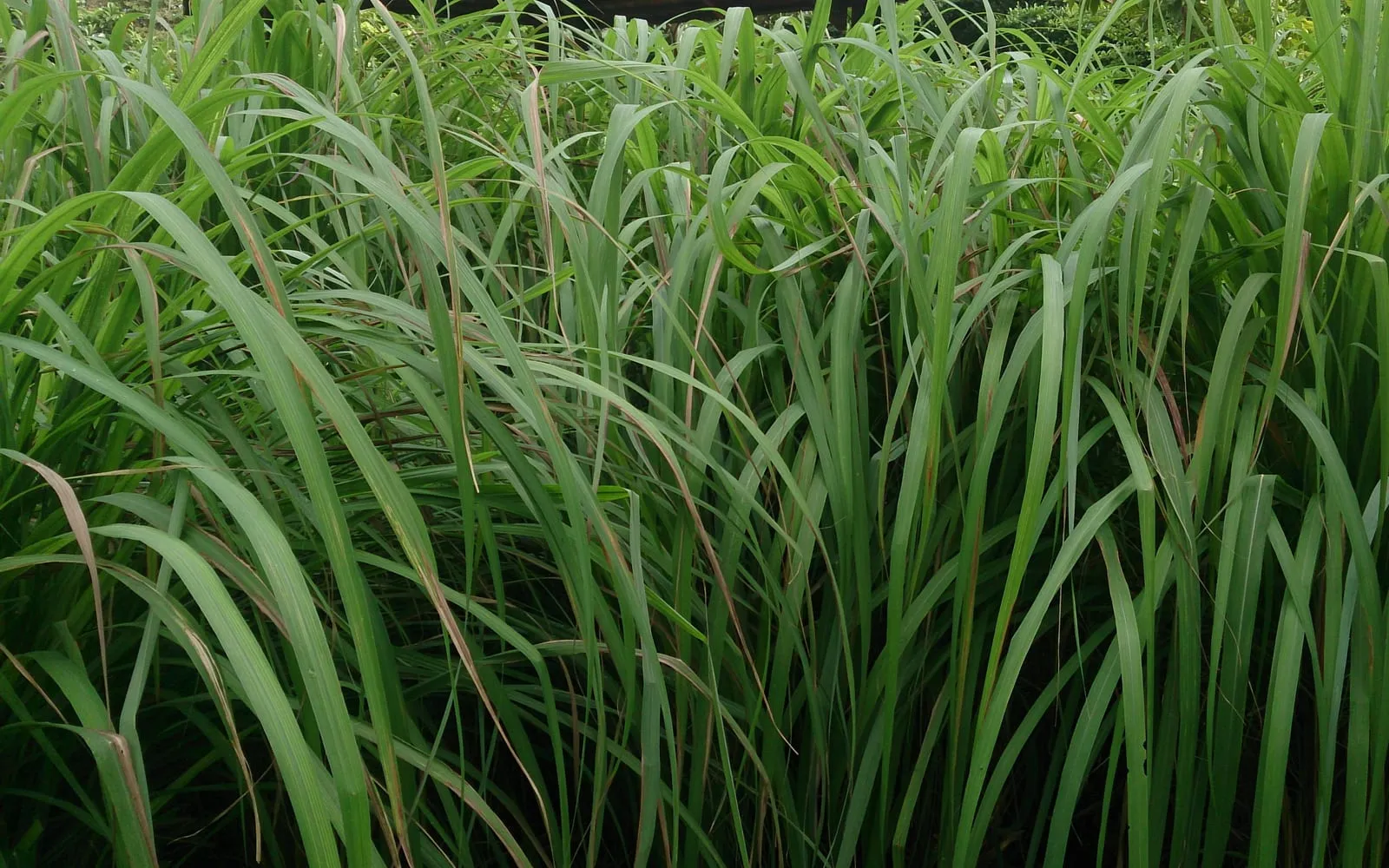
A large dense clump, 1 to 2 m tall and wide, bigger and coarser than lemongrass.
Leaves are long, up to 1 m, narrow, grey-green and arching, with rough edges sharp enough to cut skin.
Stem bases are less swollen than lemongrass and reddish rather than white, and they are not used in cooking.
The scent is citronella, sharper and more medicinal than lemongrass, which is lemon and sweeter. Rubbing a leaf of each is the quickest way to separate them.
Flowering is rare in cultivation and produces a large loose panicle where it happens.
The clump is a handsome architectural plant in a large pot, and it is grown as much for that as for anything else in a temperate garden.
Where it is from
Citronella grass is native to Sri Lanka and southern India, where it grows on open ground and has been cultivated for centuries.
Ceylon citronella oil was the original commercial product and Sri Lanka dominated the trade into the twentieth century.
Java citronella, Cymbopogon winterianus, was selected for a higher citronellal content and displaced it commercially. Indonesia, China and Vietnam now supply most of the world’s citronella oil.
The oil is used in soaps, candles, household cleaners and insect repellents, and it is one of the more widely produced essential oils in the world.
Its reputation as a repellent is real but limited. Citronella oil does repel mosquitoes when applied to skin, and it works for a much shorter time than synthetic repellents. Candles and torches produce very little effect beyond the immediate area of the flame.
How it grows
Buy a plant or take a division. Seed is rarely available and the species seldom sets viable seed in cultivation.
Divide an established clump in spring, wearing gloves, cutting through the crown with a spade or a knife.
Pot into rich free-draining compost in a large pot, 30 cm or more, and pot on as the clump fills it.
Grow it warm. A greenhouse or conservatory suits it, and a windowsill is too small for a plant this size.
Stand it outside from mid-June to early September in the sunniest position you have.
Water and feed generously through the growing season.
Bring it in during September before the nights drop below 10 deg C, cutting the leaves back by half to make it manageable.
Overwinter above 10 deg C, watering sparingly, and expect browned leaf tips.
Divide every second or third spring, since the clump gets large.
Through the seasons
Winter is survival indoors above 10 deg C. Water sparingly, trim brown foliage and expect the plant to look tired.
Spring brings new growth from March in warmth. Divide, repot and start feeding.
Early summer is when it accelerates. Move it outside in mid-June.
Midsummer is peak growth, and this is when the plant looks its best.
Late summer is the last of the outdoor season.
Early autumn is the deadline. Bring it in during September, before the cold does any damage.
Care difficulty
Moderate, and the difficulties are cold and size.
Cold ends it. Below 10 deg C the plant stops and below about 5 deg C it dies, so outside the tropics it lives in a pot and comes in for six months of the year.
Size is the practical problem. Citronella grass makes a much larger clump than lemongrass, and overwintering a two-metre grass takes real conservatory space. Dividing it hard in autumn keeps it manageable.
It is thirsty and hungry while growing, and a starved clump produces thin weak foliage.
The leaf edges cut skin. Gloves and long sleeves for dividing and handling.
Given warmth, food and water it grows vigorously and is a striking foliage plant.
Watering
Water generously through the growing season, two or three times a week in summer and daily under glass in July.
Keep the compost evenly damp while the plant is growing.
Reduce sharply from October and keep it barely moist through winter. Cold wet compost is what rots the crown.
Use tepid water in winter.
Stand a summer pot in a tray of water in a heatwave, and remove it in autumn.
Water at the base rather than over the foliage in still air, which reduces rust.
Warning signs, diseases and pests
Root rot from cold wet compost in winter is the main killer. The base softens and the clump collapses.
Brown leaf tips in winter are normal on a plant kept cool and dry.
Spider mite appears indoors in dry heated air, showing as fine stippling and webbing. Raise the humidity and introduce a predatory mite.
Rust spots the leaves in still damp air. Improve ventilation.
Thin weak shoots mean the plant is underfed or pot-bound. Divide and repot.
Yellowing foliage in summer generally means hunger.
Cuts on your arms are the leaf edges rather than anything wrong with the plant.
Growing environment
Full sun and heat. A greenhouse or conservatory where summers are cool, outside from mid-June to early September.
Minimum 10 deg C in winter and 20 deg C or more for good growth.
Free-draining compost, loam-based rather than light multipurpose, kept moist while growing.
pH from 5.5 to 7.5.
A large pot, 30 cm or more, and expect to divide it every second or third year.
Shelter from wind, since long leaves shred in an exposed position.
Feeding
Feed generously. This is a vigorous grass and it takes more than most of the plants here.
A balanced liquid feed fortnightly from May to August, or controlled-release fertiliser worked into the compost in spring.
Nitrogen suits it, since foliage is the whole point.
Stop feeding in September and do not feed through the winter.
Repot into fresh compost each spring, which matters more than feeding for a clump that has filled its pot.
Troubleshooting
Will it keep mosquitoes off my patio? No. The oil repels mosquitoes when applied to skin and for a shorter time than synthetic repellents. A growing plant releases very little unless the leaves are crushed, and repeated trials have found no useful effect from citronella candles or from the plants themselves.
Is this the citronella plant sold in garden centres? Usually not. That is almost always a scented-leaved pelargonium sold as Citrosa or mosquito plant, which smells of citronella and has been tested with no useful repellent effect.
Can I cook with it? No. Use lemongrass, Cymbopogon citratus, for cooking. Citronella grass has tough stems and a sharper, more medicinal scent.
How do I tell them apart? Rub a leaf. Lemongrass smells of lemon and is sweeter; citronella is sharper and more medicinal. Citronella also makes a much larger, coarser clump with reddish stem bases.
It died over the winter. Cold, or cold plus wet compost. Bring it in during September, keep it above 10 deg C and water sparingly.
It has outgrown the conservatory. Divide it hard in spring, wearing gloves. It takes vigorous division without complaint.
The leaves cut me. The edges are sharp. Gloves and long sleeves.