
Houseplant
String of Nickels
Dischidia nummularia
Also known as Button Orchid, Dischidia
How to grow Dischidia nummularia, string of nickels, an epiphyte with trailing threads of round coin-like leaves for a hanging pot.
At a glance
- Difficulty
- Moderate
- Water
- When the airy mix is nearly dry
- Light
- Bright indirect light
- Temperature
- Warm, 18 to 29 deg C; keep above 13 deg C
- Humidity
- High
- Hardiness
- USDA 11-12, RHS H1a, hardy to 13 C
- Type
- Evergreen trailing epiphyte
- Height
- 30 to 90 cm of trailing growth
- Native to
- Southeast Asia and the Pacific
A tender tropical epiphyte from the warm, humid forests of Southeast Asia and the Pacific, grown as a hanging houseplant. It has no frost tolerance and needs steady warmth above about 13 deg C and high humidity. Growing on trees instead of in soil, it needs an airy root run and never a heavy, wet compost, which rots it.
Hardiness zones describe winter cold alone. Summer heat, humidity, rainfall and the length of the growing season decide as much, so treat the range as the outer limit rather than as a recommendation.
Not known to be toxic
Dischidia is not recorded as toxic to people or pets, and it is a relative of the wax plants, which the ASPCA lists as non-toxic. A chewed leaf would cause no real harm. It is a safe trailing plant to grow around pets and children, grown for its strings of coin-like leaves instead of for anything edible.
Sources: ASPCA toxic and non-toxic plants, RHS potentially harmful garden plants
About
String of nickels trails in long, fine threads strung with pairs of small, round, flat leaves, each one like a little coin, which is where both the common name and the species name nummularia, meaning coin-like, come from. New leaves and stems often have a silvery, waxy sheen.
It is an epiphyte, growing on the branches of trees in the wild instead of in soil, and a relative of the wax plants such as hoya. Like them it needs an airy root run, warmth and humidity instead of a rich, wet compost.
It makes a delicate hanging plant, its coin-strung threads spilling over the pot edge, and it is happiest in a warm, humid, bright spot such as a bathroom or a plant case.
Appearance and character
Leaves are small, round and flat, held in pairs along the trailing stems, mid green and often silvery and waxy when young, giving the strings of coins their name.
Stems are fine and thread-like, trailing down thirty to ninety centimetres, rooting here and there along their length where they touch a surface, as an epiphyte does on bark.
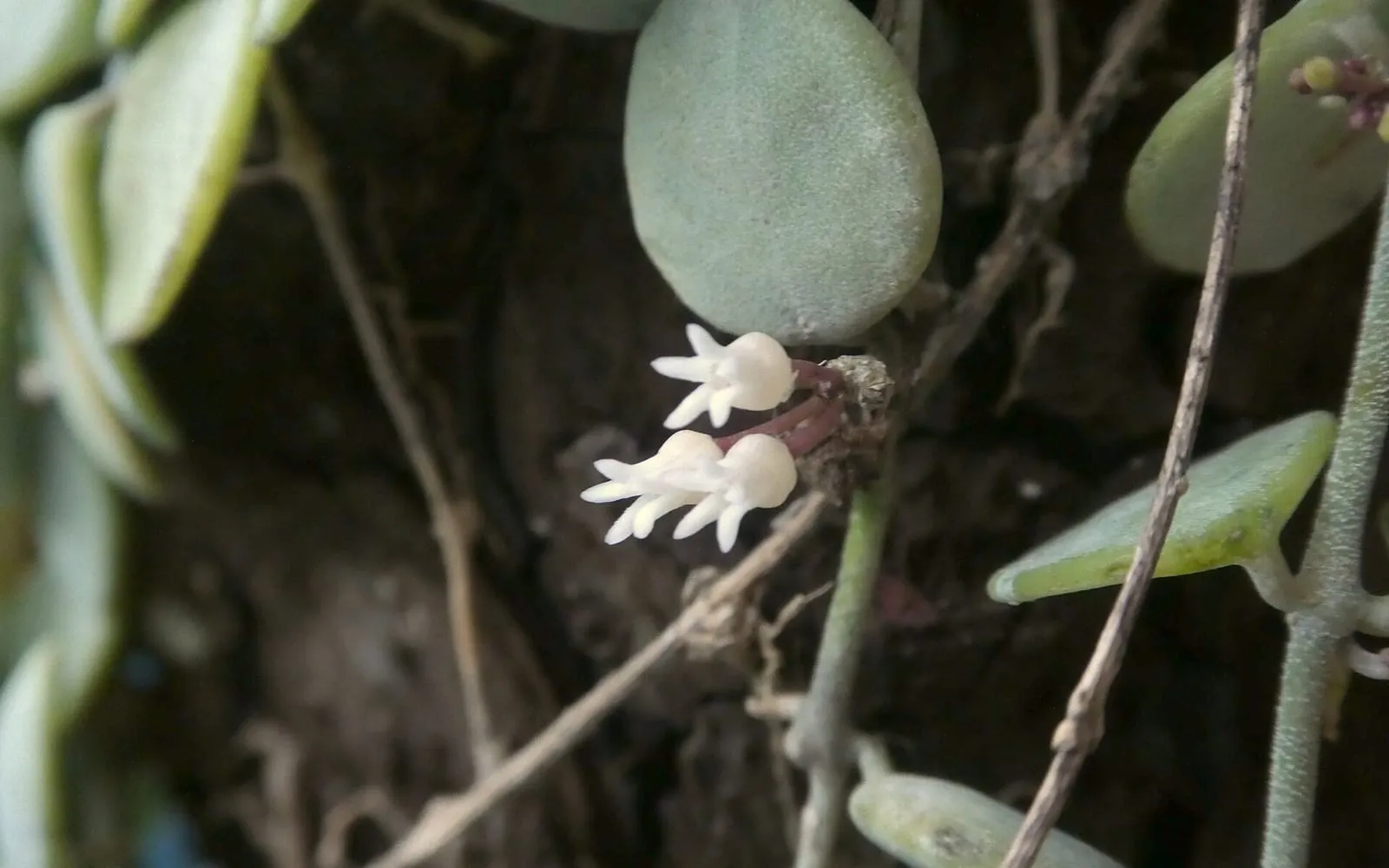
Flowers are tiny, cream or yellowish, tucked among the leaves, and are easily missed. The plant is grown for its trailing strings of leaves.
As an epiphyte it takes much of its moisture from humid air and rain instead of from soil, so it needs an open, fast-draining root run and high humidity.
Where it is from
Dischidia nummularia grows across Southeast Asia and the Pacific islands, perched on the branches of trees in warm, humid, lightly shaded rainforest. It roots in moss and bark instead of in the ground.
Give it warmth, high humidity, bright filtered light and an airy root run. It has no tolerance for frost, heavy wet soil or dry room air.
How it grows
It grows in warmth and humidity, trailing its coin-strung threads and rooting along them, and slows in the lower light and drier air of winter. Given warm, humid, bright conditions it grows steadily.
Pot it in a very free-draining, airy mix, such as orchid bark with a little compost and perlite, or grow it mounted, in a hanging pot where the threads can trail. Water when the airy mix is nearly dry, and never leave it soggy.
Keep it warm, above about 13 deg C, humid, and in bright indirect light. It suits a bathroom, a kitchen or a plant case where the air stays moist.
Take stem cuttings to propagate, which root readily in an airy mix or sphagnum, the same way as its wax-plant relatives.
Through the seasons
Spring brings renewed growth as light and warmth increase, the time to repot or take cuttings and resume feeding.
Summer is the main growing season in warmth and humidity. Water when the mix is nearly dry and keep the air moist.
Autumn growth slows as light falls. Reduce feeding and watering as the season turns.
Winter the plant rests in lower light. Keep it warm, humid and on the dry side, and protect it from cold draughts.
Care difficulty
Moderate, and easy once its epiphytic needs are met. Given warmth, humidity, bright light and an airy root run it grows steadily and needs little. The pitfalls are heavy, wet compost, which rots it, and dry room air, which shrivels the leaves. Grow it like a wax plant: airy, warm and humid.
Watering
Water when the airy mix is nearly dry, giving enough to moisten the roots and letting the excess drain straight through. As an epiphyte it dislikes sitting wet far more than a short dry spell.
Remember that the plant gets some moisture from humid air, misting or a humid spot, so do not make up for dry air with heavy watering. In winter, water less. Empty any saucer after watering.
Warning signs, diseases and pests
Mealybugs hide among the leaves and along the stems as white woolly tufts. Dab them off or treat with horticultural oil, checking where the paired leaves join the stem.
Root rot follows heavy, wet compost, showing as blackening, collapsing stems. Move the plant into an airier mix, water less, and keep it warm. Healthy cuttings will restart it if much is lost.
Shrivelled, thin leaves usually mean the air is too dry or the plant has been left too dry at the root. Raise the humidity and water a little more often.
Growing environment
Bright, indirect light suits it, matching the filtered light of the forest canopy. Direct sun scorches the small leaves, and deep shade thins the strings.
Warmth and humidity are essential, as for other epiphytes. Keep it above about 13 deg C and raise the humidity with a case, a pebble tray or a humid room, since dry air shrivels the leaves.
Give it a very airy, free-draining mix or a mount, and a hanging position where the threads can trail. A warm, humid bathroom or a plant case suits it well.
Feeding
Feed monthly through spring and summer with a dilute balanced or orchid fertiliser, since the plant takes little from its airy mix. Ease off in autumn and stop in winter.
Feed at half strength or weaker, as an epiphyte with fine roots, and flush the mix occasionally to clear any build-up.
Troubleshooting
The leaves are shrivelling. Usually dry air, or the roots left too dry. Raise the humidity with a case or humid spot, and water a little more often. As an epiphyte it takes moisture from the air as much as the roots.
The stems are collapsing and blackening. Rot from heavy, wet compost. Move it into an airy, bark-based mix, water less, keep it warm, and restart from healthy cuttings if needed.
Can I grow it mounted like an orchid? Yes. As an epiphyte it grows well mounted on bark or in an airy basket, kept humid, which suits its natural habit better than a pot of heavy compost.
There are white woolly tufts among the leaves. Mealybugs. Dab them off or treat with horticultural oil, checking where the paired leaves meet the stem.
Is it safe around pets? Yes. Dischidia is not recorded as toxic and is a relative of the non-toxic wax plants, so it is a safe trailing plant for a home with animals.
String of Nickels problem guides
Not sure what is wrong? See the common houseplant pests guide.