
Houseplant
Miniature Wax Plant
Hoya bella
Also known as Hoya bella, Beautiful Hoya
How to grow Hoya bella, the miniature wax plant, a dainty trailing hoya with clusters of white star flowers that suits a hanging pot.
At a glance
- Difficulty
- Moderate
- Water
- When the top of the mix has dried; less in winter
- Light
- Bright indirect light
- Temperature
- Warm, 16 to 27 deg C; keep above 12 deg C
- Humidity
- Moderate to high
- Hardiness
- USDA 10-12, RHS H1b, hardy to 12 C
- Type
- Evergreen trailing perennial
- Height
- 30 to 60 cm of trailing growth
- Native to
- The Himalaya, Southeast Asia
A tender tropical trailing plant grown indoors, more delicate and more warmth-hungry than the common wax plant. It has no frost tolerance and wants a warm, bright, humid spot above about 12 deg C. It grows through the year in warmth, and cold, wet conditions rot its fine stems quickly.
Hardiness zones describe winter cold alone. Summer heat, humidity, rainfall and the length of the growing season decide as much, so treat the range as the outer limit rather than as a recommendation.
Not known to be toxic
Hoyas are not listed as toxic by the ASPCA, which records the wax plant as non-toxic to cats and dogs, and no serious harm is recorded in people. The stems carry a little milky sap that can mildly irritate sensitive skin, so wash it off if you prune the plant, but there is no serious poisoning hazard.
Sources: ASPCA toxic and non-toxic plants, RHS potentially harmful garden plants
About
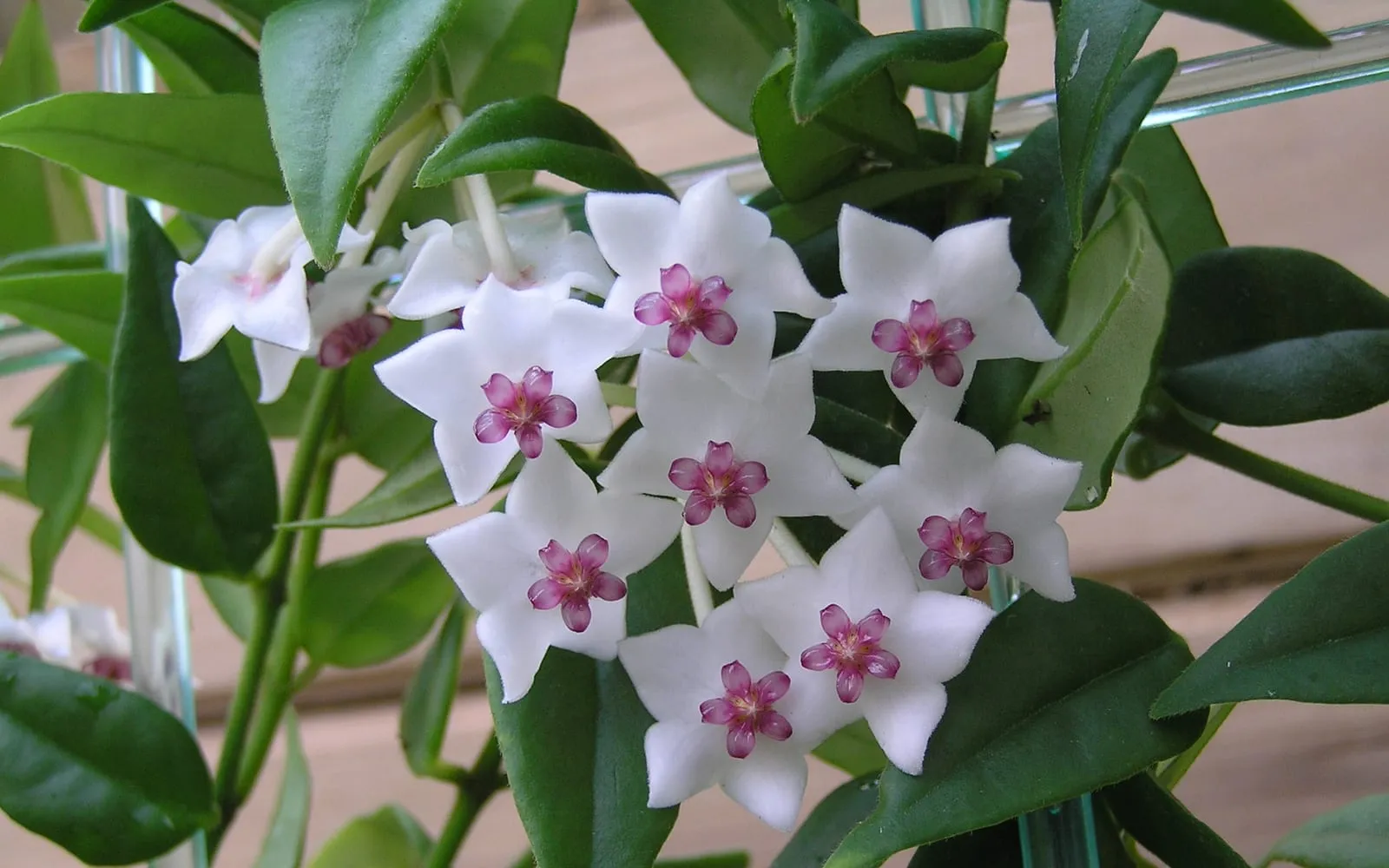
Miniature wax plant is a small trailing member of the hoya family, grown for clusters of small, waxy, white star flowers with a red or purple centre. Each cluster hangs beneath the arching stems, and the flowers are lightly scented, especially in the evening.
It is smaller and more delicate than the familiar climbing wax plant, with short, arching instead of long twining stems and small, neat, pointed leaves. That habit makes it a natural for a hanging pot or a high shelf where the flower clusters can hang free.
It is more tender and more demanding of warmth and humidity than its tougher cousin, but it is not difficult once settled. An established plant flowers reliably each summer from the same short spurs.
Appearance and character
Leaves are small, thick, waxy and pointed, mid to dark green, held in pairs along slender, arching stems. The plant forms a soft cascade over the edge of a pot.
Flowers are the main attraction, borne in rounded clusters of small white, waxy, five-pointed stars, each with a red, pink or purple central crown. They appear through summer and carry a light evening scent.
Stems are slim and semi-trailing, arching out and down instead of climbing far, which is what suits the plant to a hanging container.
The clusters form on short, permanent spurs, and each spur carries fresh flowers every summer, so cutting the old stalks away takes next year’s blooms with them. The spurs are always left in place.
Where it is from
Hoya bella comes from the Himalayan foothills and parts of Southeast Asia, where it grows as a small epiphyte and trailing plant in warm, humid, shaded forest, rooted in pockets of leaf litter instead of in deep soil.
Give it warmth, humidity, bright but filtered light and an open, fast-draining root run instead of heavy soil. It has no tolerance for cold or for sitting wet.
How it grows
It grows in flushes of arching stems through the warm months, flowering in summer from short spurs, and slows in the lower light of winter. Given warmth it stays evergreen and active much of the year.
Pot it in a very free-draining, airy mix, such as houseplant compost blended with orchid bark and perlite, in a hanging pot or on a shelf where the stems can trail. A snug pot suits it, since it flowers better slightly pot-bound.
Keep it warm, humid and in bright indirect light, and water when the top of the mix has dried, easing right off in winter. The balance of bright, warm and airy is what brings flowers.
Leave the spent flower spurs in place, since they rebloom, and resist moving the plant once buds have formed, as a change of position often makes it drop them.
Through the seasons
Spring brings fresh arching stems as the days lengthen. Repot a crowded plant now, and start feeding again.
Summer is the flowering season, the white star clusters opening on the short spurs. Keep it warm, humid and evenly watered, and enjoy the evening scent.
Autumn slows the trailing growth as daylight shortens. Taper off the feed and let the airy mix dry further between drinks.
Winter is a lower-light rest. Keep it warm, bright and much drier. That cooler, drier rest helps set the next year’s flower buds.
Care difficulty
Moderate, and reliable once its needs are met. Given warmth, humidity, bright light and an airy mix it grows and flowers well, asking little day to day. The difficulties are its dislike of cold and wet, which rots the fine stems, and its habit of dropping buds if disturbed. Settle it in one warm, bright spot and leave it there.
Watering
Water when the top of the airy mix has dried, soaking it enough to reach the roots and pouring off whatever drains through. Hoya bella has far finer stems than the climbing hoyas, and they rot faster, so let the mix dry further between drinks in winter when low light and cold work against it.
The small waxy leaves hold a little water, so a short dry spell troubles it less than a soggy pot. Tip out any saucer, and keep it on the dry side of just-moist rather than the wet side.
Warning signs, diseases and pests
The pest to watch for is mealybug, which tucks into the leaf joints and works deep into the small flower clusters as white woolly tufts. Lift the trailing stems and part the flower heads to find them, then dab them off with a cotton bud or treat with horticultural oil.
Root and stem rot follow cold, wet compost, showing as blackening, collapsing stems. Reduce watering, improve the drainage and keep the plant warm, since the fine stems rot faster than a thick-stemmed plant would.
Bud drop before the flowers open usually means the plant was shifted or caught a chill while in bud. Pick its position before the spurs set buds and then leave it untouched.
Growing environment
It flowers best in bright, filtered light with an hour or two of gentle direct sun, though harsh midday glare scorches the small leaves. Too little light gives soft trailing growth but few flower clusters.
Warmth and humidity matter, more so than for the tougher wax plant. Keep it above about 12 deg C in a warm, humid spot, and raise the humidity with a pebble tray or by grouping plants where the air is dry.
Give it an airy, free-draining mix and a snug hanging pot, and keep it out of cold draughts. A warm, bright bathroom or a spot near a well-lit window suits it well.
Feeding
Feed monthly through spring and summer with a diluted balanced feed, switching to a high-potassium feed such as a tomato fertiliser as buds form to support flowering. Ease off in autumn and stop in winter.
Feed at half the usual strength, since the plant is small and its fine roots are easily scorched. A plant in fresh mix needs little feeding for the first weeks.
Troubleshooting
It grows well but never flowers. Usually too little light, or too much nitrogen. Move it somewhere brighter, feed with a high-potassium feed as summer comes, keep it slightly pot-bound, and give it a cooler, drier winter rest to set buds.
The buds dropped before opening. Almost always because the plant was moved or chilled while in bud. Settle it in one warm, bright spot before it buds and leave it undisturbed.
I cut off the old flower stalks and now it flowers less. The short spurs rebloom year after year, so they should be left in place. Removing them removes next year’s flowers.
There are white woolly tufts in the leaf joints. Mealybugs. Dab them off with a cotton bud dipped in a little alcohol, or treat with horticultural oil, and check the flower spurs where they hide.
The stems are going black and mushy. Rot from cold, wet compost. Cut back watering, improve the drainage, keep the plant warm, and take healthy cuttings to start again if much of it has gone.
Miniature Wax Plant problem guides
Not sure what is wrong? See the common houseplant pests guide.