
Houseplant
Chinese Evergreen
Aglaonema nitidum
Also known as Aglaonema nitidum, Painted Drop Tongue
How to grow Aglaonema nitidum, a Chinese evergreen with broad glossy leaves that tolerates low light. Its sap is toxic.
At a glance
- Difficulty
- Easy
- Water
- When the top few centimetres of mix have dried
- Light
- Low to bright indirect light
- Temperature
- Warm; keep above about 15 deg C
- Humidity
- Average to high
- Hardiness
- USDA 10-12, RHS H1b, hardy to 13 C
- Type
- Evergreen foliage perennial
- Height
- 45 to 90 cm
- Native to
- Southeast Asia
A tender foliage aroid from the warm, shaded rainforests of Southeast Asia, growing on the humid forest floor. It needs warmth, average to high humidity and light shade to bright indirect light, and it cannot take frost or chill. It is safest above about 15 deg C, and cold, especially combined with wet, blackens its leaves and rots its roots.
Hardiness zones describe winter cold alone. Summer heat, humidity, rainfall and the length of the growing season decide as much, so treat the range as the outer limit rather than as a recommendation.
Toxic if eaten
- Do not eat
- All parts, which contain calcium oxalate crystals
- Harm from
- Eating it and handling it
- Affects
- People, cats and dogs
Like other aroids, Chinese evergreen contains tiny calcium oxalate crystals. Chewing a leaf or stem can push them into the soft tissue of the mouth, causing sudden burning, swelling, excess saliva and vomiting in a pet that swallows any; the sap can also irritate skin and eyes. The ASPCA lists Aglaonema among the plants that harm cats and dogs. The immediate pain means little is usually swallowed, so lasting damage is unusual, but keep it away from anything that chews and wash off any sap.
Sources: ASPCA toxic and non-toxic plants, RHS potentially harmful garden plants
About
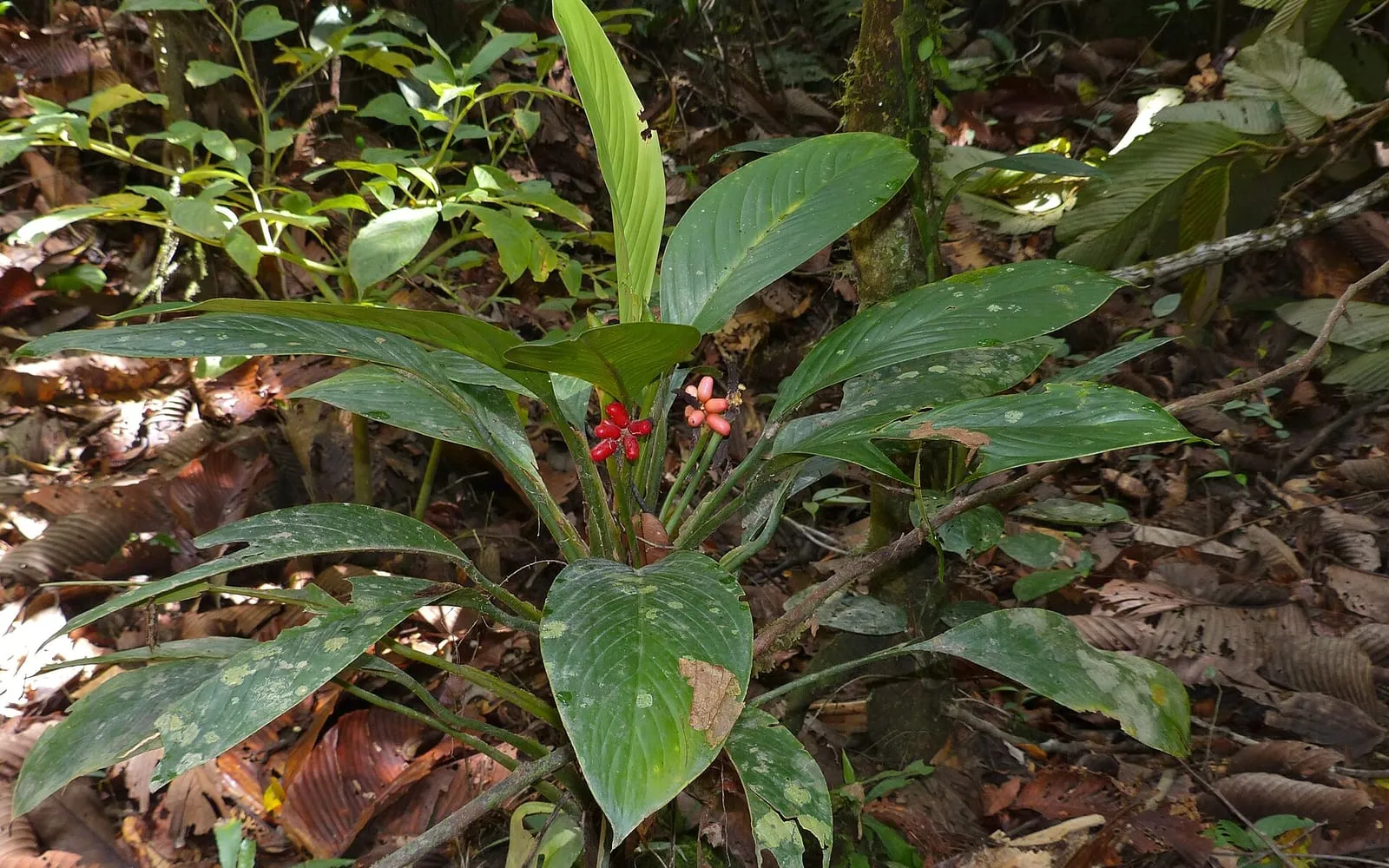
Aglaonema nitidum copes with low light. Where a fern crisps and a fig sheds leaves, this understorey plant keeps producing broad, waxy blades of deep forest green in the interior corners where many foliage plants decline. The species epithet nitidum means shining, a fair description of the polished surface of each blade.
The wild plant is plainer than the silvered hybrids sold beside it. Expect solid green in the main, sometimes broken by a paler feathering along the midrib in the form once sold as painted drop tongue. It builds a stout, upright clump instead of a running mat, and over several years the lowest leaves drop to leave a thickening cane that can be topped and re-rooted.
Warmth matters more than anything else. A plant kept above 16 deg C and out of a draught can grow for years with almost no intervention, while one left by a cold winter window can turn black at the tips within days. Every part holds an irritant sap, so keep it out of reach of chewing pets and curious children.
Appearance and character
Each blade is a broad, blunt-ended oval on a short, sheathing stalk, leathery to the touch and glossy enough to catch the light. Mature specimens throw leaves 20 to 30 cm long, stacked closely on the stem so the clump looks like a solid dome of green.
Colour runs from a uniform bottle green in the wild type to a soft grey-green marbling in selected clones. The reverse of the blade is paler, and a new leaf emerges rolled into a tight spear before it flattens out.
Flowering is occasional and easy to miss. A slim greenish sheath opens around a pencil of a spadix, and if a berry sets it ripens to a single fat red drupe. Most people grow this plant for the foliage, not the flowers.
Where it is from
Aglaonema nitidum comes from the wet lowland forests of Peninsular Malaysia, Sumatra and Borneo. It roots in leaf litter under a closed canopy, where the strongest daylight that reaches it is a shifting fleck of sun through gaps in the trees.
Those forests barely change through the year. Air near the floor stays close to saturation, the temperature seldom drops below the high teens even at night, and there is no dry or cold season to trigger dormancy. The plant handles stable shade better than sudden change, so moving it to a bright, dry sill often does more harm than leaving it in shade.
How it grows
Growth is slow. A healthy clump adds a handful of leaves across the warm half of the year and rests through the darker months without losing its canopy. Given warmth it may keep growing, but slowly enough that it needs potting on only every second or third spring.
Root the plant in an open, peat-free medium loosened with bark and a little perlite, so water drains through within seconds of pouring. Choose a pot barely wider than the rootball, since a large volume of wet compost around a slow root system greatly increases the risk of rot.
Increase a good plant by division in spring, teasing the clump apart where natural offsets have formed their own roots. A topped cane will also root, and each cutting should be handled with washed hands because the sap stings.
Through the seasons
Spring brings the clump back into active growth. Lift and divide any plant that has filled its pot, refresh the top layer of compost, and start a dilute monthly feed as the days lengthen.
Summer is the main growing period. Keep the medium lightly moist, shield the foliage from direct sun through glass, and sponge dust off the broad blades so they can photosynthesise well.
Autumn slows the plant as light fades. Stretch the gap between waterings, taper off the feeding, and check that its winter position will stay warm once the heating comes on and off.
Winter is when cold damage is most likely. Keep it well clear of cold glass and unheated hallways, water only enough to stop the rootball going bone dry, and accept that no new leaf will appear until the light returns.
Care difficulty
Few houseplants cope with neglect as well. Aglaonema nitidum handles dim light, skipped feeds and the occasional missed watering, and it keeps its looks through all of it. The main thing that kills it is cold wet compost, which blackens the foliage and turns the roots to mush within a week or two.
Keep it warm, water sparingly, and give it a stable spot. Its toxicity is the one reason for caution in a home with pets or small children.
Watering
Let the upper third of the pot dry out before the next drink, then water until the surplus runs from the base and tip the saucer empty. The plant would rather be a touch too dry than sit in standing water.
Through winter the roots take up very little, so water much less and judge by weight, lifting the pot to feel whether it is still heavy with moisture. Yellowing lower leaves point to a rootball kept too wet, while brittle brown edges usually mean the air around it has turned dry.
Warning signs, diseases and pests
Blackened, collapsing leaves after a cold night are the clearest sign of cold damage. Move it somewhere warmer at once, cut away the ruined foliage, and ease off the watering while it recovers.
Warm dry air encourages spider mites, which speckle the upper surface and web the leaf axils, and mealybugs, which lodge as white tufts where blade meets stalk. Wipe both away with a damp cloth, raise the humidity, and treat any stubborn colony with a horticultural soap.
Persistent brown leaf margins usually come from hard tap water or dry air rather than a pest. Switch to rainwater where your supply is limy, and group the plant with others to lift the local humidity.
Growing environment
This is one of the few foliage plants that grows well back from a window. It tolerates low light, though a plant given brighter, filtered daylight holds more compact growth and better markings. Direct sun through glass scorches the surface and should be kept off it.
Steady warmth matters more than any other factor. Aim for a room that stays above 16 deg C day and night, with humidity above average, and keep it away from the hot dry updraught of a radiator as much as from cold draughts.
Feeding
A dilute balanced liquid feed once a month across spring and summer keeps the foliage dense and dark. Overfeeding does more harm than good on so slow a grower, leaving a crust of salts that scorches the root tips.
Flush the pot with plain water every few months to wash those salts through, and do not feed a freshly divided or repotted plant until it has settled and started into new growth.
Troubleshooting
Why have the leaves gone black at the edges? Cold is the usual cause, often a spell against a chilly window or in an unheated room. Move it into warmth, remove the damaged parts, and let the compost dry a little.
The lower leaves keep yellowing. What is wrong? A rootball held too wet, or the natural loss of the oldest leaves. Water less, check the drainage, and pull away spent leaves at the base.
Can it cope in a dark corner? Yes, better than almost any other leafy houseplant, though growth slows to a crawl and the markings fade in deep shade. Give it what light you can spare.
How do I make more of it? Split a crowded clump in spring, or top a leggy cane and root the cutting in fresh mix, working with clean hands because the sap irritates skin.
Is it safe around cats, dogs and children? No. Every part carries an irritant that burns the mouth when chewed, so site it out of reach and see the toxicity note above.
Chinese Evergreen problem guides
Not sure what is wrong? See the common houseplant pests guide.