
Houseplant
Corn Cob Euphorbia
Euphorbia mammillaris
Also known as Euphorbia mammillaris, Indian Corn Cob, Corncob Cactus
How to grow Euphorbia mammillaris, the corn cob euphorbia, a small spurge with short ribbed clustering stems and caustic milky sap.
At a glance
- Difficulty
- Easy
- Water
- Once the mix has dried right through
- Light
- Bright light with some direct sun
- Temperature
- Warm; keep above about 7 deg C
- Humidity
- Low
- Hardiness
- USDA 9-11, RHS H2, hardy to 5 C
- Type
- Evergreen clustering succulent
- Height
- 20 to 30 cm
- Native to
- South Africa
A small clustering spurge from the dry Karoo of South Africa, storing water in short, ribbed, knobbly stems. It needs bright light, sharp drainage and long dry spells, has little frost tolerance and is safest above about 7 deg C. It withstands heat and drought and rots only in cold, wet compost.
Hardiness zones describe winter cold alone. Summer heat, humidity, rainfall and the length of the growing season decide as much, so treat the range as the outer limit rather than as a recommendation.
Toxic if eaten
- Do not eat
- The milky white sap in every part
- Harm from
- Handling it, sap in the eyes and eating it
- Affects
- People, cats and dogs
Like all euphorbias, the corn cob spurge bleeds a milky white latex the moment it is cut or broken, and that sap is a serious irritant. On skin it causes burning, redness and blistering; in the eyes it is far worse, bringing intense pain, swelling and, in bad cases, lasting damage to sight; swallowed, it burns the mouth and gut and causes vomiting. Wear gloves and eye protection whenever you cut or repot it, never touch your eyes while handling it, wash off any sap at once, and keep it away from pets and children. If sap reaches an eye, rinse it with clean water for at least 15 minutes and get urgent medical care, since the damage can be serious. The ASPCA lists Euphorbia species as toxic to cats and dogs, and this page applies that genus-level entry to Euphorbia mammillaris.
Sources: ASPCA toxic and non-toxic plants, RHS potentially harmful garden plants, North Carolina Extension plant toxicity database
About
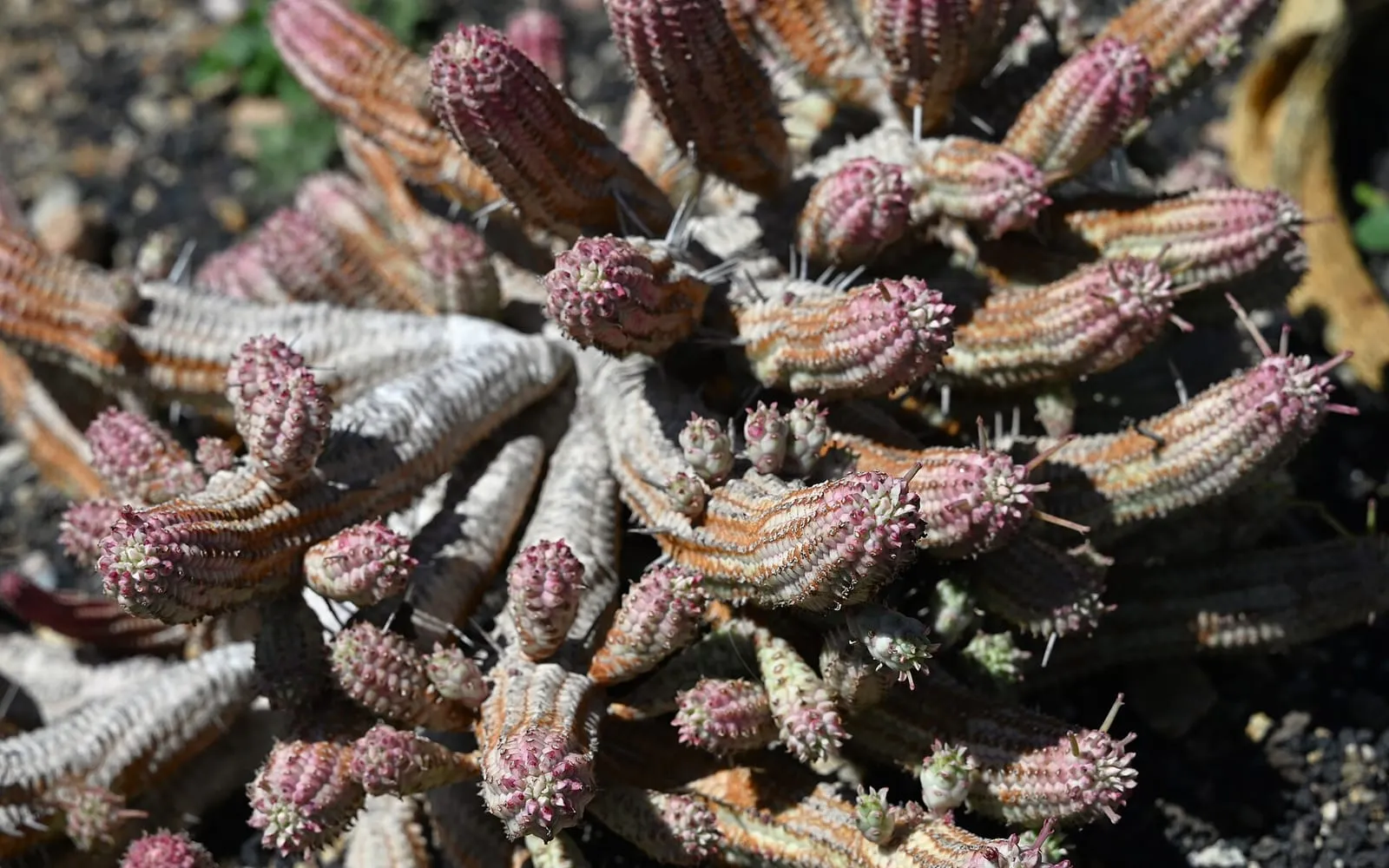
Corn cob euphorbia is easy to recognise. Each short, upright stem is fat and ribbed and set with rows of small conical bumps, so it looks like a stubby green ear of sweetcorn. The stems crowd together from the base into a low, chunky colony, and a common variegated form, pale greenish-white and blushed with pink, is grown quite as often as the plain green kind.
For all its cactus looks, it is a spurge. A nicked stem releases the milky white latex that runs in every member of the family. That sap burns skin and eyes, so this small, charming plant is one to enjoy at arm’s length and to handle only in gloves.
It comes from the dry Karoo of South Africa. It needs as much light as you can give it, grown in a coarse gritty compost and left dry for long spells. It stays small, grows slowly, tolerates heat and neglect, and ranks among the most manageable of the succulent euphorbias, so long as its sap is respected.
Appearance and character
The stems are stubby and thick, upright, and cut into six to nine ribs, each rib carrying a row of small cone-shaped tubercles that give the plant its knobbly, corn-on-the-cob texture.
The stems multiply from the base into a low, dense clump seldom taller than a hand’s span, and the widely sold variegated form is a pale creamy-green washed with pink where the light is strongest.
Short spines or dry bristles, the remains of spent flower stalks, may stud the tubercles, though it is far from the fiercely armed plant a true cactus can be.
Its flowers are tiny, greenish-yellow structures at the stem tips in the usual euphorbia style. The beaded stems are the main reason people grow it.
Where it is from
Euphorbia mammillaris is a plant of the dry Karoo scrub in South Africa, growing among rocks in fierce sun and holding its water in those ribbed stems against months without rain. Heat, aridity and thin, stony ground are its natural conditions.
Its care follows from that habitat. It needs bright light and drainage that clears in a moment, tolerates drought and warmth, and cannot cope with a cold, waterlogged pot. The milky latex that makes it hazardous to handle is its defence against anything that might browse on it in the wild.
How it grows
Growth is slow and steady over the warm months, with the plant thickening and pupping from the base, and it takes a rest through winter. Warmth and good light keep the stems plump and tightly packed; cold, damp conditions halt growth and cause rot, while a gloomy spot draws the stems up thin and pale.
Set it in a coarse, sharply draining cactus compost in a pot that matches its low clump, and wait for the compost to dry fully before watering, then soak it and let it drain. Small and slow, it needs watering rarely and hardly ever needs moving up a pot.
Stand it in bright light with a little direct sun, keep it warm above about 7 deg C, and hold the air on the dry side. Whenever you cut, divide or repot it, wear gloves and eye protection, because the sap is caustic.
New plants come from stem cuttings, taken in gloves. Sever a stem, halt the bleeding latex by dipping the cut in water or letting it dry, leave it to callus for several days, then set it to root in gritty compost.
Through the seasons
Spring starts slow growth as the light strengthens. Start watering again, move it up a pot if it needs it, and take gloved cuttings.
Summer is its main growing spell. Soak it once the compost has dried out, offer a weak feed, and keep it in bright light.
Autumn slows it down as the light drops. Cut back on the watering.
Winter is a near-dry rest above about 7 deg C. Water it barely at all, since a cold, wet pot rots it at this season.
Care difficulty
Corn cob euphorbia is simple to grow, provided it is kept bright and dry and handled carefully. A tough, slow, drought-tolerant plant, it needs little beyond sun and quick drainage and rots only if left cold and wet. The genuine caution is the caustic sap. Past that, it needs little routine attention.
Watering
Hold off until the gritty compost has dried right through, then water it well and let every drop drain away. Because the ribbed stems store water, the plant copes with long dry spells far better than steady wet, and watering stays occasional.
Give it almost nothing over winter, when cold, wet compost can kill the plant. A little puckering shows the stems are thirsty; stems that go soft, yellow or blackened at the foot are rotting, and must be cut away in gloves, the firm parts kept to root.
Warning signs, diseases and pests
Stems that soften, discolour and collapse at the base are rotting from cold, wet compost. In gloves and eye protection, cut back to sound tissue, dry the good pieces off, and restart them in fresh gritty compost, watering more sparingly.
Mealybugs bury themselves between the ribs and tubercles, their white fluff easily missed in the crevices; lift them out with dilute alcohol on a cotton bud, and keep the sap off your hands as you work.
Stems drawn up long, thin and pale have too little light. Move the plant to a brighter spot with a little direct sun to restore firm, closely packed growth.
Growing environment
Bright light with a little direct sun keeps the stems firm and tightly packed, and improves the colour of the variegated form. Starved of light the stems stretch, pale and soften. Give it the strongest light you can.
Warmth above about 7 deg C and dry, airy conditions match its Karoo origins. It likes low humidity and hates stagnant damp.
Grow it in gritty, fast-draining compost in a pot on a bright sill, and keep it out of reach of pets and children because of its sap.
Feeding
One or two weak, low-nitrogen cactus feeds across spring and summer are enough. A richer diet only forces soft, weak growth.
Feed it nothing over winter. After repotting, the fresh gritty compost sustains it for a long stretch, given how slowly it grows.
Troubleshooting
The stems have softened and discoloured at the base. Rot from cold, wet compost. In gloves and eye protection, cut back to sound tissue, dry the good pieces, and root them in fresh gritty compost. Water more sparingly.
The stems are drawn up thin and pale. Too little light. Move it to a brighter spot with a little direct sun to firm the growth.
It wept white sap when I cut it. Is that a problem? Yes. The milky latex that all euphorbias carry burns skin and eyes and harms the gut if swallowed. Wear gloves and eye protection, never rub your eyes while handling it, and wash off any splash at once.
Is it a cactus? No. It is a spurge that has evolved to look like a cactus. The milky sap, absent in any cactus, is the clear difference.
Is it safe around pets and children? No. Its caustic sap means it should be kept out of reach and handled only in gloves and eye protection.
Corn Cob Euphorbia problem guides
Not sure what is wrong? See the common houseplant pests guide.