
Outdoor plant
Soft Tree Fern
Dicksonia antarctica
Also known as Tasmanian Tree Fern, Man Fern
How to grow soft tree fern, Dicksonia antarctica. Watering has to reach the crown and trunk surface rather than just the soil, and the single growing point needs frost protection that the fibrous trunk itself does not.
At a glance
- Difficulty
- Moderate
- Water
- Water into the crown directly through dry spells, and keep the trunk itself damp
- Light
- Dappled to full shade; tolerates more sun where the air stays cool and humid
- Temperature
- Established plants take light frost; the growing crown needs protection below about -5 deg C
- Humidity
- High humidity strongly preferred
- Hardiness
- USDA 8-10, RHS H4, hardy to -10 C
- Type
- Evergreen perennial tree fern
- Height
- 4-6 m over many decades in ideal conditions; the trunk grows roughly 2.5-5 cm a year
- Native to
- eastern Australia
The fibrous trunk, a dense mass of old roots rather than true wood, survives colder and drier conditions than the single growing point at its top, which is the part winter protection targets. The zone range describes an established, mulched and wrapped plant rather than an unprotected one, and it says nothing about the high, steady humidity this species gets in Tasmanian and Victorian wet forest, which a warm, dry climate cannot replace no matter how mild its winters are.
Hardiness zones describe winter cold alone. Summer heat, humidity, rainfall and the length of the growing season decide as much, so treat the range as the outer limit rather than as a recommendation.
Not known to be toxic
Dicksonia antarctica carries no recorded toxic compounds and does not appear on the RHS list of harmful garden plants or the ASPCA index. Tree ferns are not a group associated with poisoning in pets or people, and the fronds are tough and fibrous rather than something an animal is likely to eat in any quantity. This is a plant you can grow without factoring pets or small children into the decision, though the rough, bristly trunk surface keep it young children from climbing on for ordinary safety reasons rather than any chemical one.
Sources: RHS potentially harmful garden plants, ASPCA toxic and non-toxic plants
About
Soft tree fern builds a single fibrous trunk topped by a crown of huge, arching, deeply divided fronds, the closest thing many temperate gardens have to a living fossil. Growth is very slow, measured in centimetres of trunk height a year, so a specimen with any real trunk height has taken decades to reach it, which is part of why established plants command a high price.
It needs shade, humidity and consistent moisture rather than the sun and free drainage most garden plants want, and the crown, the single point new fronds emerge from, needs protection from hard frost even where the rest of the plant tolerates cold reasonably well.
Appearance and character
The trunk is a dense mass of old, blackened, fibrous roots built up over the plant’s life rather than true wood, often furred with smaller aerial roots near the crown. It stays roughly the same thickness along its length rather than tapering, giving mature plants an architectural presence even before the fronds are considered.
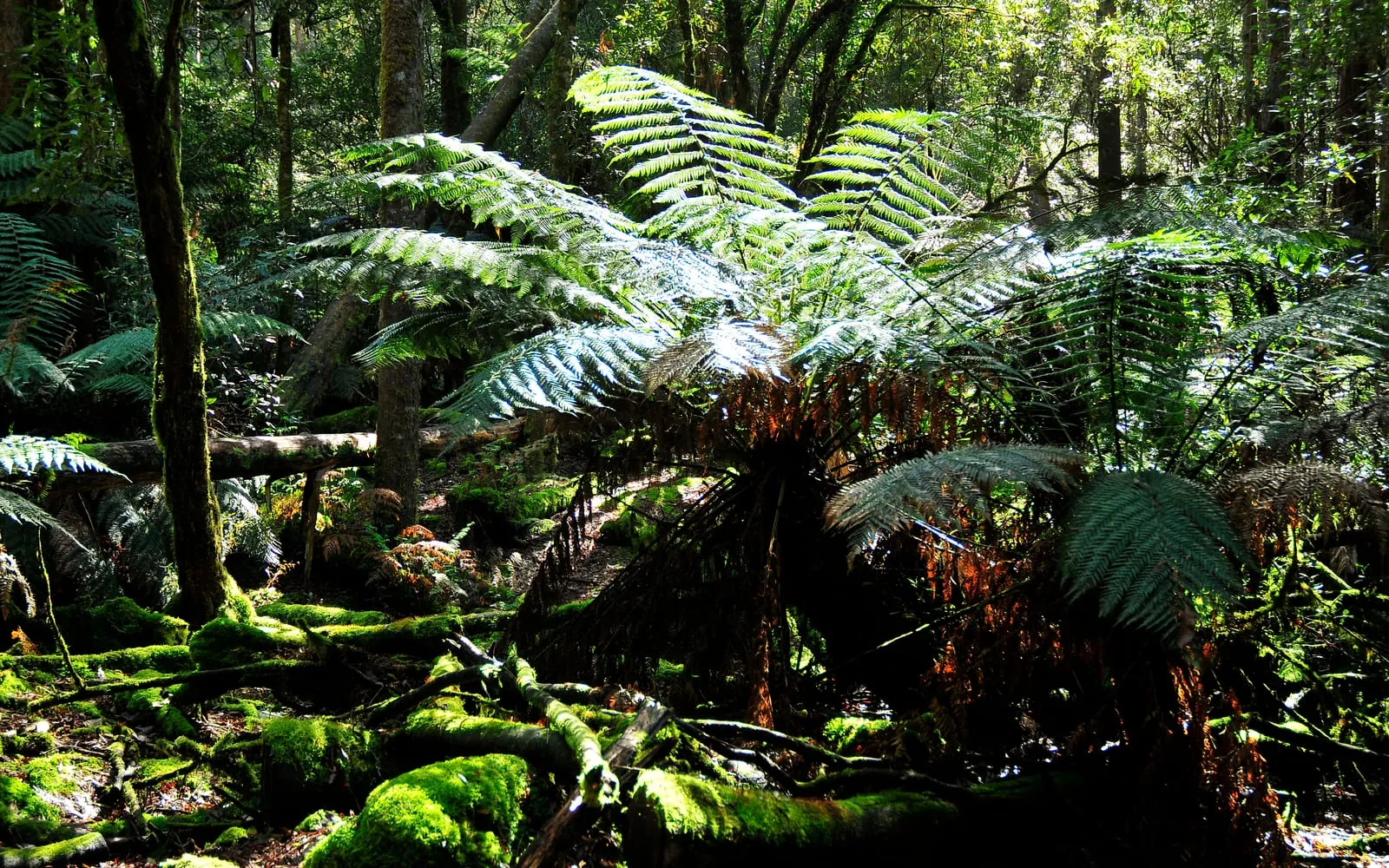
Fronds emerge from the crown as tightly coiled fiddleheads covered in pale brown scales, unfurling over several weeks into huge, tripinnate, mid-green fronds that can reach 2 to 3 m long on a well-grown plant, arching outward and downward in a full circle around the crown. A mature specimen can carry a dozen or more fronds at once, forming a dense, shady canopy beneath itself.
Older fronds die back and are often left in place through winter as extra insulation for the crown, giving a slightly untidy skirt around the top of the trunk that many growers deliberately leave until spring.
Where it is from
Dicksonia antarctica grows through the wet, cool-temperate forests of eastern Australia, from Tasmania north through Victoria and New South Wales into southern Queensland, typically in the understorey beneath a taller tree canopy, along streams and in gullies where humidity stays high year round and rainfall is frequent rather than seasonal.
That understorey habitat, shaded, damp and sheltered from wind, is the model for growing it well anywhere else. The high, steady humidity of a Tasmanian wet forest is harder to reproduce in a garden than the shade or the moisture alone, which is why this species often grows better in a damp, sheltered corner or a courtyard than in an open bed with the same soil and light.
How it grows
Plant it in a sheltered position with dappled to full shade, protected from strong wind, which dries and scorches the fronds far faster than direct summer sun does in a humid site. A courtyard, a woodland garden or the shaded side of a building all suit it better than an open lawn.
Water thoroughly and often through the growing season, directing water into the crown itself rather than just onto the soil, since the trunk takes up much of its moisture through its fibrous surface rather than through roots at the base alone. In hot or dry weather this can mean watering the crown daily.
Mulch generously around the base with well-rotted organic matter to keep the root zone cool and moist, and avoid planting it where the ground dries out between waterings, since the trunk itself has very little capacity to store water through a dry spell.
Growth is very slow, so buying an established specimen with some trunk height already is the realistic way to get a plant of any size within a human lifetime, since seed-raised plants take many years to develop a visible trunk at all.
Through the seasons
Spring brings new fiddleheads unfurling from the crown, the most vulnerable stage to late frost, so watch overnight temperatures and be ready to protect the crown if a cold snap threatens.
Summer is the main growing season. Water generously, particularly into the crown, and feed occasionally.
Autumn is a good time to build up mulch around the base ahead of winter and to plant a new specimen while the soil is still warm.
Winter calls for crown protection in any climate where hard frost is likely. Pack the crown with straw or fleece, and leave old fronds in place around it as extra insulation until the frost risk has passed in spring.
Care difficulty
Moderate, and the demands are consistent rather than occasional. Regular watering into the crown through the growing season is not optional the way it might be for many established garden plants, and skipping it in a hot, dry spell shows quickly as scorched, browning fronds. Winter protection of the crown is the other recurring task in any climate with real frost, and forgetting it even once in a hard winter can kill the single growing point and, with it, the whole plant, however large and healthy the trunk looks. Given consistent moisture, shelter and winter care, it is otherwise a resilient, long-lived plant that needs little else.
Watering
Water the crown directly and often through spring and summer, aiming to keep the growing point and the top of the trunk permanently damp rather than letting them dry out between waterings. In hot weather this can mean watering daily, more like tending a container plant than a typical established shrub.
Keep the soil around the base moist as well, without letting it become waterlogged, and reduce watering in winter when growth has slowed, though the crown should never be allowed to dry out completely even in the cooler months.
Warning signs, diseases and pests
Slugs and snails target the soft, unfurling fiddleheads in spring, which can damage or destroy new fronds before they have a chance to open fully. Torchlight checks on damp evenings and physical barriers around the base of the trunk are the most effective response.
Scale insects appear as small, flat, brownish bumps along frond stems, more often on plants grown under glass than outdoors, where natural humidity and rainfall keep populations in check. Wipe them off or treat with horticultural soap.
Frost damage to the crown shows as blackened, collapsed new growth at the centre, and in a severe case it can kill the plant outright if the growing point itself is destroyed. Wrapping the crown before hard frost is the only real prevention; once damage has happened, remove any rotting tissue promptly and hope the crown itself has survived beneath it.
Root rot develops at the base of the trunk in soil that stays waterlogged rather than moist, showing as a soft, discoloured trunk base and declining fronds. Improve drainage around the planting site, since this is one problem consistent watering into the crown does not cause on its own; it is the ground beneath that needs attention.
Growing environment
Shade or dappled shade suits it best in most climates, with some tolerance of brighter light where humidity stays consistently high, such as a coastal or consistently damp garden.
Shelter from wind matters as much as shade, since wind dries the large fronds faster than they can replace moisture and scorches their edges even when the roots and trunk have plenty of water.
Humid air improves growth noticeably over a dry one at the same temperature, and misting the crown in hot, dry weather helps where natural humidity is low.
Moist, humus-rich, slightly acidic soil around the base, kept consistently damp rather than wet, completes the conditions this species needs to thrive rather than merely survive.
Feeding
Apply a general-purpose liquid feed occasionally through the growing season, watered into the crown along with the plant’s regular watering rather than applied as a separate step.
Little feeding is needed overall; a generous mulch of well-rotted organic matter around the base each year supplies much of the fertility a soft tree fern uses, and heavy feeding offers little benefit given how slowly the plant grows regardless of nutrient supply.
Troubleshooting
The fronds have gone brown and crispy at the edges. Usually wind scorch or insufficient humidity rather than a watering problem on its own. Move a container-grown plant somewhere more sheltered, or improve watering into the crown during hot, dry, or windy spells.
New growth at the crown turned black and mushy after a cold snap. Frost damage to the growing point. Remove any obviously rotting tissue to stop it spreading, and wrap the crown before future cold weather; whether the plant recovers depends on how much of the growing point survived underneath the damage.
The trunk feels dry and the fronds are wilting despite watering the soil. Water the crown and trunk directly rather than only the ground at the base, since much of this plant’s moisture uptake happens through the trunk surface rather than through roots alone.
How long will it take to get a trunk with real height? Many years. Trunk growth of only a few centimetres a year is normal, which is why most gardeners buy an established plant with existing trunk height rather than growing one from a small plant or spore.
Can I grow it in a container? Yes, particularly while young, in a large pot with excellent drainage and a position sheltered from wind and harsh sun. A container-grown plant needs even more frequent watering than one planted in open ground, since there is far less soil around the roots to buffer against drying out.