
Outdoor plant
Australian Tree Fern
Cyathea cooperi
Also known as Lacy tree fern, Scaly tree fern
How to grow Australian tree fern, Cyathea cooperi, outdoors or under glass. Watering the trunk itself, winter protection, and its fast growth rate.
At a glance
- Difficulty
- Moderate
- Water
- Trunk misted or watered daily in the growing season, soil kept moist
- Light
- Bright, filtered light; shelter from strong direct midday sun
- Temperature
- Damaged below 0 deg C, killed by prolonged hard frost
- Hardiness
- USDA 9-11, RHS H3, hardy to -2 C
- Type
- Evergreen tree fern
- Height
- 3-6 m outdoors in favourable climates, slower in a pot
- Native to
- Eastern Australia
Tender to frost, tolerating only brief light freezes before the crown is damaged and prolonged hard frost before it is killed outright. It grows outdoors year round only in mild, frost-free or nearly frost-free climates, and everywhere colder needs the crown wrapped with fleece or straw through winter, or the whole plant moved under glass if grown in a container.
Hardiness zones describe winter cold alone. Summer heat, humidity, rainfall and the length of the growing season decide as much, so treat the range as the outer limit rather than as a recommendation.
Not known to be toxic
Australian tree fern has no toxicity listing from the RHS or the ASPCA and is considered safe around pets and children, though the fibrous trunk and coarse fronds are not something anything is likely to chew on in the first place.
Source: RHS
About
The Australian tree fern is one of the fastest-growing tree ferns available to gardeners, capable of adding 30 cm or more of trunk height in a single good growing season, far quicker than the more familiar and much slower soft tree fern, Dicksonia antarctica, that it is often grown alongside. Its large, finely divided, arching fronds and distinctive scaly, fibrous trunk give a garden an immediate tropical or prehistoric character.
It is grown outdoors year round only in reliably mild climates and elsewhere as a container specimen brought under glass for winter, or planted out for summer and given substantial protection through the colder months.
Appearance and character
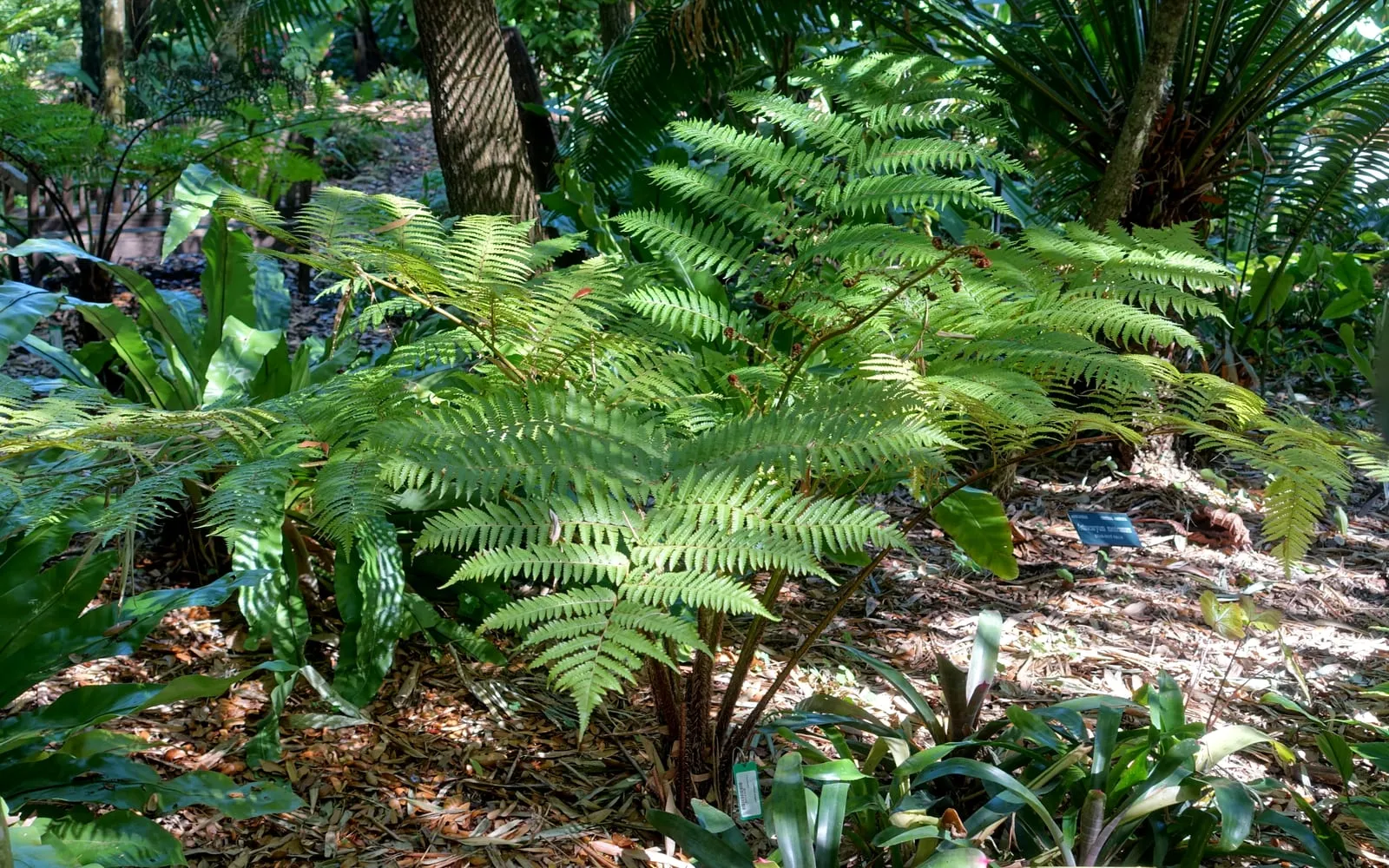
A single, unbranched fibrous trunk, covered in the persistent scaly bases of old fallen fronds, rises to carry a crown of large, lacy, arching fronds up to 3 m long on a mature specimen, giving the plant its lacy tree fern nickname. New fronds unfurl from tightly coiled croziers at the crown, often reddish-brown at first before opening to a fresh mid-green.
The trunk itself is not solid wood at all. It is a dense mass of fibrous roots and old frond bases, and that structure matters for how the plant is watered, since the whole trunk absorbs moisture along its length in a way an ordinary tree trunk does not. That absorbent trunk is the source of the plant’s most distinctive care requirement.
Where it is from
Rainforest margins and moist gullies in eastern Australia, typically growing in the dappled light beneath a taller forest canopy, in consistently humid air and reliably moist, well-drained soil.
That rainforest origin explains the plant’s need for humidity and shelter from harsh direct sun and drying wind, conditions a temperate garden rarely provides without some help, usually in the form of a sheltered courtyard position or a spot beneath larger trees.
How it grows
An evergreen tree fern that grows from a single, non-branching crown at the top of an increasingly tall trunk, adding new fronds continuously through the warmer months. Growth is markedly faster than most other tree ferns, and a well-fed, well-watered specimen in a favourable climate can reach a significant, garden-defining height within a decade, much sooner than the decades a soft tree fern typically takes to reach the same size.
Because the whole plant depends on a single growing crown at the top, damage to that crown, whether from frost, physical injury or prolonged drought, can be fatal in a way it would not be for a fern that regrows from multiple points.
Through the seasons
Spring growth resumes as temperatures rise, with new croziers unfurling from the crown. Increase watering and begin feeding as new growth appears.
Summer is the main growing season, with the fastest trunk extension and frond production. Keep the trunk itself watered or misted regularly in addition to the soil.
Autumn growth slows as temperatures drop. Prepare winter protection well before the first frost is forecast in any climate where frost occurs at all.
Winter in a marginal climate, wrap the crown with fleece or straw, or move a container-grown plant under glass; in a reliably frost-free climate it continues growing slowly through the cooler months.
Care difficulty
Moderate. The plant grows vigorously given the right conditions, but those conditions, reliable humidity, shelter from harsh sun and wind, and frost protection through any cold winter, take real planning to provide outside its native climate, and that planning is where most of the difficulty in growing this species well lies.
Watering
Water both the trunk and the soil around its base regularly through the growing season; the fibrous trunk absorbs moisture directly along its length and dries out much faster than the soil alone would suggest. In hot weather, misting or hosing down the trunk daily helps keep it hydrated, particularly for container-grown specimens in a warm, dry spot.
Reduce watering, though do not stop entirely, once growth slows in autumn and temperatures drop.
Warning signs, diseases and pests
Aphids and scale insects occasionally colonise the undersides of fronds or the crown itself, and are treated the same way as on other houseplants, with a soft brush or insecticidal soap for light infestations. Vine weevil grubs can attack the base of a container-grown plant, showing as an unexplained decline despite apparently good care; check the compost for grubs if this occurs.
A crown that fails to produce new fronds after a cold winter, with the central growing point looking blackened or mushy, usually indicates frost has killed the growing tip, which is generally fatal for this species since it has no other point from which to regrow.
Brown, crisp frond edges in summer commonly indicate too little humidity or too much direct, hot sun rather than a pest problem, and are addressed by improving shelter and increasing how often the trunk is watered.
Growing environment
Bright, filtered light suits it best, with protection from strong midday sun, which can scorch the fronds, and from cold, drying wind, which dehydrates them quickly. Reliable humidity matters more to this species than to many other garden ferns, and a sheltered courtyard or a spot among other plants that raise local humidity generally performs better than an open, exposed position.
Feeding
A balanced liquid feed at half strength, applied fortnightly through the growing season, supports the fast growth this species is capable of given good conditions. Reduce feeding through autumn and stop entirely over winter while growth is slow or dormant.
Troubleshooting
The central crown looks blackened or mushy after cold weather. This usually means the growing point has been killed by frost, which is generally fatal for a tree fern with only one crown. Improve winter protection for any surviving plants nearby.
Frond edges are brown and crisp. Check for insufficient humidity or too much direct sun. Increase how often the trunk is watered and consider providing more shade or shelter.
Growth has stalled despite regular watering of the soil. Remember that the trunk itself needs watering, not just the soil at its base; increase how often you water or mist the trunk directly.
The trunk feels soft or the plant leans unexpectedly. Check for vine weevil grub damage at the base, particularly in a container-grown specimen, and treat the compost if grubs are found.