
Outdoor plant
Scots pine
Pinus sylvestris
Also known as Scotch pine, Scots fir
How to grow Scots pine, Pinus sylvestris. The most widely distributed pine on earth, the orange upper bark that identifies it, and why it suits poor sandy soil that defeats other trees.
At a glance
- Difficulty
- Easy
- Water
- Rarely once established
- Light
- Full sun, and it will not tolerate shade at any age
- Temperature
- Extremely hardy, to about -40 deg C, and it grows north of the Arctic Circle
- Hardiness
- USDA 3-7, RHS H7, hardy to -40 C
- Type
- Evergreen conifer, long lived and slow after a fast youth
- Height
- 20-35 m
- Native to
- Europe and northern Asia, and native to Scotland
- Best month
- November in the Northern Hemisphere, May in the Southern Hemisphere
Poor sandy acid ground suits it and rich soil does not, and it survives colder winters than almost any broadleaf. It needs full light from the start and will not grow up through a canopy. It has naturalised across the Great Lakes states and Ontario, where it seeds into open ground, so it is a poor choice for planting near native pine barrens in North America.
Hardiness zones describe winter cold alone. Summer heat, humidity, rainfall and the length of the growing season decide as much, so treat the range as the outer limit rather than as a recommendation.
Every month named in this guide is for the temperate Northern Hemisphere. If you garden in the Southern Hemisphere, shift each one by six months, so November becomes May. Closer to the equator the wet and dry seasons matter more than the calendar, and the shift stops being a useful guide.
Not known to be toxic
Scots pine is not listed by the RHS as a potentially harmful garden plant and is not recorded by the ASPCA as toxic to cats, dogs or horses. No part of it is a recognised poisoning hazard, and the inner bark was eaten in famine years across northern Europe while the resin has a long history of medicinal use. The seeds are edible and are too small to be worth collecting. The recorded livestock problem in this genus belongs to ponderosa pine in North America, where the needles cause abortion in cattle, and it does not apply to Scots pine. Where a plant is unlisted by both sources rather than positively assessed, read that as no hazard recorded rather than a hazard ruled out. Two practical cautions do apply. Fresh resin sticks to skin and clothing and needs oil or alcohol to shift it, and concentrated pine oil sold as a cleaning product is a different substance from the tree, being an irritant that should be kept away from cats in particular.
Sources: RHS potentially harmful garden plants, ASPCA toxic and non-toxic plants
About
Scots pine has the widest natural range of any pine in the world, and an old one is unmistakable once you know where to look.
Look up the trunk. The lower bark is grey-brown and fissured like any other conifer, and somewhere around two-thirds of the way up it changes to a warm orange that glows when the sun catches it. Nothing else in a northern landscape does that.
The shape changes with age in a way most trees do not. A young Scots pine is a neat conical thing. A mature one has shed its lower branches entirely and carries a flat or domed crown on a long clear trunk, which is why a group of old pines on a heath reads as columns holding up a roof.
It grows where almost nothing else will. Thin acid sand, gravel, peat bog margins and exposed Highland hillsides all suit it, and a garden with poor dry soil that has defeated other trees is a good home for one.
The Caledonian pinewood it once formed across Scotland is down to a small fraction of its old extent, and planting Scots pine of native Scottish provenance is one of the few things a garden can contribute to a habitat.
Appearance and character
An evergreen conifer reaching 20 to 35 m, conical when young and flat-topped in old age with a long bare trunk.
The upper bark is the identification. Warm orange to pinkish-red, thin and flaking in papery plates, and confined to the upper trunk and the main limbs. The lower trunk stays grey-brown and deeply fissured.
Needles come in pairs, which separates Scots pine from most other pines in cultivation. They are 3 to 7 cm long, stiff, often twisted along their length, and blue-green rather than the dark green of a spruce.
Cones are 3 to 7 cm, pointed and grey-brown, taking two years to ripen. They open in dry weather and close again in damp, which is easy to watch on a windowsill.
New shoots in spring stand upright in a candle shape before the needles open out.
The crown of an old tree is level and layered, held on branches that sweep upwards from the trunk before flattening.
Where it is from
Europe and northern Asia, with the widest natural range of any pine in the world, reaching from Spain to eastern Siberia and north beyond the Arctic Circle.
In Britain it is native to Scotland, where it forms the Caledonian pinewood along with birch, rowan and juniper. The remaining fragments at Rothiemurchus, Abernethy and Glen Affric are the best of what is left.
Pollen records show it grew across England after the last glaciation and died out there naturally, so English Scots pine is a reintroduction rather than a survival.
It grows on acid sand, gravel, glacial moraine and the drier margins of peat bog, and it colonises heathland readily once grazing stops.
The timber is sold as red deal or redwood and is the commonest structural softwood in Europe, used for joists, floorboards and fencing.
Pines were planted as landmarks on drove roads and beside farmhouses in parts of Scotland and northern England, and a line of old pines across open country often marks a route rather than a boundary.
How it grows
Plant between November and March, and small stock establishes far better than large. A 40 to 60 cm transplant will overtake a 2 m container-grown tree within a few years.
Choose an open sunny position and accept that this is permanent. Scots pine has no shade tolerance at any age and a tree overtopped by neighbours dies rather than waits.
Poor soil is what it wants. Acid sand, gravel and thin ground all suit it, and rich garden soil produces soft growth that blows out of shape.
Avoid chalk and avoid heavy wet clay. Both cause yellowing and a short unhappy life.
Do not stake unless the site is very exposed, since a pine that moves in the wind builds a stronger trunk.
Prune almost nothing. Scots pine does not regrow from old wood, so a branch removed leaves a permanent gap and a shortened leader never recovers its shape.
Remove only dead or damaged branches, and do it in late summer when resin flow is lower.
Grow it from seed if you want native Scottish stock, collecting cones in late winter and drying them indoors until they open.
Through the seasons
Winter shows the tree at its best, with the orange upper bark against a grey sky and the crown holding snow. This is planting season.
Spring pushes pale upright candles at the shoot tips in May, and the pollen from the male cones drifts in yellow clouds.
Summer extends the shoots and ripens last year’s cones towards their second winter.
Autumn drops the oldest needles, which is normal. A pine holds each needle for about three years, so an inner layer browns and falls every year.
Care difficulty
Easy, provided the site suits it. This is a tree that asks for nothing and refuses to compromise on two points.
It needs full sun and it needs free drainage. Given both, it survives cold, wind, drought, salt spray, poverty and neglect without complaint.
Given shade or chalk, it declines slowly and there is no remedy but to move it while it is small.
Nothing about an established tree needs watering, feeding or pruning.
Watering
Water through the first summer after planting, particularly bare-root transplants going into sand.
An established Scots pine needs no watering in a temperate climate and is one of the most drought-tolerant trees available.
It dislikes waterlogging strongly. Roots sitting in winter wet are the commonest cause of failure in a garden.
Mulch a newly planted tree with bark to hold moisture through its first year, keeping the mulch clear of the stem.
Warning signs, diseases and pests
Yellowing needles across the whole tree on chalky ground is lime-induced chlorosis. The tree is in the wrong soil and there is no lasting fix.
Browning of the inner needles in autumn while the outer ones stay green is normal needle shed rather than disease.
Thin crown and dieback from the top in a tree that has been overtopped by neighbours is light starvation. Fell the competing trees or accept the loss.
Pine weevil chews bark from the base of young transplants, ring-barking them. It is a forestry problem on restocked clear-fell sites and rarely reaches a garden.
Red band needle blight, caused by Dothistroma septosporum, produces brown bands across the needles with green tips beyond them and has become a serious problem in forestry across Britain, central Europe and British Columbia. It weakens rather than kills mature trees.
Honey fungus attacks pine and is fatal, showing as white fungal sheets under the bark at the base.
Grey squirrels strip bark from the upper stems of young trees, which distorts growth and lets in decay.
Resin bleeding from the trunk is a normal wound response and not by itself a sign of disease.
Growing environment
Full sun, without exception. Do not plant it where anything will grow over it.
Acid, free-draining soil. Sand, gravel, thin stony ground and dry peat all suit it, and poor soil gives better shape than rich.
Avoid chalk, limestone and heavy wet clay.
It is one of the hardiest trees in cultivation, standing extreme cold, wind, altitude and coastal salt.
Allow 8 to 12 m of space. It is too big for a small garden as a forest tree, though the dwarf cultivar ‘Watereri’ reaches around 4 m and keeps the blue needles.
Its wildlife value is high and specific. Scottish crossbills feed on the seed, crested tits nest in dead pine stems, red squirrels favour pinewood over broadleaf, and pine marten, capercaillie and wood ant all depend on the habitat.
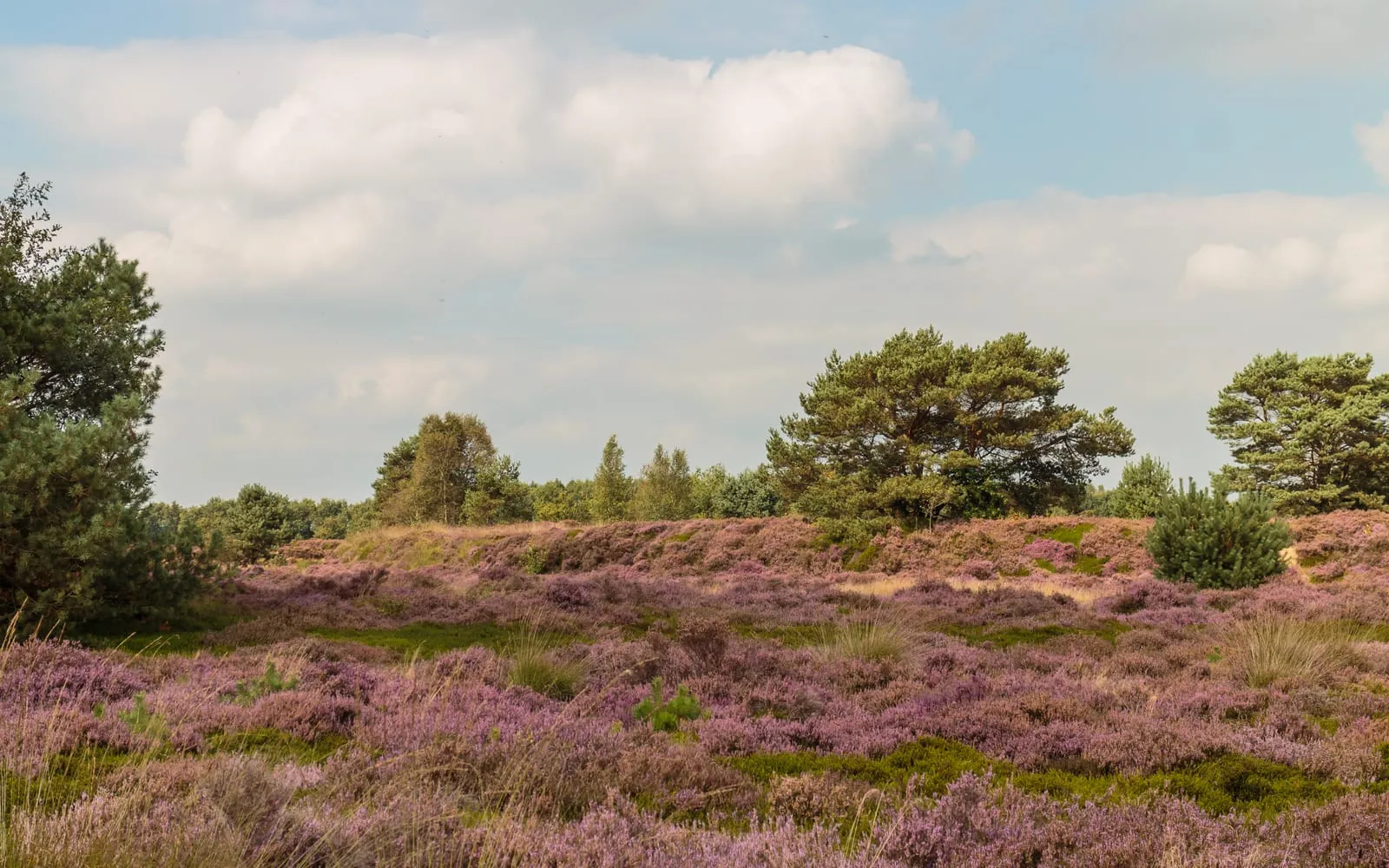
Underplant it with heather, bilberry, juniper and birch to build something closer to a pinewood than a lawn with a conifer in it.
Feeding
None needed, and feeding is counterproductive.
Scots pine evolved on soil with almost nothing in it, and nitrogen produces long soft shoots that spoil the shape and break in wind.
Skip fertiliser on a newly planted tree as well. Mulch instead, which helps by holding moisture and suppressing grass.
Yellow needles on chalk are a pH problem rather than a nutrient shortage, and sequestered iron buys a season at most.
Troubleshooting
How do I tell it from other pines? Two needles per bundle, blue-green and often twisted, plus orange flaking bark on the upper trunk. Corsican and Austrian pine also have paired needles and keep dark grey bark all the way up.
Can I keep one small? Not by pruning. Scots pine does not regrow from old wood and a cut branch leaves a permanent hole. Buy a dwarf cultivar such as ‘Watereri’ or ‘Beuvronensis’ instead.
The needles inside the tree have gone brown and are dropping. Normal. Pines hold needles for about three years and shed the oldest layer every autumn.
All the needles are yellowing. Check the soil. Chalk causes chlorosis in Scots pine and there is no permanent cure. Waterlogged ground causes the same symptom.
When should I prune it? As little as possible, and in late summer if you must. Remove dead or damaged wood and leave the shape alone.
Is it safe around children and pets? Yes. It is not listed as harmful by the RHS and not recorded as toxic by the ASPCA. Pine oil cleaning products are a separate matter and should be kept away from cats.
Something has stripped the bark off the top of the stem. Grey squirrels. A tree guard protects the lower trunk and there is little to be done higher up.
Can I plant one to help the Caledonian pinewood? Buy stock of native Scottish provenance from a nursery that states its seed source, since much of the Scots pine sold in Britain came from continental seed.