
Houseplant
Keeled Gasteria
Gasteria carinata
Also known as Keeled Ox Tongue
How to grow Gasteria carinata, the keeled gasteria, a fan of thick, spotted leaves that tolerates lower light than most succulents.
At a glance
- Difficulty
- Moderate
- Water
- Once the mix has dried right through
- Light
- Bright indirect light; tolerates light shade
- Temperature
- Warm to cool; keep above 5 deg C
- Humidity
- Undemanding; tolerates dry air
- Hardiness
- USDA 9-11, RHS H2, hardy to 5 C
- Type
- Evergreen succulent perennial
- Height
- 15 to 30 cm
- Native to
- South Africa
A small succulent from the winter-rainfall Cape of South Africa, where it grows among rocks and under shrubs. It cannot take frost and does best kept above about 5 deg C, but it tolerates shade and drought better than most succulents. A sodden pot in the cold is the main condition it will not survive.
Hardiness zones describe winter cold alone. Summer heat, humidity, rainfall and the length of the growing season decide as much, so treat the range as the outer limit rather than as a recommendation.
Not known to be toxic
The ASPCA does not list gasterias as toxic, and no harmful substance is recorded in them. A nibbled leaf would be unlikely to cause more than the slight upset any plant might, so it is safe in a home with cats, dogs or small children. It is grown for its thick, spotted, keeled leaves, not for eating.
Sources: ASPCA toxic and non-toxic plants, RHS potentially harmful garden plants
About
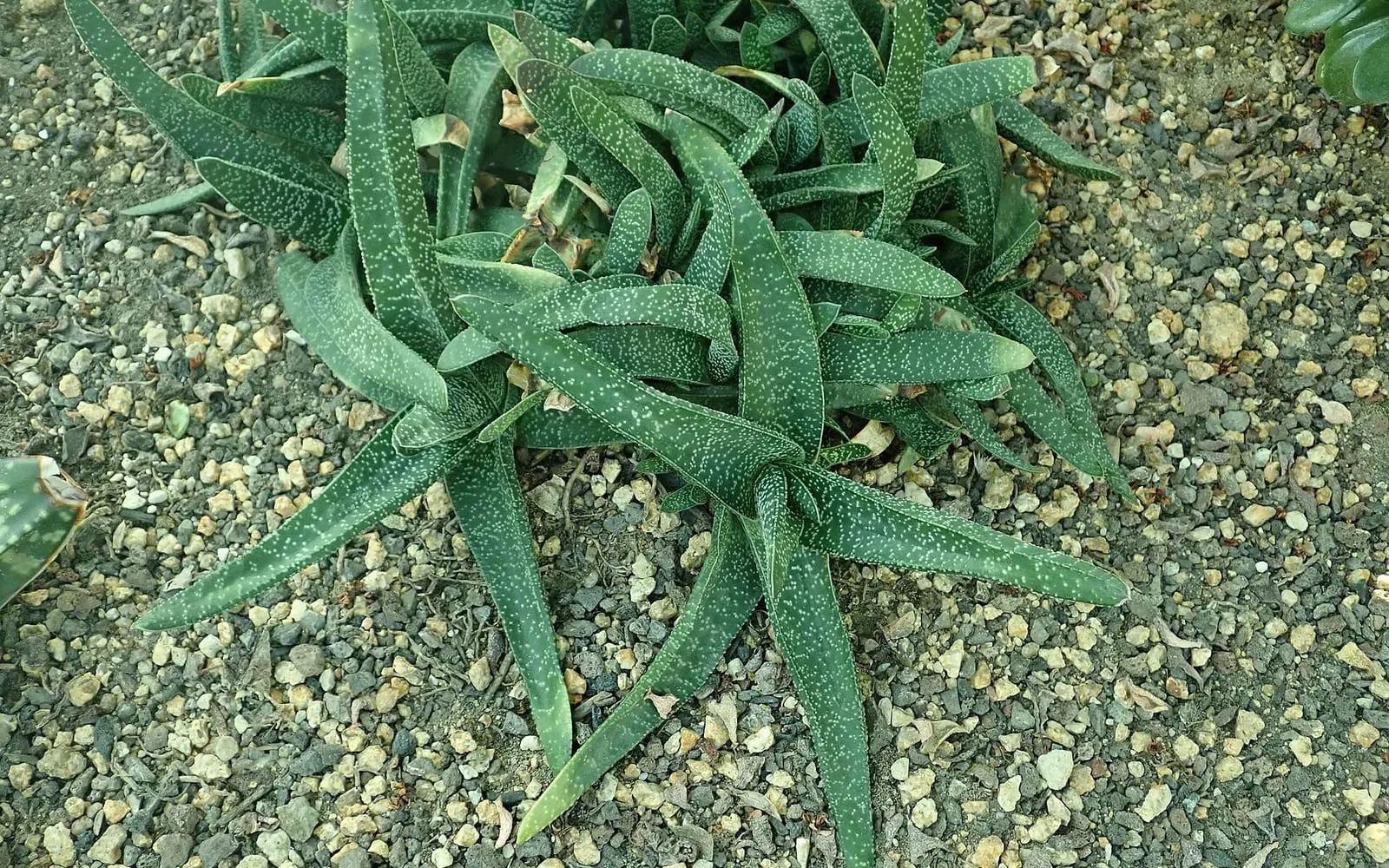
Keeled gasteria forms a cluster of thick, tongue-shaped leaves, dark green and dashed with pale spots, each with a raised ridge, or keel, down its back. That keel is the feature named in the common name and the quickest way to separate it from its smoother relatives. Young plants hold the leaves in two flat ranks; older ones twist them into a low rosette.
It sits in the same undemanding group as the ox tongue plant and, further off, the zebra haworthia. All of them tolerate lower light than many succulents, including a windowsill that never sees direct sun.
Slow, small and long-lived, it stores water in those fat leaves and needs almost nothing beyond an open mix and a light touch with the watering can.
Appearance
Each leaf is thick and firm, shaped like a blunt tongue, dark green with scattered pale spots and small rough bumps, and ridged along the underside into the keel that names it.
A young plant lines its leaves up in two facing ranks, like an open book, and only later spirals them into a low rosette. The whole plant stays compact, fifteen to thirty centimetres across.
Its flowers explain the genus name: they hang from a wiry arching stalk as small, curved, swollen-based blooms in pink and orange tipped with green, each shaped a little like a stomach, which is what Gasteria means.
Small offsets form around the base over time, and once they have made roots of their own they can be split off to make new plants.
Where it is from
Gasteria carinata grows through the southern and western Cape of South Africa, tucked among rocks and sheltered beneath shrubs, in a climate of mild, wet winters and dry summers. Bright shade and fast-draining ground are its everyday conditions.
That dappled, rocky shelter is why it takes lower light so well and why harsh sun scorches it. It needs gritty soil, modest light and sparing water, and has no defence against either frost or a waterlogged root ball.
How it grows
Progress is slow. The plant adds a few leaves a year and produces offsets around its base, filling a pot only over several seasons and needing little help along the way.
Grow it in an open, gritty cactus mix in a pot only slightly larger than the roots, and water only after the mix has dried right through. It seldom needs moving on except to thin out the offsets that form around it.
Bright but indirect light suits it, with harsh midday sun kept off the leaves, and it should stay above about 5 deg C and dry through winter. When in doubt, water less instead of more.
Increase it by teasing off rooted offsets, or by taking a whole leaf, letting the cut callus for a day or two, and setting it in gritty mix to root.
Through the seasons
Spring starts growth as light returns, the moment to repot or divide off crowded offsets.
Summer is the main, if slow, growth period. Water when the mix is thoroughly dry and shade it from a scorching window.
Autumn slows growth as the light drops. Widen the gaps between waterings.
Winter is a dry rest. Keep it above about 5 deg C and barely watered, since a cold, wet pot is what kills it.
Care difficulty
Moderate, and close to easy once you have the watering judged. Its tolerance of shade, dry air and neglect makes it forgiving, and the main way to kill it is to keep it too wet. Treat it as a shade-tolerant succulent and it will last for years.
Watering
Let the gritty mix dry out completely, then soak it and pour off whatever collects beneath. In winter, when it is resting, a small drink now and then is enough to keep the leaves from puckering.
The leaves are its reservoir, so a missed watering harms it far less than a constantly damp pot. Keeping it too dry is the safer mistake.
Warning signs, diseases and pests
Overwatering is the usual problem, and it shows as leaves going soft and brown and a plant that wobbles loose in its pot. Cut the watering right back, check the roots, and salvage the plant from healthy offsets if the base has rotted.
Mealybugs settle at the leaf bases as small white woolly clusters. Pick them off with a cotton bud or treat with horticultural oil, checking down between the leaves.
Pale, bleached or scorched leaves mean the sun is too strong. Shift the plant into bright but indirect light, since this is a shade-tolerant kind, not one for a baking sill.
Growing environment
Bright, indirect light is ideal, and it will take genuine shade far better than most succulents, which is a large part of its value as a houseplant. Only fierce, direct sun is a problem, bleaching and marking the leaves.
Warmth is welcome but not vital; cool, bright winters suit it so long as it stays above about 5 deg C and dry. It tolerates dry air and needs no added humidity.
Give it a gritty, quick-draining mix and a snug pot, and stand it on a bright but sunless sill or in a lightly shaded corner among other gasterias and haworthias.
Feeding
Feeding is barely needed. A dose of dilute cactus feed once or twice through the growing months is enough for a plant this slow, and heavier feeding only encourages soft, weak growth.
Leave it unfed from autumn through winter while it rests, and let fresh mix support a newly potted plant for its first year.
Troubleshooting
The leaves are soft and browning. Overwatering. Cut back hard, check the roots, and root healthy offsets in gritty mix if the base has gone.
The leaves look bleached. Sun that is too harsh. Move it to bright but indirect light; this is a shade-tolerant succulent, not a full-sun one.
How does it differ from the ox tongue plant? Both are spotted gasterias from the same easy group, but this one carries a clear keel down the back of each leaf and forms a rosette with age. The ox tongue plant is a separate species in the same company.
Is it safe around pets? Yes. Gasterias are not listed as toxic by the ASPCA, so it is a safe choice for a home with animals.
How do I make more? Split off rooted offsets, or root a whole leaf in gritty mix after letting the cut dry for a day or two.
Keeled Gasteria problem guides
Not sure what is wrong? See the common houseplant pests guide.