
Houseplant
Queen Victoria Agave
Agave victoriae-reginae
Also known as Royal Agave
How to grow Agave victoriae-reginae, the Queen Victoria agave, a slow-growing compact dome of white-edged leaves with sharp spines.
At a glance
- Difficulty
- Easy
- Water
- Only when the mix has dried out completely
- Light
- Bright light to full sun
- Temperature
- Warm to cool; keep above about 5 deg C
- Humidity
- Undemanding; tolerates dry air
- Hardiness
- USDA 9-11, RHS H3, hardy to -5 C
- Type
- Slow-growing evergreen succulent
- Height
- 30 to 50 cm
- Native to
- Mexico
A small, slow agave from the limestone country of the Chihuahuan Desert in Mexico, hardier than most of its kind and able to take a brief, dry frost once settled, though it is safest above about 5 deg C. It needs strong light, sharp drainage and little water. Cold combined with damp, rather than heat or drought, is what usually kills it.
Hardiness zones describe winter cold alone. Summer heat, humidity, rainfall and the length of the growing season decide as much, so treat the range as the outer limit rather than as a recommendation.
Harmful if eaten
- Do not eat
- The sap, and the spine-tipped leaves
- Harm from
- Handling it and eating it
- Affects
- People, cats and dogs
Agave sap carries calcium oxalate crystals and saponins, which can redden, blister and itch the skin and bring on a rash, and cause a sore mouth and stomach if the plant is eaten. The blunter danger is the leaf tips: each ends in a hard, needle-like spine that can drive a deep, painful wound. Wear gloves and eye protection when you handle or repot it, keep the sap off your skin, and stand it clear of where children and pets pass.
Sources: ASPCA toxic and non-toxic plants, RHS potentially harmful garden plants
About
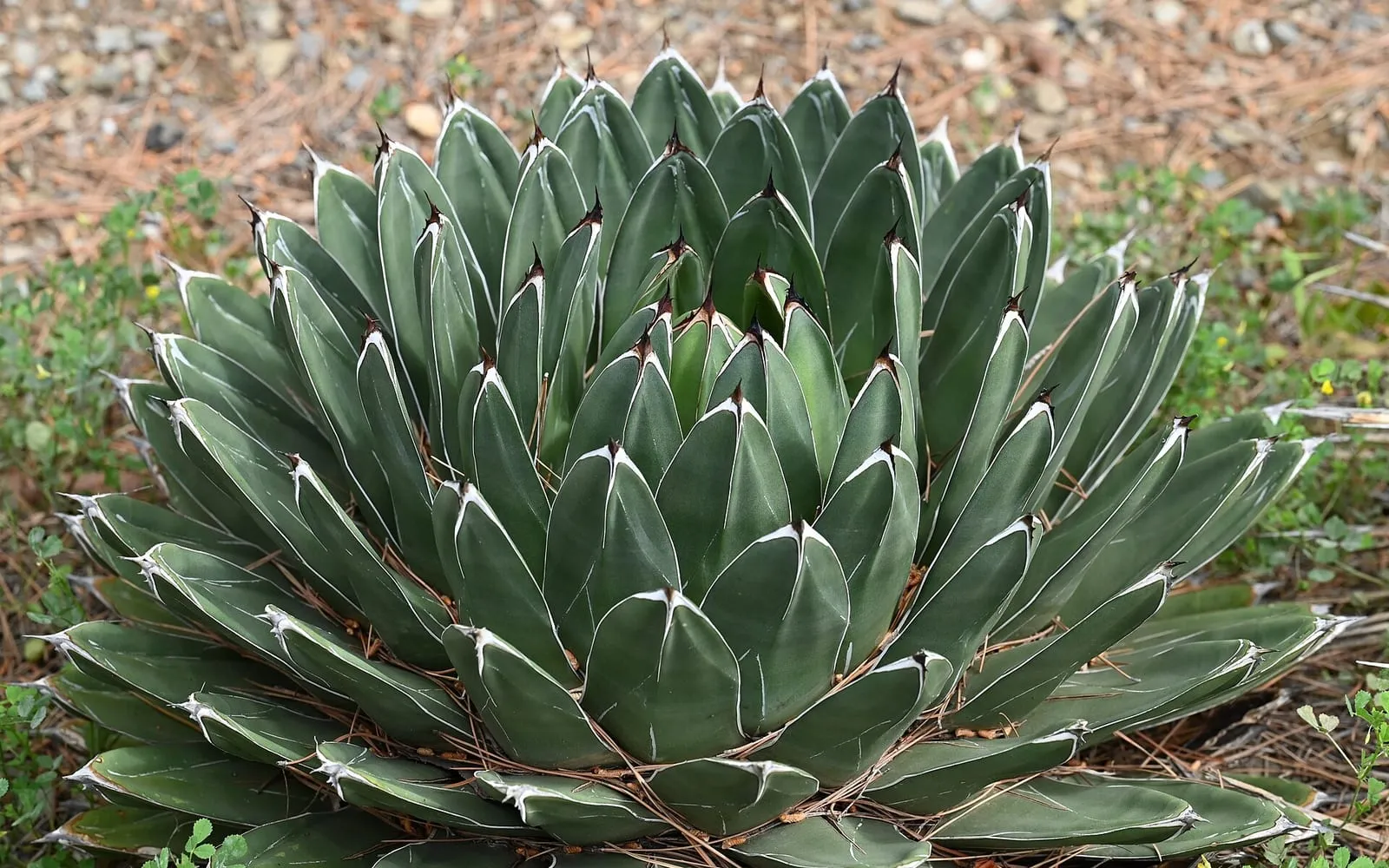
Queen Victoria agave is one of the most distinctive small agaves, a tight dome of stiff, dark green leaves marked with fine white lines along their edges and keels. The white pencilling on near-black green, and the rounded ball of leaves, make it one of the most collected agaves for a pot.
It is a fraction of the size of the huge century agaves and grows very slowly, so a single plant can sit in the same container for years without ever threatening to take over. A hard spine caps each leaf, in the family’s usual manner.
Alongside the vast century plant, it is a plant for a small space and a patient owner, needing only bright light and dry roots. Handle it with care for the spines and it is otherwise about as fuss-free as a plant can be.
Appearance and character
Leaves are stiff, thick and dark green, three-sided towards the ends and marked with crisp white lines along the margins and down the keel, packed hard into a rounded dome.
Each leaf finishes in a short, hard, dark spine, sharp enough to draw blood, which is the first thing to bear in mind when you site and handle the plant.
The rosette stays compact and builds slowly, holding its neat dome shape and rarely passing half a metre across even when fully grown.
Flowering comes once only, after many years, on a tall spike, and the rosette dies once it has flowered, as agaves do. In cultivation that is a distant prospect for most plants.
Where it is from
Agave victoriae-reginae grows wild in the Chihuahuan Desert of northern Mexico, clinging to limestone cliffs and rocky slopes in full sun, sharp drainage and long drought. Hot, dry, bright, stony ground is its natural home.
Those conditions explain its needs. It needs strong light, a very open root run and very little water, and it can take heat, drought and even a brief dry frost. A cold, wet pot is the main thing it cannot survive.
How it grows
It grows slowly, adding only a few leaves each year and keeping its tight globe of foliage, so it needs almost no attention. A plant may take many years just to fill its pot.
Set it in a sharp, gritty cactus mix in a container barely larger than the roots, and water only after the mix has dried out entirely. Repotting is a rare event, best done in gloves and with care for the spines.
Bright light or full sun and a winter kept above about 5 deg C and dry suit it best. It thrives outdoors in a hot, dry, frost-free climate and makes a long-lived pot plant elsewhere, always watered less than instinct suggests.
Offsets occasionally form at the base and can be lifted once rooted, though this species pups sparingly and is more often raised from seed.
Through the seasons
Spring starts slow new growth as light returns, the best time to repot if the plant needs it, wearing gloves.
Summer carries the main, still slow, growth. Water when the mix has dried right out and give it all the light you can.
Autumn slows it further as the light drops. Space the waterings further apart.
Winter is a dry rest. Keep it above about 5 deg C and near bone dry, since cold, wet compost is what rots it.
Care difficulty
Easy, and very tough in a bright, dry spot. It tolerates heat, drought, poor soil and brief cold, needing only strong light and sharp drainage. The reliable mistake is overwatering. The other consideration is the spines, which affect where you put the plant rather than its health.
Watering
Water only once the gritty mix has dried out completely, then soak it and let it drain. Through winter give it almost nothing, since the plant is resting and a cold, wet pot rots it.
The fleshy leaves are its water store, so it copes with neglect far better than constant damp. Keeping it dry is usually the safer choice, and the saucer should never be left full.
Warning signs, diseases and pests
Overwatering rots the roots, and the plant responds with softening, browning inner leaves and a loose grip in the pot. Cut back the water, improve the drainage and cut away any rotten tissue; prevention through gritty soil and restraint matters far more than any cure.
Mealybugs sometimes work down into the tight rosette as white woolly specks. Dab them off or treat with horticultural oil, hunting deep between the leaves where they shelter.
The spines are the main hazard. Keep the plant away from paths and seating, and where it must sit close to a walkway some growers snip the very tip off each spine.
Growing environment
Bright light or full sun keeps the dome tight and the white markings sharp. Too little light loosens the rosette and dulls the pattern.
Warmth is welcome but not essential, and it takes cool, bright, dry winters well as long as it stays above about 5 deg C. Dry air suits it and it needs no humidity.
Grow it in a gritty, free-draining mix in a snug pot, in a bright, airy place away from where anyone might brush the spines. A sunny sill, a conservatory or a hot patio all suit it.
Feeding
A light feed once or twice across spring and summer, using a dilute cactus fertiliser, is all a plant this slow requires. Heavier feeding does more harm than good.
Give none in winter while it rests, and rely on fresh mix to supply a newly potted plant for a year or more.
Troubleshooting
The inner leaves are softening and browning. Overwatering. Cut back the water, improve the drainage and remove rotten tissue. This desert plant needs far less water than most houseplants.
It has barely grown all year. Normal. The species is very slow, which is part of why it suits a pot for so long. Give it bright light and patience, and do not overwater to force it.
The spines are dangerous by a path. A fair worry. Move it away from walkways and seating, and if it must stay, trim the very tip off each terminal spine. Always handle it in gloves.
Can it survive frost? A brief, dry frost once established, being hardier than most agaves, but it is safest above about 5 deg C and dry. Cold with wet is the fatal combination.
How do I raise more? Lift any rooted offsets from the base and pot them in gritty mix, though this species offsets rarely, so most new plants come from seed.
Queen Victoria Agave problem guides
Not sure what is wrong? See the common houseplant pests guide.