
Houseplant
Giant Agave
Agave salmiana
Also known as Pulque Agave, Maguey, Green Giant Agave, Agave salmiana
How to grow Agave salmiana, the giant agave or pulque maguey, with a huge dark green rosette and a long history as the source of pulque.
At a glance
- Difficulty
- Easy
- Water
- When the mix has dried through; drought-hardy
- Light
- Full sun to bright light
- Temperature
- Warm to cool; tolerates light frost, keep dry when cold
- Humidity
- Low
- Hardiness
- USDA 8-11, RHS H3, hardy to -8 C
- Type
- Evergreen rosette succulent, monocarpic
- Height
- Rosette to 2 m across and 2 m tall
- Native to
- Mexico
A very large agave from the high plateau of central Mexico, long cultivated there for the sweet sap that ferments into pulque. It endures the cold nights and light frosts of the highlands but not hard freezing, wanting full sun, sharp drainage and lean soil. It takes light frost when dry, is safest above about minus 8 deg C, and rots in cold, wet ground.
Hardiness zones describe winter cold alone. Summer heat, humidity, rainfall and the length of the growing season decide as much, so treat the range as the outer limit rather than as a recommendation.
Toxic if eaten
- Do not eat
- The sap of the leaves; the leaf tips and teeth also wound
- Harm from
- Handling it, sap in the eyes and eating it
- Affects
- People, cats and dogs
The sap in the leaves of the giant agave holds calcium oxalate crystals and saponins, which irritate skin, eyes and the mouth. A cut leaf can redden and itch the skin of a gardener, and a pet or child that chewed one would suffer burning in the mouth, drooling and vomiting. The ASPCA lists Agave as toxic to cats and dogs. The plant is also heavily armed, with a hard terminal spine and stout marginal teeth that inflict deep wounds. Handle it with gloves and eye protection. The sweet aguamiel that is drawn from the cut flower bud and fermented into pulque is a different fluid from the irritant leaf sap, and it does not make the leaves safe to chew.
Sources: ASPCA toxic and non-toxic plants, North Carolina Extension plant toxicity database
About
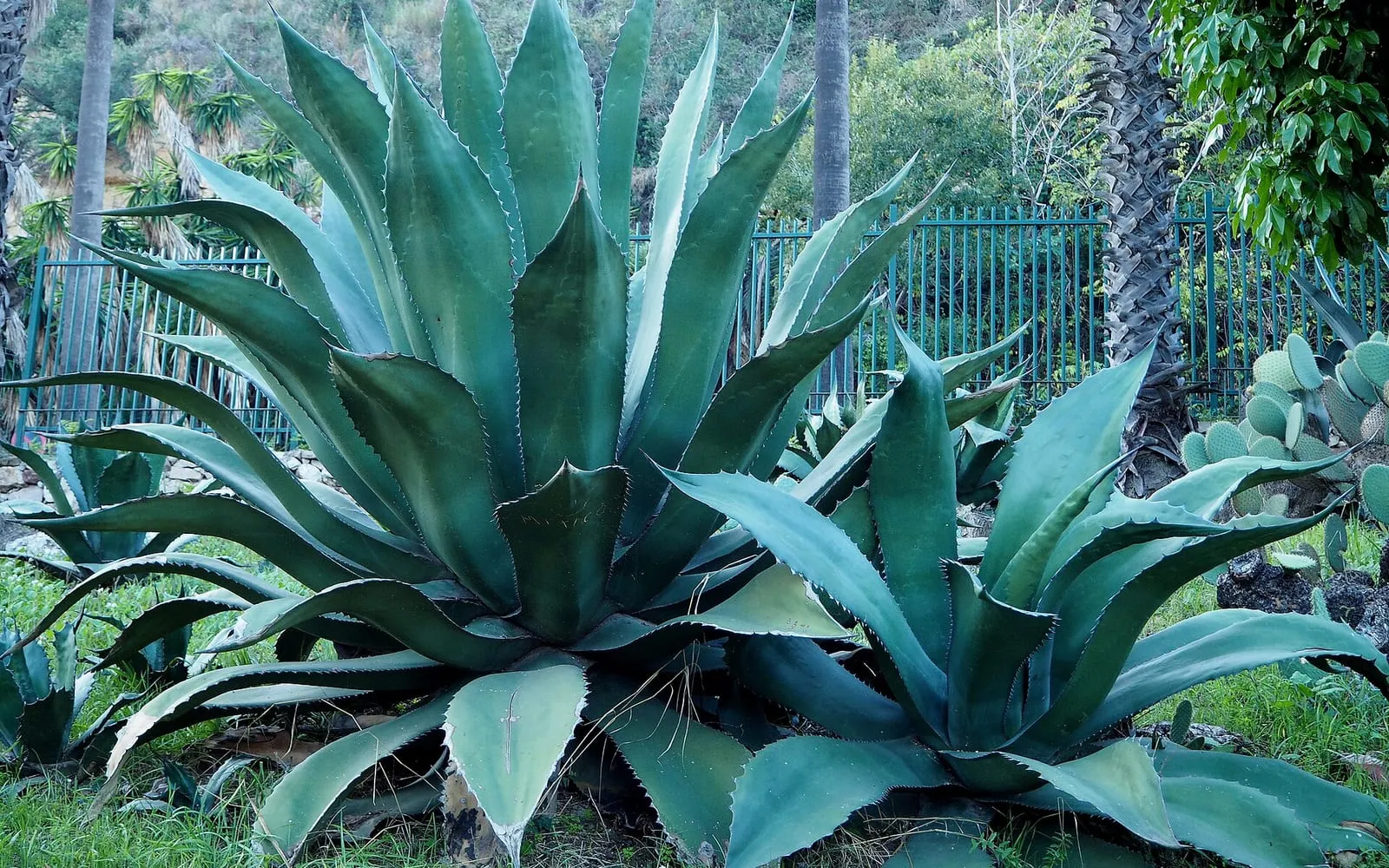
Giant agave is very large once mature. A mature plant forms a vast rosette of long, arching, dark green leaves that can reach two metres across and as tall, with each thick leaf ending in a hard spine and lined with stout teeth. It is one of the largest agaves. In warm climates it is a large garden plant, and indoors it is only practical while young because it will eventually outgrow almost any room.
This is the maguey of the Mexican high plateau, cultivated there for centuries for the sweet sap, aguamiel, that collects when the flower bud is cut out, and which ferments into the traditional drink pulque. That long history of cultivation means it comes in many local forms, but all have the huge scale and the arching, toothed leaves.
It is a hardy, sun-loving desert plant that needs full sun, lean gritty soil and long dry spells. It takes the light frosts of its highland home if kept dry. Indoors it is easy while young; the difficulty is space, since it grows into a giant. Handle it carefully, as its spines can wound and its sap irritates skin.
Appearance and character
The leaves are long, broad and thick, arching outward and often channelled or recurved, a deep grey-green to blue-green, each tipped with a long, hard spine and edged with prominent, hooked teeth that leave their imprint on neighbouring leaves.
The rosette is enormous on a mature plant, up to two metres in every direction, making it one of the biggest agaves. It will eventually dwarf a room or take over a border.
It offsets freely around the base, so it builds into a clump and is easily increased from pups, and those offsets continue the plant after the parent flowers and dies.
Its flower spike can reach eight metres tall, with branches carrying yellow blooms. It is one of the tallest flower spikes of any plant. The rosette flowers once after many years and then dies.
Where it is from
Agave salmiana comes from the high central plateau of Mexico, growing on dry, rocky slopes and cultivated across the highlands for pulque. It is used to strong sun, cold nights, light frost and long dry seasons in lean, stony ground.
Give it full sun, very sharp drainage and lean soil. It tolerates light frost when dry, and endures long drought, but it rots in cold, wet ground and cannot take a hard freeze.
How it grows
For an agave, this is a quick grower once it has room. It produces long leaves each season and gradually reaches its enormous final spread. It comes to flowering size in ten to twenty years, produces its tall flower spike, and then the parent rosette dies back and leaves its pups behind.
While young it lives happily in a big, heavy pot of coarse, gritty compost that drains at once. Wait for the compost to dry all the way down before watering, since the massive leaves are the plant’s reservoir. Be ready to keep potting it on, and to move it outdoors or hand it on, because it will not stay a pot plant for long.
Full sun gives the firmest, best-coloured leaves. Where winters are mild it will take a light frost outdoors as long as the ground is free-draining and it goes into the cold dry. A pot plant should spend winter dry and under cover, with protection from cold rain.
The usual way to propagate it is to lift the pups that crowd around its base and grow them on; seed is possible only after a plant has flowered.
Through the seasons
Spring restarts growth. Water it again, shift it into a larger pot if it is straining its current one, and take off the pups you want to grow on.
Summer is when it builds its longest leaves. Drench it once the compost has dried through, and give it the fullest sun you can.
Autumn slows it down. Cut back the watering, and begin drying off a potted plant ahead of the cold.
Winter is a dry pause. A dry plant can tolerate light frost, so water it barely at all and keep it clear of winter wet.
Care difficulty
Simple to grow, awkward to house. In full sun with fast drainage it is tough, drought-resistant and able to tolerate a light frost when dry. What makes it demanding is size. It grows large enough to overwhelm pots and rooms within a few years, and its spines and teeth make it heavy and hazardous to move. Apart from space and safe handling, it needs little routine care.
Watering
Hold off until the gritty compost has dried right through, then water it heavily and let the surplus run away. Its enormous leaves store a lot of water, so it can go a long time between waterings and copes much better with dryness than standing damp.
In winter give it almost nothing, since cold, wet compost is what rots it. Slightly puckered leaves mean it is thirsty; a soft, discoloured base or crown means it has been kept too wet. Because the plant is so large, keep firmly to the dry side.
Warning signs, diseases and pests
Rot at the base and crown, brought on by cold, wet compost, is the main threat to a potted plant. Keep the compost sharply drained, water it barely through winter, and never let it sit cold and wet. A crown gone soft and slumping is usually past rescue.
The agave snout weevil is the other danger, its grubs mining the base until the whole rosette suddenly collapses; an infested plant should be taken out and destroyed before the pest reaches its neighbours. The other common problem is space, as it steadily outgrows its pot and its corner and has to be moved on.
Scorch is rare on so sun-hardy a plant, but one grown in shade turns loose, pale and floppy, which full sun soon corrects.
Growing environment
It needs full sun and open room. Full light keeps the vast rosette firm and well coloured, while shade leaves it slack, pale and sprawling. Give it the brightest position you have and space to spread into.
Because it takes a light frost when dry, it grows outdoors in a warm climate with sharp drainage, wintered dry. In a pot, keep it dry and sheltered through winter. It prefers dry, low-humidity air.
Start a young plant in coarse, gritty, fast-draining compost in a large, heavy, stable pot in full sun, and plan ahead for where a giant will eventually live. Keep it away from paths because of its spines.
Feeding
It barely needs feeding, and lean soil suits it. Frequent feeding only pushes it faster towards giant size and can soften the leaves. A single weak, low-nitrogen feed in the growing season is enough.
Give it nothing over winter. After repotting, the fresh gritty compost supplies it for a good while.
Troubleshooting
It is outgrowing my space. This species becomes a giant. Pot it on while young, then move it outdoors in a warm climate or pass it on. No potting regime keeps a giant agave small for good.
The base has gone soft and the plant is collapsing. Rot from cold, wet compost, or the snout weevil in the crown. Check for grubs; if it is rot, dry it out and improve drainage, though a soft crown rarely recovers.
Its sap becomes pulque, so can I eat the raw plant? No. The leaf sap irritates skin and mouth. Pulque comes from aguamiel, the sweet fluid that collects in the hollow left when the flower bud is cut out, and that is a different fluid. Do not chew the leaves, and wear gloves to cut them.
It flowered and then died. Why? Agaves flower once, here from an eight-metre mast after many years, then die. Grow on the pups around the base to keep it going.
Is it dangerous to handle? Yes. The sap is an irritant, and the spine and marginal teeth cut deep, so wear gloves and eye protection and take care moving so large and armed a plant.
Giant Agave problem guides
Not sure what is wrong? See the common houseplant pests guide.