
Houseplant
Parry's Agave
Agave parryi
Also known as Artichoke Agave, Mescal Agave, Agave parryi
How to grow Agave parryi, the artichoke agave, a tight blue-grey rosette tipped with black spines and the hardiest of the agaves.
At a glance
- Difficulty
- Easy
- Water
- When the mix has dried through; drought-hardy
- Light
- Full sun to bright light
- Temperature
- Hardy; tolerates frost, keep dry when cold
- Humidity
- Low
- Hardiness
- USDA 5-10, RHS H4, hardy to -20 C
- Type
- Evergreen rosette succulent, monocarpic
- Height
- Rosette 40 to 60 cm across
- Native to
- Southwestern United States, Mexico
One of the hardiest agaves, from the high deserts and mountain grasslands of the southwestern United States and northern Mexico, where it endures hard frost, snow and cold nights. It survives well below minus 15 deg C if kept dry, wanting full sun, very sharp drainage and lean soil. Cold it takes; cold combined with wet is what kills it.
Hardiness zones describe winter cold alone. Summer heat, humidity, rainfall and the length of the growing season decide as much, so treat the range as the outer limit rather than as a recommendation.
Harmful if eaten
- Do not eat
- The sap; the leaf tips and teeth also wound
- Harm from
- Handling it and eating it
- Affects
- People, cats and dogs
Like all agaves, Parry's carries a sap rich in calcium oxalate crystals and saponins that irritates skin and the mouth, reddening and itching the skin of anyone who handles a cut leaf and burning the mouth of a pet or child that chews one. On top of the chemical irritant, this species is sharply armed: each leaf ends in a hard black spine and is edged with teeth that can inflict a deep, painful wound. Wear gloves and eye protection when handling it, and site it away from paths and play areas.
Sources: ASPCA toxic and non-toxic plants, North Carolina Extension plant toxicity database
About
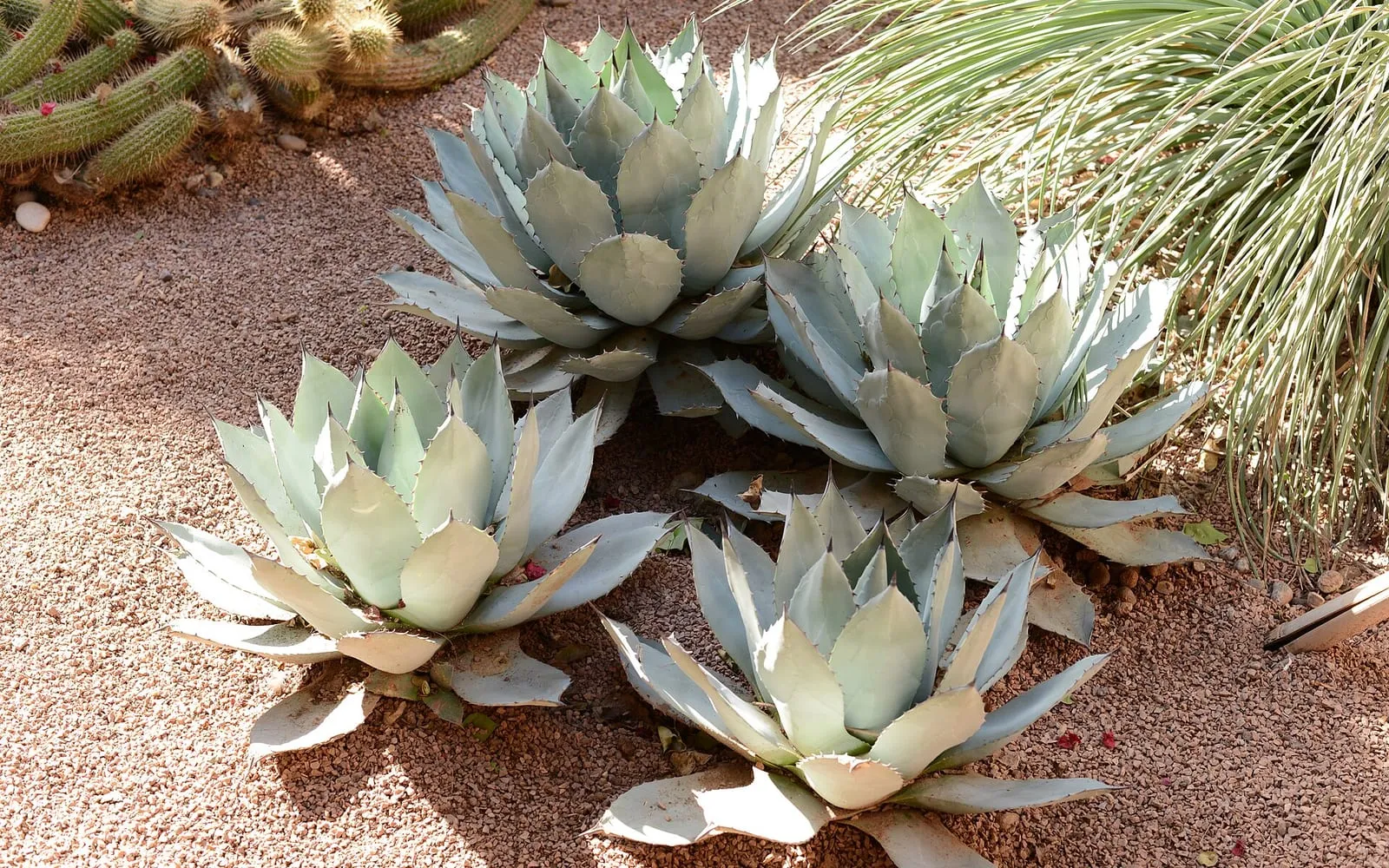
Parry’s agave forms a tight, near-perfect rosette of broad, stubby blue-grey leaves, each tipped with a hard black spine and edged with dark teeth. The overlapping leaves and their neat symmetry give it its other name, the artichoke agave, since a young plant does look like a large silvery artichoke sitting on the ground. It is compact for an agave, staying under about 60 centimetres across.
Its main distinction is toughness. It comes from the high deserts and mountain grasslands of the American Southwest and northern Mexico, where it endures frost, snow and bitter nights that would kill most agaves. It is one of the few agaves that can be grown outdoors year-round in many cold-winter gardens, provided the soil drains sharply. It tolerates cold; cold combined with wet is the problem.
It is a true desert plant, wanting full sun, lean gritty soil and long droughts, the opposite of the milder, softer foxtail agave. Slow, sculptural and all but indestructible in the right spot, it needs sun and sharp drainage and little else.
Appearance and character
The leaves are broad, short and stiff, a striking powdery blue-grey, packed into a dense, symmetrical rosette, each leaf ending in a sharp dark spine and lined with small dark teeth along the margins.
The tight, overlapping arrangement gives the plant its artichoke look and holds its shape well, so even a young plant is a neat, sculptural dome of silver-blue.
It offsets to form clumps over time, so it can be increased from pups, and those offsets carry it on after the parent flowers and dies.
Its flower, on a plant of many years, is a tall mast of yellow blooms rising several metres, after which the flowering rosette dies, leaving the offsets to continue.
Where it is from
Agave parryi grows in the high deserts, rocky slopes and mountain grasslands of the southwestern United States and northern Mexico, at altitudes where hard frost, snow and cold nights are routine. It grows in lean, stony, sharply drained ground in full sun.
Give it full sun, very sharp drainage and lean soil. It tolerates hard frost when dry and endures long drought. Its one weakness is wet soil in cold weather, which rots the roots and crown.
How it grows
It grows slowly, adding a few thick leaves a year to its tight rosette, and is among the most drought- and cold-hardy of succulents. It may take twenty years or more to reach flowering size, then flowers once and dies.
Grow it in a very free-draining, gritty, lean mix in a pot or, in a suitable climate, in the open ground, and water only when the mix has dried through. It stores water in its thick leaves and needs very little.
Give it full sun to keep the rosette tight and the blue-grey colour strong. In the ground it comes through hard frost so long as the soil drains freely and stays dry over winter. In a pot it holds water longer, so keep it barely watered from autumn and stand it clear of winter rain, cold or not.
Propagate by removing the offsets that form around the base, or from seed after flowering.
Through the seasons
Spring wakes slow growth as light and warmth return. Resume occasional watering, repot if needed, and remove offsets.
Summer is the main growing season, such as it is. Water when the mix dries through, and give full sun for the tightest, bluest rosette.
Autumn slows growth further. Ease off the water and begin drying a potted plant off before the wet season sets in.
Winter is a dry rest. Hard frost does it no harm while its roots are dry, so the job is to keep the pot barely moist and out of the rain. Wet at the root in the cold, not the cold itself, is what kills this agave.
Care difficulty
Easy, and one of the toughest succulents to grow, given sun and sharp drainage. It withstands drought, neglect and hard frost, and needs almost nothing. The main danger is wet soil in cold weather, which rots it, so keep it dry in winter. Handling is the other consideration, since its spines and teeth wound badly.
Watering
Water only when the gritty mix has dried through, then soak it and let it drain. The thick, stubby blue leaves store a large reserve, so a Parry’s agave rides out drought that would finish many plants and needs the watering can far less often than a leafy houseplant.
Give almost none over winter, when wet soil in the cold is what rots it. Leaves that pucker slightly are thirsty; a soft, discoloured crown or base signals rot from wet, cold compost. When in doubt, leave it dry.
Warning signs, diseases and pests
Wet soil in cold weather rots the roots and crown, the one real danger to this hardy plant. Keep the mix sharply drained and the plant dry in winter, and never leave it cold and wet. A soft, collapsing crown is usually fatal.
The agave snout weevil bores into the crown, its grubs tunnelling the base and causing a sudden collapse; remove and destroy an infested plant to protect others. Mealybugs may gather in the leaf bases and can be treated with dilute alcohol or oil.
A loose, stretched rosette that loses its tight symmetry and blue colour means too little light. Move it into full sun to firm it up.
Growing environment
Full sun keeps the rosette tight, symmetrical and a strong powdery blue. In shade it grows loose, green and stretched, losing the artichoke form. It needs as much direct light as you can give it.
It is among the hardiest agaves, riding out hard frost and snow to around minus twenty when its roots are dry, so in a garden with sharp drainage it lives outside the year round. A potted plant is the one to watch, since compost holds damp longer than open ground, so pull it under cover from autumn rain. Low humidity suits it.
Grow it in a very free-draining, gritty, lean mix in a pot or in the open ground in full sun, sited well away from paths and play areas because of its spines.
Feeding
Feed little or not at all. Lean soil gives the tightest, bluest, most characterful rosette, and feeding forces soft, loose growth. At most, give a single dilute, low-nitrogen feed in the growing season.
Give nothing over winter. Because it grows so slowly, a plant set in fresh gritty mix draws on it for a year or more before it needs any feed at all.
Troubleshooting
The crown has gone soft and collapsed. Rot from wet, cold compost, or the agave snout weevil in the base. Check for grubs; if it is rot, improve drainage and keep it dry, though a soft crown is usually beyond saving. Keep it dry in winter to prevent it.
The rosette has gone loose, green and stretched. Too little light. Move it into full sun to restore the tight, blue, artichoke form.
Can it really live outside through frost? Yes, if the soil drains sharply and it is kept dry over winter. It is among the hardiest agaves, taking hard frost and snow, but wet cold soil rots it.
Why did it die after flowering? Agaves are monocarpic, flowering once after many years and then dying. Grow on the offsets around the base to continue it.
Is it dangerous to handle? Its sap is a mild irritant, and its spines and marginal teeth wound badly, so wear gloves and eye protection and site it away from where people pass.
Parry's Agave problem guides
Not sure what is wrong? See the common houseplant pests guide.