
Houseplant
Blue Agave
Agave tequilana
Also known as Tequila Agave, Weber's Blue Agave, Agave tequilana
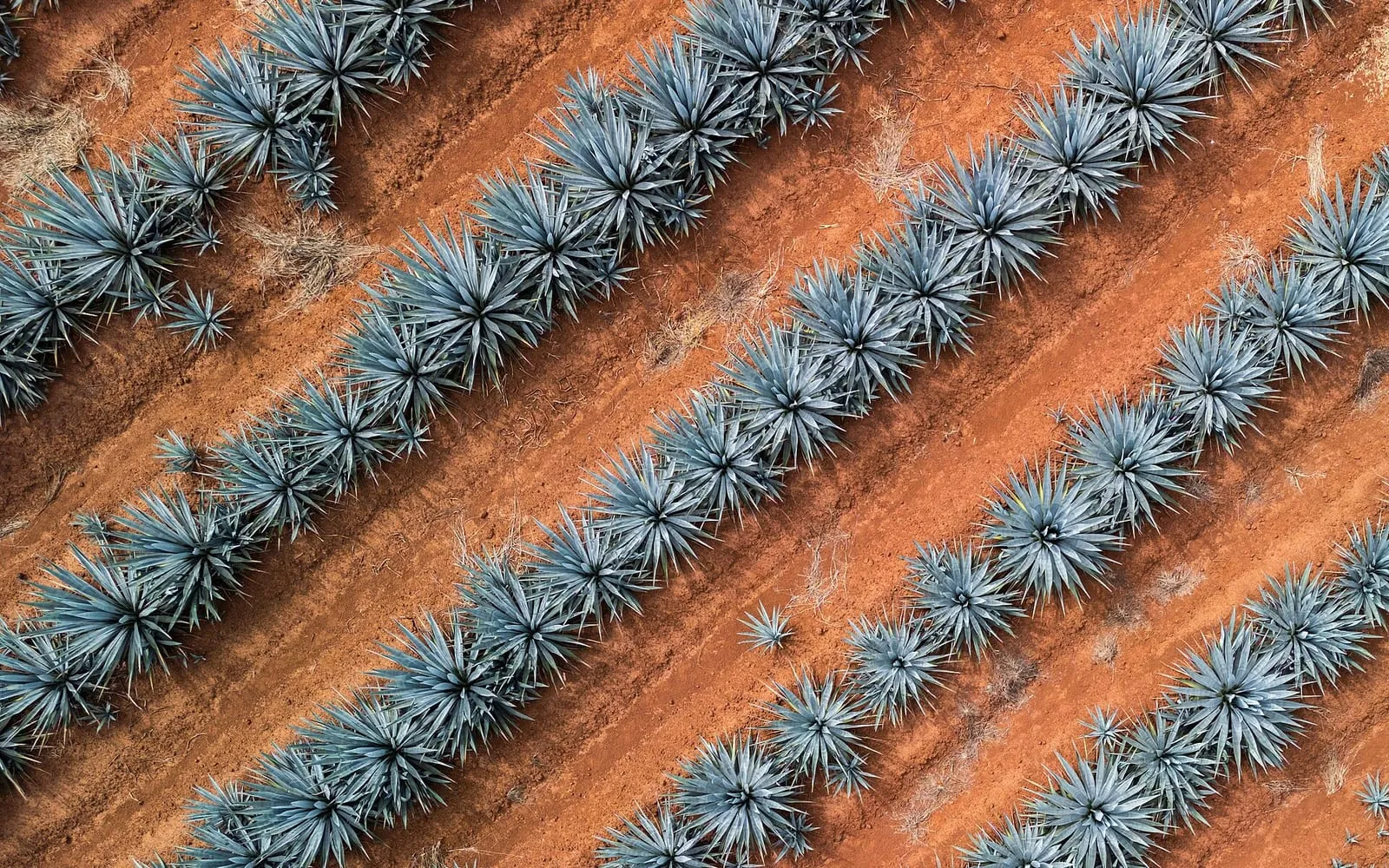
How to grow Agave tequilana, the blue agave behind tequila, with narrow steel-blue leaves. It is the crop of the fields of Jalisco.
At a glance
- Difficulty
- Easy
- Water
- When the mix has dried through; drought-hardy
- Light
- Full sun to bright light
- Temperature
- Warm; tolerates a light frost, keep dry when cold
- Humidity
- Low
- Hardiness
- USDA 9-11, RHS H3, hardy to -5 C
- Type
- Evergreen rosette succulent, monocarpic
- Height
- Rosette 1 to 2 m across
- Native to
- Mexico
The agave from which tequila is made, grown across the highlands of Jalisco in western Mexico in volcanic soil and strong sun. It takes the cool nights and occasional light frost of that upland climate but not a hard freeze, and needs full sun, sharp drainage and lean soil. It is safest above about minus 5 deg C and rots in cold, wet ground.
Hardiness zones describe winter cold alone. Summer heat, humidity, rainfall and the length of the growing season decide as much, so treat the range as the outer limit rather than as a recommendation.
Toxic if eaten
- Do not eat
- The raw sap; the leaf tips and teeth also wound
- Harm from
- Handling it, eating it and sap in the eyes
- Affects
- People, cats and dogs
Blue agave sap contains the calcium oxalate crystals and saponins common to the genus, which irritate skin and the mouth, so a cut leaf reddens and itches the skin and would burn the mouth of a pet or child that chewed one. The ASPCA lists the genus (Agave americana) as toxic to cats, dogs and horses, and sap in the eye is painful and needs rinsing. The narrow leaves end in sharp spines and are edged with teeth that wound. Handle it with gloves and eye protection. Tequila is distilled from the cooked heart of the plant, a process that removes the irritants; the raw plant is not safe to chew.
Sources: ASPCA toxic and non-toxic plants, North Carolina Extension plant toxicity database
About
Blue agave is the plant behind tequila, and one of the most recognisable agaves. Its rosette is built from many long, narrow, sword-like leaves of a cool steel-blue, held stiffly upright and outward, each tipped with a sharp reddish spine and edged with small teeth. Rank on rank of them across the highlands of Jalisco make the blue-grey fields associated with western Mexico.
Every bottle of tequila starts here. After several years the plant is cut down and its swollen heart, the piña, is roasted, crushed and fermented, so the fields are harvested before the agave ever flowers. Grown as an ornamental, it is a strong, architectural rosette of blue blades, and like all agaves it is monocarpic, flowering once after many years and then dying if left to it.
It is a highland desert plant that needs full sun, lean gritty soil and long droughts, and it takes the cool nights and light frosts of upland Jalisco if kept dry. Slower and more upright than the vast giant agave, it makes an easy pot plant given sun and sharp drainage.
Appearance and character
The leaves are long, narrow and rigid, sword-shaped, a distinctive cool steel-blue to grey-blue, held stiffly in an upright, outward-radiating rosette, each ending in a sharp reddish-brown spine.
The leaf margins carry small, regular teeth, and the narrow, upright form gives the plant a spikier, more architectural look than the broad-leaved agaves.
It offsets from the base, so it clumps over time and is easily increased from pups. Those offsets replace the parent rosette after it flowers and dies.
Its flower, on a plant of six to ten years or more, is a tall mast of yellow blooms, though in cultivation for tequila the plant is harvested before it can flower, since flowering drains the heart the drink is made from.
Where it is from
Agave tequilana is grown across the highlands of Jalisco and neighbouring states in western Mexico, in rich volcanic soil, strong sun and a climate of warm days, cool nights and occasional light frost. Its whole modern range is tied to the tequila industry.
Give it full sun, very sharp drainage and lean soil. It tolerates cool nights and a light frost when dry, and endures long drought. Like its relatives, it rots in cold, wet ground and cannot take a hard freeze.
How it grows
This is a slow plant. Over the warm months it lengthens its blue blades one at a time and firms up the upright rosette, then all but stops through winter. Reaching harvest or flowering size takes it six to ten years, and if it is left to bloom it produces a tall mast of yellow flowers and dies away afterwards.
A young plant does well in a stout pot of coarse, quick-draining, gritty compost. Let the compost bake dry before you wet it again, because the swollen leaves hold the plant’s water reserve. Move it up a pot size as the roots fill their container, though it stays smaller and more upright than the huge agaves.
Sun matters more than anything else. Strong light holds the leaves stiff and keeps the blue strong. In a warm garden it will tolerate a light frost provided the ground drains fast and stays dry through the cold months. A pot plant is best kept nearly bone dry and under cover once winter sets in.
New plants come most easily from the pups that spring up around the base. Prise one off with a few roots and pot it separately. Seed is an option only if you let a plant flower.
Through the seasons
Spring starts growth as the light strengthens. This is the moment to start watering again, to move it up a pot if the roots are crowded, and to detach any pups.
Summer is when the longest blue leaves are made. Soak it once the compost has dried right out, and stand it in the strongest sun you can offer.
Autumn slows growth. Water less and less, and start drying a potted plant off before the cold arrives.
Winter is a dry rest. A light frost does no harm if the plant is dry, so keep it barely watered and out of winter wet, which does far more damage than the cold itself.
Care difficulty
Easy in a sunny, sharply drained spot. It is a rugged desert plant that copes with drought and a light frost and needs little more than good light and a lean, gritty root run. The thing most likely to kill it is a pot left wet through a cold winter, which rots the base. Its narrow leaves are sharp at tip and edge, so it needs siting and handling with some thought. Past those two points, it needs little attention.
Watering
Let the gritty compost dry out completely, then give it a thorough soak and pour off whatever drains. Those thick, water-storing leaves mean it can go a long time between drinks, far longer than an ordinary houseplant, and it far prefers being left dry to being kept damp.
Through winter it needs next to no water at all, since a cold, sodden pot is what rots it. A little puckering in the leaves says it is thirsty; a base or crown that turns soft and discoloured says it has been too wet. If you cannot decide, leave it alone.
Warning signs, diseases and pests
The main danger in a pot is a wet, cold winter, which sets rot into the base and crown. Prevent it with fast-draining compost, dry conditions in the cold months, and a spot that never leaves the roots standing in water. Once the crown softens and slumps, there is rarely any saving it.
Watch, too, for the agave snout weevil, whose grubs eat their way into the base and can bring a plant down without warning; a rosette that suddenly keels over has often been hollowed out from within, and an infested plant is best destroyed before the pest spreads. Mealybugs sometimes lodge in the tight leaf bases, where a cotton bud of dilute alcohol or a horticultural oil deals with them.
If the rosette opens out, greens over and loses its blue, it is short of light. Move it into full sun to restore the tight shape and colour.
Growing environment
Give it the sunniest place you have. Strong, direct light keeps the rosette compact and upright and the leaves that cool steel-blue; deprived of it the plant sprawls, greens and stretches. There is little danger of too much sun for this species.
A light frost is within its range if the plant is dry, so a warm-climate garden with sharp drainage suits it outdoors year-round, kept dry over winter. Indoors, the winter rule is dry. It needs dry, low-humidity air throughout.
Pot it in coarse, gritty, fast-draining compost in a heavy, stable container, stand it in full sun, and keep it clear of paths, doorways and seating where its spines could catch someone.
Feeding
It hardly needs feeding, and does better lean. Poor soil gives the tightest, bluest rosette, while a rich diet only softens the leaves and loosens the form. One weak, low-nitrogen feed across the whole growing season is the most it needs.
Over winter, give it nothing. After repotting, the fresh gritty compost supplies it for a long stretch, since it grows so slowly.
Troubleshooting
The rosette has opened out and lost its blue. It is short of light. Move it into full sun to restore the tight shape and the steel-blue colour.
The base has gone soft and the plant is toppling. Either rot from a cold, wet pot or the snout weevil tunnelling the crown. Look for grubs; if it is rot, dry it out and improve drainage, though a soft crown seldom recovers. Keeping it dry in winter is the way to avoid both.
Can I make tequila from it at home? No. Tequila comes from the cooked, fermented heart under strict regional rules, and the raw plant is a skin and mouth irritant. Grow it to look at, and do not chew it.
It flowered and then died. Why? That is how agaves work. They flower once, from a tall mast, after many years, and then die. The pups around the base replace the parent rosette.
Is it dangerous to handle? The sap is an irritant and the narrow leaves are sharp at tip and edge, so wear gloves and eye protection and place it where nobody will brush against it.
Blue Agave problem guides
Not sure what is wrong? See the common houseplant pests guide.