
Houseplant
Foxtail Agave
Agave attenuata
Also known as Soft-leaf Agave, Lion's Tail, Swan's Neck Agave, Agave attenuata
How to grow Agave attenuata, the foxtail agave, with a spineless grey-green rosette and a long curving flower spike, the one agave safe to brush against.
At a glance
- Difficulty
- Easy
- Water
- When the mix has dried through
- Light
- Bright light with some direct sun
- Temperature
- Warm; keep above about 5 deg C
- Humidity
- Low to average
- Hardiness
- USDA 9-11, RHS H2, hardy to 3 C
- Type
- Evergreen rosette succulent, monocarpic
- Height
- Rosette to 1 m across
- Native to
- Mexico
A soft-leaved agave from the highlands of central Mexico, growing on rocky volcanic slopes. Unlike most agaves it comes from a milder, less arid setting, and it is the tenderest of the group, with no frost tolerance and damage below a few degrees above zero. It needs bright light, sharp drainage and warmth, and is safest kept above about 3 deg C.
Hardiness zones describe winter cold alone. Summer heat, humidity, rainfall and the length of the growing season decide as much, so treat the range as the outer limit rather than as a recommendation.
Harmful if eaten
- Do not eat
- The sap
- Harm from
- Handling it and eating it
- Affects
- People, cats and dogs
Agave sap contains calcium oxalate crystals and saponins, which irritate skin and the mouth. The foxtail agave is the gentlest of its group and, unlike its cousins, has no spines to wound, but the sap of a cut or broken leaf can still redden and itch skin and would burn the mouth of a pet or child that chewed it. Wear gloves when cutting the plant, wash off any sap, and keep chewing pets away.
Sources: ASPCA toxic and non-toxic plants, North Carolina Extension plant toxicity database
About
Foxtail agave is the agave you can safely brush past. Where most of its family have sharp spines, this one has soft, unarmed leaves, broad and smooth, in a pale grey-green to blue-green rosette that can reach a metre across. With age the rosette rises on a short, thickening trunk, so an old plant looks like a green rosette on a stumpy stem.
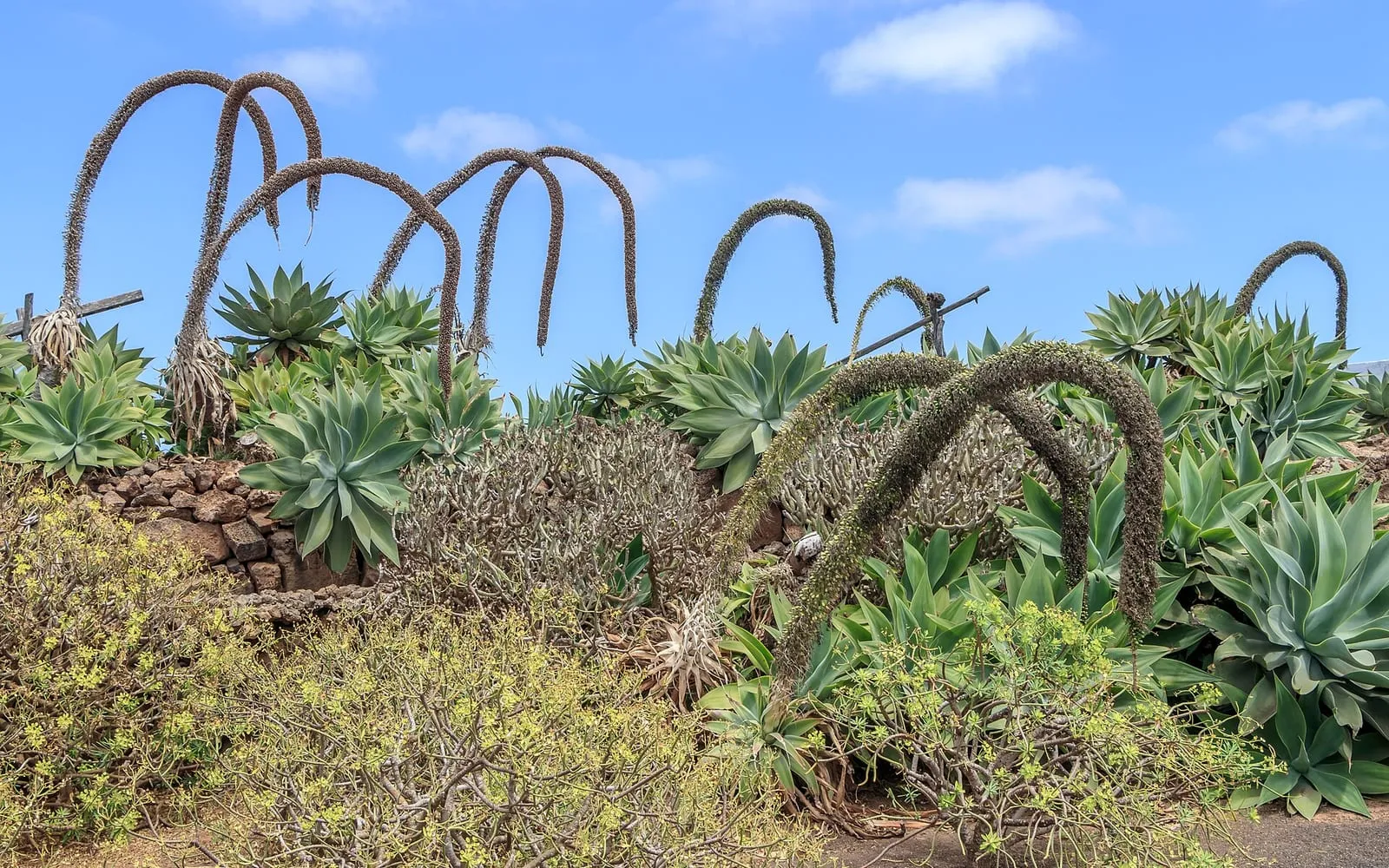
Its common name comes from the flower spike. Instead of the rigid, upright flower stems of other agaves, it sends up a long, arching, densely packed spike that curves over before turning up at the tip, giving it the names foxtail, lion’s tail and swan’s neck. Like all agaves it is monocarpic, flowering once after many years and then dying, but it leaves a ring of offsets behind.
It comes from the milder highlands of central Mexico instead of true desert, so it is a touch thirstier and far more tender than the desert agaves, with no frost tolerance at all. Given bright light, sharp drainage and warmth, it is one of the easier large succulents to grow.
Appearance and character
The leaves are broad, soft and smooth, pale grey-green to blue-green, with no marginal teeth and no sharp terminal spine, so the rosette is safe to touch and to site where people pass.
The rosette is large and open, up to a metre across, and with age rises on a short, thickening trunk that can lean and curve, giving an old plant a palm-like outline.
It offsets freely around the base, so a plant builds into a clump and is easily increased, and any offsets replace the parent after it flowers and dies.
Its flower is a long, dense, arching spike of greenish-yellow blooms that curves over like a tail, quite unlike the stiff upright flower stems of other agaves, and appears only on a mature plant after many years.
Where it is from
Agave attenuata grows in the highlands of central Mexico, on rocky volcanic slopes at moderate altitude, in a climate milder and less arid than the deserts most agaves inhabit. It rarely if ever meets frost in the wild.
Give it bright light, sharp drainage and warmth. It tolerates a little more moisture than a desert agave, and has no defence against cold, being damaged by even a light frost.
How it grows
It grows steadily through the warm months, widening its rosette and, over years, building its short trunk, and slows over winter. It is faster and softer-growing than the tough desert agaves, and reaches flowering size in perhaps ten to twenty years.
Grow it in a gritty, free-draining cactus or succulent mix in a stout pot, since a big rosette becomes top-heavy. Water when the mix has dried through, giving a little more in summer than a desert succulent needs, and keep watering sparing in winter.
Give it bright light with some direct sun, acclimatising it gradually to strong sun to avoid scorching the soft leaves, and keep it warm above about 3 deg C. Move it under cover well before any frost.
Propagate by detaching the offsets that cluster around the base, an easy and reliable method, or grow from seed after flowering.
Through the seasons
Spring starts active growth as light and warmth return. Resume watering, repot if needed, and remove offsets to propagate.
Summer is the main growing season. Water when the mix dries, feed lightly, and give bright light, shading only against sudden strong sun.
Autumn slows growth as light fades. Ease back on watering and bring an outdoor plant under cover before the cold.
Winter is a rest above about 3 deg C. Water sparingly, since this tender agave rots in cold, wet compost.
Care difficulty
Easy, and among the most forgiving large succulents, so long as it is kept warm and frost-free. It grows readily, offsets freely, and lacks the spines that make other agaves awkward to handle. Its two main needs are protection from frost, which it cannot survive, and sharp drainage, since cold, wet compost rots it. Give it warmth and light and it needs little attention.
Watering
Water when the gritty mix has dried through, giving the rosette a good soak and letting it drain. Being from a milder climate it takes a little more water in summer than a desert agave, but it still needs to dry out between drinks.
Water sparingly over winter, when cold, wet compost is the main danger to this tender species. Leaves that pucker are thirsty; a soft, discoloured crown or yellowing lower leaves point to rot from overwatering or cold.
Warning signs, diseases and pests
A cold, wet pot rots the roots and crown, the most common way to lose this frost-tender agave. Keep the mix sharply drained, water sparingly in winter, and never leave it cold and wet. A soft, collapsing crown is usually fatal.
The agave snout weevil bores into the crown of agaves and can destroy a plant from within, its grubs tunnelling the base; a rosette that suddenly collapses may have been attacked. Remove and destroy an infested plant to protect others. Soft-scale and mealybugs may also gather in the leaf bases.
Pale, scorched patches follow a sudden move into strong sun on the soft leaves. Acclimatise the plant to strong light gradually.
Growing environment
Bright light with some direct sun keeps the rosette firm and its colour good, though the soft leaves need gradual acclimatising to strong sun to avoid scorch. In poor light the rosette grows loose and pale.
Warmth is essential, above about 3 deg C, since this is the tenderest of the agaves and has no frost tolerance. It takes ordinary or low humidity and dislikes cold, damp conditions.
Grow it in a gritty, free-draining mix in a stout, stable pot, on a bright sill or, in a frost-free climate, outdoors in a sunny spot. Bring it under cover well before any frost.
Feeding
Feed only once or twice over spring and summer with a dilute, low-nitrogen cactus feed. It needs little, and rich feeding forces soft, weak growth.
Give nothing over winter. Fresh gritty mix supports a newly potted plant through its first weeks.
Troubleshooting
The crown has gone soft and is collapsing. Rot from cold, wet compost, or the agave snout weevil boring into the base. Check for grubs; if it is rot, improve drainage and keep it warmer and drier, though a soft crown is usually beyond saving.
There are pale, scorched patches on the leaves. A sudden move into strong sun on the soft leaves. Acclimatise it to strong light gradually.
Is it safe to have near a path or children, given other agaves’ spines? On the spine question, yes. This agave has soft, unarmed leaves and no sharp tip, unlike its cousins. Its sap is still a mild irritant, so wear gloves when cutting it and wash off any sap.
Why did my plant die after flowering? Agaves are monocarpic, flowering once and then dying. Grow on the offsets around the base to continue it.
How cold can it take? Very little. It is the tenderest agave, damaged by even a light frost, so keep it above about 3 deg C and under cover in winter.
Foxtail Agave problem guides
Not sure what is wrong? See the common houseplant pests guide.