
Disease
Apple and pear scab
Venturia inaequalis
Also called Apple scab, Pear scab, Black spot on apples
Apple scab causes olive-black blotches on leaves and rough corky patches on fruit. Raking up infected leaves in autumn reduces spores, and resistant cultivars are the best long-term fix.
At a glance
- Type
- Disease
- Cause
- Fungus
- Severity
- Weakens the plant
- Affects
- Herbs and edibles
- Active
- April to September
- Established in
- Worldwide
What you are seeing
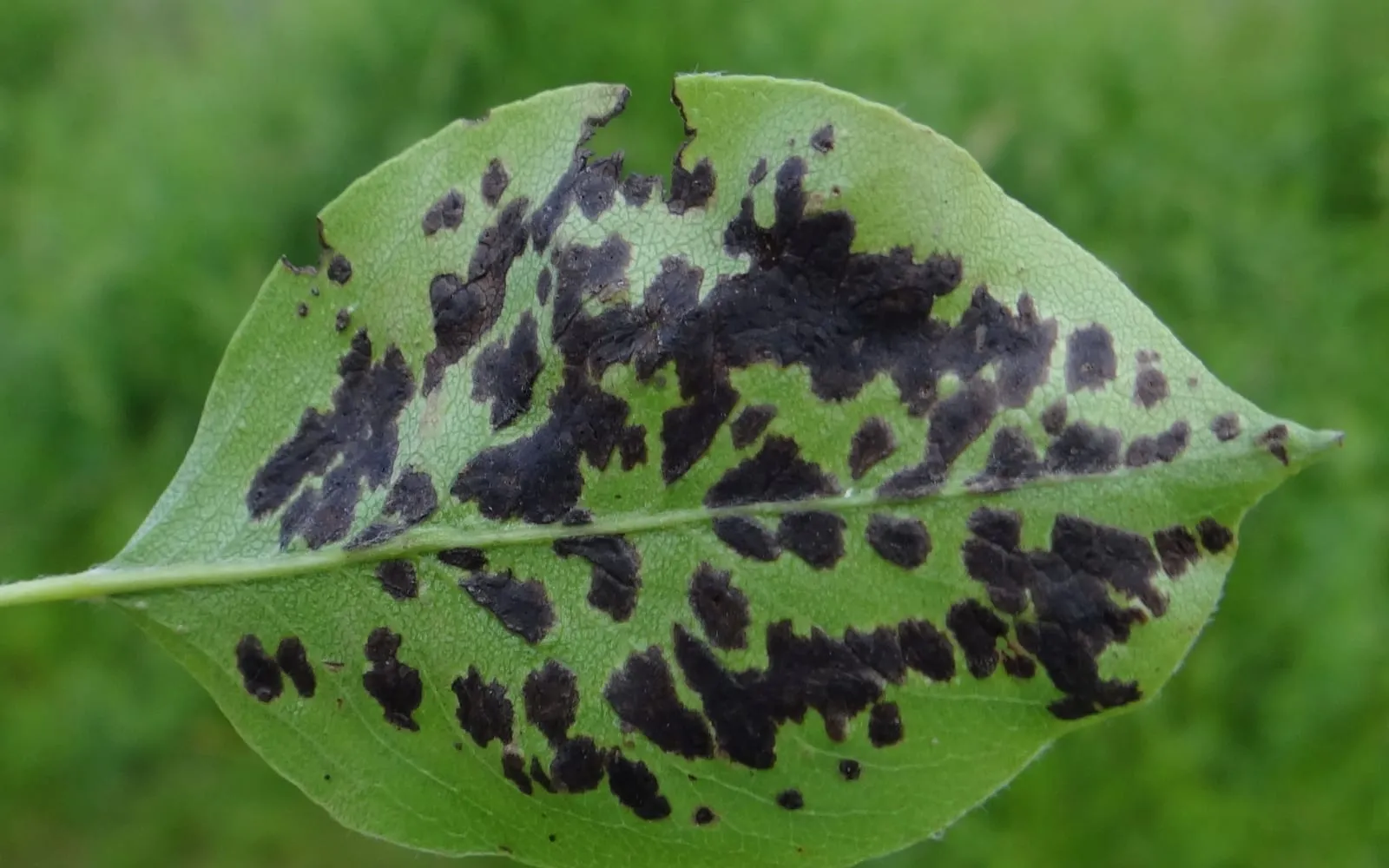
- Olive-green to black velvety blotches on the leaves, with a soft indefinite edge
- Leaves yellowing around the blotches and falling from midsummer
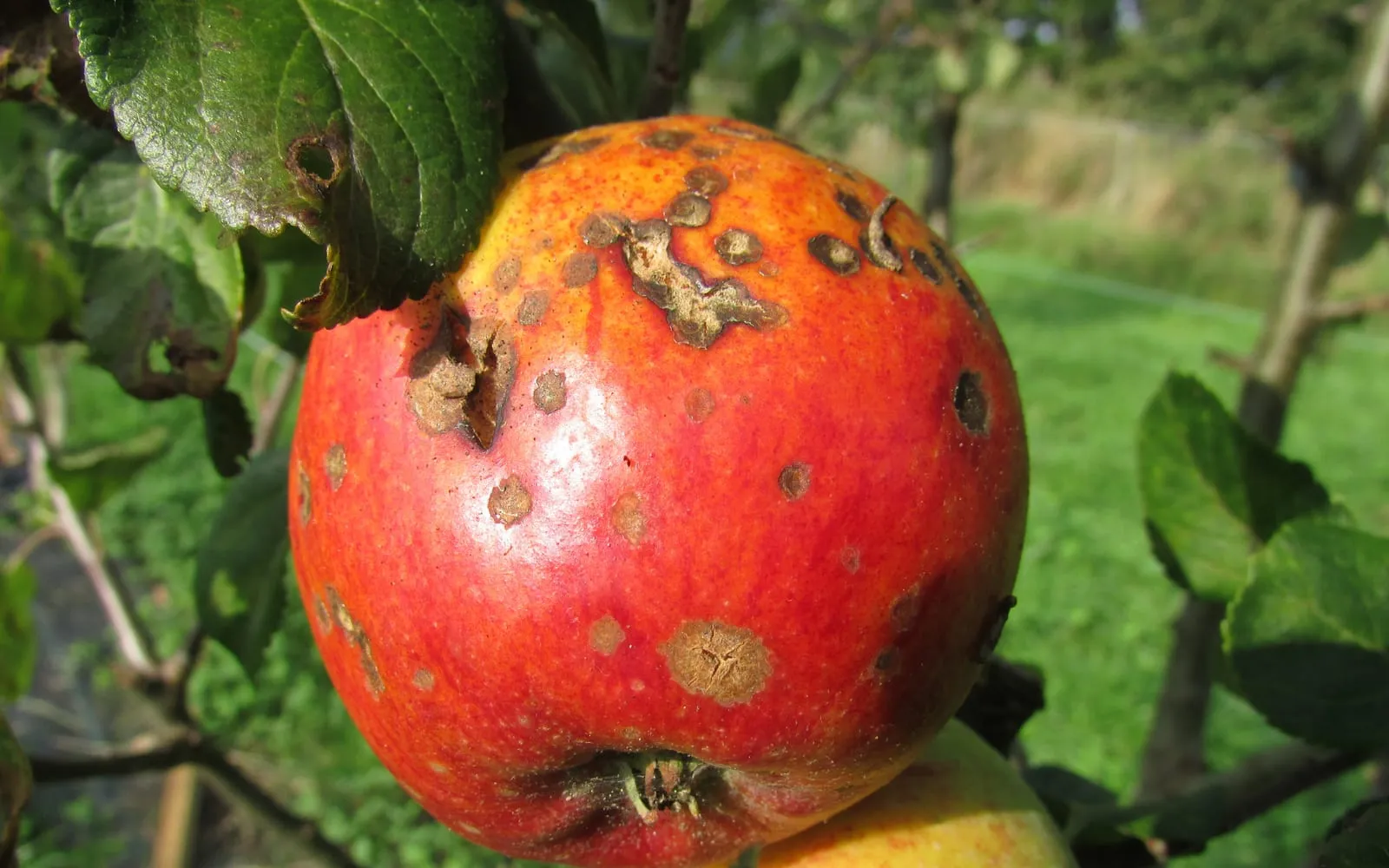
- Rough corky brown patches on the fruit, which crack open as the apple swells
- Small fruit that stays misshapen where a scab formed early
- Blistered or scabby patches on young shoots, most often on pear
- The same cultivar affected every year while the tree beside it stays clean
Before you treat anything
Scabbed fruit is safe to eat once the corky patches are cut away. Discard any apple where a scab crack has let a rot in.
What you are looking at
Olive-green to sooty black blotches appear on the leaves from late spring. They look velvety rather than glossy and their edges fade out instead of stopping at a rim. The leaf yellows around them and drops early, so a badly affected tree can be half bare by August.
On the fruit the same fungus makes rough brown corky patches. As the apple swells the corky tissue cannot stretch and splits, leaving a crack through the skin. The flesh underneath is sound.
Pears get their own species of the fungus, doing the same thing, and it also raises blistered scabby patches on the young shoots, which apples show less often.
Why some trees get it every year
Spores overwinter in the fallen leaves. Through spring, rain triggers them to fire upwards into the opening buds and infect the new leaves, and once the fungus is established on those leaves it produces a second kind of spore that splashes around the tree all summer whenever the foliage is wet.
Two things follow. Leaf fall under the tree is next spring’s infection, so clearing it up in autumn is a treatment rather than tidiness. And wet warm springs give bad years while dry ones give clean fruit, whatever anyone applied.
Cultivar matters more than either. ‘Cox’s Orange Pippin’ scabs in a wet summer and ‘Discovery’ next to it stays clean, on the same soil, in the same year, with the same treatment. Anybody planting a new tree has the whole problem in their hands at that moment.
The sprays have gone
Mancozeb, which was the standard amateur treatment for scab, had its approval withdrawn in 2021, and myclobutanil went the same way. Neither is available and neither should be sought out. Most of what still ranks online for this term recommends one of them.
That leaves the leaf raking, the pruning and the cultivar choice carrying the page, and between them they handle it. A tree with an open centre, standing where air moves, cleared of its own leaf fall each autumn, carries light scab in a bad year and none in a good one.
Scab is also worth putting in proportion. It disfigures fruit and thins the canopy, and it does not kill apple or pear trees. Trees have carried it in British orchards for as long as there have been British orchards.
What to do about it
Rake up and remove the fallen leaves every autumn, or mow them where the tree stands in grass.
Prune in winter to open the centre out so the foliage dries quickly.
Cut out scabby shoots, especially on pears.
Thin off the worst-marked fruitlets in June.
Pare the scabs off the fruit and eat it, using the marked ones first because they store badly.
When planting, choose a resistant cultivar and place it where air moves.
What it gets mistaken for
Brown rot turns the flesh brown and soft and grows concentric rings of buff pustules on the surface. Scab stays dry and superficial.
Pear rust puts bright orange spots on the top of the leaf, each with a shaggy horned outgrowth on the underside, and it needs a juniper nearby to complete its life cycle.
Apple powdery mildew coats shoots, leaves and blossom in a white felt and stunts the growth from the tip back.
Bitter pit shows as small sunken brown spots scattered through the flesh and under the skin, with no surface roughness and no fungus.
Russeting is a natural brown roughness on the skin of certain cultivars, covering the fruit evenly rather than appearing as discrete blotches, and it is a feature rather than a problem.
What to do, in order
Start here
Prevention, and the changes that stop the problem returning. Most of these pages should end at this tier.
- Rake up and remove every fallen leaf
- The fungus spends the winter in the dead leaves under the tree and fires its spores up into the opening buds during spring rain. Clearing those leaves in autumn cuts next year's infection more than anything else available to a gardener. Bin them, burn them, or put them in the hot middle of a heap.
- Plant a cultivar that resists it
- 'Discovery', 'Sunset', 'Winston', 'Ashmead's Kernel' and 'Ellison's Orange' carry good resistance among apples, and 'Concorde' and 'Beth' among pears. 'Cox's Orange Pippin' and 'Gala' scab badly in a cool wet summer and always will. Where a tree is being replaced, this decision is worth more than every spray ever sold for the problem.
- Prune to open the centre of the tree
- Spores need the leaf to stay wet for several hours. An open framework that lets air and light through dries the foliage by mid-morning and infects far less than a congested one. Winter pruning on apples and pears is the moment to do this.
- Cut out scabby shoots in winter
- Pear scab in particular overwinters in blistered lesions on young wood as well as in leaves, so a tree that keeps reinfecting itself is carrying its own supply. Prune those shoots out and take them away.
- Site new trees where they will dry quickly
- A damp shaded corner against a north wall keeps foliage wet half the morning. Open ground with air movement gives noticeably less scab on the same cultivar.
- Eat the fruit anyway
- Scabbed apples and pears are sound under the skin. Pare the corky patches off and they cook and eat perfectly well, and they keep less long in store, so use those first.
Then reach for a barrier
Netting, hand removal and water. Nothing here harms anything except the target.
- Mow the fallen leaves where raking is impractical
- Under a large tree standing in grass, running a mower over the leaf fall in autumn chops the leaves small and speeds their breakdown by worms, which takes the overwintering stage out of circulation before spring.
- Pick off badly scabbed fruitlets in June
- Thinning takes the worst-affected fruit off while it is small, which improves what is left and removes a source of summer spores.
In pictures
Plants affected
Guides that name it among the problems to watch for. The list is the plants it is characteristic of rather than everything it will feed on.