
Edible
Oregano
Origanum vulgare
Also known as Wild marjoram, Greek oregano
How to grow oregano, Origanum vulgare. Why poor dry soil gives better flavour, cutting back for a second flush, and the difference between oregano and marjoram.
At a glance
- Difficulty
- Easy
- Water
- Rarely once established
- Light
- Full sun, and as much of it as possible
- Temperature
- Very hardy, to -20 deg C
- Hardiness
- USDA 4-9, RHS H6, hardy to -20 C
- Type
- Herbaceous perennial, spreading slowly by rhizome
- Height
- 30-60 cm in flower
- Native to
- Europe and western Asia, including native Britain
- Best month
- July in the Northern Hemisphere, January in the Southern Hemisphere
Flavour depends on which plant you bought as much as on how you grow it. Greek oregano, Origanum vulgare subsp. hirtum, carries the carvacrol that gives the pizza flavour, and the ordinary garden-centre species is often close to scentless. Heat, sun and poor dry soil concentrate the oil, and rich damp ground gives a lush plant that tastes of grass.
Hardiness zones describe winter cold alone. Summer heat, humidity, rainfall and the length of the growing season decide as much, so treat the range as the outer limit rather than as a recommendation.
Every month named in this guide is for the temperate Northern Hemisphere. If you garden in the Southern Hemisphere, shift each one by six months, so July becomes January. Closer to the equator the wet and dry seasons matter more than the calendar, and the shift stops being a useful guide.
Not known to be toxic
- Safe to eat
- The leaves and flowering tops
Non-toxic. The ASPCA does not list Origanum vulgare among plants harmful to cats, dogs or horses, and it is one of the most widely used culinary herbs in the world. Leaves and flowering tops are eaten fresh and dried, and the flowers are edible. A dog or cat that chews a few leaves will take no harm. Two points are worth separating from the plant itself. Concentrated oregano essential oil is a different proposition from the herb, being high in carvacrol and thymol, and it irritates skin and mucous membranes and should never be given to cats, whose livers process phenolic compounds poorly. Undiluted oil of oregano is not something to have around pets. Secondly, oregano is in the mint family and cross-reactivity with other Lamiaceae herbs is recognised in people with sensitivities to basil, thyme, sage or mint, though genuine oregano allergy is uncommon. Neither point affects growing the plant or cooking with it, and the herb in the garden is as safe as anything you could plant.
Sources: ASPCA toxic and non-toxic plants, RHS potentially harmful garden plants
About
Oregano is the herb that gets worse the better you treat it. The flavour comes from essential oils the plant produces to cope with heat, drought and poor soil, and a plant given rich compost and regular watering makes a great deal of soft green growth that tastes of almost nothing.
Grow it hard. Poor gritty soil, full sun, no feeding and very little water gives small leaves that taste of Greece rather than of grass.
A naming muddle costs people money. What is sold as oregano is often the plain species, Origanum vulgare, which is native across Europe and mild. The strongly flavoured kind used in Greek and Italian cooking is the subspecies hirtum, sold as Greek oregano, and it is worth seeking out by name.
Appearance and character
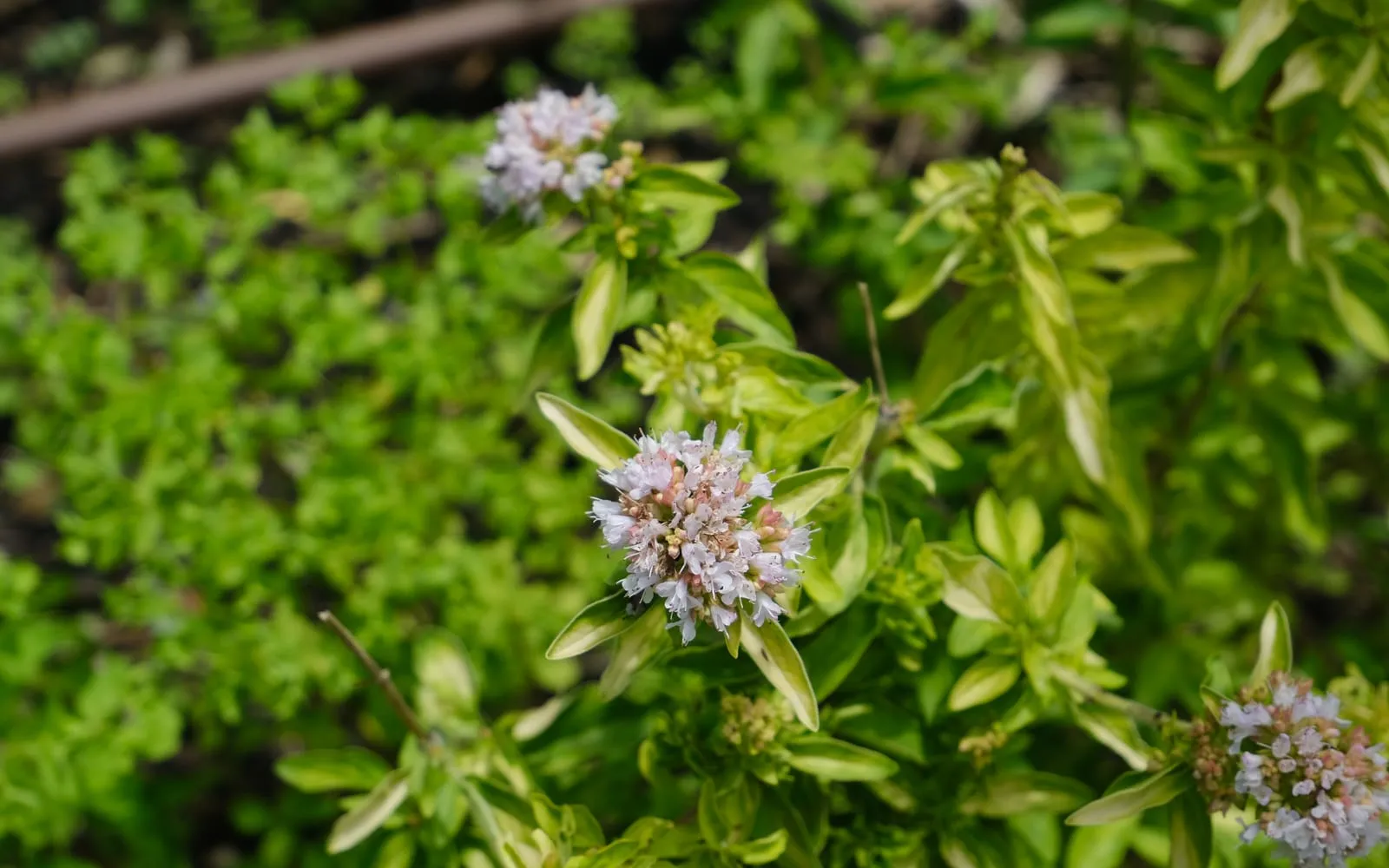
A low bushy herbaceous perennial, spreading slowly by shallow rhizomes, reaching 30 to 60 cm when in flower.
Leaves are small, 1 to 3 cm, oval and pointed, in opposite pairs, mid-green and softly hairy, and strongly aromatic when rubbed.
Stems are square in section, which is the mint family signature, and often flushed purple.
Flowers open in July and August in loose branched heads of tiny two-lipped blooms, pale pink to purple, sitting among conspicuous dark purple-red bracts.
Those bracts are worth noticing, since they give the flower head its dusky colour and distinguish Origanum from the mints it superficially resembles.
Bees and butterflies work oregano flowers harder than almost anything else in a July garden, which is a good reason to let some of it bloom.
Useful forms include subsp. hirtum, Greek oregano, which is greyer, hairier and far stronger. ‘Aureum’ is golden-leaved and mild, grown for looks. Origanum onites is pot marjoram, and Origanum majorana is sweet marjoram, a tender annual with a sweeter, softer flavour.
Where it is from
Europe and western Asia, including Britain, where wild marjoram is native and grows on chalk and limestone grassland, on sunny banks and along the edges of tracks.
Its wild habitat tells you how to grow it. Thin dry alkaline soil in full exposure is where it thrives, and it is a good indicator of unimproved chalk grassland.
The strongly flavoured forms come from the Mediterranean, particularly Greece, Turkey and southern Italy, where the same species growing in hotter and drier conditions develops much higher concentrations of carvacrol.
That is the crux of the flavour question. The difference between a bland oregano and a pungent one is partly genetics and partly growing conditions, and both point the same way, which is towards hard treatment.
The name comes from the Greek for joy of the mountains, which is a fair description of where it grows.
Britain’s native oregano has been used here since at least the medieval period, and the strong Mediterranean forms arrived with the interest in Italian cooking in the twentieth century.
How it grows
Buy a named plant rather than sowing seed if flavour matters. Seed-raised Origanum vulgare is variable and often bland, and subsp. hirtum bought as a plant is reliably strong.
Sow seed in spring on the surface of gritty compost if you do grow from seed, since it needs light to germinate.
Plant into the poorest, driest, sunniest spot you have. A gravel garden, the top of a wall, a raised bed or a hot border edge all suit it.
Add grit to heavy soil. Winter wet kills far more oregano plants than cold does.
Space plants 30 cm apart.
Pick regularly through the summer, taking sprigs from the tips rather than stripping individual leaves. The flavour is strongest just before the flowers open.
Cut the whole plant back by about two thirds after flowering, in August. This removes the tired flowered stems and produces a fresh mound of clean leaves for autumn picking.
Leave some flowers for the bees, which is worth doing on part of the plant.
Divide every three or four years in spring, which is also the cure for a plant that has gone woody in the middle.
Take cuttings in early summer, which root readily.
Cut the plant back to a low framework in late winter rather than in autumn, since the old growth protects the crown through the cold.
Through the seasons
Winter is dormancy. Leave the old stems on for protection and tidy in late winter. The plant may die back completely in a hard winter and reshoot in spring.
Spring brings the new growth from the base in April. Divide congested plants now, and cut back the old framework.
Summer is the picking season. Flavour peaks just before flowering in early July, and the flowers open through July and August.
Late summer is the cut-back. Shear the plant by two thirds after flowering for a fresh flush of leaves into autumn.
Care difficulty
Easy, and the difficulty is entirely in resisting the urge to look after it.
Overwatering and feeding are what produce the disappointing plants. Neither is needed.
Winter wet is the one thing that kills it, so drainage matters more than anything else.
Going woody and bare in the centre after three or four years is normal ageing, and division fixes it.
The plant is otherwise hardy, long-lived, pest-free and productive.
Watering
Water new plantings through their first summer while they root.
Established plants need almost no watering. Oregano withstands real drought and produces its best flavour when slightly stressed.
Water container plants sparingly, letting the compost dry between waterings.
Avoid winter wet above all. Add grit, plant on a slope or a raised bed, and never let the crown sit in standing water.
Overwatering produces soft green leafy growth with a flat, grassy taste.
Warning signs, diseases and pests
Bland flavour is the commonest complaint and it has three possible causes. The plant may be the plain species rather than Greek oregano, it may be growing in rich soil, or it may be overwatered and overfed. Buy subsp. hirtum by name, move it somewhere poorer and drier, and stop feeding it.
Woody bare centres with growth only around the edge means the plant is three or four years old. Divide it in spring and replant the vigorous outer sections.
Rotting crowns in late winter mean waterlogged ground. Add grit and improve drainage, or grow it in a pot.
Powdery mildew appears in a damp still position. Improve airflow, cut the plant back, and reconsider the site.
Leggy sprawling growth with pale leaves means too much shade.
Spreading further than wanted happens slowly by rhizome, and it is easily controlled by digging out the edges each spring.
Very little else affects it. Oregano is close to pest-free and the strong oils deter most things.
Growing environment
Full sun, and as much of it as a temperate garden can provide. This is not a plant for even light shade.
Poor, dry, sharply drained soil, preferably alkaline. It thrives on chalk and on gritty ground.
Avoid rich soil, heavy clay and anywhere that stays wet in winter.
A gravel garden, a raised bed, the top of a dry stone wall, a hot border edge or a terracotta pot are all good positions.
Containers suit it well. Use a gritty compost with added perlite or grit and a pot that drains freely, and keep it in the sunniest spot.
Plant it where you will brush past it, since the scent released is one of its pleasures.
Keep it near the kitchen door if you can, since a herb you have to walk to is a herb you will not pick.
Feeding
Do not feed oregano. Fertiliser produces lush growth and weak flavour.
Skip the compost when planting, and add grit instead.
A container plant needs fresh gritty compost every second year rather than a feed.
If a plant is starved and yellow, a very dilute feed once in spring is enough.
Division every three or four years does more for vigour than any fertiliser.
Troubleshooting
Mine has no flavour. Three likely causes. It may be the plain species rather than Greek oregano, subsp. hirtum. It may be in soil that is too rich. Or it is being watered and fed. All three point the same way, which is towards harder, drier, poorer growing.
What is the difference between oregano and marjoram? They are close relatives. Origanum vulgare is oregano or wild marjoram, hardy and pungent. Origanum majorana is sweet marjoram, tender wherever frost comes, with a sweeter, gentler flavour. Pot marjoram is Origanum onites.
When is the flavour strongest? Just before the flowers open, usually early July.
It has gone woody and bare in the middle. Normal after three or four years. Divide it in spring and replant the vigorous outer pieces.
It died over winter. Almost always waterlogging rather than cold. Oregano is hardy to -20 deg C and rots in wet ground. Add grit or grow it in a pot.
Should I let it flower? Some of it, since the flowers are among the best bee plants of July. Cut the whole plant back by two thirds afterwards for a fresh flush of leaves.
Can I grow it in a pot? Yes, and it suits one, provided the compost is gritty, the pot drains and it stands in full sun.
How do I dry it? Cut sprigs just before flowering, hang them in small bunches somewhere dark and airy, and strip the leaves once brittle. Oregano is one of the few herbs that is arguably better dried than fresh.