
Houseplant
Little Jewel
Pachyphytum compactum
Also known as Pachyphytum compactum, Glaucum
How to grow Pachyphytum compactum, the little jewel, a compact Mexican rosette succulent with chubby faceted leaves outlined in silver and a powdery bloom.
At a glance
- Difficulty
- Easy
- Water
- Once the mix has dried through
- Light
- Full sun to bright light
- Temperature
- Warm; keep above about 5 deg C
- Humidity
- Low
- Hardiness
- USDA 9-11, RHS H2, hardy to 3 C
- Type
- Evergreen rosette succulent
- Height
- Rosette 5 to 10 cm across
- Native to
- Mexico
A compact rosette succulent from the dry, rocky highlands of central Mexico, storing water in fat, faceted leaves dusted with a waxy bloom. It needs full sun, sharp drainage and long dry spells, has little frost tolerance and is safest above about 3 deg C. Strong light picks out the silvery facets; cold, wet compost rots it.
Hardiness zones describe winter cold alone. Summer heat, humidity, rainfall and the length of the growing season decide as much, so treat the range as the outer limit rather than as a recommendation.
Not known to be toxic
Pachyphytum, a close relative of the echeverias, is not listed as toxic by the ASPCA or the RHS, and no harmful compound is recorded in the genus. A pet or child that bit a leaf would be unlikely to have more than a mild stomach upset.
Sources: ASPCA toxic and non-toxic plants, RHS potentially harmful garden plants
About
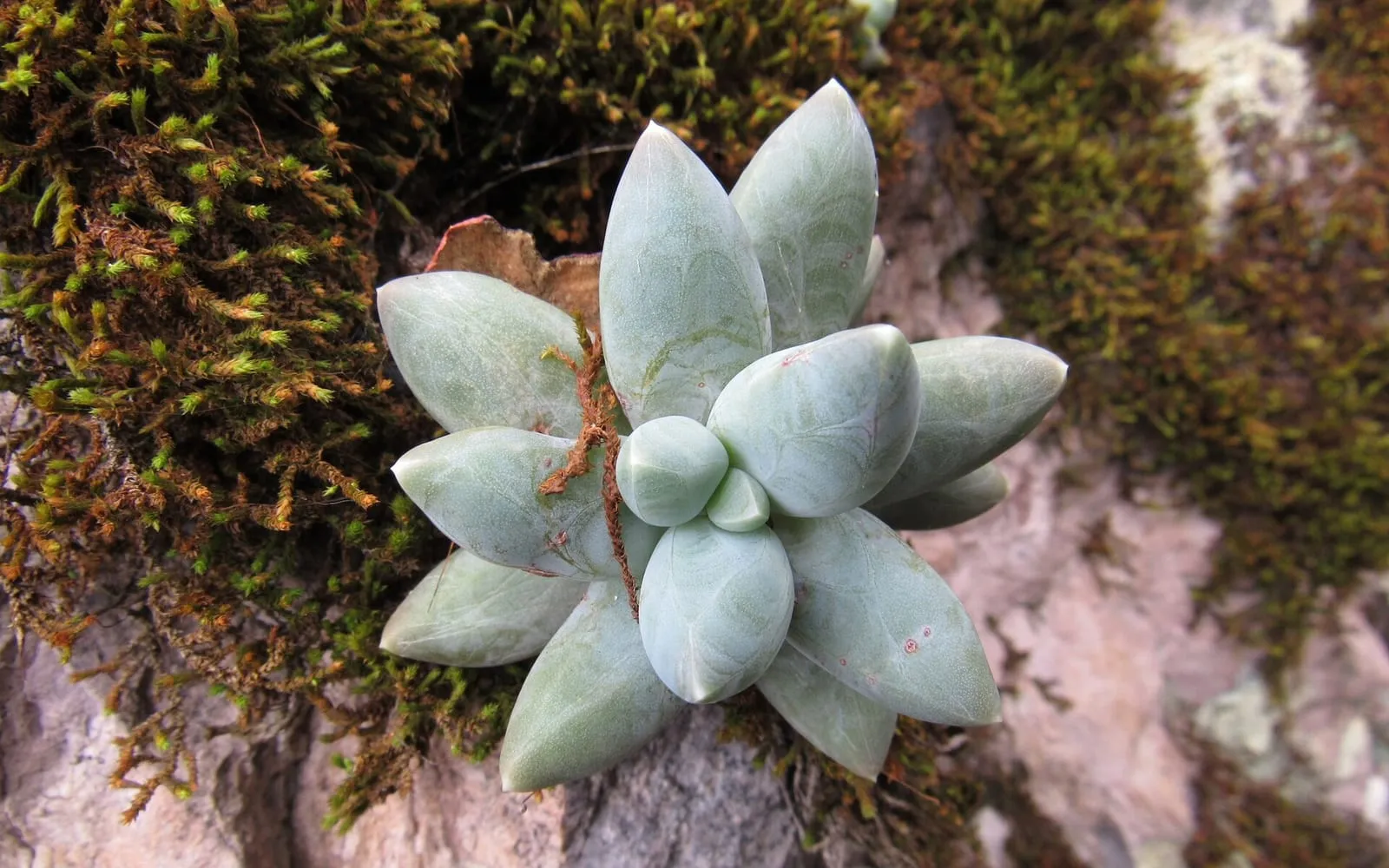
Little jewel is a small rosette succulent with short, angular leaves. Each leaf has flat facets, with fine silvery lines where the waxy bloom gathers along the edges. In strong sun the tips can flush pink, orange or lilac, and a well-grown plant stays tight and compact on a short stem.
It is a highland succulent from central Mexico, kin to the echeveria and to lavender pebbles, and it takes the same treatment they do: strong sun, a gritty root run and long dry spells. The bloom and the silvery facets are strongest in bright light, and the bloom rubs off if the plant is handled.
Small, slow and drought-tolerant, it needs little beyond sun and quick drainage. A single dropped leaf can root and grow into a new plant. The main risk is a cold, wet pot, so keep it lean and dry.
Appearance and character
The leaves are short, fat and sharply angular rather than rounded, with pale blue-grey to green surfaces and fine silvery lines where the waxy bloom collects.
Under strong sun and cool nights the tips take on pink, orange or lilac, while the bloom gives the rosette a pale, frosted finish.
The rosette stays small and closely packed, five to ten centimetres across, on a short stem that lengthens slowly and may lean or trail with age.
Its flowers are small bells, pale and often reddish within, on short arching stalks in spring. Most people grow it for the faceted leaves rather than the flowers.
Where it is from
Pachyphytum compactum comes from the dry, rocky highlands of central Mexico, where it grows on sun-baked slopes and cliffs and stores water in its fat, faceted leaves. Strong sun and lean, stony ground are its everyday conditions.
That habitat explains most of its care. It needs full sun, quick drainage and long dry spells, and the silver facets and bloom show best in strong light. Its main weak point, shared with its echeveria relatives, is cold wet compost, which rots the roots.
How it grows
Growth is slow and steady over the warm months, with the rosette adding faceted leaves one by one, and it rests through winter. Strong sun keeps it tight and its colours and facets clear; a dim spot makes it stretch and turn pale. It is slow, but it is long-lived and reliable.
Grow it in a gritty, sharply draining succulent compost in a small pot, and water only once the compost has dried right through, pouring the water at the base to spare the bloom. Its fat leaves are its reserve, so it drinks seldom.
Give it full sun for the firmest rosette, strongest colour and clearest facets, and keep it warm above about 3 deg C. Handle it as little as you can, since a touch takes off the powdery bloom, which never grows back.
New plants come from a single leaf. Ease one off, lay it on gritty compost, and it roots and buds a rosette. Stem cuttings root just as readily.
Through the seasons
Spring brings new growth as the light rises, along with the little bell flowers. Water again, repot if needed, and take leaf cuttings.
Summer is the main growing spell. Water once the compost dries through, give a weak feed, and stand it in full sun for the best colour.
Autumn slows it as the light drops. Cut the watering back and start drying it off for winter.
Winter is a near-dry rest above about 3 deg C. Keep it bright and cool, and water hardly at all, since a cold, wet pot rots it now.
Care difficulty
Easy, and among the more forgiving compact succulents. Full sun and sharp drainage keep it tough and slow, and it roots from a fallen leaf. Strong light keeps it compact and coloured. Quick drainage keeps rot away. The bloom marks if handled, so shift it by the pot.
Watering
Wait until the gritty compost has dried right through, then water it, ideally at the base to keep the bloomed leaves dry, and let it drain. The plump leaves store water, so it tolerates drought far better than damp compost and only needs a drink now and then.
Give it next to nothing over winter, its main rot-prone season. A little wrinkling means it is thirsty. Soft, yellow, translucent leaves have rotted and should come off, with any firm rosettes kept to root.
Warning signs, diseases and pests
Soft, yellowing, translucent leaves over a mushy base are rot from a cold, wet pot. Dry the plant out, cut away the rot, and start again from firm leaves or a beheaded rosette, watering more warily.
Mealybugs hide as white fluff between the tightly packed leaves; dab them off with dilute alcohol and look the rosette over closely.
A rosette that stretches and pales, losing its facets and colour, needs more light. Move it into full sun to firm it up and improve the colour.
Growing environment
Full sun keeps the rosette tight and strengthens the silvery facets and the pink or orange flush. In shade it draws up, turns greener and loses the clear leaf markings. Give it all the direct light you can.
Warmth above about 3 deg C and dry conditions suit it, with low humidity and no cold, stagnant wet.
Grow it in a gritty, sharply draining compost in a small pot in full sun, and move it by the pot to keep the bloom intact.
Feeding
A dilute, low-nitrogen cactus feed once or twice across spring and summer is plenty. If fed too richly, it grows soft and loses its facets.
Give it nothing over winter. After repotting, fresh gritty compost supports it through the first few weeks.
Troubleshooting
The rosette has stretched and lost its colour. Too little light. Move it into full sun to firm the rosette and improve the facets and colour.
The powdery bloom has rubbed off in patches. From handling. It does not regrow, so move the plant by its pot and water at the base instead of over the leaves.
The leaves are soft, yellow and see-through. Rot from a cold, wet pot. Dry it out, cut away the rot, and restart from firm leaves or a beheaded rosette.
How is it different from an echeveria? Its leaves are chubbier and sharply faceted, like cut gems, where the echeveria makes flatter rosettes. Both are close relatives grown the same sunny, dry way.
Is it safe around pets? Yes. Pachyphytum has no listed toxin, so it is safe to grow around cats, dogs and children.
Little Jewel problem guides
Not sure what is wrong? See the common houseplant pests guide.