
Houseplant
Lavender Pebbles
Graptopetalum amethystinum
Also known as Jewel Leaf Plant, Graptopetalum amethystinum
How to grow Graptopetalum amethystinum, the lavender pebbles, with plump pastel rosettes that colour pink and lavender in sun.
At a glance
- Difficulty
- Easy
- Water
- Once the mix has dried right through
- Light
- Bright light with several hours of direct sun
- Temperature
- Warm; keep above about 5 deg C
- Humidity
- Low
- Hardiness
- USDA 9-11, RHS H2, hardy to 4 C
- Type
- Evergreen rosette succulent
- Height
- 15 to 30 cm
- Native to
- Mexico
A rosette succulent from the dry cliffs of Mexico, storing water in exceptionally plump leaves and dusted with a protective bloom. It needs strong light with direct sun to keep its pastel colour, sharp drainage and long dry spells, has little frost tolerance and is safest above about 4 deg C. A shaded, wet pot turns it green, soft and rot-prone.
Hardiness zones describe winter cold alone. Summer heat, humidity, rainfall and the length of the growing season decide as much, so treat the range as the outer limit rather than as a recommendation.
Not known to be toxic
Graptopetalum, like its close relatives the echeverias, is not listed as toxic by the ASPCA or the RHS, and no harmful compound is recorded in it. A pet or child that bit a plump leaf would be unlikely to have more than a mild stomach upset.
Sources: ASPCA toxic and non-toxic plants, RHS potentially harmful garden plants
About
Lavender pebbles have some of the plumpest leaves of any rosette succulent. Each leaf is fat and rounded, almost pebble-like, in soft pastel shades of lavender, pink, blue and grey, dusted with a fine powdery bloom that gives the plant its frosted look. Arranged in loose rosettes on thickening stems, they look like handfuls of smooth stones, which is where the name comes from.
The colour is light-driven, like the plant’s cousins the echeverias. In strong sun the leaves flush pink, lavender and amethyst; in shade they turn plain green, and the rosettes stretch and open out. So this is a plant for the brightest, sunniest sill you have.
Its home is the dry cliffs of Mexico, and its care follows from that: sharp drainage, strong light and long dry spells. It is one of the easier rosette succulents, tough, forgiving and quick to root from a dropped leaf, and it only needs sun and careful watering.
Appearance and character
The leaves are exceptionally plump and rounded, thick and pebble-like, in pastel lavender, pink, blue and grey, and coated with a fine powdery bloom that gives the frosted, matte finish and rubs off if handled.
Those pastel colours deepen in strong light and fade to green in shade, so the colour shows at a glance how much sun it is getting.
The rosettes are loose and open, borne on stems that thicken and lengthen with age, so an old plant sprawls and trails a little, dropping its lowest leaves as it grows.
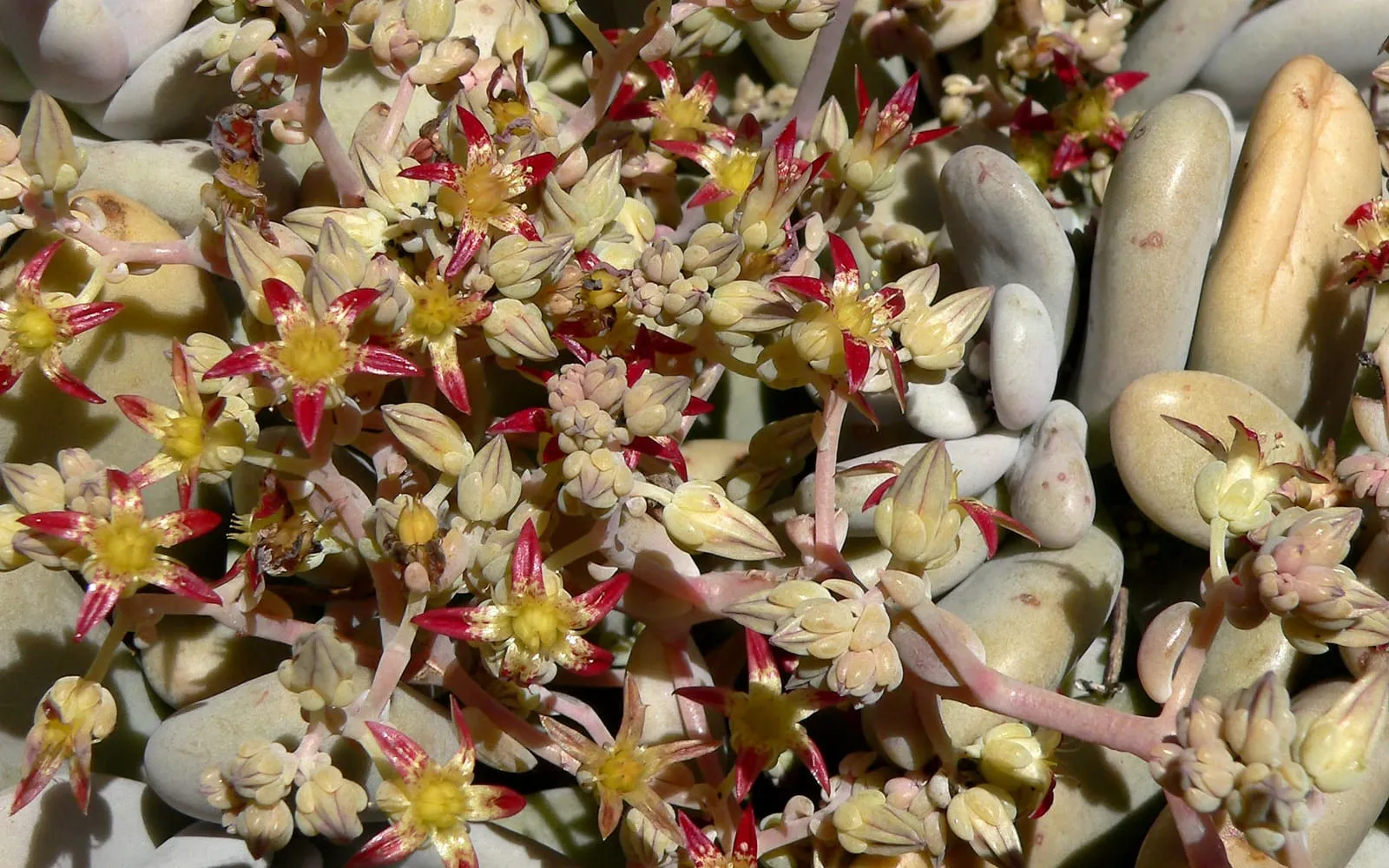
Its flowers are small, star-shaped and pale yellow, sometimes flecked red, on arching stalks in spring. The plant is grown mainly for its frosted leaves.
Where it is from
Graptopetalum amethystinum grows on dry, rocky cliffs and slopes in Mexico, clinging to crevices in bright sun and storing water in its fat leaves against drought. The powdery bloom shields the leaves from strong sun and helps them shed water.
Give it strong light, very sharp drainage and long dry spells. It colours well only in strong sun. Shade and damp turn it green, soft and rot-prone.
How it grows
It grows steadily in warmth and bright light, thickening its stems and forming fresh rosettes, and slows in the short days of winter. Strong light keeps the rosettes tight and colourful; weak light makes them stretch and green.
Grow it in a very free-draining, gritty cactus mix in a pot to suit its size, and water it only once the grit has gone dry to the bottom, then soak it and let it drain. Aim the water at the mix instead of over the rosette, since water sitting in the centre both rots the crown and marks the bloom.
Stand it in the brightest window you have, giving it several hours of direct sun, keep it above about 5 deg C, and let the air stay dry. Handle it as little as you can, because the powdery bloom rubs off at a touch and never grows back.
Propagation is easy. A dropped or pulled leaf, laid on gritty mix, roots and forms a new plantlet, and stem cuttings root readily once the cut end has dried.
Through the seasons
Spring brings active growth and flower stalks as light returns. Resume watering, repot if needed, and take leaf or stem cuttings.
Summer is the main growing season. Water when the mix dries fully, feed lightly, and give strong light to hold the pastel colour.
Autumn slows the plant as the light drops. Water less often and let the grit dry longer each time.
Winter is a near-dry rest, safe to about 4 deg C. Keep it in your brightest window and give only a little water, enough to stop the plump leaves shrivelling right back.
Care difficulty
Easy, and among the more forgiving rosette succulents. It grows readily, roots from a single leaf, and tolerates neglect far better than overwatering. The only real needs are strong light, to keep it compact and coloured, and sharp drainage, to avoid rot. Give it sun and keep it on the dry side. The main frustration is stretching in low light.
Watering
Let the gritty mix dry all the way through before you water, then soak it, directing the water at the soil instead of over the rosette, and let it drain off. Those swollen pebble-leaves are the plant’s water store, so it tolerates a long dry spell far more readily than any damp.
In winter give it barely a drink, since a cold, wet pot is what rots the stems then. Slightly puckered leaves need water and fill out again after one; leaves that turn soft, sallow and see-through have rotted, and should be pulled off, with any firm rosettes kept to root.
Warning signs, diseases and pests
Stretched, open rosettes on lengthening stems, turning green, mean too little light. Move the plant into direct sun and new growth should come back tight, plump and coloured. This is its commonest problem.
Soft, yellowing, translucent leaves and a mushy base are rot, from wet mix or water left pooling in the rosette. Dry the pot off, cut away the rotted tissue, and start again from any firm rosette or a healthy leaf. Mealybugs bury themselves deep in the centre of the rosette as white fluff, so part the leaves, dab them out with dilute alcohol, and check the crown often.
Patchy loss of the powdery bloom is usually from handling or splashing, and does not grow back, so handle the plant by the pot and water at the soil.
Growing environment
Bright light with several hours of direct sun keeps the rosettes compact and their pastel colour strong. In poor light the plant stretches and turns green.
It is hardy down to about 4 deg C when dry, and needs warm, airy conditions the rest of the year. Low humidity suits the bloomed leaves, and stagnant damp settling in the open rosette is what starts rot, so choose a spot where the air moves.
Grow it in a gritty, free-draining mix in the brightest spot you have, handling it as little as possible to preserve the bloom, and keep it off cold, damp windowsills in winter.
Feeding
Feed only once or twice over spring and summer with a dilute, low-nitrogen cactus feed. It needs little, and rich feeding produces soft, stretched growth that loses colour.
Give nothing over winter. When you pot a leaf-grown plantlet or a rooted cutting into fresh gritty mix, the new mix has enough nutrients for its first few weeks without any feed.
Troubleshooting
The rosettes have stretched and turned green. Too little light. Move the plant into direct sun, and new growth should come back tight, plump and coloured. Behead a leggy rosette and re-root it to restart.
The powdery bloom has rubbed off in patches. From handling or splashing. It does not regrow, so handle the plant by its pot and water at the soil instead of over the leaves.
The leaves are soft, yellow and translucent. Rot from too much water. Let it dry, cut out the rot, and restart from firm cuttings, watering more sparingly.
How is it different from an echeveria? Lavender pebbles have fatter, more pebble-like leaves in pastel lavender tones, where the echeveria forms flatter, tighter rosettes. Both are closely related and grown the same bright, dry way.
Is it safe around pets? Yes. Graptopetalum, like echeveria, is not listed as toxic, so it is safe with cats, dogs and children.
Lavender Pebbles problem guides
Not sure what is wrong? See the common houseplant pests guide.