
Outdoor plant
Phacelia
Phacelia tanacetifolia
Also known as Lacy phacelia, Fiddleneck
How to grow phacelia as a green manure or pollinator flower. Its curled purple-blue flower spikes, fast growth, and why it is one of the best bee plants you can sow.
At a glance
- Difficulty
- Easy
- Water
- Regular watering while establishing, drought-tolerant once mature
- Light
- Full sun to light shade
- Hardiness
- USDA 2-11, RHS H4, hardy to -10 C
- Type
- Hardy annual
- Height
- 30-90 cm
- Native to
- Southwestern United States, Mexico
Grown as a hardy annual across virtually every temperate climate, tolerating a light frost and germinating readily across a wide temperature range. It grows and flowers unusually quickly from seed, which is a large part of why it is used as a green manure and quick-turnaround cover crop as much as an ornamental garden flower.
Hardiness zones describe winter cold alone. Summer heat, humidity, rainfall and the length of the growing season decide as much, so treat the range as the outer limit rather than as a recommendation.
Skin irritant
- Do not eat
- The foliage, on contact
- Harm from
- Handling it
- Affects
- People
Phacelia foliage can cause contact dermatitis in sensitive individuals, a reaction documented particularly among growers and farm workers who handle large quantities of the plant regularly as a cover crop. Casual garden contact rarely causes a problem for most people, but anyone with sensitive skin, or handling large stands of it for cutting back, may want to wear gloves as a precaution.
Source: RHS
About
Phacelia is grown for two overlapping reasons: as one of the very best flowering plants for attracting bees and other pollinating insects, its curled, fiddlehead-shaped flower spikes densely packed with small purple-blue flowers rich in nectar and pollen, and as a fast-growing green manure, sown to cover and improve bare soil between vegetable crops. Few other plants serve both an ornamental pollinator role and a real practical function in the vegetable garden at the same time.
Its growth is unusually fast even by hardy annual standards, capable of covering bare ground and coming into flower within just a few weeks of sowing, which is the trait that makes it so useful as a short-term cover crop between successive vegetable plantings.
Appearance and character
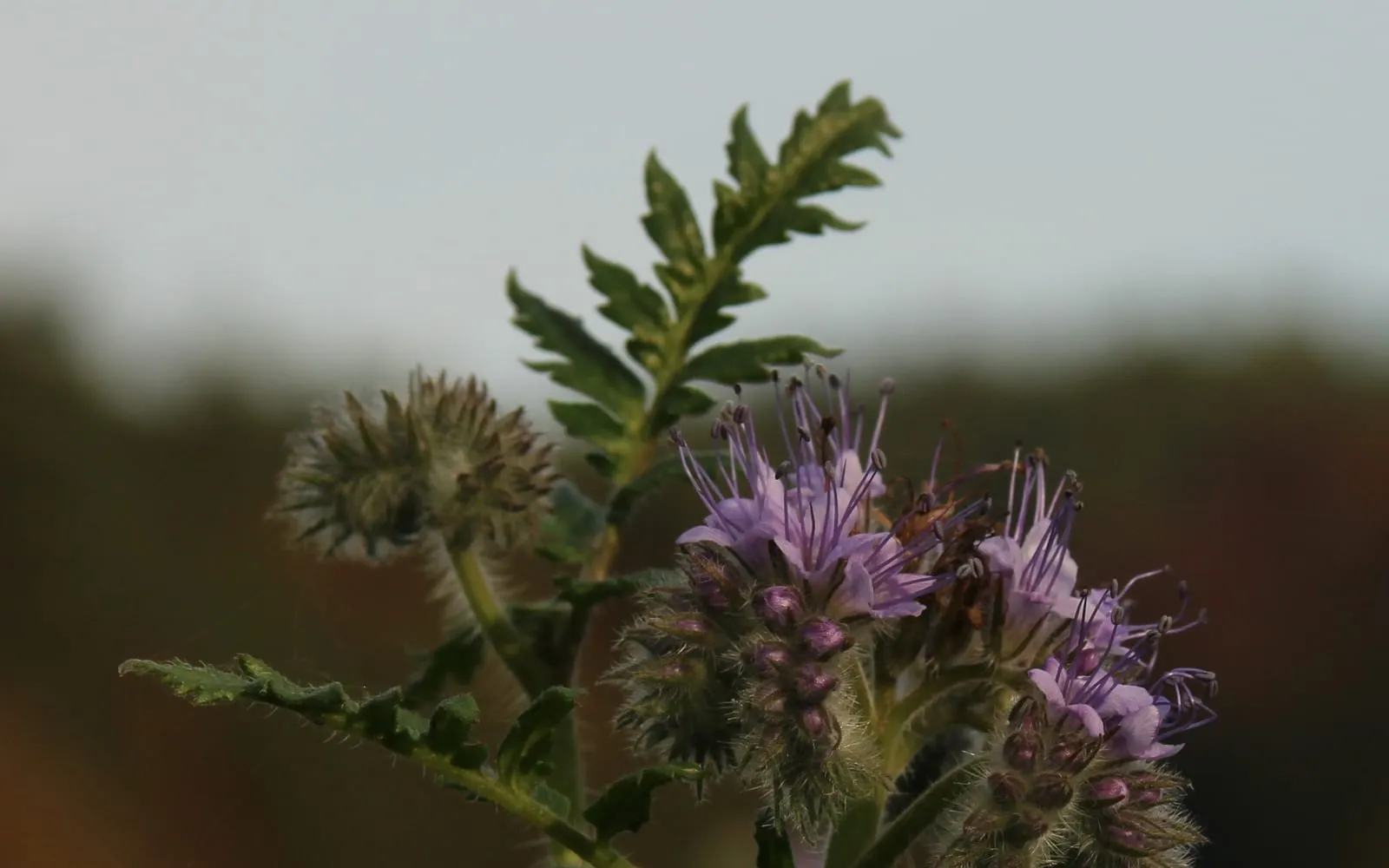
Finely divided, fern-like leaves, soft green and slightly hairy, clothe upright, branching stems that build quickly into a dense stand. Flower spikes are distinctively curled, uncurling gradually from the tip as individual small, purple-blue flowers open in sequence along their length, a shape often compared to a fiddlehead or a scorpion’s tail.
The flowers are exceptionally attractive to bees and hoverflies, often visibly crowded with foraging insects on a sunny day, and this species is regularly recommended specifically for its pollinator value ahead of many more conventionally showy garden flowers.
Where it is from
Open, disturbed ground in the southwestern United States and Mexico, a habitat that has left the species well adapted to colonising bare ground quickly, the trait that makes it so effective as a green manure and cover crop far beyond its native range.
That origin on disturbed, open ground explains both the plant’s rapid germination and growth and its tolerance of a wide range of soil types, since a species built to colonise bare earth quickly cannot afford to be particular about what that earth is made of.
How it grows
A hardy annual germinating rapidly from seed across a wide temperature range, reaching flowering size within as little as six to eight weeks given reasonable conditions, among the fastest of any commonly grown hardy annual. Growth is upright and branching, quickly forming a dense cover over bare soil.
As a green manure, the plant is typically dug into the soil or cut down before it sets seed, returning organic matter to the ground and suppressing weeds during the period it occupies the bed; as an ornamental or pollinator planting, it is instead left to flower fully and often allowed to self-seed for a following season.
Through the seasons
Spring sow seed directly outdoors from early spring; germination is fast given reasonable soil temperature.
Summer is the main flowering period for a spring sowing, with curled purple-blue spikes opening over several weeks and drawing large numbers of pollinating insects.
Autumn a second sowing can be made for autumn interest, or the species can be sown specifically as a green manure to cover a bed between crops before winter.
Winter an autumn-sown green manure crop is typically dug in or cleared before hard frost, having already served its soil-improving purpose for the season.
Care difficulty
Easy. This is one of the fastest, most forgiving hardy annuals to grow from seed, needing very little beyond a sowing and, if grown ornamentally, occasional deadheading to prolong flowering.
Watering
Regular watering supports strong establishment while young. Once established, this species tolerates real drought reasonably well, needing supplemental watering mainly during an extended dry spell.
Warning signs, diseases and pests
This is an unusually trouble-free plant, with few significant pests or diseases reported in typical cultivation; aphids occasionally appear on soft new growth but rarely cause lasting harm.
Skin irritation after handling large quantities of the foliage is the main practical issue some growers encounter, particularly those cutting back a substantial green manure crop by hand, and is addressed with gloves for anyone who has reacted before or is handling a large stand of the plant.
Growing environment
Full sun to light shade both suit it, and this species tolerates a wide range of ordinary soil types with little complaint, reflecting its origin as a coloniser of disturbed, open ground.
Feeding
None needed. This species grows vigorously in ordinary soil without supplemental feeding, in keeping with its role as a low-input green manure as much as an ornamental flower.
Troubleshooting
You want to use this as a green manure between vegetable crops. Sow thickly to cover bare soil quickly, then dig the plants in or cut them down before they set seed, generally six to eight weeks after sowing, to return organic matter to the soil before it can spread unwanted seedlings through the bed.
Skin irritation developed after handling a large quantity of the plant. This is a documented, if uncommon, reaction to the foliage. Wear gloves for future handling, particularly when cutting back a substantial stand, and wash any affected skin promptly.
The plant is self-seeding more than intended in a vegetable bed. Cut plants down before flower spikes fully open and set seed if self-seeding is not wanted, since this fast-growing species can produce viable seed within a relatively short flowering period.
You want to maximise pollinator visits in a small garden. A small, dedicated patch sown specifically for this species often draws a noticeably higher concentration of bees and hoverflies than the same area planted with more conventional ornamental flowers, given how attractive its nectar and pollen are.
You are timing a green manure sowing between two vegetable crops. Because it grows and flowers so quickly, it fits comfortably into a gap of eight to ten weeks between an early crop coming out and a later one going in, longer gaps that many slower-growing green manures would struggle to fill as efficiently, while still leaving the bed free for its next planting on schedule rather than running over into the following crop’s sowing window. Timing the cut or dig-in a week or two before the next crop goes in gives the soil enough time to settle.