
Edible
Lemongrass
Cymbopogon citratus
Also known as West Indian lemongrass, Serai, Takrai
How to grow lemongrass, Cymbopogon citratus. Rooting a supermarket stalk in water, overwintering the clump indoors, and harvesting the stem bases.
At a glance
- Difficulty
- Moderate
- Water
- Two or three times a week in summer, sparingly in winter
- Light
- Full sun
- Temperature
- Damaged below 10 deg C and killed below about 5 deg C
- Hardiness
- USDA 9-11, RHS H1c, hardy to 5 C
- Type
- Tender evergreen perennial grass
- Height
- 100-150 cm
- Native to
- tropical Asia
- Best month
- June and September in the Northern Hemisphere, December and March in the Southern Hemisphere
The clump is damaged below 10 deg C and killed below about 5, so in a frost climate it is lifted, cut back and overwintered under cover, or grown in a pot that comes in. It almost never flowers in cultivation, so propagation is by dividing the clump or rooting a supermarket stem in water.
Hardiness zones describe winter cold alone. Summer heat, humidity, rainfall and the length of the growing season decide as much, so treat the range as the outer limit rather than as a recommendation.
Every month named in this guide is for the temperate Northern Hemisphere. If you garden in the Southern Hemisphere, shift each one by six months, so June becomes December. Closer to the equator the wet and dry seasons matter more than the calendar, and the shift stops being a useful guide.
Skin irritant
- Safe to eat
- The tender stem bases and the leaves for infusing
- Do not eat
- The fibrous leaves in quantity for pets, and the concentrated oil
- Harm from
- Eating it and handling it
- Affects
- Cats and dogs
Lemongrass is a food plant eaten across south-east Asia and it is safe for people. The ASPCA lists it as toxic to cats and dogs, and the mechanism is mechanical as much as chemical: the leaves are tough and fibrous and a large quantity can cause vomiting or, in cats, an intestinal obstruction. The essential oil is a separate concern and a more serious one, since concentrated citral and citronellal are irritant and cats in particular lack the liver enzymes to process them. Do not apply lemongrass oil to a pet or use it in a diffuser around cats. The leaf blades are also sharp enough along their edges to cut skin, which is worth a pair of gloves when dividing a clump.
Sources: ASPCA (Lemon Grass, Cymbopogon citratus), RHS potentially harmful garden plants
About
Lemongrass is the easiest tropical crop in this collection to start, because a stalk from a supermarket will root in a glass of water on a windowsill. Stand three or four in a couple of centimetres of water, change it every few days, and most of them will produce roots within a fortnight.
The crop is the swollen stem base, which is what gets sliced into curry pastes and bruised into soups. The leaves are too tough to eat and they make an excellent infusion, so a plant supplies both.
Keeping it is harder than starting it. This is a tender perennial that stops growing below 10 deg C and dies below about 5 deg C, so a plant in a cool climate lives in a pot, spends the summer outside and comes in for the winter. Treated that way a clump runs for years.
Appearance and character
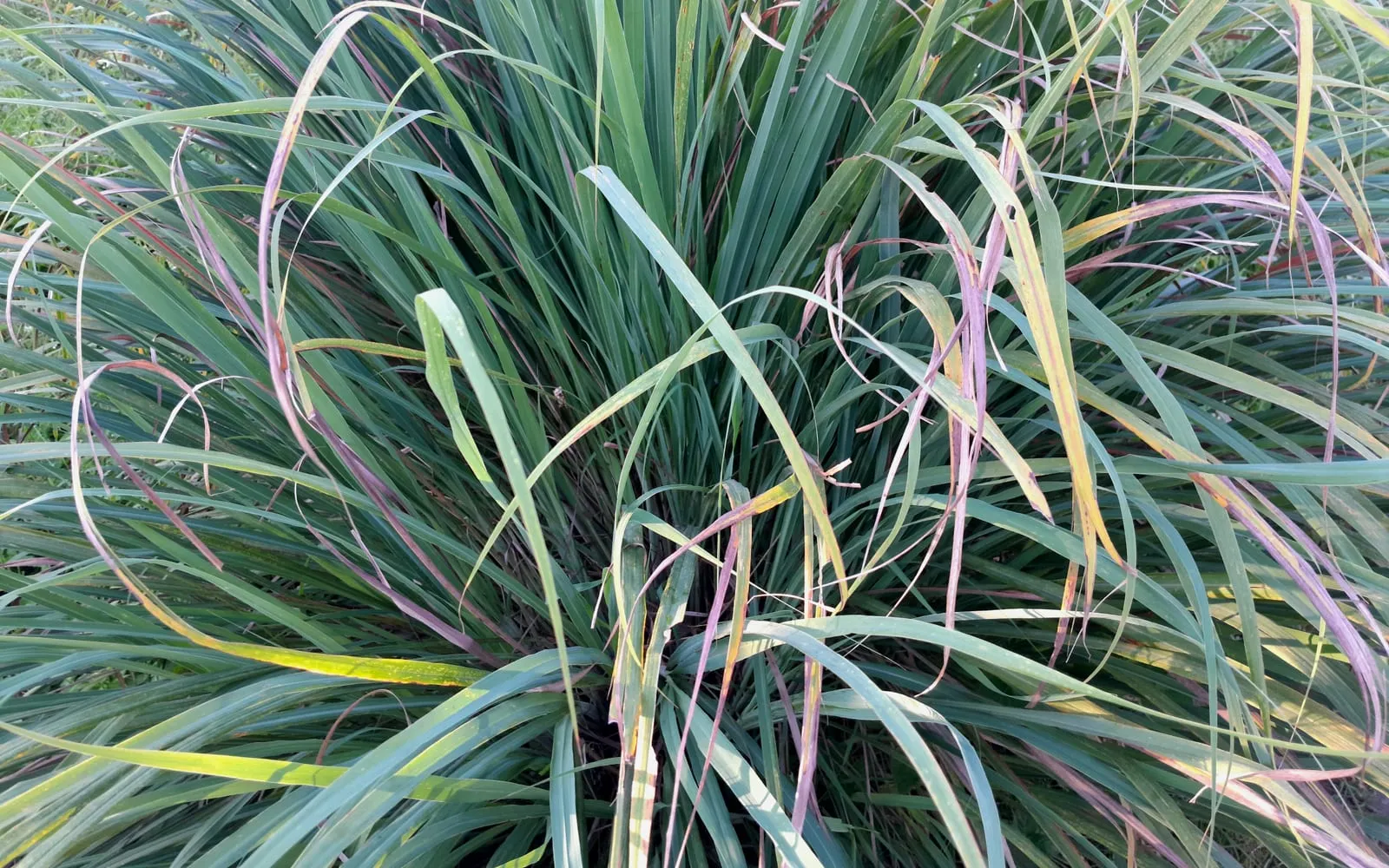
A dense upright clump of grass, 1 to 1.5 m tall in a pot and taller in the tropics, widening steadily each year.
Leaves are long and narrow, up to a metre, blue-green, arching over at the tips, with rough edges that are sharp enough to cut skin.
Stems are the crop. Each shoot has a swollen white base 10 to 20 cm long, tightly wrapped in overlapping leaf sheaths, tender inside and fibrous outside.
The scent is lemon, released the moment a leaf is crushed or a stem cut, and it comes from citral.
It rarely flowers in cultivation and almost never sets viable seed, which is why every plant is propagated by division rather than sown.
The clump is handsome enough to earn a place as a foliage plant in a large pot.
Where it is from
Lemongrass is thought to have originated in Malesia or southern India, and it is so long cultivated that no wild population is known with certainty.
South-east Asian cooking depends on it. Thai tom yam, Vietnamese marinades, Malaysian and Indonesian curry pastes, and Sri Lankan and southern Indian dishes all use the stem base.
It spread through the tropics with trade and cultivation, reaching the Caribbean early enough that West Indian lemongrass is one of its standard names, and it is used there for tea, which is where the name fever grass comes from.
Its oil is extracted commercially for perfumery, soap and flavouring, and Guatemala and India are the main producers.
It reached British greenhouses in the nineteenth century and Western supermarkets in the late twentieth, and the supermarket is still where most gardeners get their first plant.
How it grows
Start from supermarket stalks. Choose fat firm ones with the base intact, stand them in 2 cm of water on a bright windowsill, change the water every few days, and expect roots in one to three weeks.
Alternatively buy a plant or divide an established clump in spring.
Pot rooted stalks into 15 cm pots of rich free-draining compost, and pot on into 30 cm pots as they fill.
Grow it warm. It needs 20 deg C or more for real growth, and a greenhouse or conservatory produces a far better plant than a windowsill.
Stand it outside from mid-June to early September in the sunniest sheltered spot you have.
Water and feed generously through the growing season. This is a hungry thirsty grass, unlike most of the herbs here.
Bring it in before the nights drop below 10 deg C, which in a cool climate means September.
Overwinter it above 10 deg C, watering sparingly. Some leaf browning is normal.
Divide in spring every second or third year, wearing gloves.
Harvest by pulling or cutting whole shoots at the base, taking the outer ones and leaving the centre to grow.
Through the seasons
Winter is survival indoors. Keep it above 10 deg C, water sparingly, and cut away browned leaves. It looks poor and that is normal.
Spring brings new growth from March in warmth. Divide, repot and start feeding.
Early summer is when it accelerates. Move it outside in mid-June once the nights are reliably above 12 deg C.
Midsummer is the main growing period and the best harvest.
Late summer is the last of the outdoor growth, and the time to take divisions.
Early autumn is the deadline. Bring it in during September before the nights cool, cutting the leaves back by half to make it manageable.
Care difficulty
Moderate, and it splits into an easy half and a harder one.
Starting it is easy. A supermarket stalk in water roots reliably and costs almost nothing.
Keeping it is the work. Lemongrass needs to be above 10 deg C all winter, which means a heated greenhouse, a conservatory or a warm room, and it takes up a good deal of space.
Cold is what kills it, and the damage is usually done in October when people leave it out a fortnight too long.
It is thirsty and hungry, which sets it apart from most of this collection. Underfeeding gives you a thin clump with little to harvest.
The leaf edges cut skin. Wear gloves for dividing and handling.
Given warmth, water and food, a clump runs for years and produces steadily.
Watering
Water generously through the growing season, two or three times a week in summer and daily for a pot in a greenhouse in July.
Keep the compost evenly damp. This is a grass of wet tropical ground and it does not want to dry out while growing.
Reduce sharply from October and keep the plant barely moist through the winter.
Overwatering a cold plant in winter is the second commonest way to lose one.
Use tepid water in winter.
Stand a summer pot in a tray of water in a heatwave, and take it out in autumn.
Warning signs, diseases and pests
Root rot from cold wet compost over winter is the main killer. The base goes soft and brown and the clump collapses. Keep it warmer and drier from October.
Brown leaf tips in winter are normal on a plant kept cool and dry indoors.
Spider mite appears indoors in a dry heated room, producing fine stippling and webbing. Raise the humidity and use a predatory mite.
Rust spots the leaves in a damp still position. Improve airflow.
A clump that produces thin weak shoots is underfed, pot-bound or both. Divide and repot.
Yellowing leaves in summer usually mean the plant is hungry.
Cuts on your forearms come from the leaf edges. Wear gloves.
Growing environment
Full sun and heat. A greenhouse or conservatory where frost comes, with a summer outside from mid-June to early September.
Minimum 10 deg C in winter, and 20 deg C or more for useful growth.
Rich, moisture-retentive, free-draining compost. A loam-based compost with added organic matter suits it better than a light multipurpose.
pH from 5.5 to 7.5.
A large pot is the right container. Lemongrass makes a substantial clump and it will fill a 30 cm pot in a season.
Shelter from wind, since the long leaves shred in an exposed position.
Feeding
Feed generously, which is unusual for a plant in this collection. Lemongrass is a vigorous grass and it is hungry.
A balanced liquid feed fortnightly from May to August, or a controlled-release fertiliser worked into the compost in spring.
A high-nitrogen feed suits it, since leaf and shoot growth are the crop.
Stop feeding in September so the growth firms before winter, and do not feed at all through the winter.
Repot into fresh compost each spring, which does more than any feed for a clump that has filled its pot.
Troubleshooting
Can I grow it from a supermarket stalk? Yes, and it is the best way to start. Choose fat firm stalks with the base intact, stand them in 2 cm of water on a bright windowsill, and change the water every few days. Most root within a fortnight.
It died over the winter. Cold, or cold plus wet compost. Bring it in during September, keep it above 10 deg C and water sparingly.
Which part do I use? The swollen white stem base. Trim the roots, strip the tough outer sheaths and slice or bruise the tender core. The leaves are too fibrous to eat and make a good infusion.
Can I grow it in the ground? Only for the summer, and you would have to lift it again in September. A large pot is easier.
The leaves cut my arms. The edges are sharp. Wear gloves and long sleeves for dividing and harvesting.
It never flowers. Lemongrass rarely flowers in cultivation and almost never sets viable seed. Divide it instead.
Is it safe around pets? The ASPCA lists it as toxic to cats and dogs, mostly because the fibrous leaves cause vomiting or, in cats, an obstruction. The concentrated oil is the greater concern and should be kept away from cats entirely.