
Houseplant
Desert Savior
Echeveria strictiflora
Also known as Echeveria strictiflora, Chihuahuan Echeveria
How to grow Echeveria strictiflora, the desert savior, a cold- and drought-hardy Chihuahuan desert echeveria with a blue-grey rosette and orange flowers.
At a glance
- Difficulty
- Easy
- Water
- When the mix has dried through; drought-hardy
- Light
- Full sun to bright light
- Temperature
- Warm to cool; tolerates a light frost, keep dry when cold
- Humidity
- Low
- Hardiness
- USDA 8-11, RHS H3, hardy to -6 C
- Type
- Evergreen rosette succulent
- Height
- Rosette 10 to 25 cm across
- Native to
- Mexico, Southwestern United States
A tough rosette succulent from the Chihuahuan desert of northern Mexico and the southwestern United States, growing on rocky, sun-baked slopes with hot summers and cold, dry winters. Hardier than most echeverias, it takes a light frost when dry, needs full sun and very sharp drainage, is safest above about minus 6 deg C, and rots in cold, wet ground.
Hardiness zones describe winter cold alone. Summer heat, humidity, rainfall and the length of the growing season decide as much, so treat the range as the outer limit rather than as a recommendation.
Not known to be toxic
A safe plant to keep around pets and children. Echeveria is not listed as toxic by the ASPCA or the RHS, and no harmful compound is recorded in it. A pet or child that bit a leaf would be unlikely to have more than a mild stomach upset, so this hardy rosette can sit within easy reach in a home with animals or children.
Sources: ASPCA toxic and non-toxic plants, RHS potentially harmful garden plants
About
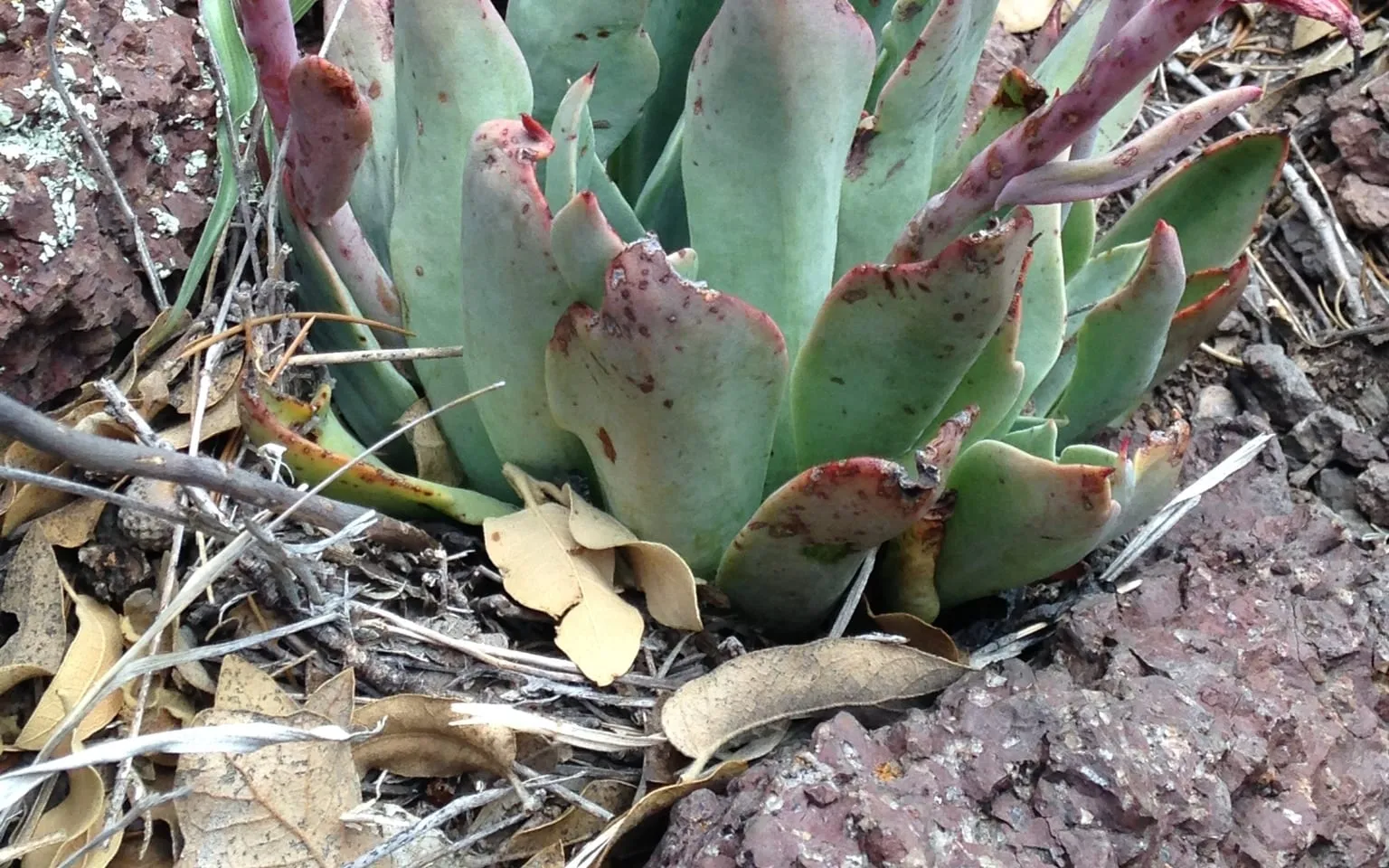
Desert savior is more cold-tolerant than most echeverias. Most of the genus comes from mild Mexican uplands and should be kept frost-free, but this one grows in the Chihuahuan desert, reaching north into Texas and the American Southwest, where the summers scorch and the winters bring hard, dry cold. So it will tolerate a light frost that would damage an ordinary echeveria, as long as it goes into the cold dry, and it ranks among the hardiest rosette succulents you can grow.
The rosette itself is handsome in the usual way, its firm, spoon-shaped leaves a cool blue-grey to green, tinting pink or red where the sun is strongest. In summer it produces arching stalks of slim orange-to-red tubes above the leaves, bright against the cool foliage and, in its native range, pollinated by hummingbirds.
Its needs are standard for an echeveria: full sun and drainage that clears fast. It holds its colour and its tight shape best in strong light. Grow it as you would the familiar echeveria, but lean on it for chillier spots, since its cold-hardiness makes it the better choice where winters are cool, provided it stays dry through them.
Appearance and character
The rosette is trim and firm, ten to twenty-five centimetres across, its spoon-shaped, pointed leaves a soft blue-grey to green that warms to pink or red at the margins under strong sun.
It tends to stay solitary or to throw only a few offsets, keeping a neat, symmetrical rosette instead of sprawling into a wide mat.
Desert-bred, it is tougher, more drought-hardy and far more cold-tolerant than the run of echeverias, which come from gentler country, and it stands both more sun and more chill than they do.
Its flowers are slim tubes of warm orange to red on arching stalks over the rosette in summer, bright and, in its homeland, a food source for hummingbirds.
Where it is from
Echeveria strictiflora ranges through the Chihuahuan desert of northern Mexico and the southwestern United States, into the Big Bend country of Texas, on rocky, sun-baked slopes and desert grassland where summers are hot and winters cold and dry. It is a desert plant through and through.
That harsh, continental habitat is why it is tougher than many relatives. It needs full sun and drainage that clears at once, banks its water in thick leaves, and takes a light frost when it is dry. What it cannot survive, like all its kind, is cold and wet together, which rots the roots.
How it grows
Its growth runs through the warm months, firming and widening the rosette, with flowers in summer, and it slows over winter. Strong sun holds the rosette tight and coloured; short of light it draws up and pales.
Set it in a gritty, sharply draining succulent mix in a pot sized to the rosette, and water only once the mix has dried through. Its thick leaves store water, so it needs water only occasionally.
Give it full sun for the firmest, best-coloured rosette, and keep it anywhere between warm and cool. In a suitable garden it takes a light frost if the ground drains fast and it goes into winter dry; in a pot, keep it nearly dry and out of winter wet, cold or not.
Raise more from leaf or stem cuttings, or from the odd offset, letting the cut dry before you set it into gritty mix.
Through the seasons
Spring starts growth as warmth and light return. Water again, repot if it needs it, and take leaf or stem cuttings.
Summer is the main growing and flowering season. Water once the mix dries through, give a weak feed, and stand it in full sun for the strongest colour.
Autumn slows it as the light drops. Ease off the watering, and start drying a potted plant off ahead of the cold.
Winter is a cool, dry rest. It takes a light frost when dry, so keep it barely watered and sheltered from winter wet, which threatens it more than the cold does.
Care difficulty
Easy, and hardier than the usual echeveria. In full sun with sharp drainage it is rugged, drought-proof and reliable, and it takes a light frost when dry, which sets it apart from its tender cousins. Its one weak point is a cold, wet pot, which rots it, so keep it dry in winter. Beyond that, and enough light to hold its shape, it needs little attention.
Watering
Wait until the gritty mix has dried right through, then soak the rosette and let it drain, pouring the water at the base to keep it out of the rosette’s heart. The thick leaves hold the plant’s water, so it copes with long droughts and should dry fully between drinks.
Give it almost nothing over winter, its most rot-prone time. Leaves that thin or pucker are thirsty; a soft, discoloured crown, or a leaf gone translucent and yellow, means rot from cold or overwatering. When in doubt, keep it drier.
Warning signs, diseases and pests
A cold, wet pot rots the roots and crown, the commonest cause of trouble. Keep the mix sharply drained, water it barely through winter, and never leave it cold and wet. A soft, discoloured centre means the rot has set in.
Mealybugs gather as white fluff in the heart of the rosette; wipe them off with dilute alcohol and look into the crown regularly, since the packed leaves hide them.
A loose, drawn-up rosette with pale leaves is short of light. Move it into full sun to tighten it and bring the colour back.
Growing environment
Full sun keeps the rosette tight, firm and richly coloured, with the strongest pink and red tints; in shade it loosens, greens and stretches. Give it all the direct light you can.
It takes a light frost when dry, so it grows outdoors in a suitable climate with sharp drainage, wintered dry. In a pot, the winter rule is dry and sheltered. It needs low humidity throughout.
Grow it in a gritty, sharply draining succulent mix in a pot in full sun, or, where the climate allows, outdoors in a sunny, well-drained spot.
Feeding
A dilute, low-nitrogen cactus feed once or twice over spring and summer is plenty. Feed it richly and the growth softens and the rosette loosens.
Give it nothing over winter. After repotting, the fresh gritty mix keeps it going through its first weeks.
Troubleshooting
The rosette has loosened, greened and stretched. Short of light. Move it into full sun to tighten the rosette and bring back its colour.
The crown or lower leaves have gone soft and discoloured. Rot from a cold, wet pot. Improve the drainage, water it barely, keep it drier, and behead and re-root a sound rosette if the base is lost. Keeping it dry in winter is the way to prevent it.
How cold can it take? More than most echeverias. As a desert plant from a cold-wintered range it tolerates a light frost when dry, though it is safest above about minus 6 deg C and kept dry through winter.
How is it different from a common echeveria? It comes from desert conditions and is hardier and more drought- and cold-tolerant, where the classic echeveria comes from milder country. Both are grown the same sunny, dry way.
Is it safe around pets? Yes. Echeveria has no listed toxin, so this rosette is safe with cats, dogs and children.
Desert Savior problem guides
Not sure what is wrong? See the common houseplant pests guide.