
Houseplant
Warty Gasteria
Gasteria carinata var. verrucosa
Also known as Ox Tongue, Gasteria verrucosa
How to grow Gasteria carinata var. verrucosa, the warty gasteria or ox tongue, with dark two-ranked leaves covered in white warts that tolerates low light.
At a glance
- Difficulty
- Moderate
- Water
- Sparingly; let the mix dry out fully between waterings
- Light
- Bright indirect light; tolerates light shade
- Temperature
- Warm to cool; keep above 5 deg C
- Humidity
- Undemanding; tolerates dry air
- Hardiness
- USDA 9-11, RHS H2, hardy to 5 C
- Type
- Evergreen succulent perennial
- Height
- 15 to 30 cm
- Native to
- South Africa
A tough succulent from the dry Cape of South Africa, growing among rocks and in the light shade of shrubs. It is frost-tender and best kept above about 5 deg C, but it tolerates lower light than most succulents and tolerates drought and dry air. Cold, wet compost is what rots it, so drainage matters most.
Hardiness zones describe winter cold alone. Summer heat, humidity, rainfall and the length of the growing season decide as much, so treat the range as the outer limit rather than as a recommendation.
Not known to be toxic
Gasterias are not listed as toxic by the ASPCA, and no harmful compound is recorded in them. A chewed leaf would cause no real harm, and it is a safe succulent to grow around pets and children. It is grown for its warty, spotted leaves instead of for anything edible.
Sources: ASPCA toxic and non-toxic plants, RHS potentially harmful garden plants
About
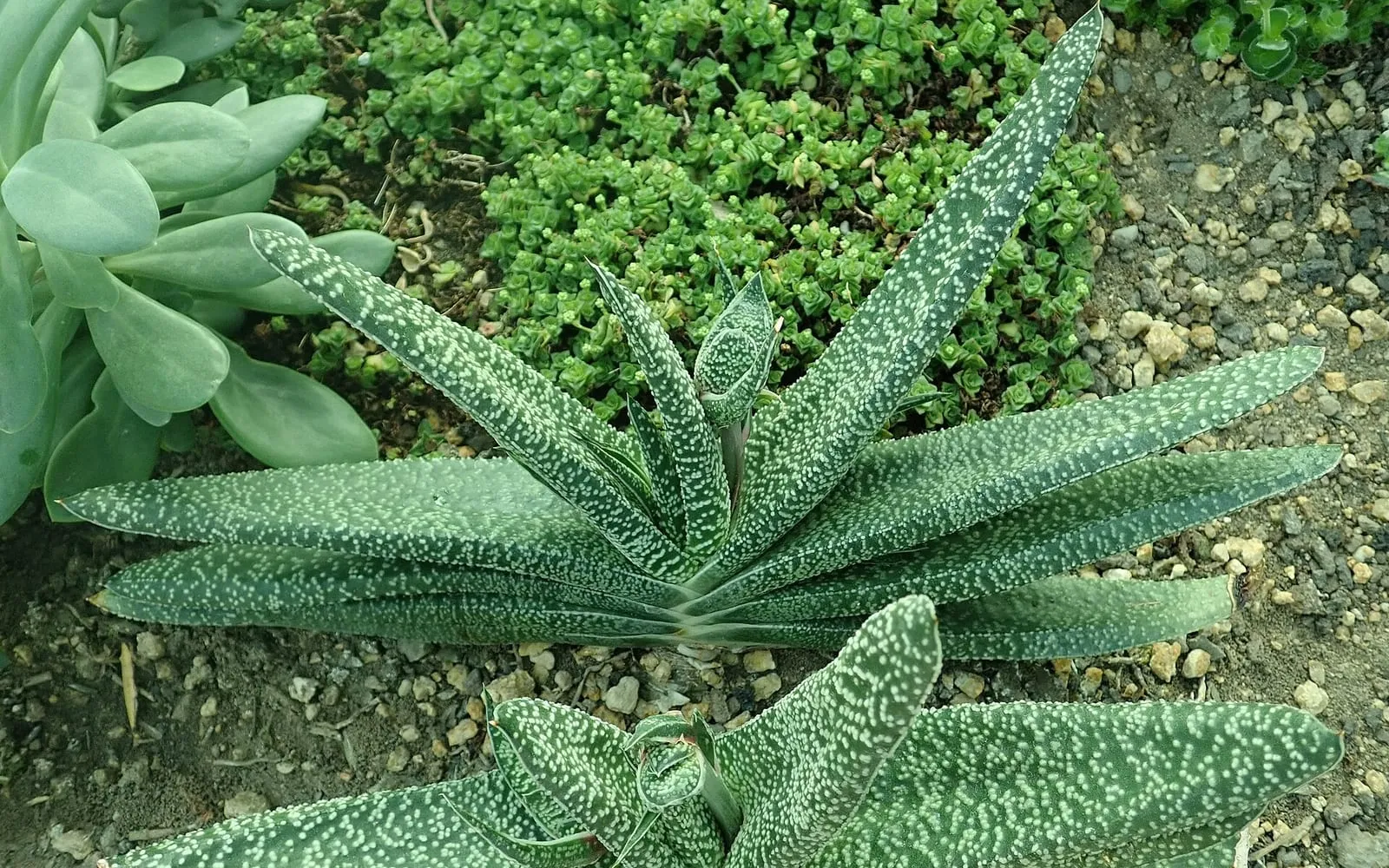
Warty gasteria carries thick, dark, tapering leaves densely covered in raised white warts, which give it both its name and its rough, pebbled texture. The leaves are held in two neat opposite ranks, like the pages of an open book, so a young plant has a flat, fan-shaped outline quite unlike a rounded rosette.
It is one of several gasterias grown as easy, tolerant houseplants, close to the keeled gasteria and the ox tongue plant, and botanists now treat it as a warty form within that same close group. The visible difference is the heavy white warting and the strictly two-ranked leaves.
Like its relatives it tolerates lower light than most succulents, stores water in its fat leaves, and mainly needs sharp drainage and careful watering.
Appearance and character
Leaves are thick, firm and tapering, dark green and so thickly covered in raised white tubercles that they feel rough and look pebbled. The warting is the plant’s most obvious feature.
The leaves are held in two opposite ranks, giving a flat, fan-shaped young plant, which spirals only loosely into a rosette with age and offsets into a clump.
Flowers hang from a slender arching stalk, small and curved with a swollen base, pink to red with green tips, dangling like little pouches through spring and summer.
Offsets form around the base and can be separated once rooted, the easiest way to make more plants.
Where it is from
Gasteria carinata var. verrucosa grows in the dry southern Cape of South Africa, among rocks and in the light shade of shrubs, in a climate of mild winters and dry summers. It is used to bright shade and sharp drainage.
Give it free-draining soil, moderate light and little water. It has no tolerance for frost or wet roots.
It has been grown as a houseplant for a very long time, one of the first South African succulents to reach European collections, and it has picked up a tangle of names along the way. Botanists now treat it as a warty variant within the wider Gasteria carinata group, so a plant sold as verrucosa and one sold as carinata may be close indeed, and the heavy white warting is the surest way to pick this one out.
How it grows
It grows slowly, adding leaves in its two ranks and offsetting around the base, and needs little attention. A plant builds into a clump over years.
Pot it in a very free-draining, gritty cactus mix in a snug pot, and water only when the mix has dried out completely. It rarely needs repotting except to divide offsets.
Give it bright, indirect light, shelter from harsh midday sun, and warmth above about 5 deg C, keeping it dry over winter. Keep it too dry rather than too wet.
Separate rooted offsets, or take leaf cuttings, letting cut surfaces dry for a day or two before potting into gritty mix.
Through the seasons
Spring brings renewed growth and the arching flower stalks, the time to repot or separate offsets.
Summer is the main growing season, though growth is slow. Water when the mix dries fully, and shade from harsh sun.
Autumn the slow growth almost stops as light falls. Cut watering right back, and move it off a cold windowsill into the room.
Winter it rests fully. Hold it above about 5 deg C and close to dry; in the low light of the season a wet pot rots the base fast.
Care difficulty
Moderate, and close to easy once you have judged the watering. Its shade tolerance sets it apart from most succulents, and it tolerates dry air and long neglect, asking only for sharp drainage and cover from hard midday sun. The single common mistake is overwatering, which rots the roots. Treated as a shade-tolerant succulent it is very forgiving.
Watering
Give a thorough soak only once the gritty mix has dried right through, then let every drop drain away. Because it sits in shade and grows slowly, it draws on that water over a long stretch, so the gaps between waterings run longer than for a sun-grown succulent. In winter give almost none, since the resting plant rots at the base in cold, wet compost.
The thick, warty leaves hold more water than a thin-leaved rosette, so a dry plant usually recovers better than a soaked one. Keep it on the dry side, and empty any saucer.
Warning signs, diseases and pests
Root rot from overwatering is the main way to lose it. The lowest leaves in the fan go soft and brown first, and the whole plant loosens in the pot. Ease off the water, repot into grittier mix, and pull away any firm offsets to grow on if the base has gone.
Mealybugs hide between the closely packed leaves as white woolly tufts. Dab them off or treat with horticultural oil, checking down between the ranks.
Scorched or reddened leaves mean harsh direct sun. Move the plant to bright but indirect light, since it naturally grows with some shade.
Growing environment
Bright, indirect light suits it best, and it tolerates light shade well, which is much of its appeal. Harsh midday sun scorches the leaves, and deep shade slows it.
Warmth is welcome but not essential, and it tolerates cool, bright winters as long as it stays above about 5 deg C and dry. It needs no humidity.
Give it a gritty, free-draining mix and a snug pot on a bright, sunless windowsill or a lightly shaded spot, among other gasterias and haworthias.
Feeding
Give a dilute cactus feed only once or twice across spring and summer. Growth is slow even in good conditions and slower still in shade, so it draws little from the soil.
Do not feed in autumn or winter while it rests. A repot into fresh gritty mix keeps a plant fed for a year or more, since it fills a pot so slowly.
Troubleshooting
Why are the leaves so warty? That is natural and is the feature that names the plant. The raised white tubercles cover the dark leaves and give them their rough, pebbled texture.
The leaves are going soft and brown. Overwatering. Cut back watering, improve the drainage, and take healthy offsets if the base has rotted.
How is it different from the other ox tongues? It is the heavily warted, strictly two-ranked form, close to the keeled gasteria and treated by botanists as part of the same group. The dense white warts and flat fan of leaves are its mark.
The leaves are scorching. Harsh direct sun. Move it to bright but indirect light.
Is it safe around pets? Yes. Gasterias are not listed as toxic by the ASPCA, so it is a safe succulent for a home with animals.
Warty Gasteria problem guides
Not sure what is wrong? See the common houseplant pests guide.