
Houseplant
Bear's Paw
Cotyledon tomentosa
Also known as Cotyledon tomentosa, Bear Paw Succulent
How to grow Cotyledon tomentosa, the bear's paw succulent, with chubby furred leaves tipped in red claws. It is toxic if eaten.
At a glance
- Difficulty
- Moderate
- Water
- Once the mix has dried right through
- Light
- Bright light with some direct sun
- Temperature
- Warm; keep above about 7 deg C
- Humidity
- Low
- Hardiness
- USDA 10-11, RHS H2, hardy to 2 C
- Type
- Evergreen bushy succulent
- Height
- 20 to 30 cm
- Native to
- South Africa
A small bushy succulent from the dry Cape of South Africa, storing water in fat, furred leaves. It needs bright light with some direct sun, sharp drainage and long dry spells, has little frost tolerance and is safest above about 5 deg C. Its hairy leaves mark and rot easily if kept wet, so it needs a dry-side regime and airy warmth.
Hardiness zones describe winter cold alone. Summer heat, humidity, rainfall and the length of the growing season decide as much, so treat the range as the outer limit rather than as a recommendation.
Toxic if eaten
- Do not eat
- All parts, especially the leaves
- Harm from
- Eating it
- Affects
- People, cats and dogs
Unlike most of the popular rosette succulents, Cotyledon is poisonous. The leaves contain bufadienolides, heart-active compounds that in grazing livestock cause the serious wasting disease known in South Africa as krimpsiekte. A pet or child that ate a quantity of leaf could suffer vomiting, a disturbed heartbeat and weakness, so this is one succulent to keep well out of reach of animals and small children. Documented poisonings are mostly in grazing livestock, so the risk to a pet or person is less well recorded. Wash your hands after handling cut stems, and seek medical or veterinary advice if a significant amount is eaten.
Sources: ASPCA toxic and non-toxic plants, RHS potentially harmful garden plants, North Carolina Extension plant toxicity database
About
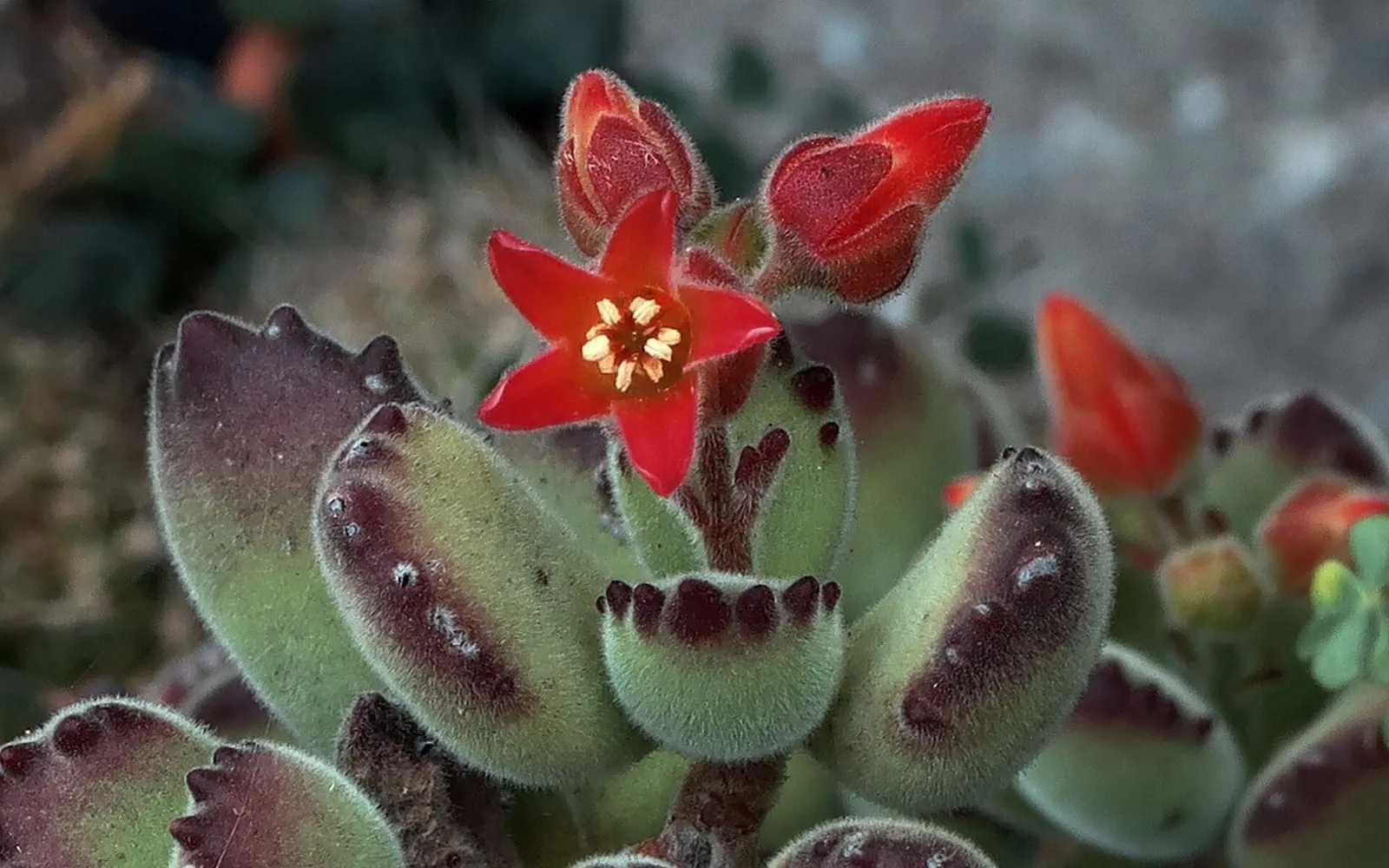
Bear’s paw is grown for its plump, furred leaves. Each fat, oval leaf is covered in fine white fur and tipped with a row of small reddish teeth, so a cluster of them looks like a bear’s paw complete with claws. The teeth redden in strong sun, and the whole plant makes a small, bushy shrub of furry green paws.
It is a Cotyledon, and that makes it one of the few widely grown succulents that is poisonous, so despite its soft appearance it belongs out of reach of pets and children. It is popular with collectors, but it is not as safe to chew as many rosette succulents.
Its home is the dry Cape of South Africa, and it needs similar conditions: bright light, gritty soil and long dry spells. The furry leaves mark and rot if kept wet or splashed, so it needs careful, dry-side watering. Grow it bright, warm and lean and it forms a compact little bush.
Appearance and character
The leaves are fat and oval, densely coated in fine white or silvery fur that gives them a soft, velvety feel, and edged at the tip with a row of small reddish-brown teeth, the claws that name the plant.
Those claws and the leaf edges redden in strong light, so a sun-grown plant is more colourful than one in shade, and the fur helps shield the leaves from fierce sun.
The plant is upright and bushy, branching into a small shrub twenty to thirty centimetres tall, denser and more shrubby than the flat rosette succulents.
Its flowers are bell-shaped, orange to red, hanging from tall stalks above the foliage in late spring and summer on a mature plant. Most of the year-round interest still comes from the furred leaves.
Where it is from
Cotyledon tomentosa comes from the dry, rocky country of the South African Cape, growing among stones in bright sun and storing water in its thick, furred leaves against drought.
Give it strong light, sharp drainage and long dry spells, and its hairy leaves stay compact. Water sitting on the fur, or a soggy pot, causes the rot and marking that are its main weaknesses.
How it grows
It grows steadily through the warm months, branching and plumping its leaves and, on a mature plant, sending up flower stalks in late spring and summer, then rests over winter. Warmth and bright light keep it growing; cold and damp can stop growth and cause rot.
Grow it in a very free-draining, gritty cactus mix in a pot to suit its bushy size. Water only when the mix has dried right through, then water at the soil instead of over the furry leaves, and drain fully. Water on the fur leaves marks and can start rot.
Give it bright light with some direct sun, warmth above about 7 deg C, and dry, airy conditions. Pinch or prune leggy stems to keep it bushy, and let cut ends dry before rooting them as cuttings.
Propagation is by stem cuttings or, more slowly, by leaf; let the cut dry for several days, then root in gritty mix. Handle with clean hands and keep the toxic sap off broken skin.
Through the seasons
Spring starts growth as light returns. Resume watering, prune to shape, and take cuttings. Flower stalks may begin to rise.
Summer is the main growing and flowering season. Give strong light to redden the claws, water only as the mix dries right out, and feed lightly.
Autumn slows growth as the light fades. Ease back on watering.
Winter brings a near-dry rest, held above about 5 deg C. Water barely at all, since the hairy stems rot quickly in cold, wet compost now.
Care difficulty
Moderate. In the right conditions it grows steadily, though its furry, water-filled leaves are more prone to marking and rot than a smooth-leaved succulent, so watering care matters. Keep it bright, warm and dry, water at the soil not the leaves, and it forms a plump little bush. The toxicity also means it needs a safe spot away from pets and children.
Watering
Wait until the gritty mix has dried out completely, then water at the base of the plant, keeping water off the furry leaves, and let it drain fully. The fat leaves store plenty of water, so the plant tolerates drought far better than damp.
Water very little over winter, when cold, wet compost rots the stems. Leaves that wrinkle are thirsty and plump up after a drink; leaves that go soft, yellow or translucent have rotted and should be removed, with firm stems saved as cuttings.
Warning signs, diseases and pests
Rot shows as soft, yellow, see-through leaves and a mushy base, brought on by wet compost or by water left sitting on the fur. Dry the plant off, cut away the rot, and start again from firm cuttings, watering at the soil from then on.
Mealybugs tuck among the furred leaves and in the leaf joints as white fluff, well hidden by the hairs. Dab them off with dilute alcohol and inspect closely, since the fur gives them cover. Brown marks and blemishes on the fur often come from splashed water or handling.
Shrivelled, wrinkled leaves mean the plant has been too dry, and usually recover after a soak.
Growing environment
Bright light with some direct sun keeps the plant compact and bushy and reddens the claws. In poor light it grows soft, pale and leggy, and the leaves lose their colour.
Warmth above about 7 deg C in dry, airy conditions suits it. Low humidity is fine, and damp settling on the fur can mark or rot the leaves, so give it moving air and keep it off cold, damp sills through winter.
Grow it in a gritty, free-draining mix in a bright spot with some direct sun, and site it out of reach of pets and children given its toxicity.
Feeding
A dilute, low-nitrogen cactus feed once or twice across spring and summer is all it needs. Too rich a feed pushes the furred leaves into soft, floppy growth that rots and loses its claws.
Feed nothing over winter. A plant just moved into fresh gritty mix has all it needs for its first weeks.
Troubleshooting
The leaves are going soft and yellow. Rot, from wet compost or water sitting on the fur. Let it dry, cut out the rot, water at the soil not the leaves, and restart from firm cuttings.
There are brown marks on the fur. Usually splashed water or handling. Water at the base, avoid wetting the leaves, and handle them as little as possible.
Is it safe around pets and children? No. Cotyledon is poisonous, containing heart-active compounds, so keep it well out of reach and wash your hands after handling cut stems. This makes it different from the harmless rosette succulents like echeveria.
It has grown leggy and pale. Too little light. Move it into brighter light with some direct sun, and prune it back to force bushy new growth.
The leaves have shrivelled. Thirst, after too long dry. A soak usually plumps them up.
Bear's Paw problem guides
Not sure what is wrong? See the common houseplant pests guide.