
Houseplant
Holly fern
Cyrtomium falcatum
Also known as Japanese holly fern, House holly fern, Cyrtomium falcatum
How to care for Cyrtomium falcatum. The stiff, dark, glossy fern that takes cold halls and dry air, why it looks nothing like a houseplant fern, and where it has escaped.
At a glance
- Difficulty
- Easy
- Water
- When the top third of the compost has dried
- Light
- Medium indirect light or light shade. It also takes deeper shade
- Temperature
- 10-21 deg C, and it tolerates brief spells near freezing
- Humidity
- Moderate. The thick fronds cope with dry air better than most ferns
- Hardiness
- USDA 6-10, RHS H5, hardy to -15 C
- Type
- Evergreen perennial fern, clump-forming and long-lived
- Height
- 40-60 cm
- Native to
- Eastern Asia
Coastal rocks, cliffs and woodland in Japan, Korea and eastern China, in a humid temperate climate with cold winters and salt-laden wind. It is hardier than anything else sold on a houseplant bench, surviving around -15 deg C once established, and it tolerates salt spray and wind that would shred a softer fern. Heat rather than cold is its limit, and it wants a cool shaded position wherever it is grown.
Hardiness zones describe winter cold alone. Summer heat, humidity, rainfall and the length of the growing season decide as much, so treat the range as the outer limit rather than as a recommendation.
Not known to be toxic
Non-toxic. The ASPCA lists the holly fern among plants that are not harmful to cats, dogs or horses, and it appears on no RHS list of potentially harmful garden plants. There is no irritant sap and no risk from handling it. The name refers only to the shape and gloss of the leaflets, which resemble small holly leaves, and the plant is not related to holly and does not carry its berries or its toxicity. The leaflet margins are toothed but not sharp, so there is no hazard in handling the fronds. The round brown spore patches scattered across the frond undersides are reproductive and are frequently mistaken for scale insects.
Sources: ASPCA (Holly Fern, Cyrtomium falcatum), RHS potentially harmful garden plants
About
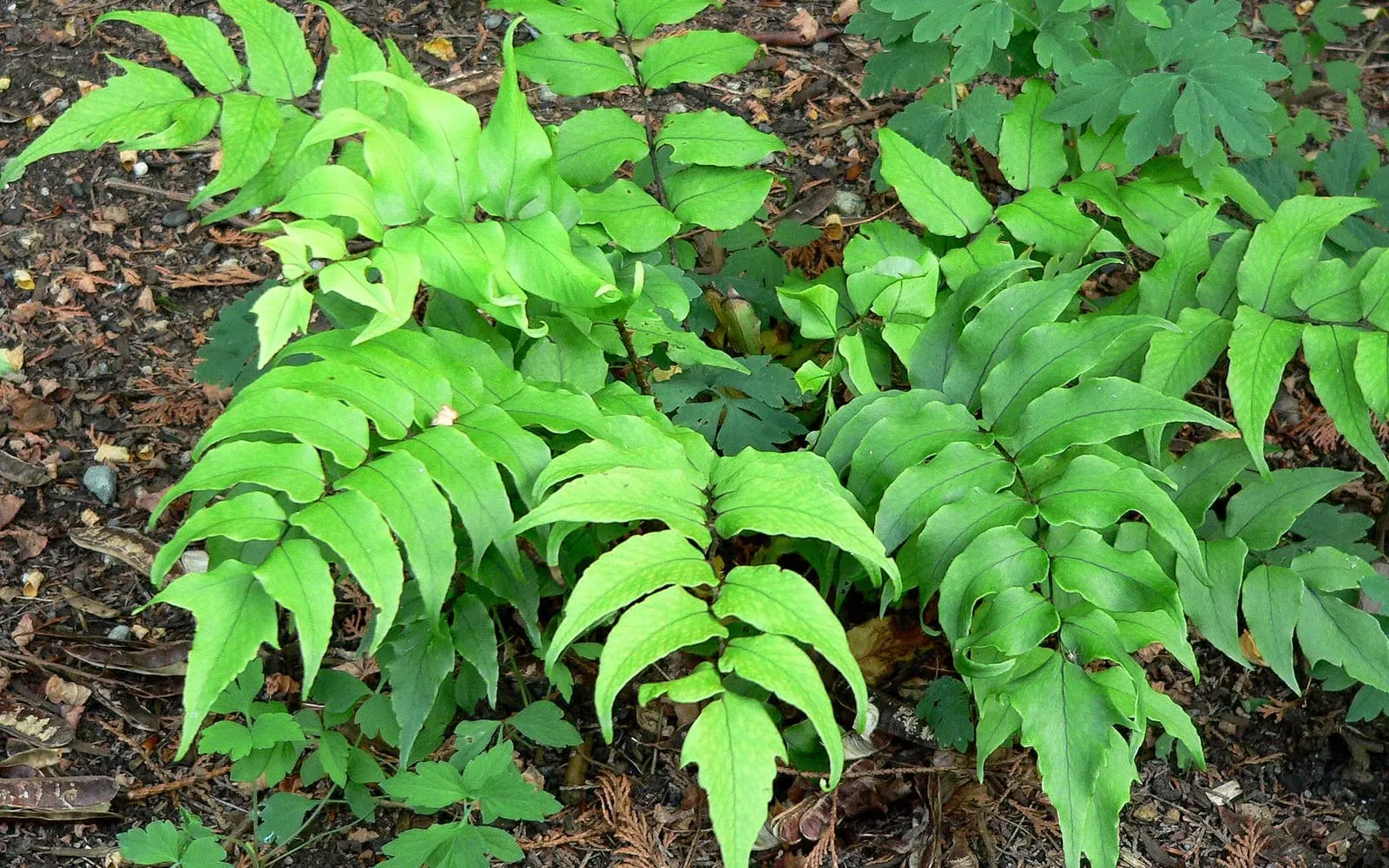
The holly fern is the toughest fern on the houseplant bench and it does not look like a fern at all. Its fronds are divided only once, into large, stiff, glossy, dark green leaflets with toothed margins that resemble small holly leaves, and the whole plant has a hard architectural quality that the lacy ferns lack.
That construction is the reason to grow it. Thick, waxy, once-divided fronds lose water far more slowly than finely cut ones, so this fern tolerates dry heated air and a missed watering in a way that would finish a maidenhair in a week.
It also tolerates cold. It comes from coastal cliffs in Japan and Korea and is hardy outdoors to around -15 deg C, which makes it a plant for an unheated hallway, a cold porch or a shaded corner of the garden rather than for a warm room.
Appearance and character
An upright evergreen fern forming a clump of arching fronds from a short erect scaly rhizome at the centre.
Each frond is 40 to 60 cm long and divided once, carrying five to twelve pairs of large leaflets along a stout stalk. The leaflets are sickle-shaped, 5 to 10 cm long, thick, very glossy, dark green, with a coarsely toothed and often lobed margin and an ear-shaped lobe at the base.
The gloss is pronounced enough that the plant reads as a small shrub rather than a fern from a distance.
Growth is moderate. A clump reaches 40 to 60 cm tall and about as wide and thickens steadily.
Round brown spore patches are scattered across the undersides of mature leaflets, densely enough to look like an infestation.
‘Rochfordianum’ has more deeply cut and coarsely toothed leaflets and is the cultivar most often sold.
Fronds are long-lived and the plant holds them through winter without shedding.
Where it is from
Japan, Korea and eastern China, growing on coastal cliffs, rocks and walls and in open woodland, often within reach of salt spray.
A coastal cliff is a demanding place for a fern. Wind, salt, sun reflected off water and sharply drained rock all select for a thick, waxy, wind-resistant frond rather than the delicate lace of a sheltered forest floor, and that construction is what makes the plant so tolerant indoors.
The temperate range with cold winters explains the hardiness, and it separates this species from the tropical ferns it sits beside in a shop.
It has naturalised widely outside its range, and is recorded as an escape on walls and coastal rocks in parts of western Europe, the southeastern United States, New Zealand and elsewhere. In some of those places it is treated as an environmental weed, so check local status before planting it out.
The genus contains around fifteen to twenty species across Asia and the Pacific.
How it grows
Give it medium indirect light or light shade. It also holds deeper shade well.
Keep it out of direct sun, which yellows and scorches the fronds.
Keep it cool. Between 10 and 21 deg C suits it, and it takes brief spells near freezing. A cool hall or porch is better than a heated room.
Water when the top third of the compost has dried, thoroughly, and drain completely.
Use a free-draining compost with grit through it, since the plant grows in sharply drained rock crevices in the wild.
Feed every six to eight weeks at quarter strength through the growing season.
Cut old or damaged fronds off at the base in spring, before the new growth unfurls.
Repot every two or three years in spring, moving up one pot size.
Divide an established clump in spring, separating rooted sections of the crown with a clean knife.
Through the seasons
Spring brings the main flush of fronds, uncurling as croziers from the centre of the crown. Cut away last year’s damaged fronds first, resume feeding, and repot or divide now.
Summer is steady growth. Water when the top third dries, feed every six to eight weeks, and keep it cool and shaded.
Autumn slows it. Reduce watering and stop feeding from October.
Winter is straightforward. The plant holds its fronds, wants little water, and prefers a cool room to a warm one.
Care difficulty
Easy, which is unusual in a fern.
Heat is the main limitation. This is a cool temperate plant and a warm dry living room stresses it, though it survives conditions that would kill most ferns.
Overwatering in a cool room rots the crown and is the commonest cause of death.
Scale insects are the pest to watch for, and the dark glossy fronds hide them well until honeydew appears.
Spore confusion causes real damage, since owners scrub or spray the undersides of healthy fronds believing the spore patches are insects.
Watering
Water when the top third of the compost has dried, roughly weekly in summer and every two to three weeks in winter.
Water thoroughly until it drains, then empty the saucer.
Reduce watering considerably in a cool room in winter, when the compost stays wet for a long time.
Use rainwater or filtered water where the supply is hard, though this species is less sensitive than most ferns.
Underwatering shows as drooping fronds and brown margins, and the plant tolerates it better than any other fern commonly sold.
Overwatering shows as blackening at the crown, yellowing fronds and a sour compost smell.
Warning signs, diseases and pests
Round brown patches scattered across the frond undersides are spores. They are normal on mature fronds and are the single most misdiagnosed feature of this plant.
Small brown or grey discs that scrape off, found along the stalks and midribs rather than scattered evenly, are scale insects. Sticky honeydew confirms it.
Yellowing fronds with a soft crown is overwatering.
Brown margins and drooping is drought.
Pale, yellowed, washed-out fronds are usually too much light.
White cottony fluff at the base of the frond stalks is mealybug.
Fronds looking tired and marked in spring is normal after a winter, and cutting them out at the base before the new flush lets the plant look fresh again.
Poor growth in a warm room is heat stress rather than disease.
Growing environment
Medium indirect light or light shade, and it holds deeper shade well.
Never direct sun.
Cool, 10 to 21 deg C, with brief spells near freezing tolerated. It is happier cool than warm.
Moderate humidity, and it copes with ordinary dry room air better than any other fern on this list.
Free-draining peat-free compost with grit, in a pot with drainage holes.
Outdoors in shade in USDA 6 and warmer, where established plants take around -15 deg C. Check local invasive status first in mild coastal regions.
Avoid warm dry living rooms, radiators, direct sun and compost that stays saturated.
Feeding
Feed every six to eight weeks from spring to early autumn with a balanced liquid houseplant fertiliser at quarter strength.
Stop feeding from mid-autumn to early spring.
Feed weakly, since ferns burn easily.
Repot every two or three years in spring into a pot one size up with a gritty free-draining mix.
Flush the compost occasionally with plain water to clear salts.
Troubleshooting
The undersides are covered in brown dots. Spores, and they are normal on mature fronds. This is the most commonly misdiagnosed feature of the plant. Scale insects sit along the stalks and midribs, scrape off, and produce sticky honeydew.
It does not look like a fern. The fronds are divided only once, into large glossy leaflets shaped like holly leaves. It is a true fern and unfurls its new growth as croziers.
Can it take a dry room? Better than any other fern commonly sold, because the fronds are thick and waxy. It would still rather be cool and moderately humid.
Can it live outside? Yes, in shade in USDA 6 and warmer, taking around -15 deg C once established. Check local status first, since it has naturalised in several mild coastal regions.
Is it related to holly? No. The name refers only to the shape and gloss of the leaflets. It carries no berries and none of holly’s toxicity.
Is it safe with pets? Yes. The ASPCA lists it as non-toxic to cats, dogs and horses.
The fronds look tired and marked. Normal after a winter. Cut them out at the base in early spring before the new flush unfurls, and the plant will look fresh again by early summer.
It is doing badly in a warm room. Heat stress. This is a cool temperate cliff fern and a heated living room is the wrong place for it. Move it somewhere cooler.
Holly fern problem guides
Not sure what is wrong? See the common houseplant pests guide.