
Outdoor plant
Hart's tongue fern
Asplenium scolopendrium
Also known as Hart's tongue, Deer tongue fern, Phyllitis scolopendrium
How to care for Asplenium scolopendrium. The hardy native fern with undivided strap fronds, why the spore lines run in herringbone stripes, and where it grows that other ferns cannot.
At a glance
- Difficulty
- Easy
- Water
- Keep the soil moist, and water containers whenever the surface dries
- Light
- Deep to partial shade. Sun scorches the fronds badly
- Temperature
- Hardy outdoors, and it dislikes heat and dry air
- Humidity
- Moderate to high, and it wants a sheltered position
- Hardiness
- USDA 5-9, RHS H6, hardy to -20 C
- Type
- Evergreen perennial fern, clump-forming and long-lived
- Height
- 30-60 cm
- Native to
- Europe and western Asia
Shaded woodland, limestone rock crevices, old walls and stream banks across Europe and western Asia, in a temperate climate with cool damp summers and cold winters. It is hardy to around -20 deg C and evergreen through the winter, and it favours alkaline conditions, growing on mortar and limestone where acid-loving ferns will not. Heat and drought are its limits rather than cold, and it will not hold its fronds through a hot dry summer without shade and shelter.
Hardiness zones describe winter cold alone. Summer heat, humidity, rainfall and the length of the growing season decide as much, so treat the range as the outer limit rather than as a recommendation.
Not known to be toxic
Non-toxic. Asplenium scolopendrium appears on no RHS list of potentially harmful garden plants, and the ASPCA lists its relative the bird's nest fern as not harmful to cats, dogs or horses. There is no irritant sap and no hazard from handling. Ferns as a group are among the safest plants to grow around animals and children. The brown herringbone stripes on the underside of a mature frond are spore-bearing structures called sori, and they are the feature most often mistaken for a disease or an infestation, which leads to healthy fronds being cut off. The plant has a long history in herbal use, though it is grown now for ornament alone.
Sources: RHS potentially harmful garden plants, ASPCA (Bird's Nest Fern, Asplenium nidus)
About
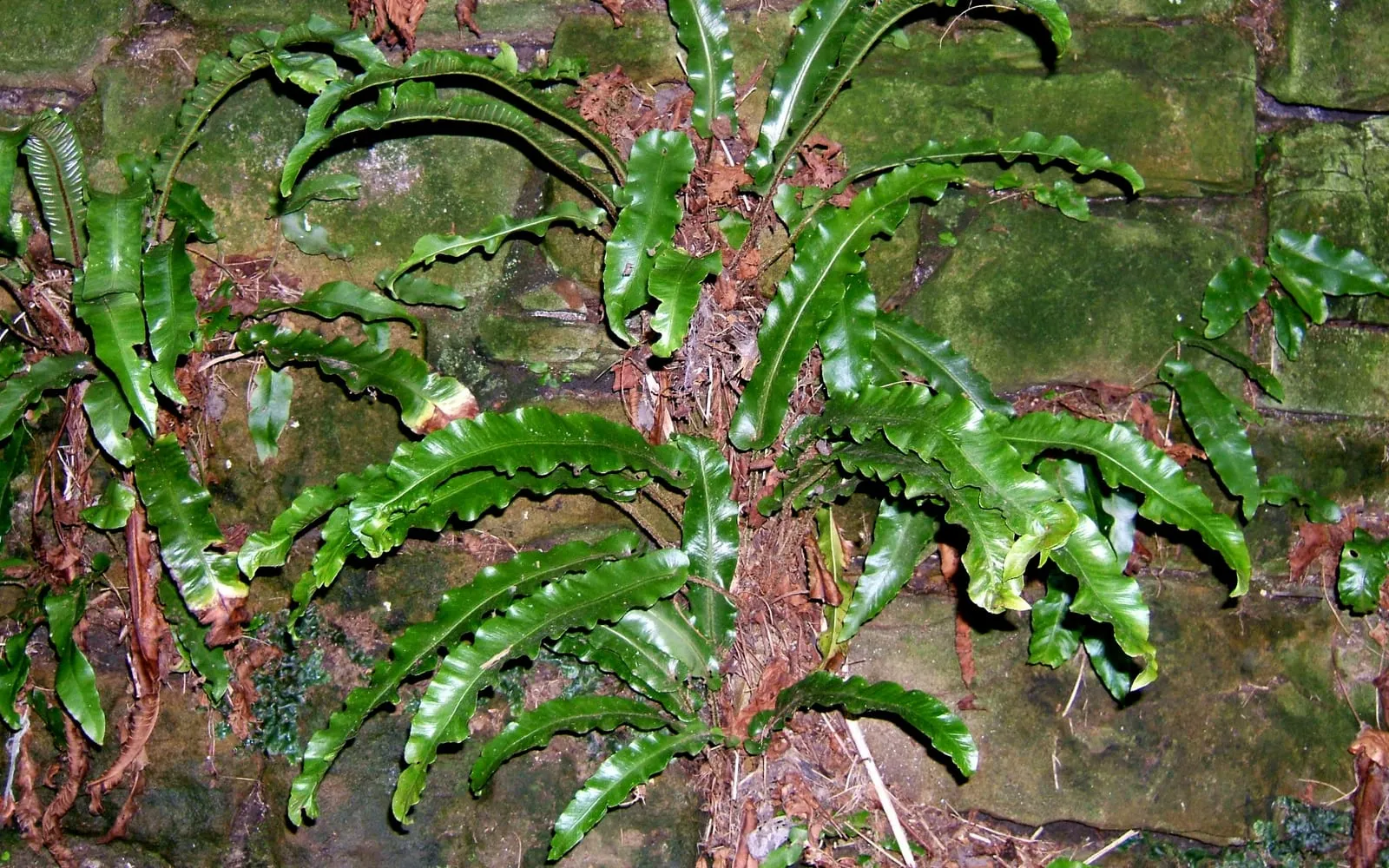
Hart’s tongue is the fern that does not look divided. Where almost every other fern carries a frond cut into leaflets, this one holds a single undivided strap of bright glossy green, wavy at the edges, rising in a shuttlecock rosette from a scaly crown.
It is also one of the few ferns that grows on lime. Most ferns want acid leaf litter, and this one colonises limestone crevices, old mortar and the sides of brick wells, which is why it turns up in places nothing else green will grow.
For a shaded garden it is one of the most useful evergreen plants available. It is hardy to around -20 deg C, holds its fronds through winter when the deciduous ferns have collapsed, and asks for nothing beyond shade, shelter and soil that does not dry out.
Appearance and character
An upright evergreen fern forming a rosette of fronds from a stout scaly crown, arranged in a shuttlecock so that new growth rises from the centre.
Each frond is a single undivided strap, 20 to 60 cm long and 3 to 6 cm wide, bright glossy green, with a wavy or crimped margin and two backward-pointing lobes at the base where it meets the stalk.
New fronds unfurl as tightly coiled croziers, which is the clearest sign that this is a fern despite the shape.
Spores are carried in long straight lines on the underside, running out from the midrib at an angle in pairs, so that a mature frond looks striped in brown herringbone. That arrangement is the origin of the name scolopendrium, from the Greek for a centipede.
Growth is moderate. A clump reaches 30 to 60 cm and thickens over years.
Cultivars have been selected for centuries, particularly by Victorian fern collectors. ‘Crispum’ has heavily frilled margins, ‘Undulatum’ is wavy, and the ‘Cristatum’ group carries forked and crested tips.
Where it is from
Woodland, shaded banks, limestone pavement, ravines, old walls and the sides of wells across Europe and western Asia, with a related subspecies in eastern North America.
The limestone preference sets it apart. Most ferns grow in acid conditions and this one thrives on alkaline ground, which is why it colonises mortar in old brickwork and the joints of stone walls in places where the surrounding soil would suit nothing.
Its temperate range with cold winters explains the hardiness, and the deep shade of ravines and woodland explains why it scorches so readily in sun.
Victorian Britain went through a fern craze in the middle of the nineteenth century, and this species was one of its main subjects. Hundreds of cultivars were named, wild populations were stripped in some areas, and a good many of the crested and frilled forms grown today date from that period.
The genus Asplenium is large and includes the bird’s nest fern grown as a houseplant, which shares the undivided frond and wants a warm room rather than a cold garden.
How it grows
Plant it in deep or partial shade. Sun scorches the fronds and is the commonest mistake.
Give it moist, well-drained soil. It tolerates clay, chalk and stony ground, and it does well in soil improved with leaf mould.
Shelter it from wind. Exposed fronds shred and brown at the edges, and this is a plant for a sheltered corner rather than an open border.
Keep the soil from drying out, particularly in the first two seasons and in containers.
Mulch with leaf mould in spring, which suits it better than fertiliser.
Cut the old fronds off at the base in late winter, before the new croziers unfurl, since the plant holds tired fronds indefinitely otherwise.
Grow it in a container in a shaded courtyard if you have no border, using free-draining compost and watering regularly.
Plant it in a wall crevice or between paving in shade, where it establishes readily and looks natural.
Through the seasons
Late winter is the time to cut away last year’s fronds, before the new growth appears.
Spring brings the new croziers, unfurling from the centre of the crown. Mulch now, and watch for slugs grazing the emerging fronds.
Summer needs shade, shelter and soil that stays moist. Water containers regularly and garden plants in prolonged drought.
Autumn and winter are when the plant earns its place, holding glossy green fronds through the months when deciduous ferns have gone.
Care difficulty
Easy, and one of the most reliable evergreen ferns for a shaded garden.
Sun is the main mistake, scorching the fronds brown and pale within days of exposure.
Drying out is the second. A plant in dry soil browns from the frond tips and looks poor for the rest of the season.
Wind damage shreds the long straps, which is why shelter matters as much as shade.
Slugs and snails graze the new croziers as they unfurl in spring, leaving holes and notches that remain for the life of the frond.
Watering
Keep garden plants moist through their first two seasons while they establish.
Water established garden plants only in prolonged drought, since they cope well once rooted.
Water containers whenever the surface dries. A pot in a shaded courtyard still dries out and this fern will not tolerate it.
Water at the base rather than over the crown, since water sitting in the centre of the rosette can rot it in cold weather.
Underwatering shows as browning from the frond tips inward, and the damage remains on those fronds.
Overwatering is rare in the ground and possible in containers, showing as blackening at the crown.
Warning signs, diseases and pests
Brown lines in a herringbone pattern on the underside of a frond are spores, and they are normal on mature growth. This is the feature most often mistaken for disease.
Brown scorched patches on the upper surface are sun damage.
Browning from the tips inward is drought or wind.
Raised orange pustules on the fronds are rust, which is uncommon. Remove affected fronds and improve air movement.
Holes and notches in newly unfurled fronds are slug and snail damage, done while the crozier was soft.
Notched frond margins with a wilting container plant suggests vine weevil, whose grubs eat the roots in pots.
Fronds looking tired and marked in late winter is normal, and cutting them out before the spring flush restores the plant.
A plant that has stopped producing fronds is usually too dry, too sunny or both.
Growing environment
Deep to partial shade, and it will grow in shade too deep for most plants.
Never full sun.
Hardy outdoors to around -20 deg C, growing in USDA 5 and warmer, and evergreen through winter.
Sheltered from wind, which shreds the long undivided fronds.
Moist well-drained soil, and it favours alkaline conditions, growing happily on chalk, limestone and old mortar.
A shaded container, a wall crevice or a gap between paving stones all suit it.
Avoid open exposed borders, full sun and soil that bakes dry in summer.
Feeding
Mulch with leaf mould or garden compost in spring, which is what this fern wants rather than fertiliser.
Feed container plants with a balanced liquid feed at quarter strength every six to eight weeks through the growing season.
Avoid rich feeding in the ground. A woodland fern in improved soil grows soft and looks coarse.
Divide congested clumps in spring, separating rooted crowns with a knife.
Sow spores onto damp sterile compost under cover if you want quantity, which is slow but reliable.
Troubleshooting
There are brown stripes under the fronds. Spores, arranged in the herringbone lines that give the species its name. They are normal on mature fronds and are not a disease.
The fronds have gone brown and scorched. Sun, wind or drought. This is a plant for deep shade in a sheltered position with soil that stays moist.
Is it a fern at all? Yes. The frond is undivided, which is unusual, but new growth unfurls as croziers and the plant reproduces by spores like any other fern.
Will it grow in an alkaline soil? Better than most ferns. It grows on limestone, chalk and old mortar in the wild, so a chalky garden suits it.
Is it safe with pets and children? Yes. Ferns are among the safest plants to grow, and this one appears on no list of harmful garden plants.
When should I cut the old fronds off? Late winter, before the new croziers unfurl. The plant holds tired fronds indefinitely otherwise.
Holes have appeared in the new fronds. Slugs and snails grazed them while they were soft and unfurling. The holes stay for the life of the frond.
Can I grow it in a pot? Yes, in shade, in free-draining compost, watered regularly. It will not tolerate a container drying out.