
Houseplant
Japanese Bird'S Nest
Asplenium antiquum
Also known as Asplenium antiquum
How to grow Asplenium antiquum, the japanese bird's nest fern, with its broad, undivided, glossy fronds set in a funnel-shaped rosette around a central nest.
At a glance
- Difficulty
- Easy
- Water
- When the top few centimetres of mix have dried
- Light
- Bright indirect light to light shade
- Temperature
- Warm; keep above about 13 deg C
- Humidity
- Average to high
- Hardiness
- USDA 10-12, RHS H1b, hardy to 13 C
- Type
- Perennial
- Height
- 30-60 cm
- Native to
- eastern Asia
A tender tropical foliage plant from eastern Asia, growing in warm, humid, shaded to filtered light. It needs warmth, humidity and bright indirect light, and it cannot take frost or chill. It is safest above about 13 deg C, and cold, wet compost or dry air spoils it.
Hardiness zones describe winter cold alone. Summer heat, humidity, rainfall and the length of the growing season decide as much, so treat the range as the outer limit rather than as a recommendation.
Not known to be toxic
Asplenium antiquum, the japanese bird's nest, is not recorded among the seriously toxic plants, and related plants in its group are not listed as toxic by the ASPCA or the RHS. A pet or child that chewed a leaf would be unlikely to have more than a possible mild stomach upset.
Sources: ASPCA toxic and non-toxic plants, RHS potentially harmful garden plants
About
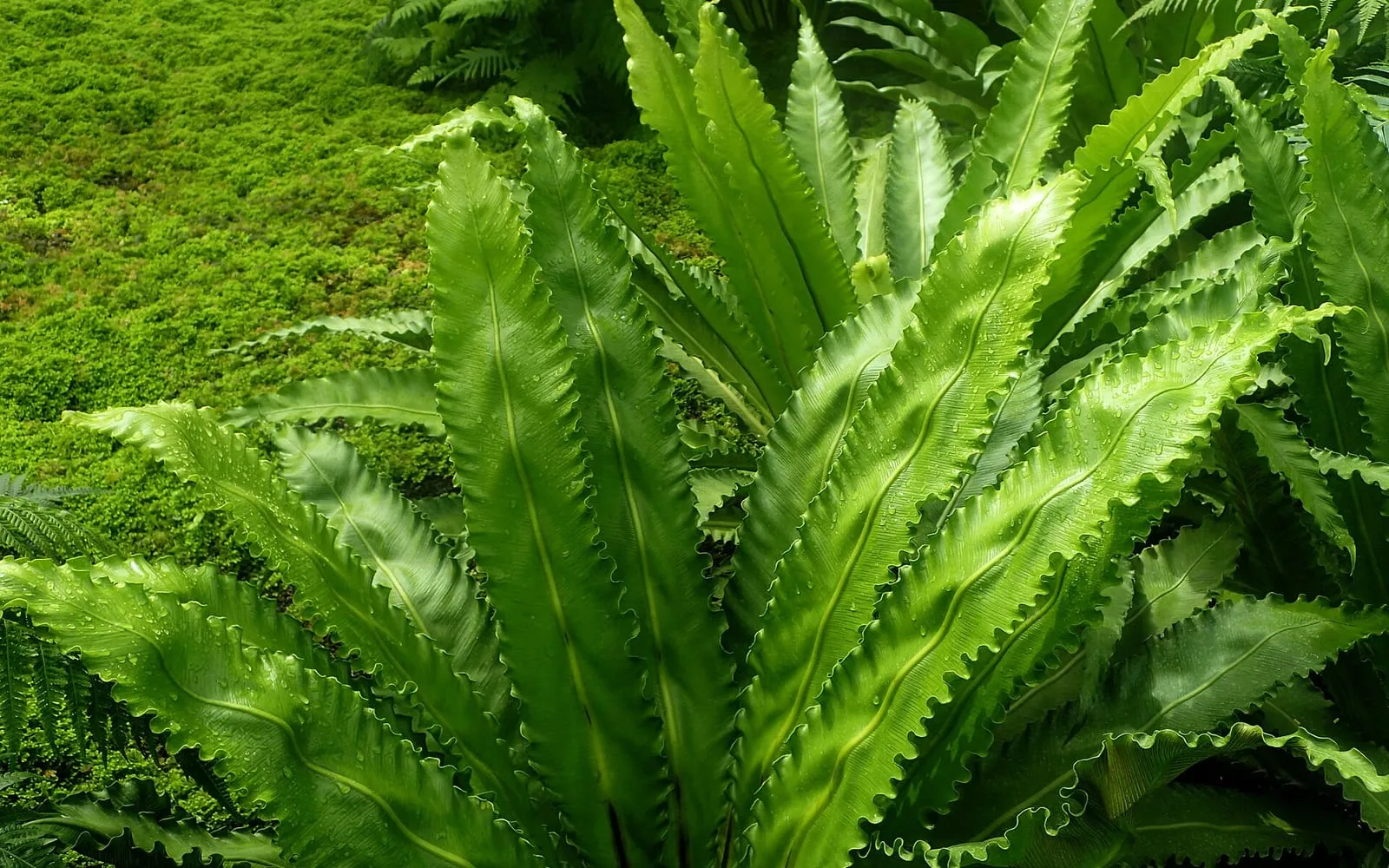
Asplenium antiquum looks unlike the feathery ferns many people expect. Instead of divided fronds it has broad, undivided, strap-shaped leaves of glossy apple green, each with a dark central rib, arranged in a tight funnel so the whole plant forms a rosette like a shuttlecock or a green vase. At the centre is the crown, the nest of the name, from which every new leaf unfurls.
In the wild it lives as an epiphyte, growing in the forks and on the trunks of trees through the warm forests of eastern Asia, where its funnel catches falling leaves and rain. That habit shapes how it should be grown: give the roots an open, airy mix instead of dense soil, and keep the central nest clear instead of filled with water.
It makes a good foliage plant for a warm, humid, softly lit room, holding its broad glossy leaves through the year. Warmth, humidity and steady but careful watering keep it in good order. Cold, wet compost rots the crown, and dry, draughty air browns the leaf edges.
Appearance
The leaves are broad, undivided and strap-shaped, a glossy apple green with a dark central rib, quite unlike the divided fronds of most ferns.
They are held in a tight, upward funnel that forms a rosette or shuttlecock, with the crown, the nest, at its centre.
Each new leaf unfurls from that central nest, pale and soft at first before it firms and darkens to its glossy green.
It does not flower, because it is a fern, and long spore lines run in herringbone fashion along the undersides of the mature leaves.
Where it is from
The japanese bird’s nest is native to eastern Asia, growing as an epiphyte in warm, humid forest, perched on tree trunks and in branch forks in shade or gently filtered light.
Give it warmth, a humid atmosphere and light out of harsh sun. Keep its roots in an open, airy mix instead of heavy, wet soil. It has no tolerance of frost or chill, and cold, sodden compost around the crown is the main thing that kills it.
How it grows
New leaves emerge one at a time from the central nest through the warm months and slow in winter, and the plant holds its full rosette the year round. Warmth, humidity and an open, evenly moist footing keep it growing; cold, wet compost rots the crown, and dry air browns the leaf margins.
Pot it into a light, open, free-draining mix, the kind used for epiphytes, so air reaches the roots, and water around the edge of the pot instead of into the central nest, which rots if it stays wet. It forms a single rosette and cannot be divided; that is normal for the species.
Stand it in bright but filtered light or light shade, keep it above about 13 deg C, and lift the humidity with a wet-gravel tray or grouped plants where the room air is dry.
Through the seasons
Spring starts fresh leaves unfurling from the nest. Resume feeding, and keep the open mix evenly but lightly moist.
Summer is the strongest growth period. Water around the crown so the mix stays moist, hold the air humid, keep it out of scorching sun, and feed through the month.
Autumn slows the plant as the light fades. Cut the feeding back and let the mix dry a little more between waterings.
Winter is a rest period. Keep it warm, water sparingly around the edge, and never leave cold, wet compost around the crown.
Care difficulty
Easy, given warmth and a little care over watering. Filtered light, a humid atmosphere and an open mix kept lightly moist suit it well. The main problems are cold, wet compost around the crown, which rots it, dry, draughty air, which browns the leaf edges, and harsh sun, which bleaches and scorches the broad leaves.
Watering
Water when the top few centimetres of the mix have dried, pouring around the edge of the pot instead of into the central funnel, since water sitting in the nest rots the crown. Let the surplus drain away and never leave the pot standing in it.
Reduce watering in winter, when growth slows and cold, wet compost can rot the crown. Rainwater or filtered water keeps the glossy leaves cleanest, though the plant is not as fussy about hard water as the delicate ferns are.
Warning signs, diseases and pests
A crown gone soft, brown and collapsing has been kept cold and wet, or watered into the nest; there is rarely a way back once the centre rots, so careful, edge-of-pot watering matters most. Browning leaf edges mean dry, draughty air, so raise the humidity and move it off the draught.
Warm, dry air can bring spider mites and mealybugs; wipe mealybugs off the broad leaves with a dab of dilute alcohol, and raise the humidity to discourage mites, treating early before either pest builds up.
Growing environment
Bright but filtered light or light shade suits it, out of the harsh sun that bleaches and scorches the broad leaves. Warmth above about 13 deg C is essential, since it takes no frost or chill.
Give it an open, free-draining, epiphyte-style mix and a humid atmosphere, well away from cold draughts and dry radiator heat. A warm, softly lit room, a bright bathroom or a grouped humid corner all suit it.
Feeding
A weak, balanced feed through the growing season keeps the leaves broad and glossy. Reduce feeding through autumn and stop over winter.
Keep the dose light, as a strong feed produces soft, weak leaves. A freshly potted plant lives on its new mix for the first weeks before it needs feeding.
Troubleshooting
Why is my japanese bird’s nest struggling? Most often cold, wet compost or water left sitting in the central nest, which rots the crown, or dry, draughty air, which browns the leaf edges. Warmth, humidity and careful edge-of-pot watering usually fix it.
How much light does it need? Bright but filtered light or light shade. Harsh direct sun bleaches and scorches the broad leaves.
Should I water into the middle? No. Water around the edge of the pot, since water pooling in the central nest rots the crown.
How do I propagate it? It makes a single rosette and cannot be divided or taken as cuttings, so it is raised from spores instead of split.
Is it safe around pets? Spleenworts are not recorded as poisonous, so it is treated as safe around cats, dogs and children.
Japanese Bird'S Nest problem guides
Not sure what is wrong? See the common houseplant pests guide.