
Houseplant
Brain Cactus
Stenocactus crispatus
Also known as Wave cactus, Brain-fold cactus
How to grow brain cactus as a houseplant. Its wavy, convoluted ribs, and why strong light is what keeps the folded pattern tight and pronounced.
At a glance
- Difficulty
- Moderate
- Water
- Regular watering in summer, minimal in winter
- Light
- Bright light, full sun once acclimatised
- Temperature
- 10-28 deg C; tolerates a cool, dry winter rest
- Hardiness
- USDA 9-11, RHS H2, hardy to 2 C
- Type
- Evergreen perennial cactus
- Height
- 8-15 cm tall
- Native to
- Central Mexico
Tolerant of a light chill but not real frost, and best grown as a container plant across most temperate climates. Strong, consistent light is what keeps the plant's characteristic tightly folded ribs pronounced, and a cool, dry winter rest supports better flowering the following spring than being kept warm and watered year round.
Hardiness zones describe winter cold alone. Summer heat, humidity, rainfall and the length of the growing season decide as much, so treat the range as the outer limit rather than as a recommendation.
Not known to be toxic
Brain cactus has no toxicity listing from the RHS or the ASPCA and is considered safe around pets and children in terms of chemical toxicity. Its spines, though relatively slender for a cactus, are still sharp enough to scratch skin, and the tightly folded ribs make the plant awkward to handle safely without padded tools.
Source: RHS
About
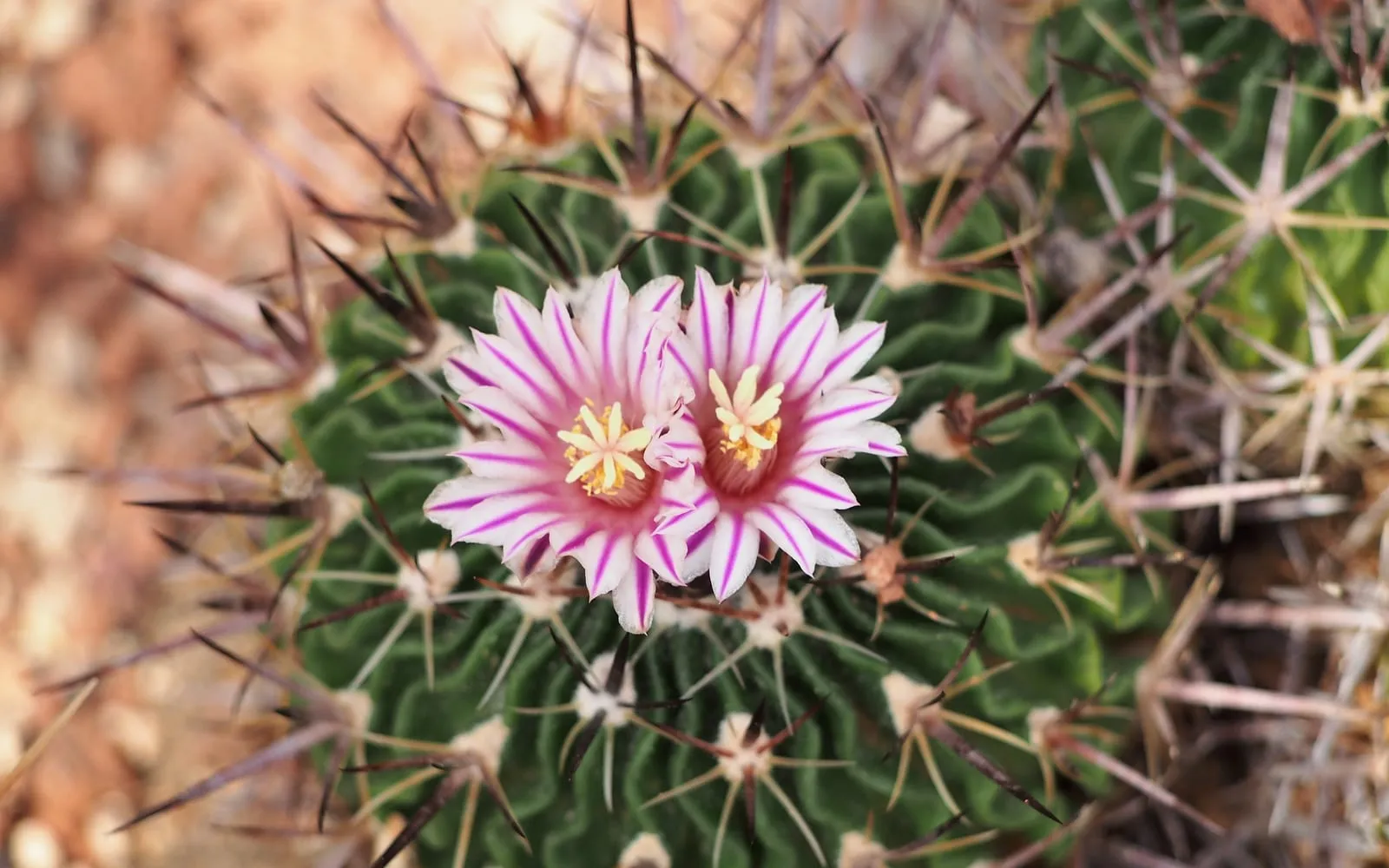
The brain cactus takes its common name from its unusual, densely folded ribs, which wave and undulate around the stem in a pattern that closely resembles the convolutions of a brain, an effect quite unlike the straight or gently curved ribs of most other cacti. It is grown almost entirely for this striking sculptural form, though a mature, well-grown specimen also produces attractive, delicate flowers each spring.
Among the Stenocactus genus, known collectively for their unusually high rib counts and wavy growth patterns, this species is one of the more widely available and reliably grown in cultivation, tolerating typical houseplant conditions reasonably well provided its need for strong light is respected.
Appearance and character
A solitary, rounded to slightly flattened stem has an exceptionally high number of thin, tightly folded ribs, sometimes twenty or more, winding around the stem in a wavy, convoluted pattern that gives the whole plant its brain-like appearance. Fine spines, some straight and some distinctively twisted or curved, arise from areoles spaced along each undulating rib.
Delicate, pale flowers, often white or very pale lilac with a fine darker stripe down each petal, open from the crown in spring, comparatively small and short-lived next to the flowers of some other cacti, but a welcome contrast to the plant’s otherwise sculptural, non-floral appeal through the rest of the year.
Where it is from
Rocky, semi-arid ground in central Mexico, typically among sparse vegetation in full sun and free-draining, mineral soil.
That harsh, sun-exposed origin explains the plant’s need for strong, consistent light in cultivation; without it, the tightly folded ribs that define the species’ appearance tend to relax and space out, losing much of the dense, convoluted texture that makes it distinctive.
How it grows
An evergreen cactus growing slowly from the tip of its single stem, gradually increasing the number and complexity of its folded ribs as it matures rather than producing offsets in the way many clustering cacti do. It remains solitary through most of its cultivated life, its interest lying in the increasing intricacy of its ribbed pattern rather than in forming a wider cluster.
Because it grows as a single stem with one growing point, careful handling to avoid damaging the crown matters more for this species than for a plant capable of resprouting from offsets elsewhere on the plant.
Through the seasons
Spring is the main flowering period, with small, pale flowers opening from the crown as growth resumes.
Summer is the main growing season. Water regularly and feed once through this period.
Autumn growth and flowering slow as temperatures drop.
Winter keep the plant cool and nearly dry to support strong growth and flowering the following season.
Care difficulty
Moderate. The main challenge with this species is providing consistently strong light, since the plant tolerates lower light without dying but loses much of its characteristic tightly folded appearance as a result, which for most growers defeats the purpose of growing it at all.
Watering
Water thoroughly during the growing season, letting the compost dry out fully between waterings. Reduce watering significantly over winter, keeping the compost close to dry, since overwatering during the cooler months is a common cause of loss in this and most other small ornamental cacti.
Warning signs, diseases and pests
Mealybug occasionally colonises the crown or base of the stem, tucked into the folds between ribs where it can be harder to spot; regular close inspection helps catch an infestation early, and careful manual removal or a horticultural soap treatment addresses it. Root rot from overwatering or poor drainage is the more serious risk, showing as a soft, discoloured base.
Ribs that appear to relax and space out, losing their tight, convoluted folding, usually indicate insufficient light rather than disease, and moving the plant to a brighter position, gradually to avoid scorch, generally produces more tightly folded new growth over subsequent seasons, though existing relaxed growth will not refold.
Growing environment
Bright light with strong sun is essential to maintain this species’ characteristic tightly folded ribs; in lower light the folding relaxes noticeably even though the plant continues to survive. Sharply free-draining, mineral cactus compost is equally important, and a distinctly cooler, drier winter spot supports strong flowering the following spring.
Feeding
A low-nitrogen cactus fertiliser, applied once during the growing season, is generally sufficient for this slow-growing, non-clustering species. Heavy feeding is unlikely to benefit it and can encourage softer growth uncharacteristic of the plant’s naturally dense, compact form.
Troubleshooting
The ribs look relaxed and spaced out rather than tightly folded. Almost always insufficient light. Move the plant to a brighter, sunnier spot gradually over a couple of weeks; new growth will show tighter folding, though existing relaxed growth does not correct itself.
The base of the stem is soft and discoloured. Suspect root rot from overwatering or poor drainage. Cut back to healthy tissue if caught early, let it callus, and repot into fresh, sharply draining compost.
Small clusters are visible tucked into the folds between ribs. Check for mealybug, which can hide within the plant’s convoluted ribs more easily than on a smoother cactus. Treat with careful manual removal or a horticultural soap.
No flowers appear despite an established, healthy-looking plant. Check that the plant received a cool, dry winter rest and sufficiently strong light through the previous growing season, since both influence whether this species flowers reliably each spring.
You want to compare this plant with a similar-looking Echinofossulocactus label at a nursery. The two names refer to the same genus under an older and a newer classification, so a plant sold under either label is likely to be the same or a closely related species, and the same strong-light, sharp-drainage care applies regardless of which name appears on the tag.
You are trying to decide where in a collection to place this cactus. Because its appeal is almost entirely about the tight, convoluted folding of its ribs, position it somewhere it can be looked down on or viewed close up, such as a low shelf or the front of a display, rather than tucked among taller plants where the pattern is harder to appreciate at a glance.
Brain Cactus problem guides
Not sure what is wrong? See the common houseplant pests guide.