
Houseplant
Flaming Katy
Kalanchoe blossfeldiana
Also known as Kalanchoe, Widow's thrill, Christmas kalanchoe
How to care for Kalanchoe blossfeldiana. Watering a succulent that is sold in flower, deadheading, and the long dark nights that make it bloom a second time.
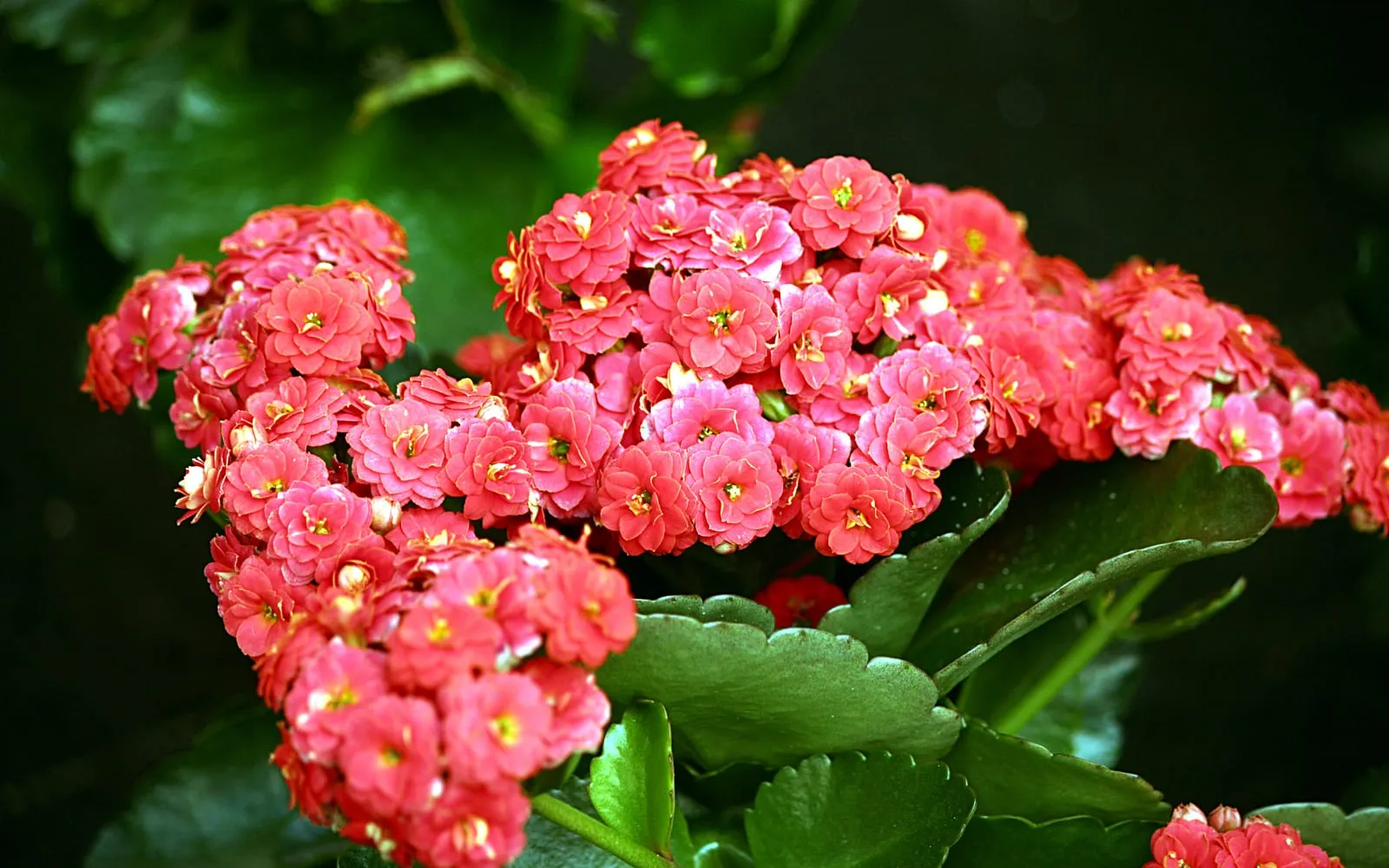
At a glance
- Difficulty
- Easy
- Water
- When the compost has dried out almost completely
- Light
- Bright light, including several hours of direct sun
- Temperature
- 15-24 deg C. Never below 10 deg C
- Humidity
- Low. It dislikes humid air and needs good ventilation
- Hardiness
- USDA 10-12, RHS H1b, hardy to 10 C
- Type
- Evergreen succulent perennial, often treated as temporary
- Height
- 20-45 cm
- Native to
- Madagascar
- Best month
- November in the Northern Hemisphere, May in the Southern Hemisphere
Madagascar. Flowering is triggered by short days rather than by feeding, so a plant kept under household lighting through the evening will stay green for years. Six weeks of fourteen-hour nights brings it back into bud. Outdoors year round only in USDA 10 and warmer.
Hardiness zones describe winter cold alone. Summer heat, humidity, rainfall and the length of the growing season decide as much, so treat the range as the outer limit rather than as a recommendation.
Every month named in this guide is for the temperate Northern Hemisphere. If you garden in the Southern Hemisphere, shift each one by six months, so November becomes May. Closer to the equator the wet and dry seasons matter more than the calendar, and the shift stops being a useful guide.
Toxic to pets if eaten
- Do not eat
- Every part, and the flowers most of all
- Harm from
- Eating it
- Affects
- Cats, dogs and horses
Kalanchoe is more dangerous than it looks and it is bought in enormous numbers as a cheerful supermarket plant. Every part contains bufadienolides, cardiac glycosides that act on the heart in the same way as those in foxglove and lily of the valley. The ASPCA lists Kalanchoe as toxic to cats, dogs and horses. Most cases involve nothing worse than drooling, vomiting and diarrhoea, because the amount an animal eats is usually small. A larger quantity, and particularly the flowers, which carry the highest concentration, can cause an abnormal heart rhythm, weakness and collapse. Any animal that has eaten a quantity of flowers should be seen by a vet rather than watched at home. Serious poisoning is far commoner in Australia and South Africa, where related Kalanchoe species growing wild kill grazing cattle in numbers, than it is from a pot plant indoors. For people the plant is a low risk and eating it causes stomach upset. What makes it worth naming is the combination of bright attractive flowers, a low position on a windowsill or a table, and an owner who has no idea the plant is toxic at all. Keep it out of reach of a cat that chews.
Sources: ASPCA (Kalanchoe), RHS potentially harmful garden plants
About
Flaming Katy is bought in flower, enjoyed for two months and thrown away, which is a reasonable way to treat it and an unnecessary one. The plant is a perennial succulent that will live for years and flower every winter, and the only reason most of them do not is that nobody tells the owner what makes them bloom.
Kalanchoe is a short-day plant. It sets flower buds only when the nights are long, which means fourteen hours of genuine darkness for around six weeks. In a house with lamps and television that never happens, so a plant that flowered magnificently in its first November sits green and leafy ever afterwards.
Giving it a dark cupboard for six weeks in autumn is the entire trick. Everything else about the plant is as easy as any succulent.
Appearance and character
A compact evergreen succulent perennial, 20 to 45 cm tall and about as wide.
Leaves are thick, fleshy and glossy dark green, oval with a distinctly scalloped or crenate margin, carried in opposite pairs.
The leaves store water, which is what makes the plant drought-tolerant and what makes overwatering fatal.
Flowers are the reason it sells. Dense flat-topped heads of many small four-petalled blooms held well above the foliage, lasting six to eight weeks.
Colours cover scarlet, orange, yellow, pink, magenta and white, and double-flowered forms are now commoner in shops than singles.
Stems become woody and bare at the base with age, which is the plant’s main cosmetic fault.
The species is one of over a hundred in the genus, several of which are grown. Mother of thousands, Kalanchoe daigremontiana, produces plantlets along its leaf margins and is considerably more invasive and more toxic.
Where it is from
Madagascar, where it grows on rocky slopes and in dry scrub in the highlands, in warm conditions with a pronounced dry season.
Robert Blossfeld, a German seed merchant, introduced it to Europe in 1932, and it was bred into a commercial pot plant within a few years.
Its dry rocky habitat explains the succulent leaves, the intolerance of wet compost and the preference for low humidity, which is unusual among houseplants.
The short-day flowering response is an adaptation to a seasonal tropical climate where day length rather than temperature signals the change of season. That response has been kept in cultivation and is what commercial growers manipulate to supply plants in flower all year round.
Madagascar’s flora is extraordinarily distinctive and heavily endemic, and this plant sits alongside the areca palm and several other familiar houseplants that come from the same island.
How it grows
Position it in bright light with several hours of direct sun. A south or west-facing windowsill suits it, and poor light gives leggy growth and no flowers.
Keep it between 15 and 24 deg C, and never below 10 deg C.
Water only when the compost has dried out almost completely, which in summer means every ten to fourteen days.
Water at the base rather than over the plant. Water sitting in the crown among the leaves rots it.
Use free-draining cactus compost, or ordinary compost with a third added grit and perlite.
Deadhead as the flowers fade, cutting the whole spent head back to the first pair of leaves. This tidies the plant and encourages a further flush.
Cut the plant back by about a third after flowering finishes, which prevents the legginess that otherwise develops.
Feed monthly with a dilute cactus or high-potassium feed while in growth, and not at all in winter.
To make it flower again, give it long nights from late September. Fourteen hours of complete darkness every night for six weeks does it. A cupboard, a cardboard box over the plant, or an unused room with the curtains shut all work. Bring it back into the light during the day. Buds appear after about six weeks and flower a few weeks later.
Propagate from leaf or stem cuttings in spring or summer. Let the cut end dry for a day, then push it into gritty compost. They root readily.
Repot every second year in spring into fresh gritty compost.
Through the seasons
Winter is the flowering season for a plant given its dark treatment, and the riskiest time for watering. Keep it bright, water sparingly, and stop feeding.
Spring is the cut-back. Trim the plant by a third once flowering finishes, repot if needed, take cuttings, and resume feeding.
Summer is growth. Water when the compost dries fully, feed monthly, and give it as much light as possible.
Autumn is the dark treatment. From late September, give it fourteen hours of complete darkness each night for six weeks to set the buds.
Care difficulty
Easy to keep alive and moderately difficult to reflower, which is the reverse of how most people experience it.
Overwatering is the one thing that kills it, and it rots from the crown outward.
The short-day requirement is the reason so few plants flower twice, and it is straightforward once you know.
Legginess develops within a year without the post-flowering cut-back.
The plant is otherwise tough, drought-tolerant, pest-resistant and long-lived.
Watering
Water only when the compost has dried out almost completely, roughly every ten to fourteen days in summer.
Water at the base and never into the crown, since water sitting among the leaves causes rot.
Water thoroughly when you do, then drain fully and empty the saucer.
Reduce watering in winter to perhaps monthly, particularly in a cool room.
Wrinkled softening leaves mean thirst. Yellowing translucent leaves and a soft stem base mean overwatering, which is far more serious.
The thick leaves buy a good deal of tolerance, and the plant forgives being forgotten far more readily than being watered twice a week.
Warning signs, diseases and pests
Never flowering again is the commonest disappointment and it is not a fault in the plant. Kalanchoe needs fourteen hours of darkness a night for about six weeks to initiate buds, and household lighting prevents that. Give it a cupboard from late September.
Soft blackening stems at the base and yellowing translucent leaves mean rot from overwatering. Take healthy cuttings from the top, let them dry, and start again.
Leggy bare stems with growth only at the top mean the plant has not been cut back after flowering, or is short of light. Trim it by a third and move it brighter.
Powdery mildew appears in humid still air, which is why this plant dislikes a bathroom. Improve ventilation and reduce the humidity.
Mealybug hides in the leaf axils as white cottony masses. Dab with a cotton bud dipped in alcohol.
Faded washed-out flower colour usually means too little light.
Leaves dropping in quantity usually means cold or wet, and often both.
Growing environment
Bright light with several hours of direct sun. A south or west-facing windowsill is ideal, and this is not a plant for a shaded corner.
Warmth of 15 to 24 deg C, and never below 10 deg C.
Low humidity and good air movement, which is unusual among houseplants and means a steamy bathroom is the wrong place.
Free-draining cactus compost in a pot with drainage holes, only slightly larger than the rootball.
Away from cold glass in winter and from radiators.
Out of reach of a cat, since the flowers carry cardiac glycosides and are the most attractive part of the plant.
A windowsill in a cool bright room suits it better than a warm living room.
Feeding
Feed monthly with a dilute cactus feed or a high-potassium fertiliser while the plant is in active growth.
Stop feeding entirely in winter.
Switch to a high-potassium feed as buds form to support flowering.
Avoid high-nitrogen feeds, which produce soft leafy growth and fewer flowers.
Repot every second year into fresh gritty compost rather than relying on feeding.
Troubleshooting
It has not flowered since I bought it. Kalanchoe is a short-day plant and needs fourteen hours of complete darkness every night for about six weeks to set buds. Put it in a cupboard each evening from late September, or cover it with a box, and bring it into the light by day.
The stems went soft and black. Overwatering, and probably water sitting in the crown. Take cuttings from healthy top growth, let the cut ends dry, and root them in gritty compost.
It has gone tall and bare at the bottom. It was not cut back after flowering. Trim the plant by a third once the flowers finish, and give it more light.
How often should I water it? Only when the compost has dried out almost completely, roughly every ten to fourteen days in summer and monthly in winter.
Should I put it in the bathroom? No. Unlike most houseplants it wants dry air and good ventilation, and humidity brings powdery mildew.
What do I do with it after flowering? Deadhead, cut the plant back by a third, feed and grow it on through the summer, then give it the dark treatment in autumn.
Can I take cuttings? Yes, easily. Leaf or stem cuttings root readily. Let the cut end dry for a day before pushing it into gritty compost.
Is it safe around pets? No. Every part contains cardiac glycosides and the flowers are the strongest. Most cases cause vomiting, and a quantity of flowers can affect the heart, so see a vet rather than waiting.
Flaming Katy problem guides
Not sure what is wrong? See the common houseplant pests guide.