
Houseplant
Cathedral Bells
Kalanchoe pinnata
Also known as Air Plant, Life Plant, Miracle Leaf, Kalanchoe pinnata, Bryophyllum pinnatum
How to grow Kalanchoe pinnata, cathedral bells, with scalloped leaves that sprout new plants from the notches. It is toxic if eaten.
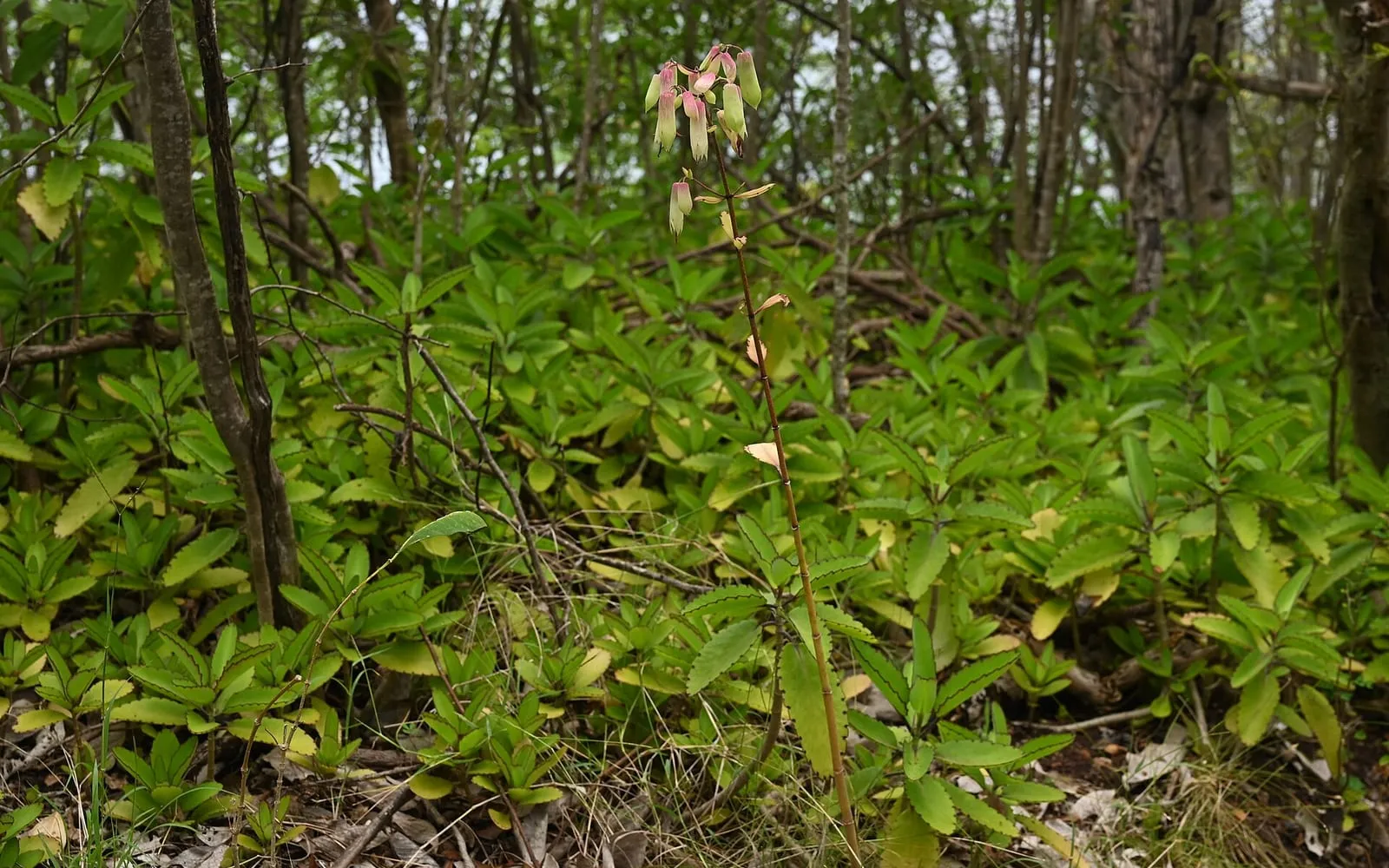
At a glance
- Difficulty
- Easy
- Water
- Once the mix has dried through
- Light
- Bright light with some direct sun
- Temperature
- Warm; keep above about 7 deg C
- Humidity
- Low to average
- Hardiness
- USDA 9-11, RHS H2, hardy to 5 C
- Type
- Evergreen succulent, often short-lived after flowering
- Height
- 60 to 150 cm
- Native to
- Madagascar
A vigorous succulent from Madagascar, now naturalised across the warm tropics, storing water in fleshy scalloped leaves. It needs bright light and sharp drainage, has little frost tolerance and is safest above about 5 deg C. It thrives on heat and drought and rots only in cold, wet compost. It has become a pantropical weed, so it should be kept contained and never planted out in a frost-free climate.
Hardiness zones describe winter cold alone. Summer heat, humidity, rainfall and the length of the growing season decide as much, so treat the range as the outer limit rather than as a recommendation.
Toxic if eaten
- Do not eat
- All parts contain cardiac glycosides
- Harm from
- Eating it
- Affects
- People, cats and dogs
Despite a long history of folk-medicinal use in the tropics, this is a poisonous plant. All parts hold bufadienolides, cardiac glycosides that disturb the heart, and the ASPCA lists Kalanchoe as toxic to cats and dogs, which may vomit, drool and develop an abnormal heartbeat after eating it. It poisons grazing livestock and is harmful to people in quantity. Its folk-medicine reputation does not make it safe to eat, so keep it away from pets, children and animals instead of treating it as a herbal remedy.
Sources: ASPCA toxic and non-toxic plants, RHS potentially harmful garden plants, North Carolina Extension plant toxicity database
About
Cathedral bells is known for the way its leaves make new plants. Pull off one of its fleshy, scalloped leaves, set it on a saucer or pin it to a wall, and in a few days rows of tiny plants push out of the notches along its edge, rooting with no pot and no soil. This is why people call it the air plant, the life plant and the miracle leaf.
That same habit makes it a coloniser. On the living plant the notches sprout plantlets that fall and root, so it spreads easily and has gone wild across the warm tropics. Grow it as a contained pot plant, keep it out of any frost-free garden, and remember that, whatever its herbal folklore, every part of it is poisonous.
Its home is Madagascar, and it needs strong light, a gritty root run and long dry gaps between drinks. It grows fast and gives no trouble on those terms. The nodding, lantern-shaped flowers of a mature plant are a welcome extra alongside the endless novelty of its self-starting leaves.
Appearance and character
The leaves are thick and scalloped, simple and oval low down and splitting into leaflets further up the stem, a bright green often rimmed in red, carried in opposite pairs on an upright stem.
At each scalloped notch a plantlet forms readily, whether the leaf is still growing, has dropped to the soil, or has been picked off and hung in the air. Each one can become a rooted young plant.
The stem grows tall and fleshy, and after flowering it usually dies off, having by then sprouted a generation of plantlets to follow it.
The flowers are its most ornamental feature, large drooping lanterns of pale green flushed red, puffed up like little paper bags and dangling in loose heads at the top of a mature plant.
Where it is from
Kalanchoe pinnata began in Madagascar and has since spread through the warm tropics worldwide, taking hold in dry, sunny, disturbed ground and storing water in its fleshy leaves. Heat and drought are its natural setting.
That background leaves it fast, hardy and drought-tolerant, after strong light and quick drainage, and prone to rot only in a cold, wet pot. Its remarkable leaf-sprouting is a colonising trick, the reason it has turned into a pantropical weed and has to be kept contained.
How it grows
It grows briskly through the warm months, lengthening its leafy stem while the leaf notches bud plantlets, blooms on a mature plant, and often dies back afterwards as its offspring take over. It likes warmth and strong light, and cold, wet compost is the only thing that rots it.
Grow it in gritty, quick-draining cactus compost and water once that has dried through. It will take a bit more water than a desert succulent when growing hard, but still needs a dry spell between drinks. With this group, the main job is keeping the plantlets in check, not persuading the plant to grow.
Give it bright light with some direct sun, warmth above about 7 deg C, and dry air. Gather up and bin dropped or detached leaves and plantlets before they root about the house, and never let it get away into a frost-free garden.
Propagation is easy, since a single leaf left on soil or even in the open produces plantlets of its own. The challenge is containment.
Through the seasons
Spring starts it growing fast again on the returning light. Water once more, and clear stray plantlets from neighbouring pots.
Summer is the main growing spell. Water once the compost dries, give a weak feed, and keep it in bright light.
Autumn slows growth and may set buds. Reduce watering.
Winter is a cooler, drier rest when the lanterns may open. Keep it bright and frost-free, water little, and expect the parent stem to fade after flowering.
Care difficulty
Easy to grow, awkward only to contain. It grows and multiplies readily, from leaves that produce plants whether attached or not, so the task is containment. Cold, wet compost is all that rots it. Its toxicity and weediness are the reasons for care, met by disposing of leaves and plantlets tidily and keeping it clear of pets, children and gardens.
Watering
Let the gritty compost dry through, then water and let the surplus drain. The fleshy leaves store plenty, so it tolerates drought well, though it takes a little more when growing hard in summer than a true desert plant would.
Water it sparingly through winter, its most rot-prone time, and as it flowers and starts to fail. Soft, yellow lower leaves over a mushy base mean it has been overwatered, which causes more problems than dryness.
Warning signs, diseases and pests
Fresh plants springing from every fallen or detached leaf are normal. Collect and bin the plantlets and any dropped leaves before they root, and remove any that have taken hold in nearby pots.
Cold, wet compost causes root rot, shown by soft, yellowing lower leaves; sharpen the drainage and water less. Mealybugs and aphids gather on the stems and flowers; remove them with dilute alcohol or a horticultural oil.
A parent stem failing after flowering is normal, since the plant is often short-lived and its plantlets will already have replaced it.
Growing environment
Bright light with some direct sun keeps it firm and compact and helps it flower; a dim corner leaves it soft, pale and leggy, though it sprouts plantlets all the same.
Warmth above about 7 deg C and dry to average conditions suit it, with low humidity and no patience for cold, stagnant wet. Keep it as a contained pot plant, and never set it out in a frost-free garden where it can become a weed.
Grow it in gritty, fast-draining compost in a pot in bright light, out of reach of pets and children, and dispose of leaves and plantlets responsibly.
Feeding
One or two weak, low-nitrogen cactus feeds across spring and summer are plenty; it needs little and grows strongly without much.
Give nothing in winter. After repotting, the fresh gritty compost supports it for the first weeks.
Troubleshooting
Every leaf I drop turns into a new plant. That is normal for this plant. Collect and bin dropped or detached leaves and plantlets before they root, and remove any that have taken hold in nearby pots.
Can I use it medicinally, given its names? No. For all its folk-medicine reputation it is poisonous, carrying heart-active compounds, and should not be eaten. Grow it as a curiosity, not a remedy.
The lower leaves are soft and yellow. Root rot from cold, wet compost. Improve the drainage and water less; overwatering is the usual cause.
How is it different from the mother of thousands? Its scalloped leaves sprout plants even when picked off and hung up, and it bears puffy lantern flowers, whereas the mother of thousands frills its leaf edges with plantlets on the growing plant. Both are toxic and weedy.
Is it safe around pets and children? No. Every part holds heart-active compounds, and the ASPCA lists Kalanchoe as toxic to cats and dogs. Keep it out of reach and dispose of leaves and plantlets with care.
Cathedral Bells problem guides
Not sure what is wrong? See the common houseplant pests guide.