
Houseplant
Easter Orchid
Cattleya mossiae
Also known as Flor de Mayo, Spring Cattleya
How to grow Easter orchid, Cattleya mossiae. Why a cooler, drier winter determines whether it flowers each spring, and the disturbance that causes a forming bud to yellow and drop before it opens.
At a glance
- Difficulty
- Moderate
- Water
- Thoroughly once the roots are visibly dry, typically weekly in growth
- Light
- Bright indirect light with two to three hours of direct morning sun
- Temperature
- 13 to 27 deg C, with a cooler winter rest before spring flowering
- Humidity
- 50-70 percent
- Hardiness
- USDA 10a-11, RHS H1c, hardy to 10 C
- Type
- Evergreen epiphytic orchid, flowering from mature pseudobulbs each spring
- Height
- 30-45 cm
- Native to
- Venezuela
Native to cloud forest in the coastal mountains of northern Venezuela, at a higher, cooler elevation than many cultivated cattleyas, where mist and cloud cover keep humidity high without the heat that lowland species tolerate. The zone number captures none of that elevation, and a plant kept permanently hot as well as humid grows leggy and flowers less freely than one given a properly cooler winter before its spring display.
Hardiness zones describe winter cold alone. Summer heat, humidity, rainfall and the length of the growing season decide as much, so treat the range as the outer limit rather than as a recommendation.
Not known to be toxic
Cattleya carries none of the toxic compounds found in many popular houseplants, and the wider orchid family has an unusually clean safety record. The ASPCA lists Cattleya as non-toxic to cats and dogs, and it does not appear on the RHS list of potentially harmful garden plants. No part of the plant is a recognised hazard to eat, though a pet that chews the coarse bark it grows in may bring it back up from the sheer roughage rather than from any poison. As with most orchids, wild collection has damaged populations of the species historically, so buy only nursery-propagated plants from a reputable specialist grower.
Sources: ASPCA toxic and non-toxic plants, RHS potentially harmful garden plants
About
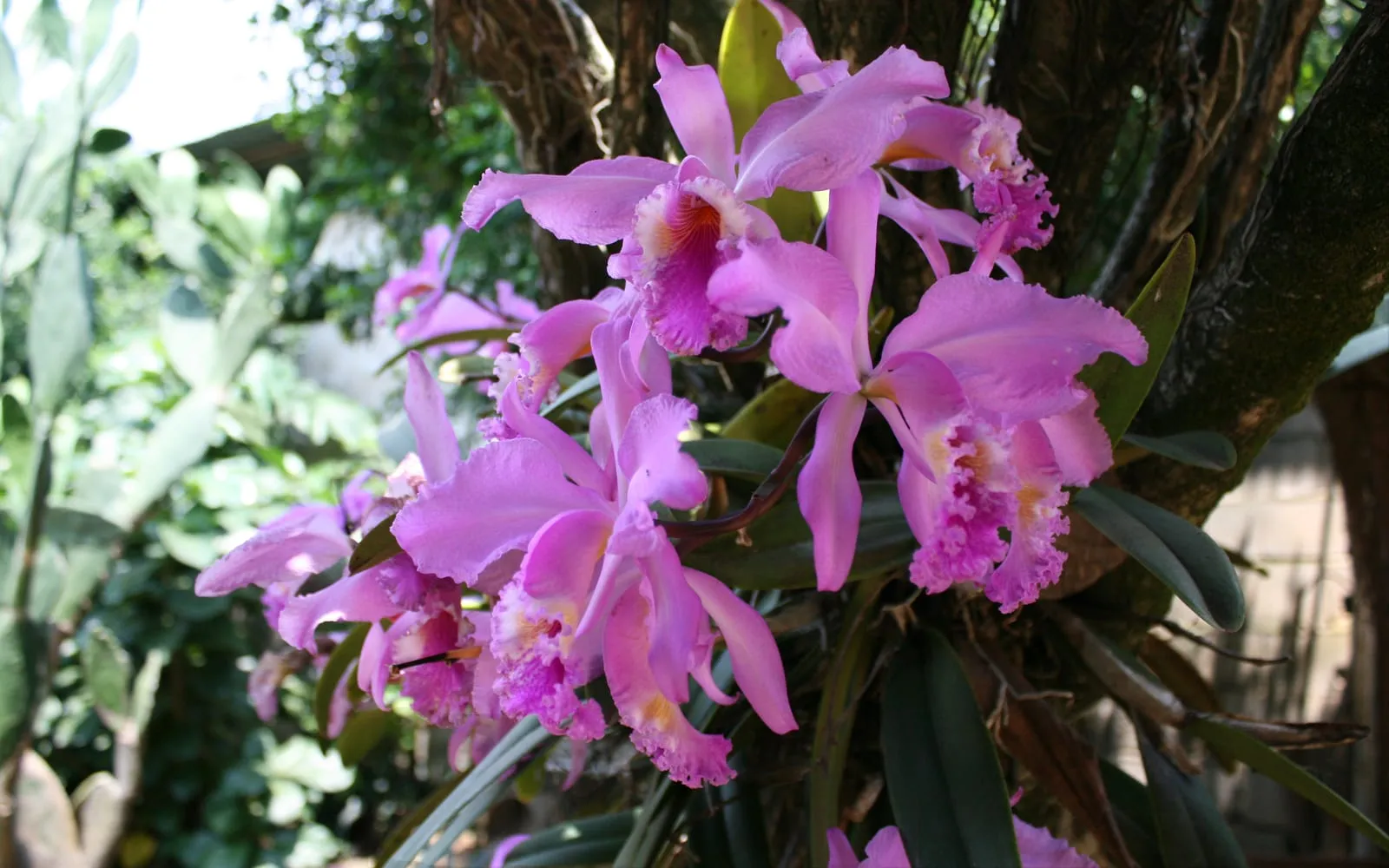
Easter orchid earns its keep on the size of its flowers. Even against other members of the Cattleya genus, its blooms run unusually large, pale lavender-pink with a ruffled, deep-magenta lip, and they open on a predictable spring schedule that gave the plant its English name. In its native Venezuela the same seasonal habit earned it a formal honour. In 1951 it was declared the country’s national flower, and growers there still call it Flor de Mayo, the May flower, after the month its wild populations typically bloom.
A plant reaches that display by building up a fan of thick pseudobulbs year on year, each one a reservoir the plant draws on when it flowers. Getting a mature specimen to flower well and on time comes down to one decision more than any other: whether it gets a real cool spell over winter before spring arrives.
Appearance and character
A mature clump is built from several stout, upright pseudobulbs of differing ages, each topped with one broad, leathery leaf and connected by a creeping rhizome at the base. New growths appear from that rhizome each year, so an old plant reads as a fan of pseudobulbs rather than a single stem.
The flowers themselves are the standout feature: 18 to 20 cm across on a well-fed plant, which puts them among the largest of any cattleya species. Two to five open together from a papery sheath at the tip of a mature pseudobulb, pale lavender-pink through the petals and sepals with a heavily ruffled lip in a much darker magenta, marked at its throat with gold. The scent carries well through a room, strongest in the cooler air of early morning.
Once a pseudobulb has flowered it does not repeat the performance. It keeps its leaf, stays alive, and goes on feeding the rest of the clump, while the next flush of flowers comes from whichever pseudobulb has matured most recently.
Where it is from
Cattleya mossiae is confined in the wild to the Cordillera de la Costa, the mountain range that runs along Venezuela’s northern coast, where it grows as an epiphyte in cloud forest well above sea level. Mist rolling in most days keeps the air reliably humid without the sustained heat of the lowland forests that many other cattleya species call home, and nights there run noticeably cooler than a tropical lowland climate would suggest.
That elevation explains why the plant flowers so reliably each spring. A real dip in night temperature through the cooler months, paired with less frequent watering, is the cue that pushes a mature pseudobulb into bloom. A plant kept hot and damp all year, the way an indoor grower might expect for a Venezuelan native, tends to put on leaf growth steadily while producing few or no flowers at all.
How it grows
Give the roots something coarse and open to grow through: a bark-based orchid mix in a pot barely bigger than the current root mass, or a slab of cork or bark for a plant mature enough to handle the more frequent watering a mount demands. Either way, air around the roots matters as much to this species as water does.
Aim for bright light with two or three hours of direct sun each morning. Leaves that stay a dark, heavy green rather than a lighter yellow-green are a sign of too little light, and a plant grown that way often looks perfectly healthy while producing few flowers.
Deliberately let temperatures fall through winter, several degrees below what the plant gets in summer, and water less often at the same time. That combination, rather than warmth and humidity held constant, is what sets up the following spring’s flowers.
Repotting is only needed once every two or three years, when the bark has broken down or the clump has outgrown its container, and it is best done immediately after flowering rather than while a new growth is still soft and forming.
Through the seasons
Spring is when a well-timed plant flowers, its largest and most fragrant blooms of the year opening from mature pseudobulbs before new growth resumes.
Summer carries the bulk of the year’s growth, with warmth, humidity and regular watering supporting the pseudobulbs that will eventually flower.
Autumn sees that growth finish and harden as days shorten, the plant building toward winter rather than adding much new size.
Winter brings the deliberate cool, drier rest that determines how well the plant flowers come spring, so hold back on both water and warmth through this stretch.
Care difficulty
Moderate. Week to week there is little to do beyond checking the roots and watering when they call for it, and the real skill lies in one seasonal decision. Commit to a winter properly cooler and drier than summer, rather than keeping the plant on the same warm, even routine all year. Get that timing right and a mature plant flowers reliably every spring; get it wrong and the plant grows on regardless, just without much to show for it when spring comes.
Watering
Soak the mix or mount fully whenever you water, letting it drain completely afterwards, and hold off again until the roots have turned from a wet, dark green back to a lighter silvery shade. A root system that never gets the chance to dry between waterings tends to rot however open the growing medium is.
Ease off through winter, both in how often you water and how much you give each time, and pick the pace back up once new growth is clearly under way in spring.
Warning signs, diseases and pests
Scale insects settle along the pseudobulbs and on the underside of the leaves as flat, brownish bumps, often unnoticed until a colony has spread. Scrape them away and follow up with horticultural soap, watching soft new growth closely since it is the most vulnerable to a fresh attack.
Mealybug prefers the papery sheaths where new leaves and flower buds first appear, showing up as small white, fluffy clusters tucked out of sight. The same soap treatment used for scale works here, though reaching into the folds takes more care.
Root rot takes hold when the growing medium stays wet too long or drains poorly, turning healthy silvery roots brown and soft. Take the plant out of its pot, cut back to firm tissue, and repot into fresh, coarse bark.
Bud drop shows as a developing flower bud turning yellow and falling before it opens, almost always triggered by a sudden disturbance while buds are forming, a move to a new spot, a cold draught, or a swing in temperature. Once buds appear in spring, leave the plant exactly where it is.
Growing environment
Bright but indirect light, topped up with a couple of hours of gentle morning sun, keeps the plant compact and flowering well; push it into deep shade and it survives but rarely blooms.
Aim for a properly cooler stretch each winter against a warmer, more humid summer, never letting the temperature fall below 10 deg C, and keep it clear of cold draughts near a winter window.
Humidity between 50 and 70 percent supports strong root growth and mirrors the misty cloud forest the species comes from. A tray of water and pebbles beneath the pot, with the pot’s base kept clear of the water itself, raises the humidity around the plant without soaking the roots.
Feeding
A balanced orchid fertiliser at roughly quarter strength, applied weekly through spring and summer, covers most of the plant’s needs. Switch to a high-potash, low-nitrogen formula for four to six weeks before flowering is expected, which favours bud development over further leaf growth.
Cut feeding back sharply once the flowers fade and through the cooler winter months, then build back up to the full routine as strong new growth returns in spring.
Troubleshooting
It puts on good growth every year but rarely flowers. The most common cause is a winter that never gets properly cool or dry. Check that temperatures drop for a few months in a way you can measure and that watering eases off during that period, and make sure the plant gets enough light to fully mature its pseudobulbs beforehand.
Flower buds turned yellow and fell before opening. This is bud drop, usually set off by a disturbance while the buds were still forming. Once a spike appears in spring, keep the plant in one stable spot away from draughts and sudden temperature changes.
The roots have turned brown and soft instead of silvery. That is root rot, almost always down to overwatering. Take the plant out of its pot, cut away the dead roots, repot into fresh bark, and let the roots dry out properly between waterings from now on.
A pseudobulb has shrivelled and gone soft without ever flowering. Check the roots first, since damage there is the likelier cause rather than simple underwatering. Deal with any rot you find, then build the watering routine back up gradually.
Why call it an Easter orchid if Venezuelans call it the May flower? Both names describe the same spring bloom, seen from different calendars. The English name reflects when it typically flowers in cultivation in the northern hemisphere, often close to Easter, while Flor de Mayo reflects the slightly later timing of its native season in Venezuela.
Easter Orchid problem guides
Not sure what is wrong? See the common houseplant pests guide.