
Houseplant
Crimson Cattleya
Cattleya labiata
Also known as Autumn Cattleya, Corsage Orchid
Practical guidance for growing crimson cattleya, Cattleya labiata, including pseudobulbs, the autumn flowering trigger, bark mix, bright light, and how to avoid bud blast.
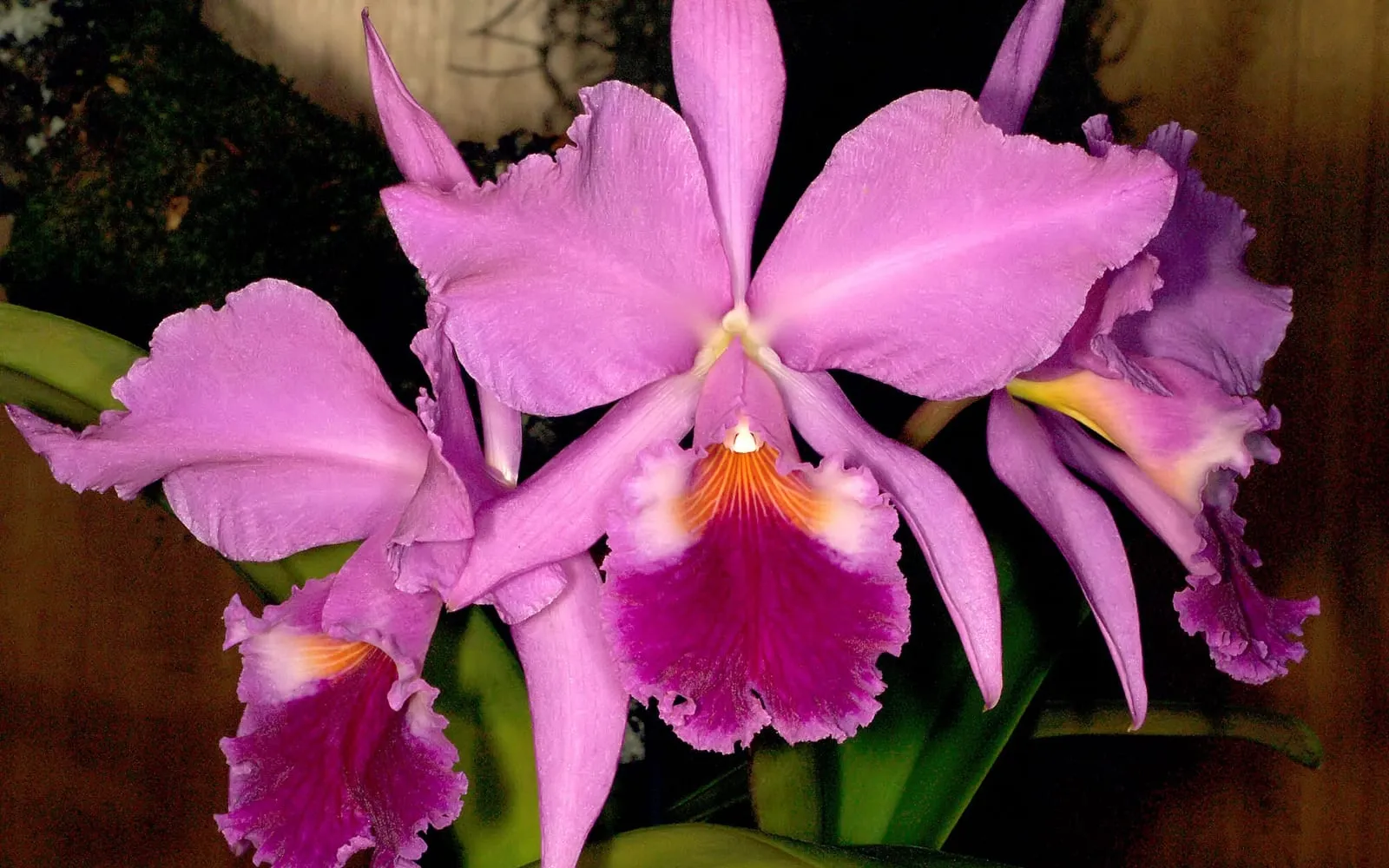
At a glance
- Difficulty
- Moderate
- Water
- Thoroughly once the roots are visibly dry, typically weekly in growth
- Light
- Bright indirect light with two to three hours of direct morning sun
- Temperature
- 15 to 27 deg C, with a cooler autumn spell to help set buds
- Humidity
- 50-70 percent
- Hardiness
- USDA 10a-11, RHS H1c, hardy to 10 C
- Type
- Evergreen epiphytic orchid, flowering from mature pseudobulbs each autumn
- Height
- 30-45 cm
- Native to
- Brazil
Native to the coastal mountains of Pernambuco in north-eastern Brazil, where it grows as an epiphyte in forest that carries a distinct cooler, drier spell around the turn of the year. That seasonal dip, rather than any particular low temperature, is what triggers flowering; a plant kept at one constant warm, humid setting all year can grow well and still flower poorly. It has no tolerance for cold below about 10 deg C.
Hardiness zones describe winter cold alone. Summer heat, humidity, rainfall and the length of the growing season decide as much, so treat the range as the outer limit rather than as a recommendation.
Not known to be toxic
Cattleya carries none of the toxic compounds found in many popular houseplants, and the wider orchid family has an unusually clean safety record. The ASPCA lists Cattleya as non-toxic to cats and dogs, and it does not appear on the RHS list of potentially harmful garden plants. No part of the plant is a recognised hazard to eat, though the coarse bark mix it grows in is not food and a pet that eats a mouthful of that may bring it back up from the roughage alone. As with most orchids, wild collection has damaged populations of the species historically, so buy only nursery-propagated plants from a reputable specialist grower.
Sources: ASPCA toxic and non-toxic plants, RHS potentially harmful garden plants
About
Crimson cattleya is the orchid a corsage was traditionally cut from, prized for a single, enormous flower carried on each mature growth rather than for a long spray of smaller blooms. Growth comes from thick, upright pseudobulbs, each one storing enough water and energy to carry a single thick leaf and, once mature, a flower.
It flowers on a strict autumn schedule in the wild, and reproducing that timing indoors matters more than almost anything else in this guide. Bright light through summer followed by a cooler, slightly drier spell as the days shorten is what tells a mature pseudobulb to flower instead of growing another leaf.
Appearance and character
Each pseudobulb is thick, upright and slightly club-shaped, topped with a single broad, leathery leaf, and new pseudobulbs form in a fan from the base of the last one, gradually building a spreading clump over several years.
Flowers appear from a papery sheath at the top of a mature pseudobulb, typically one to three per growth, and are large by any orchid’s standard, often 12 to 15 cm across. The species colour is a rich rose-purple to crimson, with a deeper-coloured, ruffled lip marked with a yellow throat, and the scent is notably strong for an orchid, especially in the morning.
A single pseudobulb flowers only once, after which it keeps its leaf and continues supporting the plant, while flowering moves on to whichever pseudobulb matures next.
Where it is from
Cattleya labiata comes from the Atlantic coastal forest of Pernambuco in north-eastern Brazil, growing as an epiphyte on tree branches and rock faces in a belt of forest with a distinct seasonal rhythm: warm and wet through much of the year, with a cooler, notably drier stretch that falls around the southern hemisphere’s autumn.
That dip in temperature and rainfall is the flowering cue the species has built its whole cycle around, which is also why the plant carries the common name it does. Where growing conditions stay warm, wet and unvarying all year, as an indoor room often does, a plant can put on healthy leaf growth for seasons without ever flowering.
How it grows
Pot it in a coarse, bark-based orchid compost in a pot only just large enough for the current root mass, since Cattleya roots want air around them almost as much as they want water. Many growers mount mature plants on a slab of bark or cork instead, which suits the species even better once it is large enough to tolerate the more frequent watering a mount needs.
Give it bright light with some direct morning sun. A leaf that stays dark green rather than a fresher yellow-green usually means too little light, which produces healthy-looking growth that still fails to flower.
From late summer into autumn, let the plant run several degrees cooler and noticeably drier than through the main growing season. This is the single most important thing to get right, and skipping it is the commonest reason an otherwise healthy plant never flowers.
Repot only when the bark has broken down or the plant has outgrown its pot, typically every two to three years, and always straight after flowering rather than while a new growth is actively forming.
Through the seasons
Spring brings strong new growth as fresh pseudobulbs and roots develop. Resume regular feeding as growth picks up.
Summer is the main growing season, with warmth, humidity and steady watering supporting the pseudobulbs as they mature.
Autumn is the flowering trigger. Let temperature and watering drop slightly as the days shorten, and expect flower spikes to appear from mature growths.
Winter brings the flowers themselves on a well-timed plant, along with a quieter growth period. Reduce feeding once flowering finishes.
Care difficulty
Moderate, mainly because of timing rather than daily effort. The plant needs comparatively little routine attention week to week, but reliably reproducing the seasonal shift from a warm, humid summer into a cooler, drier autumn determines whether it flowers every year or only grows leaves. Watering and light also both need to be judged by the plant rather than by habit, since either extreme shows up as a lost flowering season rather than immediate damage.
Watering
Water thoroughly, soaking the mix or mount until water runs through freely, then let the roots dry until they show silvery-green rather than staying a wet, dark green. Cattleya roots that never get to dry out are prone to rot even in an otherwise well-drained mix.
Reduce watering frequency and volume through the cooler, drier autumn period, and increase again once new growth resumes strongly in spring.
Warning signs, diseases and pests
Scale insects fix themselves along the pseudobulbs and on the underside of the leaves, appearing as small, flat brown bumps that are easy to miss until numbers build. Scrape them off and treat with horticultural soap, checking new growth regularly since it is particularly vulnerable while still soft.
Mealybug hides in the papery sheaths where new growth and flower spikes emerge, showing as small white, cottony tufts. Treat the same way as scale, paying particular attention to these hidden folds.
Root rot follows a mix that stays wet or a pot without enough drainage, showing as roots that turn brown and mushy instead of the healthy silvery green of a dry root. Unpot, cut away dead roots, and repot into fresh, coarse bark.
Bud drop, where a developing flower bud yellows and falls before opening, usually follows a sudden change while buds are forming, a house move, a draught, a shift in position, or a swing in temperature. Once a plant is budding, avoid moving or repositioning it if at all possible.
Growing environment
Bright indirect light with some direct morning sun keeps growth compact and encourages flowering; too little light produces dark green leaves and few, if any, flowers.
Warmth through the main growing season, easing into a cooler autumn, suits it best. Keep it above 10 deg C at all times and avoid a sudden cold draught, particularly near winter windows.
Moderate to high humidity, around 50 to 70 percent, supports healthy root growth. A pebble tray of water beneath the pot, kept below the pot’s base rather than touching it, raises local humidity without wetting the roots.
Feeding
Feed weekly at around quarter strength with a balanced orchid fertiliser through spring and summer, switching to a high-potash, low-nitrogen formula for four to six weeks before the expected autumn flowering to support bud development.
Reduce feeding sharply once flowering finishes and through the cooler, drier autumn rest, resuming the full routine as strong new growth begins again in spring.
Troubleshooting
It grows well every year but never flowers. Almost always a missing seasonal cue. Make sure the plant experiences a markedly cooler, drier autumn rather than the same warm, humid conditions all year, and check that light is bright enough to have matured the current pseudobulb fully.
The flower buds turned yellow and dropped before opening. Bud drop, usually from a sudden change in conditions while the buds were developing. Keep the plant in a stable position, away from draughts and temperature swings, from the moment a flower spike appears.
The roots look brown and mushy rather than silvery. Root rot from overwatering. Unpot, trim away the dead roots, and repot into fresh bark, adjusting your watering so the roots are allowed to dry between soakings.
A pseudobulb has gone soft and shrivelled without flowering. Likely underwatering or a root system too damaged to support it. Check the roots for rot as the more common underlying cause, and resume a fuller watering routine once any rot has been dealt with.
Should I cut off the old leafless growths? No, leave them. A spent pseudobulb that still carries its leaf continues to feed the plant and support new growth, and cutting it back only removes stored reserves the plant would otherwise use.
Crimson Cattleya problem guides
Not sure what is wrong? See the common houseplant pests guide.