
Houseplant
Dutchman's Pipe Cactus
Epiphyllum oxypetalum
Also known as Queen of the Night, Orchid Cactus, Night-blooming Cereus
How to grow Epiphyllum oxypetalum, the Dutchman's pipe cactus, with huge white flowers that open for a single night on flat leaf-like stems.
At a glance
- Difficulty
- Moderate
- Water
- When the top few centimetres of mix have dried
- Light
- Bright indirect light
- Temperature
- Warm; keep above about 10 deg C
- Humidity
- Average to high
- Hardiness
- USDA 10-12, RHS H1c, hardy to 10 C
- Type
- Evergreen epiphytic cactus
- Height
- 2 to 3 m of stem
- Native to
- Mexico, Central America
A jungle cactus from the warm forests of Mexico and Central America, where it grows on tree branches instead of in the ground. It needs warmth, bright but filtered light and an open, fast-draining root run, has no frost tolerance and slows below about 10 deg C. Unlike a desert cactus it should not bake or dry out entirely.
Hardiness zones describe winter cold alone. Summer heat, humidity, rainfall and the length of the growing season decide as much, so treat the range as the outer limit rather than as a recommendation.
Not known to be toxic
A safe plant for a home with pets or children. Orchid cacti (Epiphyllum) are not listed as toxic by the ASPCA, and no harmful compound is recorded in them. A chewed stem might cause a brief stomach upset, but poisoning is not expected.
Sources: ASPCA toxic and non-toxic plants, RHS potentially harmful garden plants
About
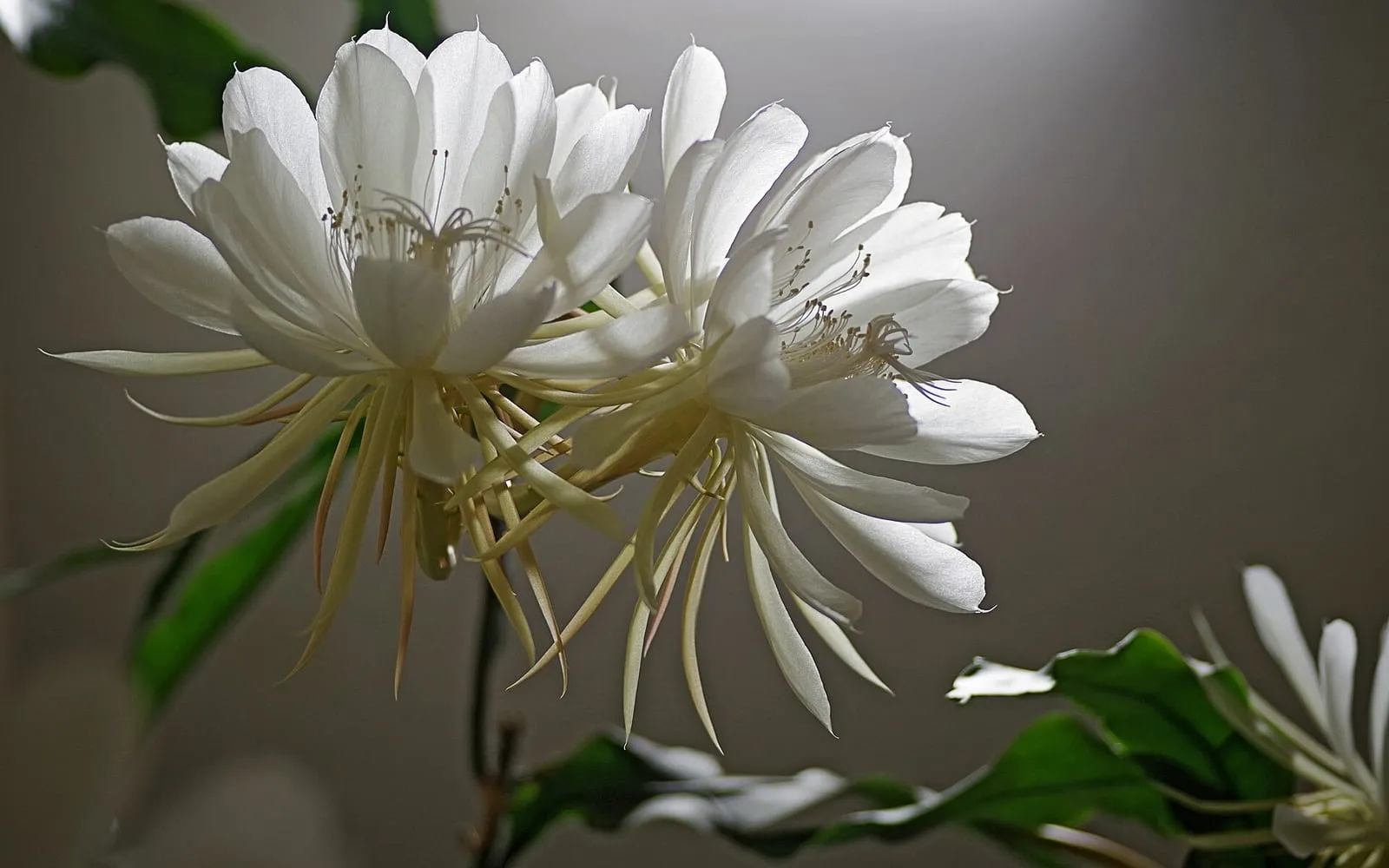
Dutchman’s pipe cactus is grown for its large night-opening flowers. From flat, strappy green stems it produces enormous white blooms, up to 30 centimetres across, that open only after dark, release a heavy sweet scent, and are over by dawn. Growers often stay up to watch them.
It is a jungle cactus, an epiphyte that in the wild grows on tree branches instead of rooting in soil. The stems are flat and leaf-like, arching and sprawling as they lengthen, and can grow into a large, ungainly plant. Most growers keep it for the few hours when its flowers are open.
Like the Christmas cactus, another forest-dwelling cactus, it needs warmth, bright filtered light and an open, quick-draining mix, not the hard baking a desert cactus needs. A cool, drier winter rest helps it flower.
Appearance and character
The stems are flat, thin and strap-like, a fresh green, arching and branching as they grow, with the scalloped edges from which the flower buds emerge. They are stems, not leaves, doing the plant’s photosynthesis.
The plant is large and sprawling, upright when young and arching over with age, and it grows too big and lax to hold itself up, so it is usually staked or allowed to cascade.
Its flowers are the main attraction, huge, pure white, many-petalled and powerfully fragrant, opening at night from long tubular buds and fading by morning. Each lasts one night only.
Away from bloom it is a plain, leggy green plant, so most of the reward is in the short flowering period.
Where it is from
Epiphyllum oxypetalum comes from the warm, humid forests of Mexico and Central America, growing as an epiphyte in the branches of trees, its roots in pockets of leaf litter instead of in soil, in bright but dappled light.
Give it an open, airy, fast-draining root run, bright but filtered light, warmth and humidity. Do not let it dry out completely or bake in full sun the way a ground-dwelling desert cactus can.
How it grows
It grows vigorously in the warm months, lengthening and branching its flat stems, and rests over a cooler winter. That winter rest, cool and drier, triggers the flower buds the following year, so a plant kept warm and watered all year rarely blooms.
Grow it in an open, free-draining epiphytic or cactus mix in a pot that is wider than it is deep since it flowers better a little pot-bound. Water when the top few centimetres dry, keeping it moderately moist in growth.
Give it bright, indirect light, warmth above about 10 deg C, and support for the sprawling stems. Come autumn, move it somewhere cooler and water less to set buds, then bring it back into warmth as they swell.
Propagation is easy. Take a length of flat stem, let the cut end dry for a day or two, then root it in gritty mix.
Through the seasons
Spring starts strong growth as light returns. Repot if pot-bound, resume watering, and begin feeding.
Summer is the main growing and flowering season. Keep it warm and moderately moist, feed for flowers, and watch for buds through the warmest months.
Autumn begins the rest. Move it cooler, water less, and stop feeding to encourage bud set.
Winter is a cool, drier rest above about 10 deg C. Water sparingly. This rest helps set next year’s flowers.
Care difficulty
Moderate. The plant itself is easy and forgiving, growing readily and rooting from a scrap of stem. The difficulty is getting it to flower, which takes a cool, drier winter rest and a plant left a little pot-bound and mature. Kept warm, wet and freshly potted all year, it grows lush and never blooms.
Watering
Water when the top few centimetres of the open mix have dried, keeping it moderately moist through spring and summer. As a forest cactus it likes more water than a desert one, but the mix must still drain freely and never stay sodden.
Cut back over the cool winter rest, watering only enough to stop the stems from shrivelling badly. This suits its dormancy and helps set buds. Once buds have formed, do not move the pot or let it dry out sharply, as either can make the buds drop.
Warning signs, diseases and pests
The most common disappointment is no flowers, which almost always means the plant has had no cool, drier winter rest, or is too young, too well fed on nitrogen, or too freshly potted. Give it a proper rest and a high-potassium feed, and be patient.
Mealybugs settle on the flat stems and in the notches as white fluff. Wipe them off with dilute alcohol and check regularly. Root rot follows heavy, wet compost, so keep the mix open and drain the pot well.
Buds that form and then drop usually mean the plant was moved, chilled or allowed to dry out at the wrong moment. Keep conditions steady once buds appear.
Growing environment
Bright, indirect light suits it, matching the dappled light of its forest home. Direct midday sun scorches the flat stems, and deep shade prevents flowering.
Warmth above about 10 deg C and average to high humidity keep it growing, with a deliberate cooler spell in autumn and winter to set buds. Keep it off cold draughts and away from radiators.
Grow it in an open, free-draining epiphytic mix in a snug pot, staked or hanging, in a warm, bright, humid spot. It flowers best slightly pot-bound.
Feeding
Through spring and summer, feed fortnightly to monthly with a high-potassium or tomato feed, which favours flowers over leafy growth. A high-nitrogen feed makes lush stems and few blooms.
Stop feeding over the autumn and winter rest. Resume only when growth restarts in spring.
Troubleshooting
It never flowers. The usual cause is no cool, drier winter rest. Give it a cooler, drier spell in autumn and winter, feed with a high-potassium feed, keep it slightly pot-bound, and let it mature.
The buds formed then dropped. It was moved, chilled or dried out at the wrong time. Once buds appear, keep the plant in one place with steady watering and warmth.
The stems are floppy and sprawling. This is its natural habit. Stake it or let it cascade from a high shelf or hanging pot.
Is it safe around pets? Yes. The orchid cacti are not listed as toxic by the ASPCA, so it is safe in a home with cats or dogs.
When will the flowers open? After dark, usually in the warm months, from long tubular buds. Each bloom lasts a single night, so watch the buds closely as they swell.
Dutchman's Pipe Cactus problem guides
Not sure what is wrong? See the common houseplant pests guide.