
Houseplant
White Stonecrop
Sedum album
Also known as Sedum album
How to grow Sedum album, the white stonecrop, a hardy bead-leaved carpeting succulent of Europe and western Asia, a classic green-roof plant.
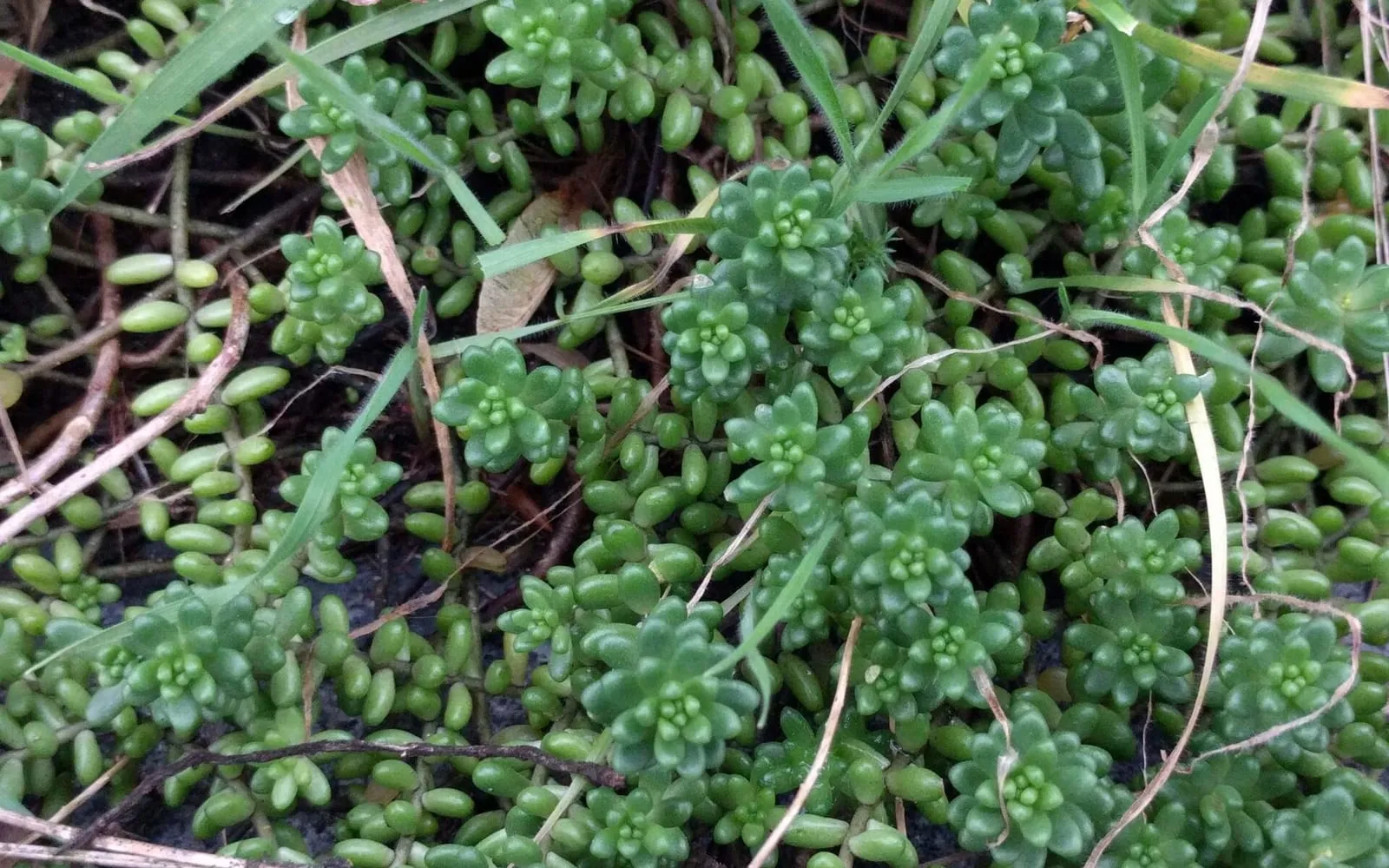
At a glance
- Difficulty
- Easy
- Water
- When the soil dries; very drought-tolerant
- Light
- Full sun to bright light
- Temperature
- Fully hardy; tolerates hard frost
- Humidity
- Low
- Hardiness
- USDA 3-9, RHS H7, hardy to -30 C
- Type
- Evergreen mat-forming succulent perennial
- Height
- 5 to 15 cm; spreading wide
- Native to
- Europe, Western Asia
A fully hardy mat-forming stonecrop from Europe and western Asia, growing in thin soil on rocks, walls and dry banks and surviving hard frost well below minus 20 deg C. It needs full sun and very sharp drainage, tolerates drought and poor soil, and rots only where it sits wet, especially in winter. It needs no protection outdoors and thrives on neglect.
Hardiness zones describe winter cold alone. Summer heat, humidity, rainfall and the length of the growing season decide as much, so treat the range as the outer limit rather than as a recommendation.
Not known to be toxic
A safe plant to grow around pets and children. Sedum is not listed as toxic by the ASPCA or the RHS, and white stonecrop carries no harmful compound; the young shoots have a long history of being eaten in small amounts as a wild green, though in quantity they can be mildly purgative. A pet that nibbles it comes to no real harm, so it can carpet a green roof, wall or trough within easy reach.
Sources: ASPCA toxic and non-toxic plants, RHS potentially harmful garden plants
About
Sedum album has tiny cylindrical leaves packed along low, rooting stems. It forms a dense mat only a few centimetres deep, creeping across the ground, over wall edges and through the shallow substrate of a living roof. In strong sun and cold the leaves redden and bronze, and in summer the plant produces small white star flowers on short reddish stalks that attract bees.
It is fully hardy. Across Europe and western Asia the wild plant colonises thin soil on rocks, old walls and dry banks, coping with hard freezes, drought and very poor ground. That toughness, paired with stems that root as they creep, has made it one of the standard plants for green roofs and dry landscaping. Give it sun and drainage and it is close to indestructible; give it rich, shaded, waterlogged ground and it thins and rots.
Appearance and character
The leaves are minute, plump and sausage-shaped, a fresh translucent green crowded tightly along the stems, and they colour up strongly under stress, flushing coral, bronze and deep red in fierce sun or winter cold. Selections such as the coral-leaved forms turn almost entirely red in the open.
The stems creep flat and root down at intervals, making a low, dense evergreen carpet only a hand’s-breadth high at most. It covers bare ground quickly and spills over raised edges.
Its flowers come as loose heads of small white five-petalled stars, carried on short upright stalks above the mat in summer and visited by bees and small pollinators.
Set beside the broad-leaved stonecrops, the plant looks finer and more delicate, with bead-like foliage and white flowers. It keeps its leaves through the cold instead of dying back.
Where it is from
Sedum album is native across Europe and western Asia, growing in thin, gritty soil on rock outcrops, walls, screes and sun-baked banks, in full exposure and ground that drains the moment rain stops. It is a plant of lean, dry, open places, rooting into cracks and shallow pockets that offer little more than grit.
Its garden needs follow directly from that habitat. It needs sun and very sharp drainage, endures drought, poor soil and hard frost, and needs no winter protection. Rich feeding and standing wet both leave it soft, drawn and liable to collapse.
How it grows
Growth runs through spring and summer, the creeping stems rooting and the mat thickening. White flowers arrive in summer, and the tinted foliage stays evergreen through the cold. The plant spreads steadily but stays shallow-rooted, so it is quick to pull back where it spreads too far.
Grow it in very free-draining, gritty, lean soil in full sun, on a green roof, a wall, a rockery, a trough or a dry bank. Water new plantings until they settle; from then on it needs water only in a long drought, or when a pot dries out. Lift and drop rooted pieces to spread it or patch a gap. Beyond that it needs little attention, since thin spots refill from the running stems.
Propagation is easy. Rooted fragments of the mat, or even loose stem pieces scattered on soil, root where they touch the surface.
Through the seasons
Spring greens and extends the mat as growth resumes; pull it back from anywhere it has crept too far.
Summer brings the white flower heads above the carpet; water only if a drought sets in, and keep feeding to nothing.
Autumn slows the spread as the beads begin to colour bronze and red; almost nothing needs doing.
Winter keeps the mat evergreen, tinted and fully hardy without any cover, provided it is not left standing in cold, wet ground.
Care difficulty
White stonecrop is very trouble-free. It spreads, flowers and returns each year on next to no care, which is why it is used on so many green roofs. Sun and sharp drainage are all it needs. It fails only where the ground is rich, shaded or waterlogged, so keep it lean and sunny.
Watering
Water new plants until their roots take, then leave them largely to the weather, since the plant is intensely drought-tolerant once established. In open ground only a drawn-out dry spell warrants watering.
On a roof or in a pot, water when the substrate dries and let it drain, then ease off through winter. Cold, standing moisture around the shallow roots is the main cause of rot, so sharp drainage matters most in the wet, cold months.
Warning signs, diseases and pests
Thin, bare stretches in the mat usually mean too much shade, crowding from stronger neighbours, or old growth worn out at the centre. Clear the competition, lift rooted pieces into the gaps, and give it more sun.
Root rot affects a carpet left cold and sodden through winter, mostly in heavy soil or a container that will not drain; sharpen the drainage and keep it dry in the cold. In pots, vine weevil grubs can eat the roots, so tip out and check any plant that fades for no clear reason. Soft, drawn-out growth with few flowers usually means shade or too rich a soil. Leaner, sunnier conditions should correct it.
Growing environment
Full sun gives the tightest mat, the deepest leaf colour and the most flower, whereas shade thins it, draws it up and cuts the bloom. It needs an open, bright, exposed position.
Fully hardy in the open, it needs no winter protection, though a pot or a roof must drain freely so it never stands sodden. Dry air suits it.
Grow it in very free-draining, gritty, lean soil on a green roof, wall, rockery, trough or dry bank in full sun. It fares far better outdoors than indoors, since it relies on a cold winter rest.
Feeding
Feed little, or not at all. Lean, even impoverished soil gives the densest, most colourful, freest-flowering carpet, while a rich diet only makes it leggy and soft.
A trough or roof needs little feeding, and nothing is needed through autumn or winter. A tired patch does better with fresh rooted pieces than with fertiliser.
Troubleshooting
The mat has thinned to bare patches. Too much shade, crowding or worn-out central growth. Clear competitors, replant rooted pieces into the gaps and move it into more sun.
It has grown leggy and barely flowered. Too much shade or too rich a soil. Grow it leaner and sunnier.
Can I use it on a green roof? Yes; it is one of the classic roof plants, flourishing in the thin, sharply drained, sunny, exposed conditions there on almost no care.
Is it invasive? It spreads readily and can creep past its patch, but the shallow roots make it very easy to pull back or lift.
Is it safe around pets? Yes. Sedum is not listed as toxic, so this creeping carpet is safe around cats, dogs and children.
White Stonecrop problem guides
Not sure what is wrong? See the common houseplant pests guide.