
Houseplant
Chinese Fan Palm
Livistona chinensis
Also known as Fountain Palm, Livistona
How to grow Livistona chinensis, the Chinese fan palm. Its pleated fan leaves with weeping tips, slow growth as a houseplant, and how to avoid brown tips.
At a glance
- Difficulty
- Moderate
- Water
- When the top of the mix has dried
- Light
- Bright indirect light, with some direct sun
- Temperature
- Warm to cool; keep above about 5 deg C
- Humidity
- Average to high
- Hardiness
- USDA 9-11, RHS H3, hardy to -3 C
- Type
- Evergreen single-stemmed palm
- Height
- Up to 12 m outdoors; far smaller and slow indoors
- Native to
- Eastern Asia
A fan palm from the warm-temperate and subtropical forests of eastern Asia, hardier than most indoor palms and able to take a light frost outdoors once established, though it is safest above about 5 deg C. Grown indoors it tolerates cool rooms well and needs bright light, steady moisture and shelter from hot, dry, draughty air, which browns its leaf tips.
Hardiness zones describe winter cold alone. Summer heat, humidity, rainfall and the length of the growing season decide as much, so treat the range as the outer limit rather than as a recommendation.
Not known to be toxic
The Chinese fan palm is not listed as toxic by the ASPCA or the RHS, and no harmful compound is recorded in it, so it is one of the safer large houseplants for a home with pets or children. The one caution is mechanical: the leaf stalks are edged with small, sharp teeth that can scratch, so handle the fronds with a little care.
Sources: ASPCA toxic and non-toxic plants, RHS potentially harmful garden plants
About
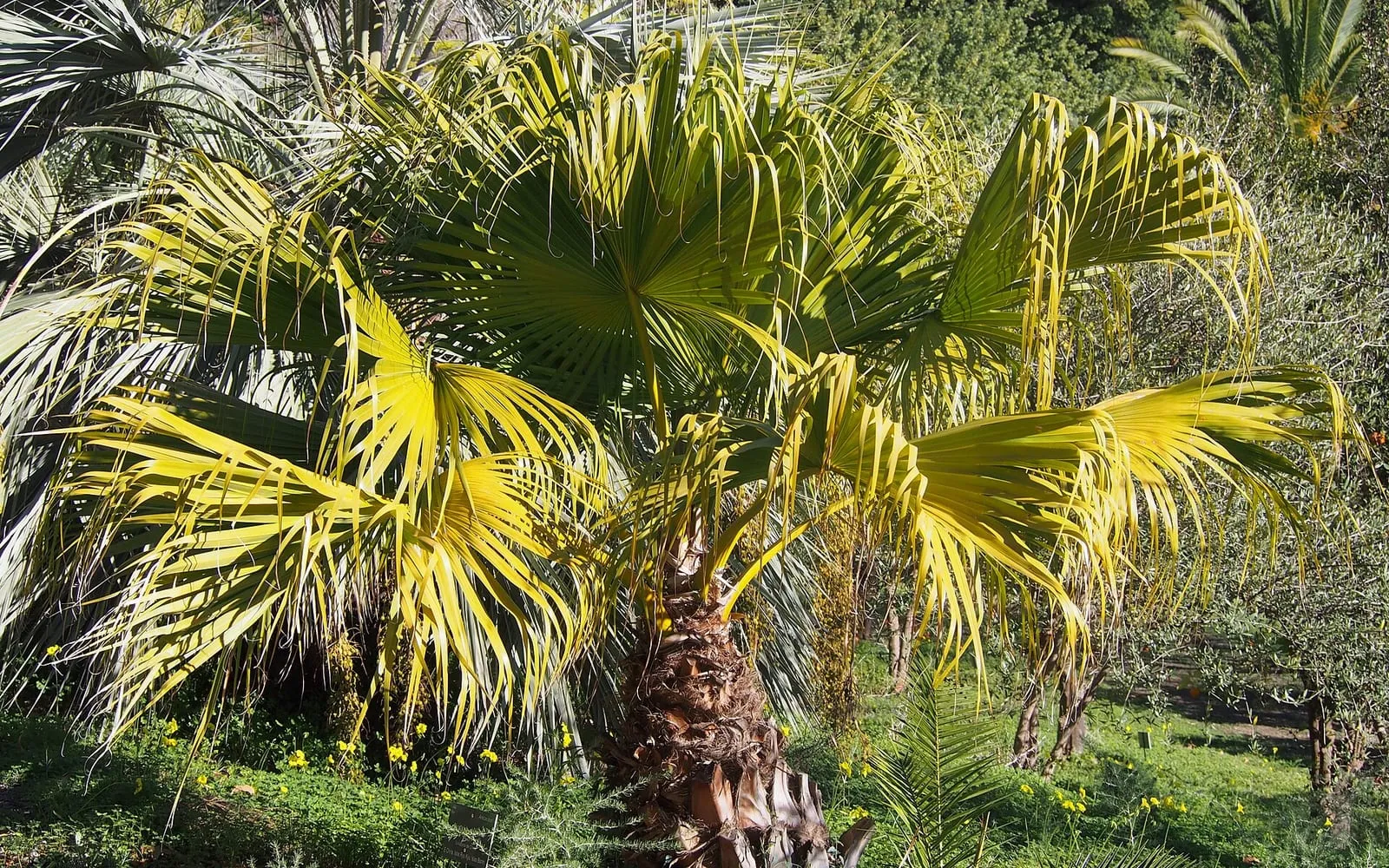
Chinese fan palm makes a slow, elegant houseplant with large, circular, pleated leaves split into many segments whose tips droop, so a mature plant looks like a green fountain of fans. It is grown indoors while young and small, taking years to gain much height, which is part of its appeal for a big, calm plant that will not quickly outgrow a room.
Outdoors in a warm climate it becomes a tall single-stemmed palm, and it is hardier than most palms grown indoors, taking cool rooms and even a light frost once established. That toughness makes it more forgiving than the tender parlour palms.
It needs bright light, steady moisture and shelter from hot, dry air, and its main problem, shared with most indoor palms, is brown leaf tips when the air is dry or the water is hard.
Appearance and character
Leaves are large and fan-shaped, circular and deeply pleated, split into many stiff segments whose slender tips hang down, giving the weeping, fountain-like look that names the fountain palm.
The plant is upright, building a crown of overlapping fans on a short stem while young and, over many years, a tall single trunk outdoors. Indoors it stays a manageable size for a long time.
Leaf stalks are edged with small, sharp teeth, a feature to note when handling or placing the plant near where people pass.
It grows only from its single growing point, so it cannot be pruned to branch or reshaped. Remove only fully dead fronds.
Where it is from
Livistona chinensis is native to eastern Asia, including southern Japan, Taiwan and southern China, growing in warm-temperate and subtropical forest. It is used to warm summers, bright light and mild, sometimes cool, winters.
Give it bright light, steady moisture and reasonable humidity. Hot, dry, draughty air and hard water both brown its leaf tips.
How it grows
It grows slowly, adding a few fans a year from its single growing point, and keeps a neat crown for years indoors. Patience is part of growing it, since it will not be hurried.
Pot it in a free-draining but moisture-retentive potting mix in a deep pot to suit its roots, and keep the compost evenly moist in growth. Repot only every few years, since palms dislike frequent root disturbance and grow slowly.
Give it bright light with some direct sun, and turn it occasionally for an even crown. Keep it out of hot, dry draughts, and mist or stand it on a pebble tray in a dry room to reduce tip browning.
Never cut out the single growing point, and trim only fully brown leaf tips or wholly dead fronds, leaving green tissue in place, since a palm draws nutrients back from a fading frond.
Through the seasons
Spring starts renewed growth as light increases. This is the best time to repot if the plant needs it and to resume feeding.
Summer is the main growing season. Keep the compost evenly moist, feed monthly, and watch for spider mites in dry spells.
Autumn growth slows as light falls. Reduce feeding and let the mix dry a little more between waterings.
Winter is a slower period. A cool room suits it; keep it bright, only lightly moist, and above about 5 deg C.
Care difficulty
Moderate, and more forgiving than most indoor palms. Given bright light, steady moisture and shelter from dry air it grows slowly and reliably, and it tolerates cool rooms that tender palms dislike. The usual frustration is brown leaf tips from dry air or hard water, which is manageable instead of serious.
Watering
Water when the top of the mix has dried, keeping the compost evenly moist through the growing season without letting it dry out hard or stand waterlogged. Palms dislike both extremes.
Use rainwater or filtered water where the tap water is hard, since fluoride and salts contribute to brown leaf tips. Ease off a little in winter, keeping the mix just moist, and empty any saucer after watering.
Warning signs, diseases and pests
Brown leaf tips are the most common complaint and usually mean dry air, hard water or the mix drying out. Raise the humidity, switch to rainwater or filtered water, keep the compost evenly moist, and trim only the dead brown tissue.
Spider mites thrive in warm, dry air, stippling the fronds pale with fine webbing. Raise the humidity, wash the fronds, and treat early. Scale insects settle on the fronds and stalks as small brown bumps and can be wiped off and treated with horticultural oil.
Handle the fronds with care for the small sharp teeth along the leaf stalks, which can scratch.
Growing environment
Bright, indirect light with some direct sun suits it, and it tolerates a fairly sunny spot better than tender palms, though it should be acclimatised to strong sun gradually. Deep shade slows it and weakens the fronds.
A warm to cool room suits it, above about 5 deg C, and it takes cooler winter conditions than most indoor palms. It dislikes hot, dry, draughty air, which browns the tips, so keep it away from radiators and cold draughts alike.
Give it a deep pot of free-draining but moisture-retentive mix and room for its spreading fans, and raise the humidity in a dry room.
Feeding
Feed monthly through spring and summer with a diluted balanced or palm fertiliser to support steady frond growth. Palms are sensitive to over-feeding, so keep the feed dilute.
Reduce feeding in autumn and stop in winter while growth slows. Fresh mix supplies enough for the first months after repotting.
Troubleshooting
The leaf tips are turning brown. This is the usual palm complaint, from dry air, hard water or the mix drying out. Raise the humidity, water with rainwater or filtered water, keep the compost evenly moist, and trim only the dead brown tips.
Can I cut it back to keep it small? No. A palm grows from a single point and cannot be pruned to branch or reshape, and cutting out the growing tip kills it. It stays small by being slow.
The fronds are dull and webbed. Spider mites, from warm, dry air. Raise the humidity, wash the fronds top and bottom, and treat early.
Is it safe around pets and children? Yes, chemically, since it is not listed as toxic. The only caution is the small sharp teeth on the leaf stalks, which can scratch, so site it where people will not brush against it.
How hardy is it? Hardier than most indoor palms, taking cool rooms and a light frost outdoors once established, though it is safest kept above about 5 deg C.
Chinese Fan Palm problem guides
Not sure what is wrong? See the common houseplant pests guide.