
Outdoor plant
Australian Fan Palm
Livistona australis
Also known as Cabbage tree palm
How to grow Australian fan palm, Livistona australis, outdoors or in a large container. Its slow early growth, and why young plants want shade.
At a glance
- Difficulty
- Easy
- Water
- Regular watering; does not tolerate prolonged drought well
- Light
- Full sun once mature; young plants prefer partial shade
- Temperature
- Tolerates brief light frost once established
- Hardiness
- USDA 9-11, RHS H3, hardy to -4 C
- Type
- Evergreen perennial palm
- Height
- 15-25 m outdoors, much smaller and slower in a container
- Native to
- Eastern Australia
Reasonably cold-tolerant for a palm once established, surviving brief light frost that would seriously damage many other fan palms. It grows best with reliably moist soil rather than the drought tolerance some other palms show, reflecting its origin in rainforest margins and creek lines rather than an arid climate.
Hardiness zones describe winter cold alone. Summer heat, humidity, rainfall and the length of the growing season decide as much, so treat the range as the outer limit rather than as a recommendation.
Not known to be toxic
Australian fan palm has no toxicity listing from the RHS or the ASPCA and is considered safe around pets and children. Historically its young leaves were eaten as a vegetable by Aboriginal Australians and early European settlers, a further indication that no part of the plant has any significant toxicity.
Source: RHS
About
The Australian fan palm, also called the cabbage tree palm for the historical use of its young, tightly furled leaves as a cooked vegetable, is a stately palm of eastern Australian rainforest margins, grown well beyond its native range for its rounded, glossy crown of large fan-shaped fronds and its comparatively good tolerance of cool, damp conditions for a palm of its size.
It is slower growing in its early years than many other ornamental palms, often spending several years building a strong root system with little visible trunk before height gain accelerates, a pattern that can make it appear an unpromising choice until it reaches a certain maturity, after which growth becomes much more noticeable.
Appearance and character
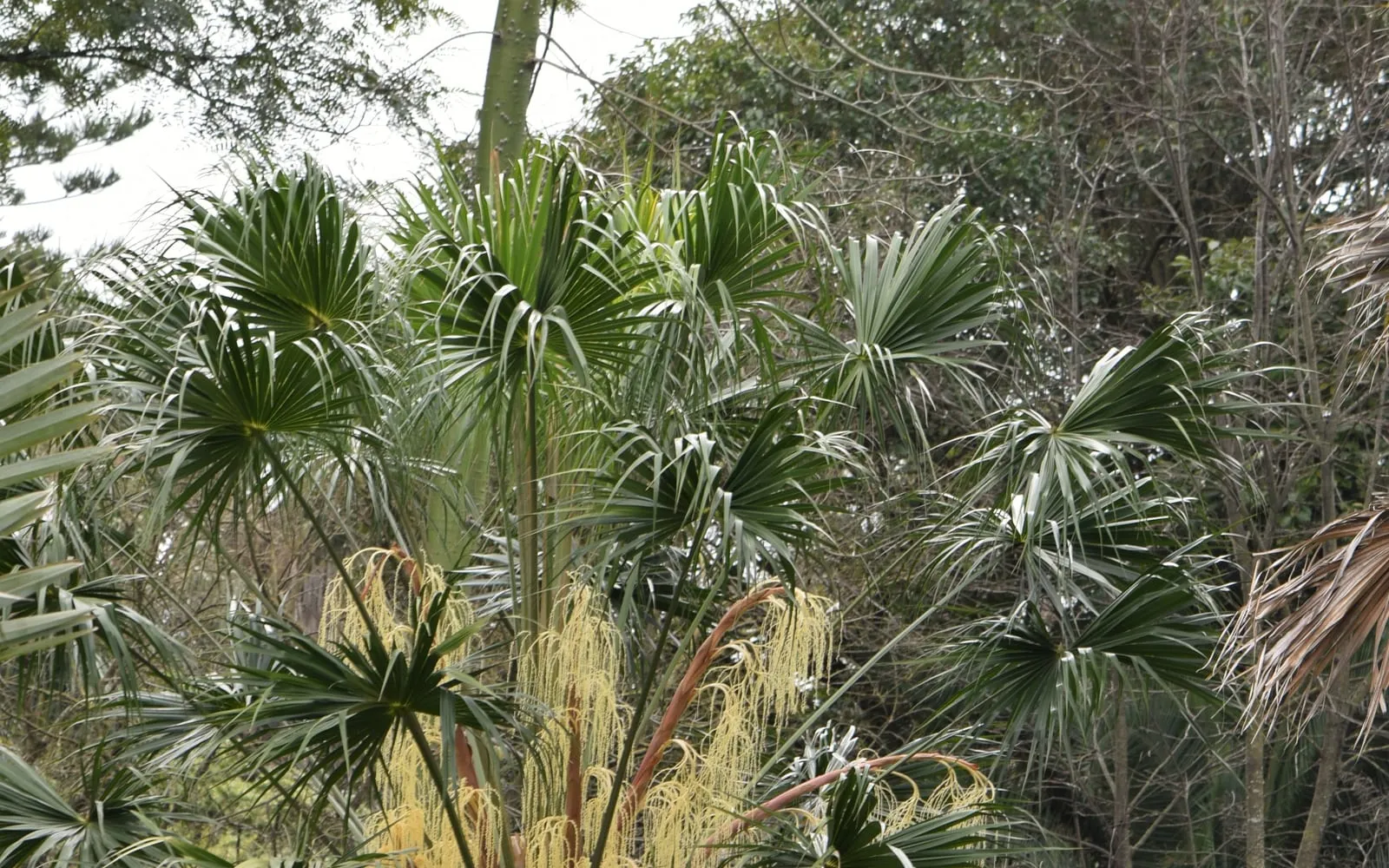
A solitary, columnar trunk, marked with the horizontal scars of old fallen frond bases, rises to support a full, rounded crown of large, fan-shaped fronds, each one divided into numerous drooping, ribbon-like segments that give the crown a slightly shaggy, informal texture compared with the stiffer fronds of some other fan palms.
Creamy white flowers appear in large, branching clusters among the fronds, followed by small, rounded black fruit that are attractive to native Australian birds and that have historically been eaten by people in small quantities, though they are grown ornamentally rather than as a food crop today.
Where it is from
Rainforest margins, gullies and creek lines along the eastern coast of Australia, typically in reliably moist, humus-rich soil with some shelter from the most intense midday sun while young.
That rainforest margin origin, rather than open, exposed ground, explains why young plants perform noticeably better in partial shade than in scorching full sun, a preference that shifts as the plant matures and its crown rises above the shade of surrounding vegetation in the wild.
How it grows
An evergreen palm that spends its early years building a substantial root system and a broadening base with comparatively little visible trunk extension, a stage that can last several years before height gain becomes more rapid. Once established, it grows steadily rather than explosively, reaching a significant, tree-like size over a couple of decades in a favourable climate.
Because it has a single growing crown, as with most fan palms, protecting that crown from mechanical damage and severe cold matters more to its long-term survival than almost any other single factor.
Through the seasons
Spring growth resumes as temperatures rise, with new fronds unfurling from the crown.
Summer is the main growing period, with the greatest frond and, in a mature plant, trunk extension. Feed two to three times through this season and keep the soil consistently moist.
Autumn growth slows gradually as temperatures cool.
Winter established plants tolerate brief light frost; young plants benefit from some shelter during any prolonged cold snap.
Care difficulty
Easy for an established plant in a suitable climate, though patience is required in the early years while the palm builds its root system before visible trunk growth accelerates. Consistent moisture matters more for this species than for some more drought-tolerant palms, which is worth planning for at planting time.
Watering
Regular, consistent watering suits this palm far better than the drought-tolerant regime some other ornamental palms accept, reflecting its rainforest margin origin. Allow the soil to approach dryness between waterings rather than staying constantly waterlogged, but avoid the prolonged dry spells this species tolerates poorly compared with a true desert-adapted palm.
Warning signs, diseases and pests
Scale insects occasionally colonise the fronds, appearing as small, immobile bumps along the leaf ribs, and respond well to a horticultural oil treatment for significant infestations. Palm leaf skeletoniser caterpillars, present in some warmer growing regions, feed on the leaf tissue between the veins, leaving a distinctive lacy, skeletonised pattern; removing and destroying affected fronds usually controls light infestations.
Yellowing or browning fronds in a plant that has recently experienced a dry spell most often reflect drought stress rather than disease in this moisture-loving species, and recovery is likely with a return to consistent watering, though severely affected fronds will not green up again and can be trimmed away once new growth confirms recovery.
Growing environment
Young plants perform best in partial shade, mirroring their natural position beneath a taller rainforest canopy, and can move into full sun as they mature and their crown rises. Moist, free-draining, humus-rich soil suits it well, and this species is noticeably less tolerant of poor, dry, sandy ground than some other ornamental palms.
Feeding
A palm-specific fertiliser containing adequate magnesium and potassium, applied two to three times through the growing season, supports healthy, even green fronds. Palms readily show visible nutrient deficiencies on older fronds, and a dedicated palm feed addresses the specific nutrients most commonly lacking far better than a generic balanced fertiliser.
Troubleshooting
Growth seems very slow in a young plant with little visible trunk. This is normal for the species, which spends its early years building a strong root system before height gain accelerates. Consistent watering and feeding support this stage even though little change is visible above ground.
Fronds have yellowed or browned after a dry spell. Suspect drought stress, since this species is less drought-tolerant than many other ornamental palms. Resume consistent watering and trim away fronds that do not recover once new growth confirms the plant is improving.
Fronds show a lacy, skeletonised pattern of damage. Check for palm leaf skeletoniser caterpillars, and remove and destroy affected fronds to control light infestations.
A young plant is scorching in full sun. Move it to a position with some shade, or provide temporary shading, until it has matured enough to tolerate the fuller sun a mature specimen accepts well.
The trunk is developing an uneven, ringed texture. This is a normal feature of the species rather than a fault, since the horizontal scars left by old fallen fronds mark the trunk as it ages. Older sections typically show a more pronounced ring pattern than younger growth near the crown, and this texture is part of the trunk’s mature character.
A container-grown specimen has become root-bound. Repot into a larger container in spring, giving the roots room to expand before the main summer growing period begins, and expect a noticeable improvement in vigour once the plant has room to establish new roots.