
Houseplant
Carrion Flower
Stapelia grandiflora
Also known as Starfish Flower, Giant Toad Plant, Carrion Plant
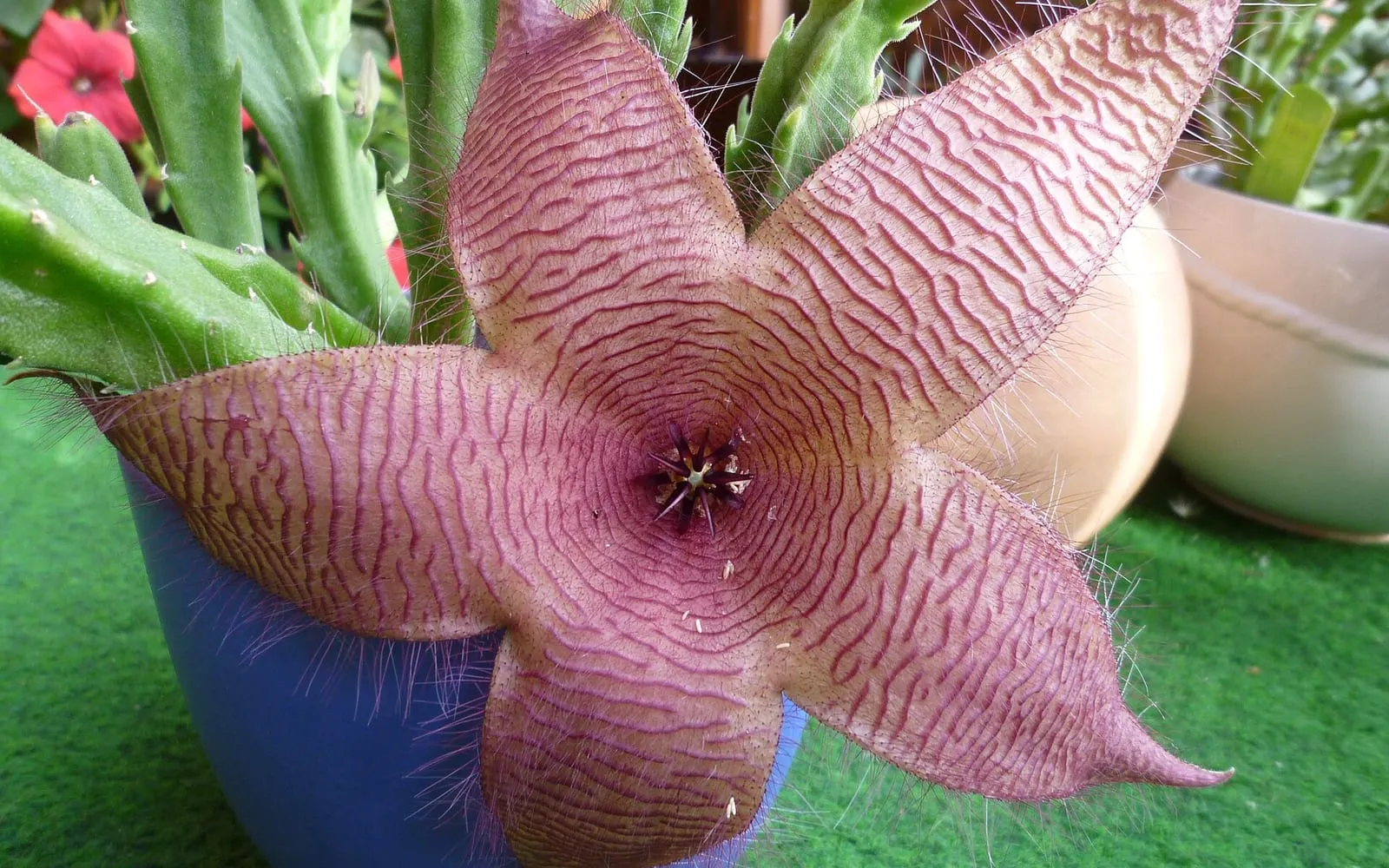
How to grow Stapelia grandiflora, the carrion flower, with huge hairy star flowers that smell of rotten meat to draw flies and finger-like stems.
At a glance
- Difficulty
- Moderate
- Water
- Once the mix has dried right through
- Light
- Bright light with some direct sun
- Temperature
- Warm; keep above about 10 deg C
- Humidity
- Low
- Hardiness
- USDA 10-11, RHS H1c, hardy to 10 C
- Type
- Evergreen clump-forming succulent
- Height
- 15 to 20 cm
- Native to
- South Africa
A clumping stem succulent from the dry scrub of South Africa, storing water in soft four-angled stems and enduring long drought. It needs bright light, sharp drainage and warmth, has no frost tolerance and rots below about 10 deg C in damp conditions. Cold combined with wet is fatal, while heat and drought suit it well.
Hardiness zones describe winter cold alone. Summer heat, humidity, rainfall and the length of the growing season decide as much, so treat the range as the outer limit rather than as a recommendation.
Not known to be toxic
The carrion flower is not listed as toxic by the ASPCA or the RHS, and no harmful compound is recorded in it, despite the smell. A pet or child that bit a stem would meet a bitter, fleshy mouthful and at worst a mild stomach upset. The flowers smell strongly of rotting meat while open, which is off-putting enough that few will go near them, but the smell is a deterrent, not a poison hazard.
Sources: ASPCA toxic and non-toxic plants, RHS potentially harmful garden plants
About
Carrion flower is grown for its strange, large bloom. From a low clump of soft, finger-like green stems it opens enormous five-pointed star flowers, up to 15 centimetres across, ridged and fringed with hairs, coloured a mottled purple-brown, and smelling powerfully of rotting meat. The stench is deliberate: it draws flies, which the flower fools into laying eggs and so pollinating it.
The stems are the plant’s water store, upright, soft, four-angled and toothed, spreading into a low mound. There are no true leaves, the green stems doing the work instead, so out of flower it is a modest, cactus-like clump.
It comes from the dry scrub of South Africa and needs similar treatment: bright light, gritty soil and long dry spells. It is grown much like its cousin the red dragon flower, another stapeliad, and the same care suits the whole group of carrion flowers. Its one awkward feature is the smell, so a plant in bloom is best admired outdoors or by an open window.
Appearance and character
The stems are soft, upright and four-angled, edged with small blunt teeth, a fresh green sometimes flushed red in strong sun, and they spread from the base into a low, mounding clump.
There are no leaves; the fleshy green stems store the water and do the photosynthesis, so the plant looks like a small cactus until it flowers.
The flowers are the main display. They are huge five-pointed stars, wrinkled and ridged, mottled purple-brown to maroon, and covered with fine hairs, opening from balloon-like buds low on the stems.
That flower smells strongly of carrion while open, a lure for the flies that pollinate it, which is the plant’s pollination strategy and its main drawback indoors.
Where it is from
Stapelia grandiflora grows in the dry, rocky scrub of South Africa, sheltering among stones and low shrubs, storing water in its stems against long drought and enduring baking heat and cool nights.
Give it bright light and sharp drainage. It handles drought well, and does worst in a cold, wet pot. The fly-pollinated flower is an adaptation to a dry habitat with fewer bees, attracting carrion flies with smell and colour.
How it grows
It grows through the warm months, spreading new stems from the base and swelling flower buds in late summer and autumn, then rests over winter. Warmth and bright light keep it growing; cold and damp stop it and rot it.
Grow it in a very free-draining, gritty cactus mix in a wide, shallow pot to suit its spreading, low clump. Water only when the mix has dried right through, then soak and drain it fully. Overwatering, especially in cool weather, is the main way to kill it.
Give it bright light with some direct sun, warmth above about 10 deg C, and dry, airy conditions. When it blooms, expect the smell and, indoors, some flies; a plant in bud can be moved outdoors or to a porch to open.
Propagation is very easy. Break off a stem, let the cut end dry for a few days, then root it in gritty mix.
Through the seasons
Spring starts growth as light and warmth return. Resume watering, repot a crowded clump, and take cuttings.
Summer is the main growing season. Water when the mix dries fully, give a little dilute feed, and watch for the fat flower buds forming.
Autumn is the usual flowering time, when the star-shaped flowers open and smell. Reduce watering as the season cools.
Winter is a near-dry rest above about 10 deg C. Water barely at all, since cold, wet compost is fatal now.
Care difficulty
Moderate. The plant is easy in the right conditions and roots from a snapped stem, but it is more prone to rot than a hard desert cactus because its stems are soft and water-filled. The single danger is watering it while cool or leaving it wet, which turns the stems to black mush. Keep it bright, warm and dry and it grows well, smell and all.
Watering
Wait until the gritty mix has dried out completely, then water thoroughly and drain it fully. The soft stems hold plenty of water, so the plant tolerates long dry spells far better than damp compost.
Water almost not at all over winter, when a cold, wet pot rots the stems fast. Stems that wrinkle slightly are thirsty and recover with a drink; stems that go soft, yellow or black have rotted and must be cut away, with firm pieces saved as cuttings.
Warning signs, diseases and pests
Soft, blackening stems that collapse at the base are rot, from cold, wet compost, the most common way to lose the plant. Cut out every affected part back to firm tissue, dry the cuttings, and restart in fresh gritty mix.
Mealybugs hide at the stem bases and among the roots as white fluff. Dab them off with dilute alcohol and check the roots when repotting. When the plant flowers indoors, the smell draws houseflies, a nuisance best solved by opening a window or moving the pot outside while it blooms.
Buds that shrivel and drop before opening usually mean the plant was too dry or too cold at the wrong moment. Keep it warm and lightly watered as the buds swell.
Growing environment
Bright light with some direct sun keeps the stems firm, encourages flowering, and brings out a red flush on the stems. In poor light the stems grow thin, pale and floppy and the plant seldom blooms.
Warmth above about 10 deg C and dry, airy conditions suit it, matching its desert scrub habitat. It needs low humidity and hates stagnant damp, so give it some air movement.
Grow it in a wide, shallow pot of gritty, free-draining mix on a bright sill, and be ready to move it outdoors or to a porch when it flowers, both for the smell and to let flies pollinate it.
Feeding
Feed only once or twice over summer with a dilute, low-nitrogen cactus feed. It needs very little, and rich feeding produces soft, rot-prone stems.
Give nothing over winter. Fresh gritty mix supports a newly potted plant through its first weeks.
Troubleshooting
The stems have gone soft and black. Rot from cold, wet compost. Cut back to firm tissue, dry the healthy pieces, and root them in fresh gritty mix. Water far less, especially in cool weather.
Why does the flower smell so bad? By design. The flower mimics rotting meat to attract the flies that pollinate it. The smell fades once the flower closes, and a budding plant can be moved outdoors to bloom.
The stems are thin, pale and floppy. Too little light. Move it somewhere brighter with some direct sun, and new growth firms up.
Is it safe around pets? Yes. It is not listed as toxic, so despite the smell it is safe with cats and dogs. The odour keeps most animals away in any case.
The buds dropped before opening. The plant was too dry or too cold as the buds formed. Keep it warm and lightly watered while they swell.
Carrion Flower problem guides
Not sure what is wrong? See the common houseplant pests guide.