
Houseplant
Canary Island Ivy
Hedera canariensis
Also known as Algerian Ivy, Canary Ivy
How to grow Hedera canariensis, the Canary Island ivy, with large glossy leaves on wine-red stems. It suits a cool room and has an irritant sap.
At a glance
- Difficulty
- Easy
- Water
- When the top of the compost has dried
- Light
- Bright indirect light; variegated forms need more
- Temperature
- Cool to warm; happy in an unheated room
- Humidity
- Average
- Hardiness
- USDA 8-11, RHS H4, hardy to -8 C
- Type
- Evergreen climbing or trailing perennial
- Height
- Up to 20 m climbing; kept far smaller indoors
- Native to
- The Canary Islands, North Africa
A big-leaved ivy from the Canary Islands and North Africa, hardier than a tropical houseplant but more tender than the common English ivy. It copes well with a cool room and survives frost to about minus 8 deg C outdoors when established, though hard freezes scorch the leaves and cut variegated forms back. Warmth suits it less than a cool, bright spot, and it dislikes hot, dry air.
Hardiness zones describe winter cold alone. Summer heat, humidity, rainfall and the length of the growing season decide as much, so treat the range as the outer limit rather than as a recommendation.
Toxic if eaten
- Do not eat
- The leaves, berries and sap, which contain saponins and falcarinol
- Harm from
- Handling it and eating it
- Affects
- People, cats, dogs and horses
Ivies contain triterpenoid saponins and the irritant polyacetylene falcarinol, and the ASPCA lists English ivy (Hedera helix), its close relative, as toxic to dogs, cats and horses. Handling the plant, especially cutting it, can give sensitive people a rash, and eating the leaves or berries causes vomiting and stomach upset in people and pets. It is not one of the most dangerous houseplants, but wear gloves if it irritates your skin, wash off the sap, and keep pets and children from chewing it.
Sources: ASPCA toxic and non-toxic plants, RHS potentially harmful garden plants
About
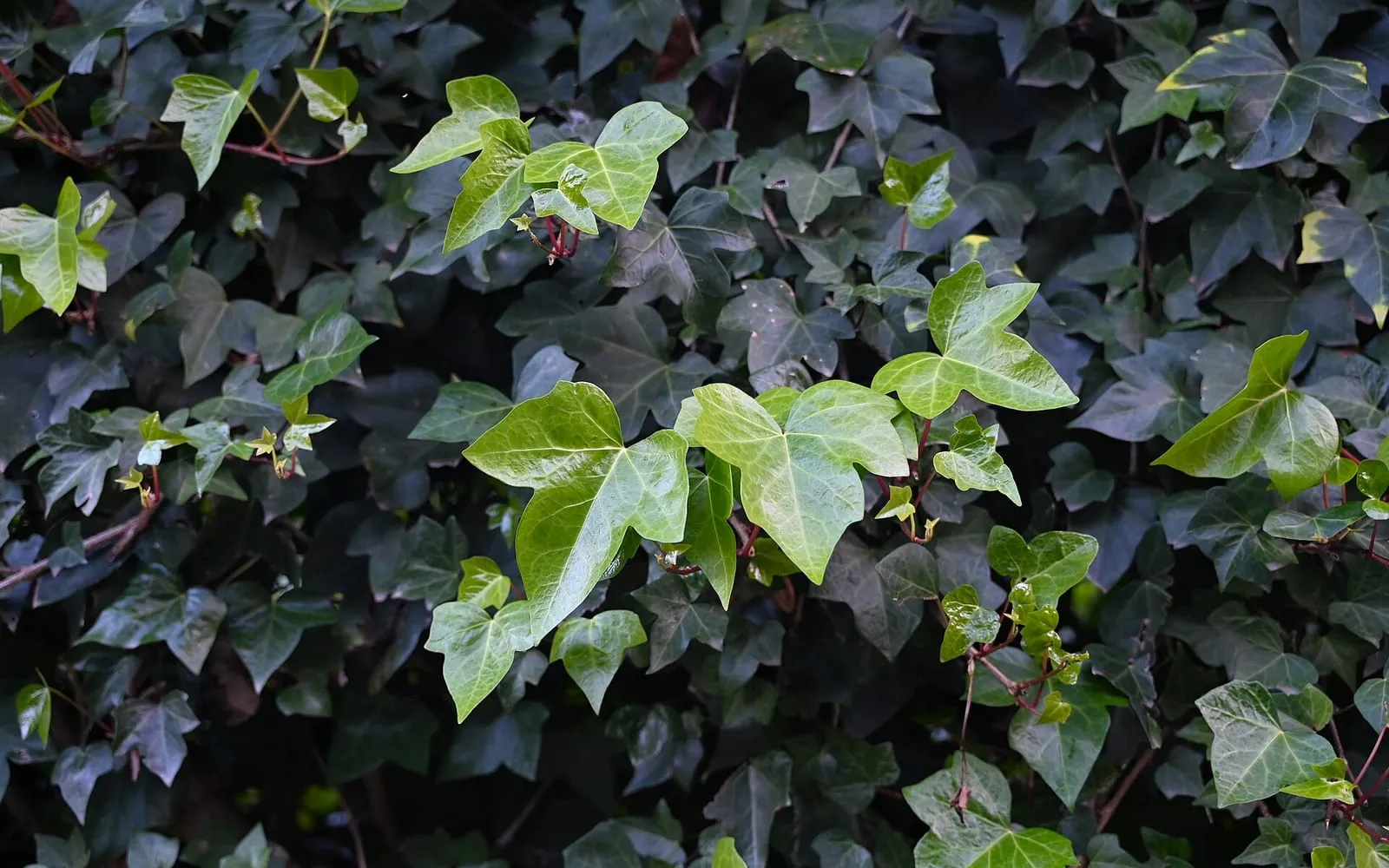
Canary Island ivy is the big, glossy-leaved ivy, with leaves far larger and less deeply lobed than those of the familiar English ivy, carried on wine-red stems. The variegated form, broadly edged in cream, is the one most often grown indoors, brightening a cool corner or trailing from a shelf.
It is a vigorous climber that will scale a wall to twenty metres outdoors in a mild climate, but indoors it is easily kept as a compact trailing or trained plant. It comes from the Canary Islands and North Africa, so it is hardier than a tropical houseplant and happiest in a cool, bright room instead of a hot one.
Its main drawback is shared with all ivies: the leaves and sap can irritate skin and are toxic if eaten, so it needs a little care in handling and placing.
Appearance and character
Leaves are large, glossy and leathery, three to five lobed but far less deeply cut than English ivy, mid green or, in the popular form, boldly edged and marbled with cream and grey-green.
Stems are vigorous and often a rich wine-red, climbing by aerial roots or trailing over the edge of a pot, and they grow fast in good conditions.
Flowers and black berries appear only on very old, mature climbing growth and are rarely seen on an indoor plant. The plant is grown for its foliage.
It roots readily from stem cuttings at almost any node, which is how it is increased and how a leggy plant is easily replaced.
Where it is from
Hedera canariensis is native to the Canary Islands and North Africa, where it climbs over rocks, cliffs and trees in a mild, frost-poor climate. It is used to cool, bright, humid-coastal conditions instead of tropical heat.
That origin makes it a plant for a cool, bright room. It is hardier than a tropical foliage plant, taking cool conditions and even a light frost in mild areas, but it dislikes hot, dry, centrally heated air, which encourages spider mites.
How it grows
It grows fast in a cool, bright spot, trailing or climbing, and slows in the lower light of winter. It is vigorous and easily kept in shape by trimming.
Pot it in a free-draining houseplant compost, and water when the top of the compost has dried. Train it up a support or let it trail, and pinch or trim it to keep it bushy instead of bare and leggy.
Keep it in bright indirect light, giving the variegated form the brighter position it needs to hold its colour, and in a cool to average room instead of a hot one. Wipe the glossy leaves occasionally to keep them clean and free of mites.
Take stem cuttings whenever you like, since they root easily in compost or water. This is the simplest way to make more plants or to refresh an old one.
Through the seasons
Spring starts fast renewed growth as light increases. This is the time to trim, repot, train and resume feeding.
Summer is the main growing season. Water when the surface dries, feed, and keep it out of hot, dry air.
Autumn growth slows as light falls. Reduce feeding and watering.
Winter is a slower period in lower light, but the plant stays evergreen. A cool room suits it well; keep it bright and only lightly watered.
Care difficulty
Easy, and among the more forgiving foliage plants for a cool room. It grows fast, roots readily and tolerates cool conditions that many houseplants dislike. The main problems are loss of variegation and legginess in poor light, and spider mites in hot, dry air. Keep it cool, bright and out of a baking radiator’s draught and it should grow well.
Watering
Water when the top of the compost has dried, giving enough to moisten the roots and letting the excess drain. Let it dry a little more between waterings in winter, when growth slows and cool, wet compost risks rot.
It dislikes both waterlogging and drying out hard, so steady, moderate watering suits it. Empty any saucer after watering.
Warning signs, diseases and pests
Spider mites are the most common pest, especially in hot, dry air near radiators. They stipple the leaves pale with fine webbing. Raise the humidity, wash the leaves, and treat early, since a hot, dry spot brings them on fast.
Scale insects settle on stems and leaf undersides as small brown bumps with sticky honeydew. Wipe them off and treat with horticultural oil.
Loss of variegation, with new leaves coming plain green, and long bare stems both point to too little light. Move the plant somewhere brighter, especially a variegated form, and pinch it back to thicken it.
Growing environment
Bright, indirect light suits it, and the variegated forms need good light to hold their cream markings, though direct summer sun can scorch the leaves. Plain green forms take a little more shade.
A cool to average room suits it better than a hot one. It tolerates cool, even unheated, conditions and dislikes hot, dry, centrally heated air, which encourages spider mites.
Give it a free-draining compost and a support to climb or a shelf to trail from, and keep it out of the dry draught of a radiator. It is a good choice for a cool hallway or a bright, unheated room.
Feeding
Feed monthly through spring and summer with a balanced liquid houseplant feed at half strength, to support its fast growth. Reduce feeding in autumn and stop in winter.
Fresh compost supplies enough for the first weeks after repotting, and a resting winter plant needs no feed.
Troubleshooting
The new leaves are coming plain green. Loss of variegation from too little light. Move a variegated plant somewhere brighter, and cut back to a point where the leaves are still marked, since all-green shoots stay green.
The leaves are dull and finely webbed. Spider mites, from hot, dry air. Raise the humidity, wash the leaves top and bottom, and move the plant away from a radiator.
It has gone bare and leggy. Too little light, or age. Give it brighter light and pinch or cut it back hard, rooting the trimmings as cuttings to thicken the plant.
Can I grow it outdoors? In a mild climate, yes, where it is hardier than a tropical plant and survives light frost, though hard freezes cut it back. It is more tender than common English ivy.
Is it safe around pets and children? Not fully. The leaves and sap are irritant and toxic if eaten, and the ASPCA lists English ivy, its close relative, as toxic to cats, dogs and horses, so keep pets and children from chewing it and wash off any sap that irritates your skin.
Canary Island Ivy problem guides
Not sure what is wrong? See the common houseplant pests guide.