
Houseplant
Common Twayblade
Neottia ovata
Also known as Neottia ovata, Listera ovata
How to grow Neottia ovata, the common twayblade orchid, a hardy terrestrial orchid with a single pair of broad leaves and a tall green flower spike.
At a glance
- Difficulty
- Moderate
- Water
- Keep moist in growth; drier when dormant
- Light
- Part shade to dappled sun
- Temperature
- Hardy; needs a cold winter dormancy
- Humidity
- Average
- Hardiness
- USDA 4-8, RHS H7, hardy to -30 C
- Type
- Hardy deciduous terrestrial orchid
- Height
- 20 to 60 cm
- Native to
- Europe and temperate Asia
A widespread hardy orchid of Europe and temperate Asia, growing in damp woods, grassland, scrub and dune slacks over moist, humus-rich, often limy ground. It is fully hardy and needs a cold winter dormancy, dying back each year, and it depends on its soil fungi. It tolerates a wide range of conditions but needs moisture and cannot take a hot, dry root run.
Hardiness zones describe winter cold alone. Summer heat, humidity, rainfall and the length of the growing season decide as much, so treat the range as the outer limit rather than as a recommendation.
Not known to be toxic
A safe plant to grow around pets and children. Hardy terrestrial orchids such as Neottia are not listed as toxic by the ASPCA or the RHS, and no harmful compound is recorded in them. A pet or child that chewed a leaf would be unlikely to have more than a mild stomach upset. The difficulty is getting this woodland orchid established.
Sources: ASPCA toxic and non-toxic plants, RHS potentially harmful garden plants
About
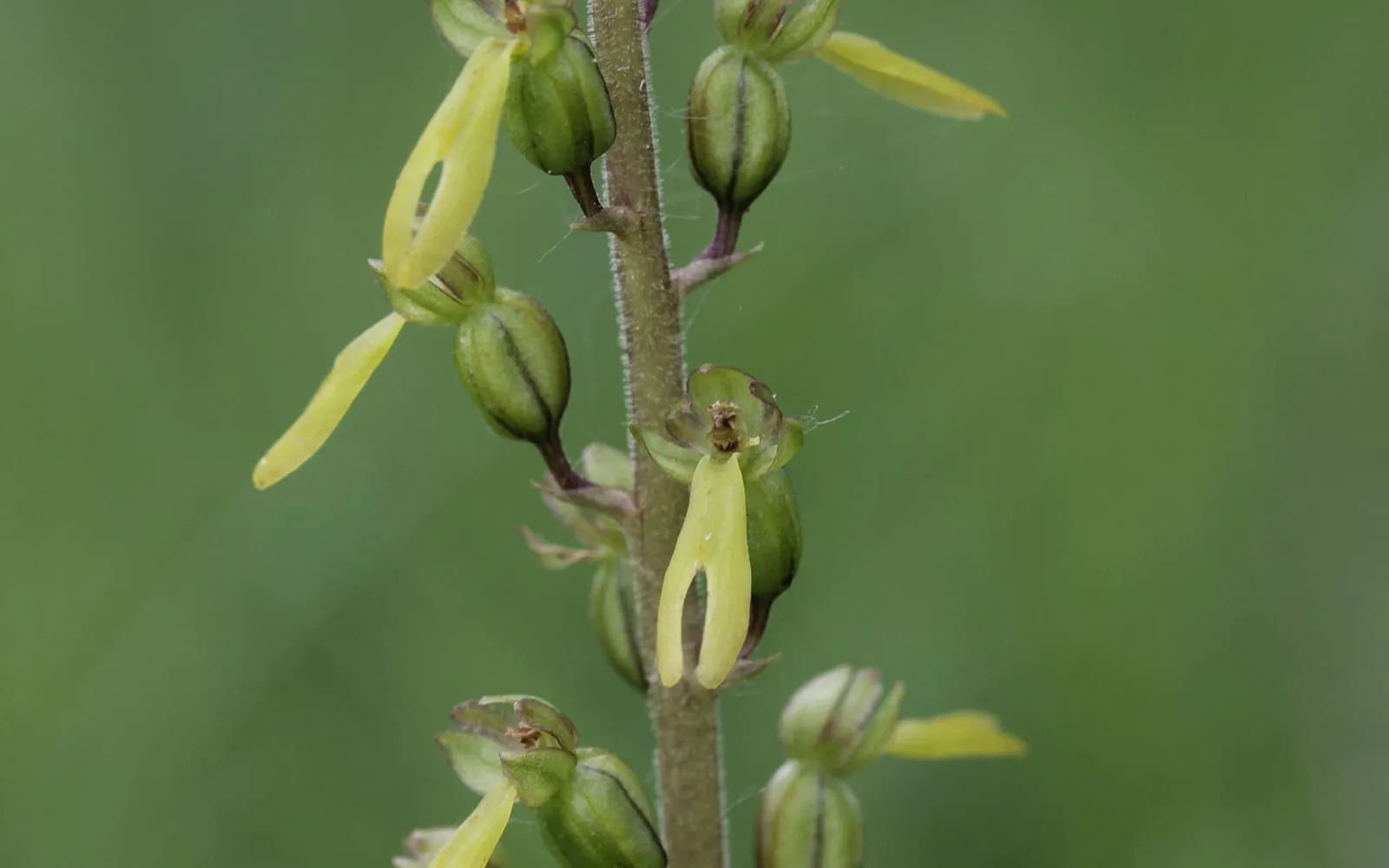
Common twayblade is a hardy orchid named for the two broad, oval leaves that sit low on its stem like a pair of green paddles. Above them rises a slender spike of many small, yellow-green flowers, each with a distinctive deeply forked lip, subtle and easily overlooked but curious close up. It is one of the most widespread orchids in Europe and temperate Asia, found in woods, grassland, scrub and dunes alike.
It is a hardy terrestrial orchid, growing over moist, humus-rich, often limy ground in part shade or dappled sun, dying back to a rootstock each year and needing a cold winter dormancy. Like other terrestrial orchids it depends on its soil fungi, but it is more tolerant and adaptable than most, taking a wide range of conditions provided the ground stays moist and is not hot and dry.
Grown in a moist, humus-rich, un-fed spot in light shade, in a woodland garden or a lightly shaded, grassy planting, it can establish and persist for years. Its green flowers are small and subdued, but its value is that it is a hardy native orchid that will settle and return in places where fussier kinds fail.
Appearance and character
The two broad, oval leaves sit low and opposite on the stem, a fresh green, the feature that names the plant, and die back after flowering.
Above them rises a slender spike of many small, yellow-green flowers, each with a deeply forked, tongue-like lip, subtle in colour but distinctive close up.
It grows from a rootstock, dying back after flowering and resting dormant through winter, and it depends on its soil fungi to grow and persist.
It is one of the most widespread and adaptable hardy orchids, more tolerant of varied conditions than most, though its flowers are small and green.
Where it is from
Neottia ovata grows across Europe and temperate Asia, in damp woods, grassland, scrub, hedge banks and dune slacks, over moist, humus-rich, often limy ground, in part shade to dappled sun. It is a widespread and adaptable orchid of varied habitats.
That broad range makes it more tolerant than most hardy orchids. It still needs moist, humus-rich, neutral to alkaline ground, part shade or dappled sun, and a cold winter dormancy, and it depends on its soil fungi. It cannot take a hot, dry root run, but it copes with a wide range of moist conditions.
How it grows
It grows in spring, producing its pair of leaves and slender flower spike, sets seed and builds its rootstock, then dies back and rests dormant through winter. That cold dormancy is essential, and it depends on soil fungi to grow and spread, increasing slowly in suitable ground.
Grow it in moist, humus-rich, neutral to alkaline soil in part shade or dappled sun, in a woodland garden or a lightly shaded, grassy planting, and keep it moist through the growing season with rainwater. It dislikes a hot, dry root run.
Leave it undisturbed to establish, mulch with leaf mould, and let the seed heads ripen if you want it to spread. It handles disturbance poorly and depends on its soil fungi, so move it as little as possible.
Propagation is by careful division of an established clump, keeping soil and fungi around the roots, or by allowing it to self-seed, which is slow.
Through the seasons
Spring produces the pair of leaves and the slender green flower spike. Keep the ground moist.
Summer the plant sets seed and builds its rootstock. Keep it moist and lightly shaded.
Autumn the foliage dies back. Keep the ground from drying out but not waterlogged.
Winter the whole plant rests as a rootstock below ground. The hard cold does no harm and is what prepares next year’s spike, so leave it outside and keep the ground just moist, never dry and never sodden.
Care difficulty
Common twayblade is moderate for a hardy orchid and more forgiving than many once settled. It copes with a wider span of light and soil than most, from woodland shade to open grass, as long as the ground stays cool and moist and never bakes. It handles moving poorly, since it depends on its soil fungi and may take years to recover if those are disturbed. Give it a moist, shaded, un-fed corner and leave it alone, and it should persist and slowly spread, though the green flowers stay modest.
Watering
Keep the ground moist through the growing season, using rainwater. Twayblade grows in damp woods and old grassland where the soil stays cool and never parches, and the pair of leaves browns and the green spike fades early if it runs dry while in leaf and flower. A leaf-mould mulch holds that moisture without souring the ground.
It will not tolerate a warm, stagnant, waterlogged root run, which rots the fleshy rootstock. Aim for steady damp over free-draining, humus-rich soil. As the leaves die down in late summer let the ground dry a shade, and hold the dormant rootstock just moist through the cold winter it needs.
Warning signs, diseases and pests
Warm, stagnant, waterlogged soil rots the rootstock, and a hot, dry position is the other common way to lose it. Keep the ground cool, moist, humus-rich and lightly shaded, with drainage underneath, and never let it bake dry in summer sun.
Slugs and snails often eat the soft emerging leaf pair and the tender green spike, which they can strip in a night, so protect the young growth in spring. Where a plant fails to settle at all, the usual cause is that it was lifted away from the soil fungi it depends on, or planted in ground too hot and dry for it.
It is otherwise a tough and adaptable native orchid.
Growing environment
Part shade to dappled sun suits it, matching its varied woodland and grassland home. It tolerates a wide range of light, from light shade to fairly open, provided the ground stays moist.
It is fully hardy, down to around minus thirty, and the cold winter rest triggers flowering, so it belongs in the open garden instead of on a windowsill. Ordinary outdoor humidity and reliably moist ground suit it.
Grow it in moist, humus-rich, neutral to alkaline soil in part shade or dappled sun, in a woodland garden or lightly shaded, grassy planting, and leave it undisturbed.
Feeding
Feed nothing. It relies on the natural richness of humus-rich soil and its soil fungi, and dislikes fertiliser. A leaf-mould mulch is enough.
Keeping the ground moist, humus-rich and undisturbed matters far more than any feeding.
Troubleshooting
It failed to establish. Usually the plant was moved away from its soil fungi, or the ground was too hot and dry. Keep it in moist, humus-rich, lightly shaded ground, disturb it as little as possible, and buy nursery-raised stock.
The rootstock rotted. It sat in warm, stagnant, waterlogged soil. Keep the ground damp over free drainage, lift the bed if it puddles, and never leave the rootstock warm and sodden.
The flowers are green and hard to see. That is normal; the twayblade is grown as a native orchid with small green forked-lipped flowers rather than for a bright display.
Is it easy for a hardy orchid? Relatively. It is one of the more adaptable and widespread hardy orchids, tolerating varied moist conditions, though it still needs its soil fungi and a cold winter.
Is it safe around pets? Yes. Neottia and the other hardy terrestrial orchids have no compound the ASPCA or RHS lists as toxic, and a nibbled leaf or rootstock would be unlikely to cause more than mild stomach upset, so it is safe in a garden with cats, dogs and children.
Common Twayblade problem guides
Not sure what is wrong? See the common houseplant pests guide.