
Houseplant
Black Gold Philodendron
Philodendron melanochrysum
Also known as Philodendron melanochrysum, Melano
How to grow Philodendron melanochrysum, the black gold philodendron, with long velvety near-black leaves veined in gold and a need for a moss pole.
At a glance
- Difficulty
- Easy
- Water
- When the top few centimetres of mix have dried
- Light
- Bright indirect light
- Temperature
- Warm, 18 to 29 deg C; keep above 15 deg C
- Humidity
- High, above 60 per cent
- Hardiness
- USDA 10-12, RHS H1b, hardy to 15 C
- Type
- Evergreen climbing perennial
- Height
- 3 to 5 m with support
- Native to
- Colombia
A tender climbing aroid from the warm, wet forests of Colombia, grown indoors for its velvet leaves. Frost kills it and it slows below about 15 deg C, so it needs a steadily warm room, humid air and something to climb. Dry, cold air shrinks the leaves, and a cold, airless, wet pot rots the roots.
Hardiness zones describe winter cold alone. Summer heat, humidity, rainfall and the length of the growing season decide as much, so treat the range as the outer limit rather than as a recommendation.
Toxic if eaten
- Do not eat
- All parts, which contain calcium oxalate crystals
- Harm from
- Eating it, handling it and sap in the eyes
- Affects
- People, cats and dogs
Every part of this plant contains tiny calcium oxalate crystals, the aroid family's standard defence. Chewing a leaf or stem can push them into the soft tissue of the mouth, causing sudden burning, swelling, excess saliva and vomiting in a pet that swallows any. The sap stings skin and eyes as well. The ASPCA lists Philodendron among the plants that harm cats and dogs. The immediate pain means little is usually swallowed, so lasting damage is unusual, but keep it away from anything that chews and rinse off any sap.
Sources: ASPCA toxic and non-toxic plants, RHS potentially harmful garden plants
About
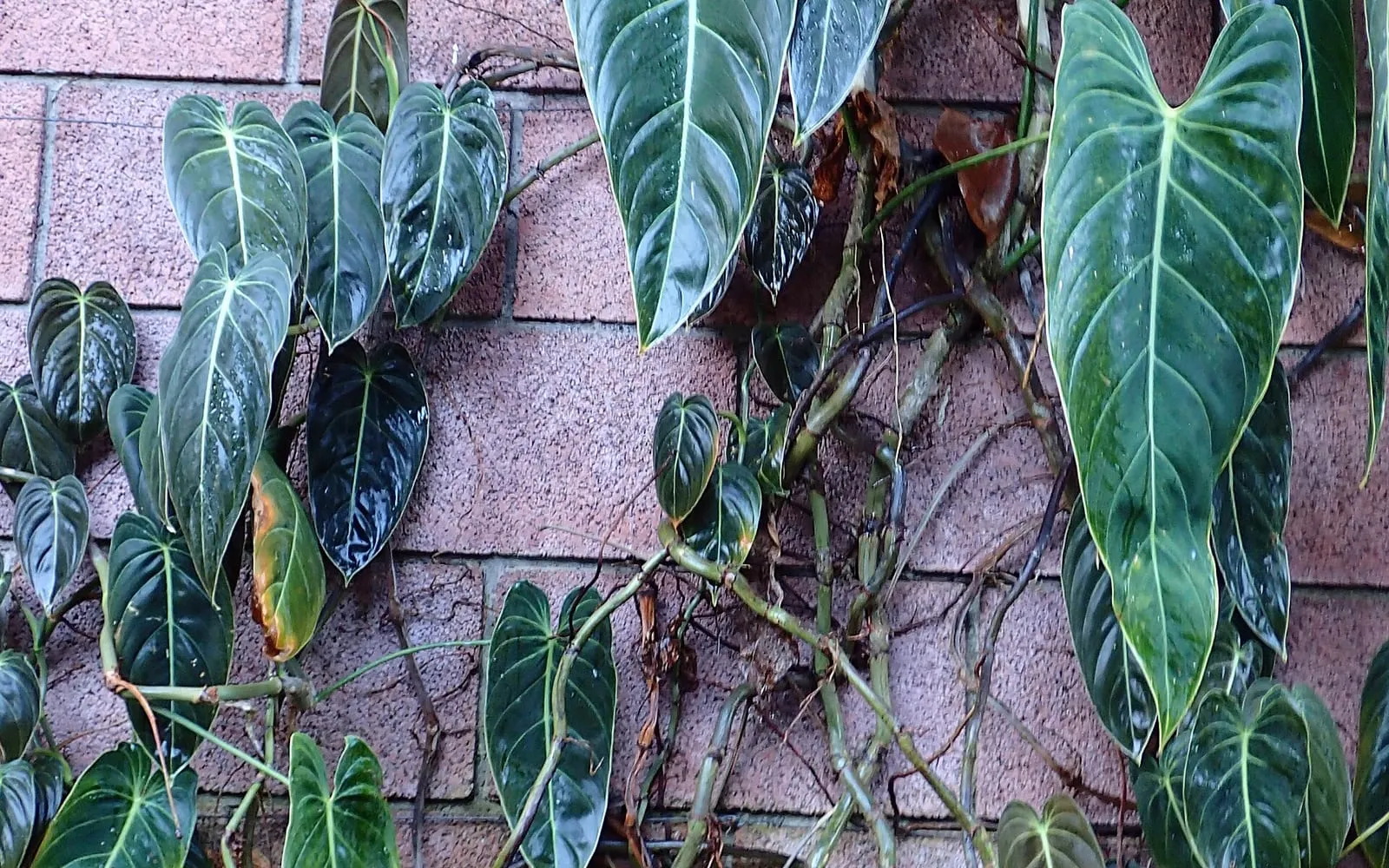
Black gold philodendron is grown for a leaf that looks like dark velvet threaded with gold. Each long, drooping, heart-shaped blade is a deep blackish green with a matte surface, ruled by fine pale-gold or bronze veins, and the leaves stretch out longer and longer as the plant gains height.
It is a climber, not a creeper, which makes it different from the ground-hugging velvet philodendron. Rooted onto a mossy pole it heads upward, and only with that height do the leaves reach their full length, so a supported plant looks nothing like a small one on a shelf.
Its home is the warm, wet forest of Colombia, and indoors it needs heat, damp air, soft light and a pole to climb. Given those, it is easier than its reputation suggests.
Appearance and character
The leaves are the main feature, long and heart-shaped, blackish green with a velvet nap and threads of pale gold along the veins. They hang from the stem and lengthen markedly with height.
The stem climbs, gripping a mossy support with stubby aerial roots and growing up several metres given the room. Kept flat and unsupported, it stays small and its leaves stay short.
New leaves push out from a papery sheath at the tip, each one, on a fed and supported plant, a little longer than the last.
Bloom is a rare, unshowy green hood of the arum kind and almost never appears on a plant grown in the house. This philodendron is grown for foliage, not flowers.
Where it is from
Philodendron melanochrysum is native to the humid rainforests of Colombia, where it scales tree trunks in dappled light, its aerial roots gripping the mossy bark for water and food. Warmth, wet air and a trunk to climb are its everyday conditions.
Its needs are simple. Give it warmth, humidity above about sixty per cent, filtered light and a damp pole to root into, and it lengthens its leaves; leave it cold, dry or flat on a shelf and it produces stunted, short-leaved growth.
How it grows
The plant climbs in flushes through the warmer, brighter half of the year, its aerial roots gripping the pole and its leaves growing larger, then rests over winter. A warm spot and a support keep it growing.
Grow it in a coarse, open aroid mix, mostly bark and perlite with a little compost, and stand a mossy pole in the pot for it to climb. Dampen that pole when you water, since the aerial roots drink from it, and water the compost once its top few centimetres feel dry.
Hold the room above about 15 deg C, keep the air humid and the light bright but off the direct sun, and steer the climbing stem onto the pole as it grows. Away from cold draughts it climbs well.
To make more, cut the stem into pieces each bearing a node and, ideally, an aerial root, and root them in a humid, airy medium.
Through the seasons
Spring starts the climb as light returns. Repot if needed, wrap fresh moss on the pole, and start feeding again.
Summer is the season of the longest leaves. Keep it warm, humid and lightly but regularly watered, and feed each month.
Autumn slows the climb as light fades. Cut back the feeding and let the mix dry a little further between drinks.
Winter is a rest in the dimmer light. Keep it warm and barely moist, well clear of cold draughts.
Care difficulty
Easy enough for a velvet aroid, so long as it has warmth, damp air and a pole. Given those it climbs steadily and its leaves grow long. It goes wrong when the pot stays cold and wet and rots, when dry air brings mites and shrunken leaves, or when it is grown flat with no support so the leaves never develop. Provide the pole and the warmth and it should grow well.
Watering
Let the top few centimetres of the open mix dry, then water so the whole root ball is moistened and the surplus runs away. The coarse mix should drain freely, because roots left cold and sodden in poor light quickly rot.
Keep the moss pole damp at the same time, since the climbing roots feed from it. Through winter, when growth slows, water less and tip out any water that gathers in the saucer.
Warning signs, diseases and pests
Warm, dry air brings spider mites, which fleck the velvet leaves with dull pinpricks and hang fine webs beneath. Lift the humidity, sponge the leaves gently, and act early before the colony builds.
A pot kept cold and wet rots the roots, and the plant shows this with yellowing, flopping leaves and a mushy base. Switch to an airier mix, water more sparingly, and keep it warm.
Leaves that stay short with long gaps of bare stem between them mean the plant has nothing to climb, or too little light. Give it a damp pole and brighter, indirect light and the new leaves lengthen.
Growing environment
Filtered, indirect light is what it needs, like the broken light beneath forest canopy. Direct sun burns the velvet, and gloom stalls the climb and keeps the leaves small.
Warmth and damp air are essential. Hold it above about 15 deg C, ideally warmer, and push the humidity past sixty per cent with a humidifier or a pebble tray, since dry air both spoils the leaves and encourages mites.
Set it in a coarse aroid mix with a damp moss pole, in a warm, humid, well-lit corner out of draughts. A moss pole lets it reach full size.
Feeding
Through spring and summer, feed monthly with a balanced liquid feed at half the label rate, to support the big leaves. Taper off in autumn and stop over winter while it rests.
The half-rate feed keeps the roots from scorching, and an occasional flush of plain water clears any salts. Newly potted plants use the nutrients in fresh mix for their first few weeks.
Troubleshooting
The new leaves are short. It has nothing to climb, or too little light. Give it a damp moss pole and brighter indirect light, and the leaves lengthen as it rises.
The velvet leaves look dull and speckled. Spider mites out of dry air. Raise the humidity, sponge the leaves, and treat at the first sign.
The base has gone soft and the leaves are yellow. Cold, wet compost rotting the roots. Move it to an airier mix, water less, keep it warm, and root a healthy tip if the base is lost.
How is it different from the velvet philodendron? This one climbs and hangs long leaves; the velvet philodendron creeps along the soil with rounder ones. Both are velvet-leaved aroids grown for foliage.
Is it safe with pets and children? No. Like monstera and the other aroids it holds calcium oxalate that burns the mouth when chewed, so keep it out of reach and wash off any sap.
Black Gold Philodendron problem guides
Not sure what is wrong? See the common houseplant pests guide.