
Protecting plants from late frosts: why warmer winters bring more frost damage
A mild winter followed by a spring frost can do more damage than a steadily cold one. Warm spells start growth early, and frost can still follow. Covers, siting and timing reduce the damage.
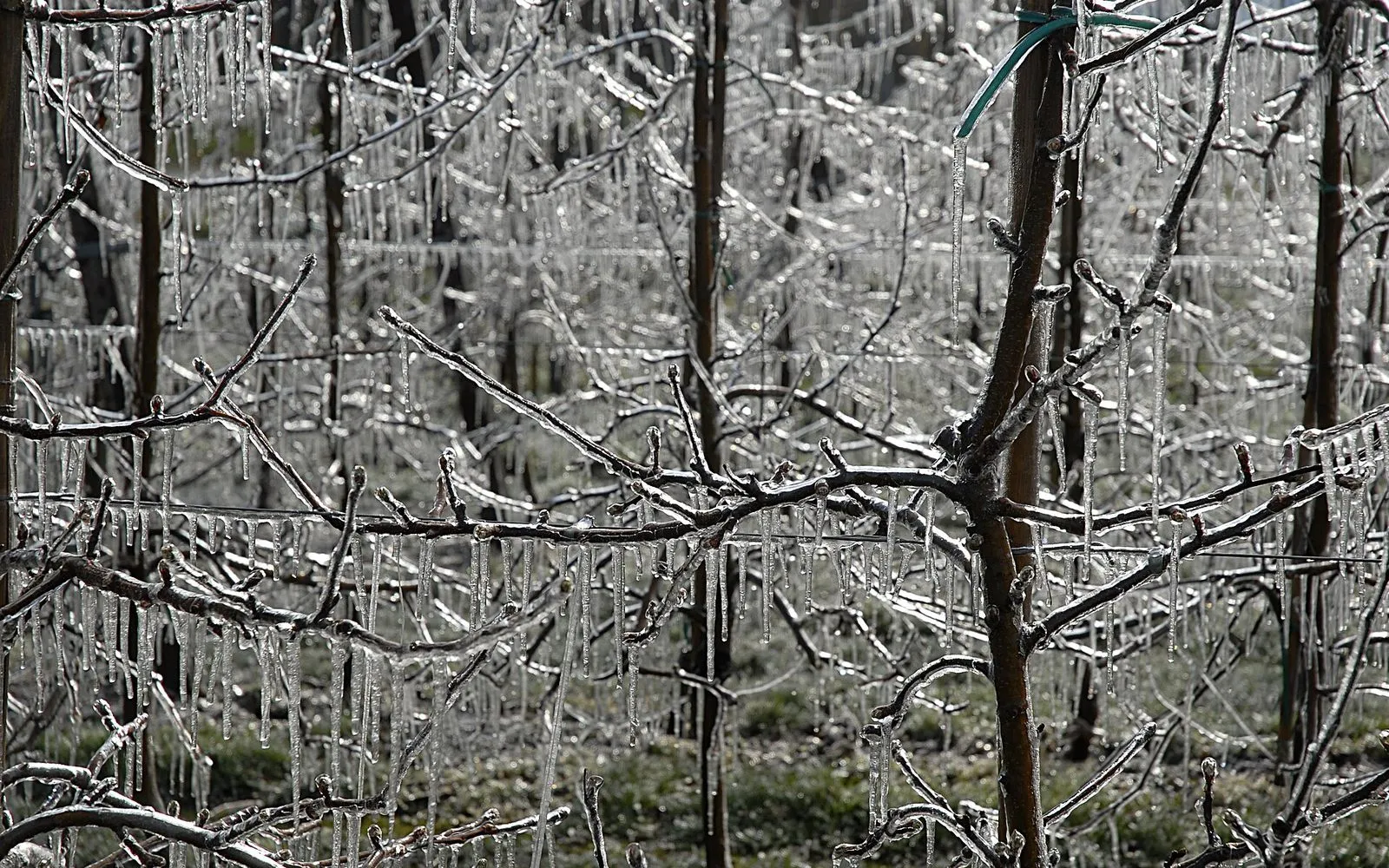
A warming climate can still bring more frost damage. The danger lies in the timing of the cold rather than its depth. Warmer winters can start growth early, but spring frosts can still arrive.
The risk comes from the plant’s dormancy, and it is the same one the gardening in a changing climate hub describes as volatility. A mild spell can start growth, and the frost that follows can damage tissue that has lost its winter hardiness. Protecting plants from late frost starts with that timing.
Why a warmer winter raises the risk
Through winter, a hardy plant is dormant and can take hard cold without harm. Two things bring it out of that state: the passing of enough cold, and the return of warmth. A mild winter delivers both signals early. The plant may not enter the deep dormancy a cold winter would bring, and a warm spell can start buds and shoots weeks ahead of the old timetable.
Frost has not gone away. Spring still brings cold nights, and those nights may now hit soft, active growth instead of hardened dormant buds. Warm-winter regions can face the opposite problem too. A plant may not get the winter chill it needs to break dormancy cleanly, so it flowers unevenly.
What a late frost does
Frost damages a plant by freezing the water in and around its cells. Ice forming in the tissue ruptures cell walls, and the growth it touches collapses, blackens and dies within a day. New shoots wilt and turn brown, unfurling leaves go translucent and limp, and open blossom is killed outright.
Lost blossom is the costly part for anyone growing fruit. A frost that catches a fruit tree in flower destroys that year’s crop in a single night, because the killed flowers set no fruit, a loss that shows up later as blossom drop and bare branches. On woody plants, repeated spring frosts and the freeze-thaw of late winter can also split bark, a frost crack that leaves a lasting wound.
Know where the frost lands in your garden
Cold air is denser than warm air, so it flows downhill and pools in hollows or against walls and hedges that block it. A low corner or the foot of a slope can be several degrees colder on a still night than the ground just above it. Late frost reaches those frost pockets first. A plant that would be safe higher up the garden may fail at the bottom.
The last-frost date is an average, not a guarantee. It marks when frost becomes unlikely, not impossible. A mild run of years can encourage earlier planting, but a late frost can still arrive. Your garden’s own features change the risk. A wall that stores the day’s heat, a position under open sky, or buildings around an urban plot can all change where and when frost forms.
Protect on the frosty night
When frost is forecast and plants have vulnerable growth, cover them. Horticultural fleece, cloches, or old sheets and cardboard over blossom and new shoots can trap enough warmth from the soil to lift the plant a degree or two. Remove the cover by day. Move tender pots against a wall or under cover.
Prepare the ground as well as the plant. Moist soil holds far more of the day’s heat than dry soil and releases it slowly overnight, so watering the ground before a frosty night can warm the air just above it. Hold off feeding and hard pruning early in the year, since both encourage the soft growth that frost catches. A plant that starts more slowly has less tender growth exposed.
Site and choose to dodge the frost
The most reliable protection comes from where you plant. Put an early-flowering fruit tree where it warms slowly so it stays dormant longer and misses more of the frost risk. In the northern hemisphere, a cool, north-facing wall can suit blossom better than a warm south-facing one that starts flowering too early. Avoid frost-tender or early-flowering plants in frost pockets, and use walls, hedges and slopes to keep cold air moving through rather than pooling around them.
Choice of plant helps too. Late-flowering cultivars of apple, pear, plum and cherry open their blossom after the main frost risk has passed, and matter most where late frosts are common. Site early and evergreen ornamentals such as camellia out of early morning sun, since rapid thawing can brown frosted flowers.
After a frost, wait before you cut
Frost-blackened growth looks final, but much of it is not. Many plants push new shoots from below the damage once the danger has passed, and the browned growth, unsightly as it is, gives the buds behind it some shelter from the next frost. Waiting until settled warmer weather before cutting back lets you see what has died, and avoids removing growth that would have recovered. Plan for late frost after a warm spring, even when February has felt mild.
Common questions
- What is a late frost and why is it dangerous?
- A late frost is a freeze that arrives in spring, after plants have started into growth. It is dangerous because the soft new leaves, shoots and blossom that appear in spring have no protection against ice, unlike the dormant buds of winter. A single late frost can blacken new growth and destroy a fruit crop for the whole year by killing the open blossom.
- How do I protect plants from a late frost?
- Watch the forecast and cover vulnerable plants on frosty nights with horticultural fleece, cloches or even old sheets, lifting the cover by day. Bring tender pots under cover. Water the soil beforehand, since moist soil holds and releases more warmth overnight than dry soil. Avoid feeding or pruning too early, which pushes out soft growth that frost then catches.
- Why do warmer winters increase frost damage?
- A mild winter lets plants start growing earlier and can stop them entering deep dormancy, so they are soft and active when a cold snap arrives. A warm February brings buds and blossom out ahead of time, and a normal March frost can then damage tender growth that a colder, steadier winter would have kept dormant. The damage comes from the swing, not the average.
- Which plants are most at risk from late frosts?
- Early-flowering fruit trees such as apricot, plum, pear, cherry and apple, whose blossom is killed by frost so no fruit sets, and early or evergreen ornamentals such as camellia and magnolia whose flowers and new leaves brown overnight. Plants in frost pockets, where cold air collects, and tender plants pushed into early growth by a warm spell are the most exposed.
Sources and further reading
- RHS Gardening in a Changing Climate reportRoyal Horticultural Society, 2017The RHS point that milder winters can leave plants more exposed to sudden cold, because they have not entered deep dormancy.
- AR6 Synthesis Report: Climate Change 2023Intergovernmental Panel on Climate Change. IPCC, 2023The warming trend and rising variability behind earlier springs and the frosts that still follow them.
- Climate change impacts on winter chill for temperate fruit and nut productionEike Luedeling. Scientia Horticulturae, 2012How warm winters change the dormancy and bud break that decide when a plant is exposed to frost.