
Houseplant
White Fusion Calathea
Goeppertia lietzei
Also known as Calathea lietzei, White Fusion
How to grow Goeppertia lietzei, the White Fusion calathea, with white-marbled leaves and lilac undersides, and how to stop the variegation browning.
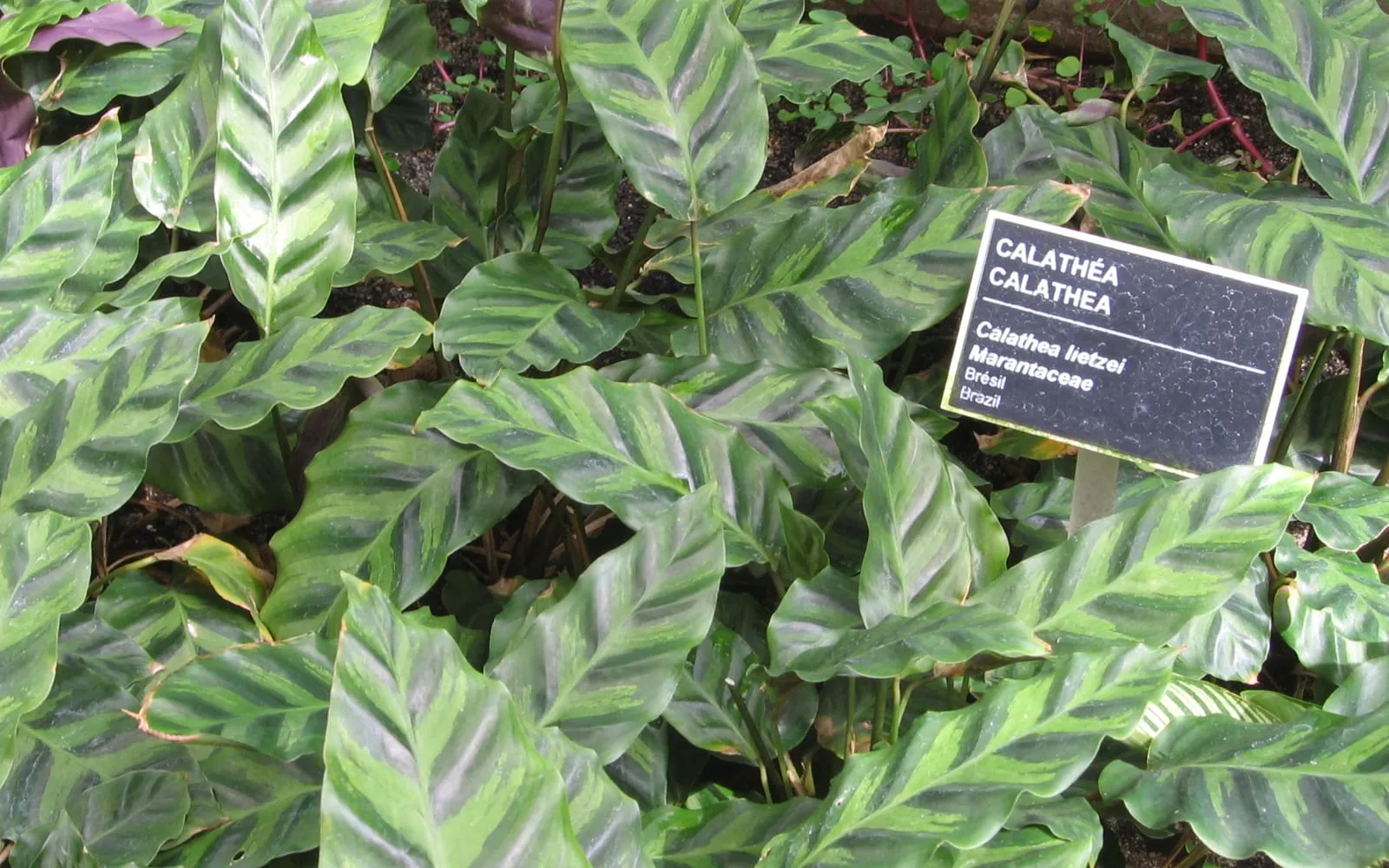
At a glance
- Difficulty
- Moderate
- Water
- Keep evenly moist; never dry out or waterlog
- Light
- Bright indirect light
- Temperature
- Warm, 18 to 27 deg C; keep above 16 deg C
- Humidity
- Very high
- Hardiness
- USDA 11-12, RHS H1a, hardy to 16 C
- Type
- Evergreen rhizomatous perennial
- Height
- 30 to 60 cm
- Native to
- Brazil
A tender Brazilian foliage plant, grown mainly as the variegated White Fusion, which is more demanding than a plain calathea. It has no frost tolerance and stalls below about 16 deg C, so it needs a warm, very humid, draught-free spot. The white parts of its leaves have no green to protect them, so they scorch and brown more readily, making steady warmth, humidity and clean water all the more important.
Hardiness zones describe winter cold alone. Summer heat, humidity, rainfall and the length of the growing season decide as much, so treat the range as the outer limit rather than as a recommendation.
Not known to be toxic
Calatheas, now placed in Goeppertia, are listed as non-toxic to cats and dogs by the ASPCA, and no harmful compound is recorded in people. A chewed leaf causes no more than the mild upset any foliage might. It is one of the safer houseplants for a home with pets or children, grown purely for its striking variegated leaves.
Sources: ASPCA toxic and non-toxic plants, RHS potentially harmful garden plants
About
White fusion calathea is grown for its white, pale green and deep green marbled leaves, with lilac-purple undersides. The pattern varies from leaf to leaf. The white areas are what make the plant desirable, and they are also what make it difficult.
The white parts of the leaf carry no green pigment to shield them, so they scorch, brown and dry far more easily than a plain green leaf would. This makes White Fusion the most demanding of the common calatheas, unforgiving of dry air, harsh light and hard water.
It is grown like its relatives, such as the furry feather calathea and the eternal flame, but it needs stricter conditions, with very high humidity, soft water and gentle, even light. Given a case or a very humid room, it is manageable and keeps its markings well.
Appearance and character
Leaves are oval and boldly variegated, marbled and streaked in white, pale green and dark green on the upper surface, with a soft lilac to purple flush beneath. The pattern varies leaf to leaf.
The plant is compact, thirty to sixty centimetres tall, growing from a creeping rhizome that sends up new leaves around the clump.
The leaves fold and lift at night, showing their purple undersides, and lower again by day, the daily movement of the prayer-plant family.
New leaves may emerge with more or less white depending on the light and the plant’s health, and a stressed plant tends to produce plainer, greener leaves.
Where it is from
Goeppertia lietzei comes from the warm, humid forests of Brazil, growing on the shaded, moist forest floor in even warmth and filtered light. It is not adapted to cold, drought or a dry season.
Give it steady warmth, very high humidity, gentle filtered light and clean, soft water. When one of those conditions is missing, the white areas are usually the first to brown and crisp.
How it grows
It grows steadily in warmth and very humid air, unfurling marbled leaves from the centre of the clump. It stalls in cool or dry conditions. Both growth and variegation depend on stable, humid warmth.
Pot it in a light, free-draining, peat-free mix, and keep the compost evenly moist with rainwater or filtered water. The white leaf areas make steady moisture and clean water even more important than for a green calathea.
Keep it warm, above about 16 deg C, in high humidity and gentle, bright but indirect light, out of any cold draught. A closed case, a cabinet or a very humid bathroom suits it far better than an open room.
Divide the rhizome in spring to make more plants, and remove browned leaves at the base, since some tip and edge browning of the white areas is almost inevitable and best trimmed away.
Through the seasons
Spring brings renewed growth as warmth and light return, the best time to repot or divide and to resume feeding.
Summer is the main growing season. Keep it evenly moist with soft water, very humid and warm, and out of strong sun.
Autumn slows growth as the light drops. Keep the humidity high as heating dries the air, and ease off feeding.
Winter the plant rests and is most at risk from cold and dry, heated air. Keep it warm, very humid and evenly moist.
Care difficulty
Moderate to demanding, and the fussiest of the common calatheas because of its variegation. Given very high humidity, gentle light, warmth and clean water, it grows and holds its markings well. Most problems come from dry air, harsh light, cold or hard water, which scorch the white areas. A case or a very humid room makes it far easier.
Watering
Keep the compost evenly moist through the year, watering when the surface begins to dry with rainwater, filtered or distilled water. The plant is sensitive to fluoride and salts, and the white leaf areas brown all the more readily for it.
Ease off only slightly in winter, keeping the mix just moist, and empty any saucer. Never let it dry out hard or stand soggy, since both stress the delicate variegated leaves.
Warning signs, diseases and pests
Brown, crisp patches on the white parts of the leaves are the most common problem. They usually come from dry air, harsh light or hard water. Raise the humidity, soften the water, shade it from direct sun, and trim the worst damage away.
Spider mites thrive in warm, dry air, stippling the leaves and often attacking the weaker white areas first. Raise the humidity, wipe the leaves, and treat early.
Plainer, greener new leaves, or fading variegation, usually mean the light is wrong, too little or occasionally too harsh, or the plant is stressed. Steady, gentle, bright indirect light and good care bring back the white.
Growing environment
Bright but gentle indirect light suits it, enough to hold the variegation without the direct sun that scorches the white areas. Deep shade dulls the pattern and weakens the plant.
Very high humidity is the single most important condition, more so than for any other common calathea. A closed case, a cabinet or a humidifier is often needed, along with warmth above about 16 deg C and freedom from cold draughts.
Give it a light, free-draining, peat-free mix and clean water, in a warm, very humid, gently lit spot. It is a plant for a terrarium or a humid cabinet as much as an open shelf.
Feeding
Feed monthly through the growing season with a dilute balanced houseplant feed at half strength, since the plant is sensitive to a build-up of fertiliser salts, which worsen the browning.
Stop feeding in winter, and flush the pot occasionally with clean water to clear any salts. Fresh mix supplies enough for the first weeks after repotting.
Troubleshooting
The white parts are browning and crisping. This is the common White Fusion problem, caused by dry air, harsh light or hard water. The white areas have no green to protect them. Raise the humidity, soften the water, shade it from direct sun, and trim the damage.
The new leaves have less white. Usually a light or stress problem. Give it steady, gentle, bright indirect light and good, humid care, and better-marked leaves should follow. Very stressed plants revert to greener leaves.
Do I really need a case for it? Often, yes. Its variegation makes very high humidity close to essential, and a closed case or cabinet is the easiest way to provide it, though a very humid room with a humidifier can work.
The leaves are stippled and dull. Spider mites, from warm, dry air, often starting on the white areas. Raise the humidity, wipe the leaves, and treat early.
Is it safe around pets? Yes. Calatheas are listed as non-toxic to cats and dogs by the ASPCA, so it is a safe houseplant for a home with animals despite being fussy to grow.
White Fusion Calathea problem guides
Not sure what is wrong? See the common houseplant pests guide.