
Houseplant
Eternal Flame
Goeppertia crocata
Also known as Calathea crocata, Saffron Calathea
How to grow Goeppertia crocata, the eternal flame calathea, a rare calathea with saffron-orange flowers and dark crinkled leaves that needs humidity.
At a glance
- Difficulty
- Easy
- Water
- Keep evenly moist; never dry out or waterlog
- Light
- Bright indirect light
- Temperature
- Warm, 18 to 27 deg C; keep above 15 deg C
- Humidity
- High
- Hardiness
- USDA 11-12, RHS H1a, hardy to 15 C
- Type
- Evergreen rhizomatous perennial
- Height
- 30 to 60 cm
- Native to
- Brazil
A tender Brazilian foliage plant, and one of the few calatheas grown as much for flower as for leaf. Frost is fatal and it struggles below about 15 deg C, so it needs a warm, humid, draught-free corner. Hard tap water browns its leaf edges as it does its cousins', and warmth, damp air and steady moisture together help it flower.
Hardiness zones describe winter cold alone. Summer heat, humidity, rainfall and the length of the growing season decide as much, so treat the range as the outer limit rather than as a recommendation.
Not known to be toxic
The ASPCA places the calatheas, now grouped under Goeppertia, on its safe list for cats and dogs, and no harmful compound is recorded for people. A leaf chewed by a curious pet or child is likely to cause at most a little stomach upset, so this is a safe flowering houseplant for a busy household. It is grown for its foliage and flowers, not as an edible plant.
Sources: ASPCA toxic and non-toxic plants, RHS potentially harmful garden plants
About
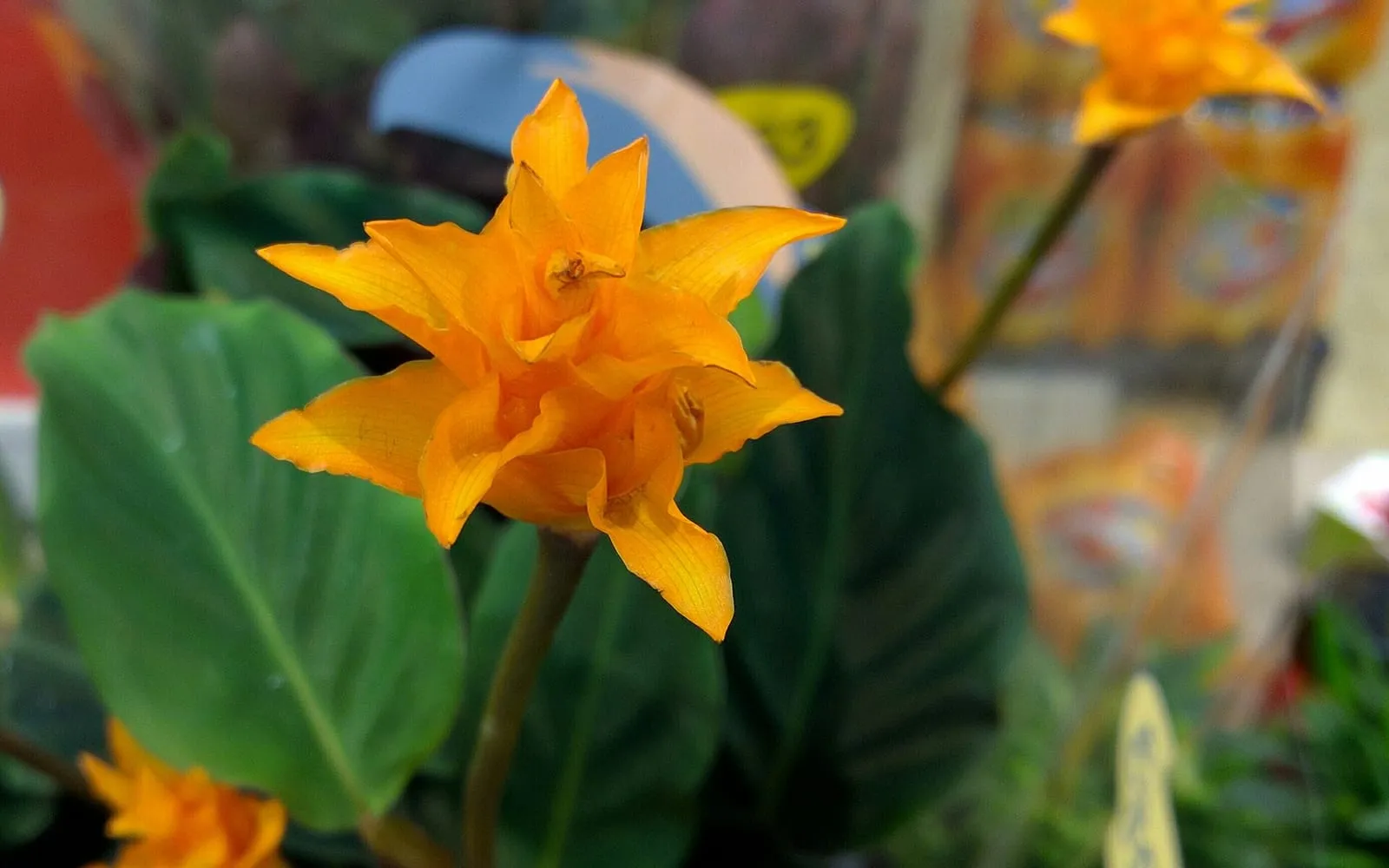
Eternal flame is the calathea people grow for flowers. Most of the group are foliage plants whose blooms are minor, but this one produces spikes of vivid saffron-orange flowers on slim stalks, held clear of the leaves. That colour is where both the common name and the epithet crocata, meaning saffron, come from.
The leaves are also worth growing: dark green, deeply puckered and crinkled on top, backed in a rich purple, and folding upward at dusk in the way the prayer plants are known for. Against that dark, textured foliage the orange spikes look all the brighter.
It is grown along the same lines as the other calatheas, such as the furry feather calathea, and it shares their two main needs, humid air and clean, soft water. Provide those, keep it warm and bright, and it can flower for weeks.
Appearance and character
The leaves are oval, dark green and strongly puckered on the upper surface, with a deep purple flush beneath, gathered into a compact clump on short stalks.
The flowers are small and saffron to burnt orange, packed into upright spikes that rise on stalks above the foliage and open over several weeks, unusually showy for this group.
The plant stays compact, thirty to sixty centimetres tall, spreading slowly from a creeping rhizome that produces fresh leaves around the clump.
Come nightfall the leaves lift and close, showing their purple backs, and open flat again by morning, the daily rhythm the prayer plants share.
Where it is from
Goeppertia crocata comes from the warm, wet forests of Brazil, growing on the shaded, moist floor in even warmth and filtered light. It is not adapted to cold, drought or a dry season.
Those forest conditions are what it needs both to grow and, above all, to bloom. Warmth, humid air, soft light and steady, clean moisture support flowers, while dry air, chill or hard water cause browned edges and few buds.
How it grows
It grows steadily in warmth and humid air, unrolling crinkled leaves and, once settled and well tended, producing its orange spikes through the warmer months. Cool or dry spells stall both the growth and the flowers.
Pot it in a light, quick-draining, peat-free mix and keep that mix evenly moist, using rainwater or filtered water instead of hard tap water. Warmth, damp air and clean water in combination are what helps it flower.
Hold the room above about 15 deg C, keep it humid and out of cold draughts, and give bright but indirect light. Snap off the spent flower spikes to keep it tidy, and split the rhizome in spring to make more plants.
Take off any browned leaves at the base to keep the clump fresh, and top up the humidity when winter heating dries the air.
Through the seasons
Spring starts new growth and the first spikes as warmth and light return. Repot or divide now, and start feeding again.
Summer is the season of growth and flower. Keep it evenly moist with soft water, humid and warm, and feed for bloom.
Autumn slows growth as light fades. Keep humidity high as heating comes on and ease off the feed.
Winter is a rest. Keep it warm, humid and evenly moist, and take care it never sits cold and wet.
Care difficulty
Easy for a flowering plant once its two main needs are met: humid air and clean water. Warmth, humid air, soft light and clean water support both leaves and flowers. Its troubles are nearly always caused by dry air, chill or hard water, which brown the leaves and reduce flowering. Grow it somewhere humid and water it with rainwater or filtered water.
Watering
Keep the mix evenly moist year-round, watering as the surface begins to dry but before the pot dries through, and always with rainwater, filtered or distilled water. Fluoride and the salts in hard water brown the leaf edges.
Ease back only a little in winter, keeping the mix just moist, and pour off anything left in the saucer. It needs even moisture, not a swing between bone-dry and sodden.
Warning signs, diseases and pests
Browned, crisp leaf edges are the usual problem, and they mean dry air or hard water, often both. Raise the humidity, switch to rainwater or filtered water, and keep the mix evenly moist.
Spider mites appear in warm, dry air, freckling the leaves and webbing their undersides. Raise the humidity, wipe the leaves, and treat early, since dry air brings them on fast in a calathea.
Few or no flowers usually mean too little light, too little warmth, or dry air. Move it brighter, keep it warm and humid, and use a flowering feed to support bud formation.
Growing environment
Bright but indirect light suits it, enough to flower without the direct sun that scorches and fades the leaves. Deep shade gives lush leaves and no flowers.
Warmth and humidity are essential. Hold it above about 15 deg C in a humid spot, using a humidifier, a pebble tray or a group of plants, well away from radiators and cold draughts. A warm, humid, bright room suits it.
Give it a light, quick-draining, peat-free mix and clean water, in a warm, humid, brightly lit corner. Those conditions matter more than anything for both leaves and flowers.
Feeding
Feed every two to three weeks in the growing season with a dilute flowering feed, to support both the foliage and the blooms. Keep it to half strength, since the plant reacts badly to a build-up of fertiliser salts.
Stop feeding over winter while growth slows, and flush the pot now and then with clean water to clear salts. Fresh mix supports a newly potted plant for its first weeks.
Troubleshooting
The leaf edges are brown and crisp. Dry air or hard water, or both. Raise the humidity, water with rainwater or filtered water, and keep the mix evenly moist. It is the calatheas’ commonest problem.
Plenty of leaves, but no flowers. Usually too little light, too little warmth, or dry air. Move it brighter, keep it warm and humid, and feed with a flowering feed.
The flowers have faded. Do I cut them off? Yes. Snap the spent spikes off at the base to keep the plant tidy and direct growth to the leaves and any further bloom.
The leaves are freckled and dull. Spider mites from warm, dry air. Raise the humidity, wipe the leaves top and bottom, and treat early.
Is it safe around pets? Yes. The calatheas are on the ASPCA’s non-toxic list for cats and dogs, so it is one of the safer flowering houseplants for a home with animals.
Eternal Flame problem guides
Not sure what is wrong? See the common houseplant pests guide.