
Houseplant
Jungle Velvet
Goeppertia warszewiczii
Also known as Calathea warszewiczii, Velvet Calathea
How to grow Goeppertia warszewiczii, the jungle velvet calathea, with large velvety leaves, feathered markings and cream cone flowers. It needs humidity.
At a glance
- Difficulty
- Easy
- Water
- Keep evenly moist; never dry out or waterlog
- Light
- Bright indirect light to light shade
- Temperature
- Warm, 18 to 27 deg C; keep above 16 deg C
- Humidity
- High
- Hardiness
- USDA 11-12, RHS H1a, hardy to 16 C
- Type
- Evergreen rhizomatous perennial
- Height
- 60 to 100 cm
- Native to
- Central America
A tender foliage plant from the warm forests of Central America, bolder and taller than most calatheas. Frost kills it and it stops below about 16 deg C, so it needs a warm, humid, draught-free spot. Its big soft leaves lose water fast, so dry air and hard tap water both show up quickly as browned edges, and it needs steady moisture and warmth throughout.
Hardiness zones describe winter cold alone. Summer heat, humidity, rainfall and the length of the growing season decide as much, so treat the range as the outer limit rather than as a recommendation.
Not known to be toxic
The ASPCA lists the calatheas, now Goeppertia, among the species that are non-toxic to cats and dogs, and none is known to hold a toxin harmful to people. If a pet or child bites a leaf, the worst expected result is a brief stomach upset, so the plant can sit within reach.
Sources: ASPCA toxic and non-toxic plants, RHS potentially harmful garden plants
About
Jungle velvet is one of the larger calatheas. Broad oval leaves, plush to the touch, have a dark green surface feathered with pale green along the midrib and a deep maroon-purple reverse, and the plant can reach a metre where many smaller calatheas stay knee-high.
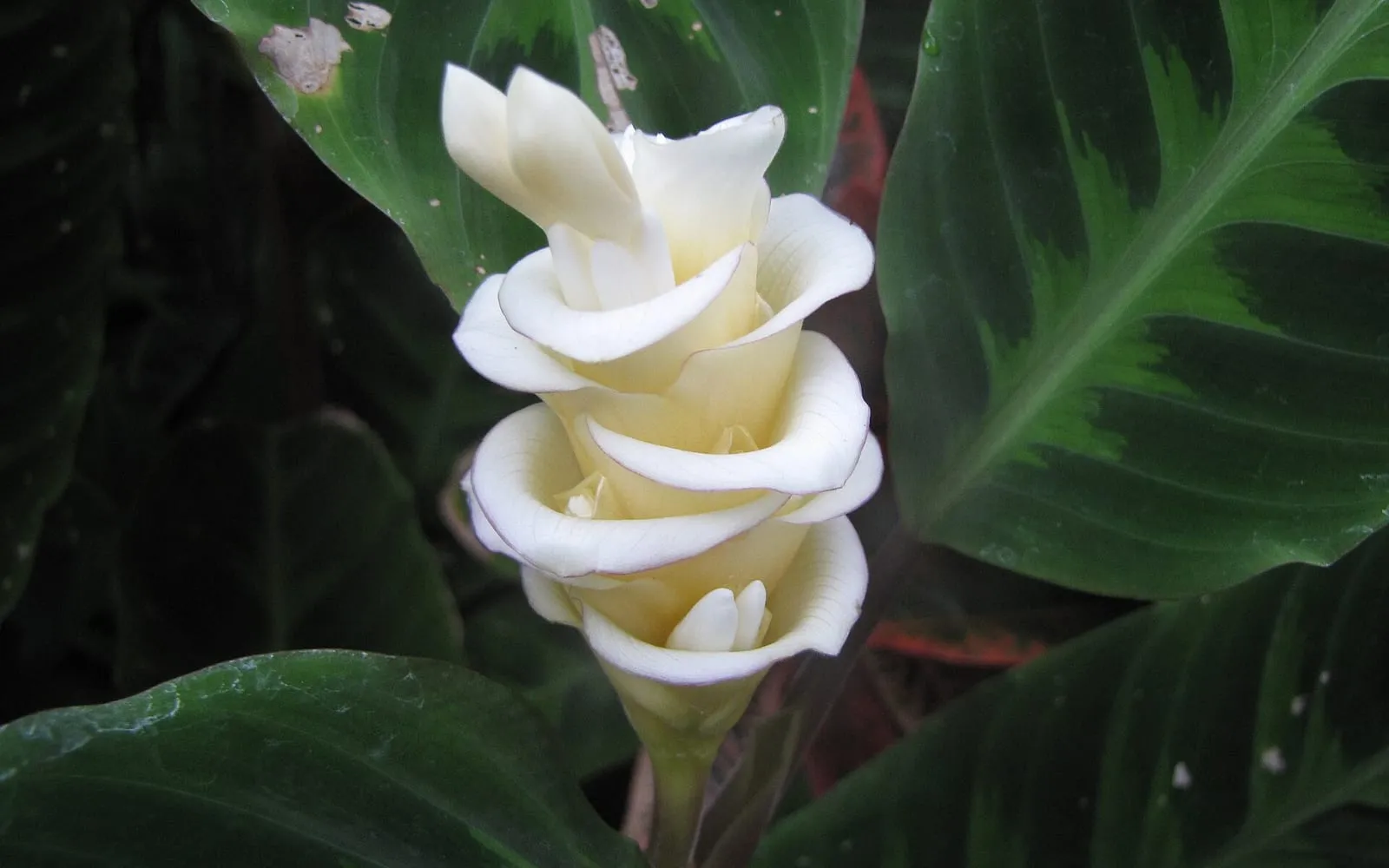
Flowers come more freely on this one than on most of its relatives, as cone-shaped heads of overlapping cream bracts on stalks above the leaves. As in the whole group, the leaves move at dusk, lifting and closing before settling flat by morning.
The rules for keeping it match those of the furry feather calathea. It needs warm air, damp air and soft water. Apart from its larger size, it is grown the same way, but its height makes it a plant for a warm, humid room instead of a small windowsill.
Appearance
Each leaf is large, oval and velvety, dark green above with a pale feathered midrib and a maroon- purple back, the soft nap giving the plant its name.
The clump is upright and tall for a calathea, sixty centimetres to a metre, widening as a creeping rhizome sends up fresh leaves at the edges.
Its flower heads are stiff cones of cream to white bracts on upright stalks, appearing more readily here than on most calatheas when the plant is content.
Come evening the leaves fold upward to show their purple backs, and open flat again by day, the prayer-plant movement the family is known for.
Where it is from
Goeppertia warszewiczii is a Central American forest plant, rooted in the shaded, moist leaf litter of the understorey where warmth and humidity stay steady through the year. It has little tolerance of cold or drought.
Everything it needs follows from that habitat, only on a larger scale than its smaller relatives need. Warm, damp air, gentle light and a mix kept steadily moist keep it in good order, while a dry room, a chill or a jug of hard tap water quickly scorch the edges of its big leaves.
How it grows
Growth is vigorous for a calathea in warm, humid conditions, the rhizome producing one plush leaf after another and, on a settled plant, the cream cones through summer. Let the room turn cold or the air dry and it stalls.
Choose a light, quick-draining, peat-free mix and a pot in proportion to the plant, and keep the mix damp with rainwater or filtered water. The broad leaves transpire heavily, so damp air matters as much here as what goes into the pot.
Warmth above about 16 deg C, shelter from draughts and bright light out of direct sun keep it healthy. When a clump grows crowded, lift and split the rhizome in spring, both to propagate and to control its spread.
Strip off tired, browned leaves at the base to keep it looking well, and clean the velvet with a dry or barely damp cloth, never a wet one, since droplets leave marks on the leaf surface.
Through the seasons
Spring is when growth speeds up; divide or pot on now, and start feeding again as new leaves appear.
Summer is the main growth and flowering period. Water often enough to hold the mix evenly damp, keep the air humid, and feed each month.
Autumn slows growth as daylight shortens. Increase humidity to offset the drying effect of the heating, and taper the feed.
Winter is quiet. Hold it warm and humid, keep the mix just damp, and never leave it standing cold and wet in the low light.
Care difficulty
Straightforward for a calathea once the basics are in place, and worth the trouble for its size and flowers. Warm, damp air, gentle light and soft water make a healthy plant. Nearly every setback, dry air, a chill, or hard water, shows first as scorched leaf edges. Put it in a warm, humid room and use rainwater or filtered water.
Watering
Aim to keep the mix evenly damp right through the year, watering as the surface starts to dry instead of waiting for it to go dry, and use rainwater, filtered or distilled water. The fluoride and salts in hard water scorch the edges, and the big leaves need a reliable supply.
Pull back just a little over winter, keeping the mix barely damp, and tip out any water left standing beneath the pot. Steady moisture, rather than a swing between drought and flood, is what it needs and in summer a plant this size may take more than a small calathea.
Warning signs, diseases and pests
Scorched, crisp edges are the first thing you are likely to see, and they usually mean dry air, hard water, or both. Step up the humidity, move to rainwater or filtered water, and hold the mix evenly damp.
Warm, dry air also encourages spider mites, which fleck the big leaves and web beneath them. Raise the humidity, sponge both sides of each leaf, and deal with them early, since so much soft leaf gives them a large surface to damage.
Where the markings wash out or brown patches appear, suspect too much sun. Shift the plant into bright shade or indirect light, which keeps the velvet dark and the feathering clear.
Growing environment
Bright but indirect light, or a little shade, matches the forest floor it came from. Direct sun bleaches and burns the velvet, while heavy shade thins the plant and flattens its pattern.
Warmth and humidity matter most. Keep it over about 16 deg C somewhere humid, whether by humidifier, pebble tray or grouped plants, and clear of radiators and cold draughts. Its bulk suits a warm, humid room or a conservatory.
Plant it in a light, quick-draining, peat-free mix, water with soft water, and leave room for the big leaves, in a warm, humid, well-lit but sunless position.
Feeding
A monthly half-strength balanced feed through the growing season is plenty, and worth keeping weak, because a build-up of fertiliser salts adds to edge scorch.
Hold off entirely over winter, and rinse the pot through with plain water now and then to wash salts away. A freshly potted plant needs nothing extra for its first few weeks.
Troubleshooting
The leaf edges are scorched and crisp. Dry air or hard water, usually both. Raise the humidity, water with rainwater or filtered water, and hold the mix evenly damp. This is the most common calathea problem.
The velvet spots where I wipe it. Water marks the pile. Dust it with a dry or barely damp cloth instead of soaking it, and keep cold water off the leaves.
The markings have washed out. Too much sun, most often. Move it to bright shade or indirect light to hold the dark velvet and pale feathering.
The leaves are flecked and dull. Spider mites out of warm, dry air. Raise the humidity, sponge both sides of the leaves, and treat early, since the big soft leaves suffer fast.
Is it safe around pets? Yes. The calatheas are on the ASPCA’s non-toxic list for cats and dogs, so this bold-leaved plant is safe in a home with animals.
Jungle Velvet problem guides
Not sure what is wrong? See the common houseplant pests guide.